Sir Winston Churchill vintages headline Champagne Pol Roger masterclass


There can't be many better ways to begin a weekend than with a Champagne Pol Roger masterclass, including two top vintages of prestige cuvée Sir Winston Churchill.
No surprise that there wasn’t a seat left in the Pol Roger masterclass room at the Decanter Fine Wine Encounter 2015.
Which of Pol Roger’s cuvées goes best with thai green curry? If your answer is Brut Reserve NV, then you think similarly to the Champagne house’s UK MD, James Simpson MW. ‘That’s my hot tip,’ he told a packed room at this Decanter Fine Wine Encounter 2015.
His comments set the tone for a lively tasting session in which Simpson and Hubert de Billy formed an entertaining double-act inbetween talking DFWE guests through a sumptuous assembly of wines – not to mention a bit of Champagne history revolving around World War One and Churchill.
Keeping it in the family
‘We remain a completely family owned Champagne house,’ said Hubert de Billy, the great-great grandson of house founder Pol Roger. ‘We are always working for our children. Our decisions are based on the long-term view.’
Pol Roger is one of the smallest Champagne houses, producing just 1.6m bottles per year from 92ha of its own vineyards.
Bollinger is twice as big and Moet & Chandon alone makes 30m bottles annually, Simpson said.
Blanc de blancs 2008, Pol Roger Brut 1999
On that note, guests were offered a rare taste of the Pol Roger Blanc de Blancs 2008. ‘It’s the wine we make the least of,’ Simpson said. ‘It’s from exclusively grand gru vineyards.’
The 2008 was picked in September. Freshness, elegance and a touch of minerality were central to this wine, according to de Billy, who nevertheless explained that Champagne has only been widely considered an aperitif since World War Two.
Several vintages followed, including the Pol Roger 2006 and strongly rated 2004 and then two vintages from the 20th Century, Pol Roger 1999 and 1996.
‘For me, the ’96 has to be drunk,’ said de Billy. ‘It’s just at the age.’ But, he believes the 1999 has plenty of time left. ‘The 1999 has got 20 years in it,’ added Simpson. ‘It shouldn’t have, really – actually 1999 is probably only a four star vintage.’
Guests heard how Pol Roger’s vintage blend has shifted in recent decades from 80% Pinot Noir and 20% Chardonnay to a 60-40 split.
Sir Winston Churchill 2004, 2000
Soon, it was time for the main event and the anticipation was palpable as Sir Winston Churchill 2004 and 2000 was poured into glasses around the room.
There was immediate step up in both complexity and richness in the much-vaunted 2004 vintage – evident from its deep, golden colour – and in a prestige cuvée that is known for its full bodied character.
The cuvee’s first vintage was 1975 – incidentally the year of Decanter‘s launch – and it was released in 1984 to re-inforce the link between the British wartime prime minister and what he repeatedly described as his favourite Champagne house.
Simpson and de Billy entertained the crowd throughout the 2004 and 2000 prestige cuvee tasting. Churchill, Simpson said, fell upon hard financial times in the late 1930s and subsequently rationed himself to ‘only one bottle of Champagne per day’. He also named a race horse after Pol Roger.
Last but not least, there was a tasting of the Pol Roger rosé brut 2006, which Simpson said had a much more savoury character than several others tasted. ‘It’s very food friendly,’ added de Billy.
De Billy spoke proudly of Pol Roger’s family heritage, but he also hinted at friendly tensions between members.
‘When we taste the vats in January and we analyse my recipe (for this year’s blend), there can be arguments. Nobody goes to lunch until we are all agreed. After 2pm in the afternoon, the decisions start to be much faster,’ he quipped.
It set the informal tone for a whole weekend of tasting some of the world’s best wines.
- Château Cheval Blanc and d’Yquem presented by the ‘dream team’
- Full report and photos of the Decanter Fine Wine Encounter 2015
- REPLAY: Live coverage of the DFWE 2015
- Next up: Spain & Portugal Fine Wine Encounter
Stephen Brook’s top five Champagnes from the Masterclass
Pol Roger, Extra Cuvée de Reserve, Champagne, France, 1996
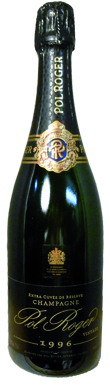

This shows a restrained nose, with sweet appley fruit, but it's surprisingly reticent. In contrast, the palate is rich and full-bodied, firm yet not too...
1996
Pol Roger

Pol Roger, Cuvée Sir Winston Churchill, Champagne, France, 2004
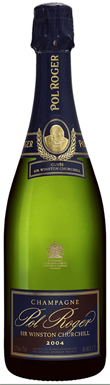
At 20 years of age this vintage of Cuvée Sir Winston Churchill has settled into a comfortable sense of ease and mature charm, propped up...
2004
Pol Roger
Pol Roger, Cuvée Sir Winston Churchill, Champagne, France, 2000
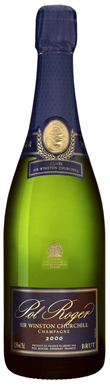
95
Although not regarded as a top year, this Churchill is a great succcess. The apple-compote nose is reserved but it has purity of fruit and finesse. The attack is lean, tight, and racy, very youthful and tight, with a wonderful tension and dynamism. It is in its prime but should keep well thanks to its racy acidity, which gives excellent length.
2000
Pol Roger
Pol Roger, Vintage, Champagne, France, 2006
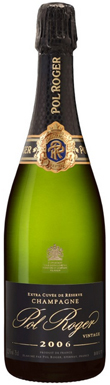
92
Restrained appley nose, still quite austere. The attack is rich and broad, and the palate full-bodied, with depth and power. With flavours of grilled nuts, this is a tasty, compact style, but it has vibrancy too. The acidity is in the backgound, but it gives good length.
2006
Pol Roger
Pol Roger, Vintage, Champagne, France, 2004
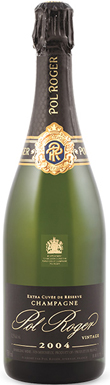
Toasty, biscuitty nose, with the fruit expression rather retient. Rich and very assertive, this is compact and bold, and different in character to the broader...
2004
Pol Roger
