Life, for German Riesling growers, should be one long hurrah. The world is moving away from obvious oak and high alcohol; and ‘minerality’ is the most popular word in the contemporary wine lexicon.
All these things should have the Riesling growers of the Mosel and Rheingau, Pfalz, Rheinhessen and everywhere else bouncing out of bed each morning with cries of joy. And actually, they often do.
The cries of joy might be a little muted because, being farmers, they never quite trust good news. But fashion has swung hard in their direction. And for once the climate is on their side.
The upshot is that there is a new wine style for Brits to get to grips with. New to us, that is. German Riesling can be off-dry, in the traditional way, or it can be bone dry. Germans have valued their dry Rieslings for years, but the British wine trade, normally able to spark interest among consumers in any new wine, finds dry German Riesling a tough sell.
The usual reason (and I can’t think of any other, so we’ll stick with it) is that sweet Liebfraumilch and its like destroyed the reputation of all German wines. But good grief, worse sins than that have been forgiven by another generation. Think of platform shoes!
While we’ve been looking the other way, Riesling has been evolving: getting drier, riper and more precise. Climate change is taking German Riesling into its comfort zone, and dry wines that used to be a speciality only of more southerly regions like Baden or the Pfalz, and then the Rheingau, are now made in the Mosel. And successfully, too.
Even 10 years ago, wines with residual sugar comprised about 60% of production in Germany; now that’s down to about 30%. The better dry Rieslings get, the more people want them; and the more conditions favour dry wines, the more growers want to make them.
Balancing act
Making a dry wine is not merely a question of letting your vat ferment to dryness. Balance is key. For balanced dry wines, you need ripeness; back in the early 1990s dry Rieslings could be skeletal and hard. The 1970s had three good years, three mediocre ones and four bad ones.
Warmer summers have opened up a realm of possibilities to growers who in the past struggled to make something drinkable. ‘We used to have years of no Kabinett at all, like 1980, 1981 and 1984, because we had to chaptalise everything’, says Christian Ebert of Schloss Saarstein.
It’s not just climate: lower yields and better viticulture have also helped to produce wines with more stuffing; wines that don’t need residual sugar for balance. The classification of Grosses Gewächs, focussing as it does on dry wines at the top of the market, reminds growers that you have to start with good sites.
What you get, along with the greater concentration that comes with lower yields and better viticulture, and the better ripeness that comes from all that plus a warmer climate, is wines of crystalline precision.
‘Roll back the sugar and it’s like the tide going out. Every contour is visible’ – Margaret Rand
Reducing levels of residual sugar is cruelly revealing to any wine: faults will show. Think of how much more precise Champagne is these days, with lower dosage made possible by exactly the same factors that have benefitted German Riesling: roll back the sugar and it’s like the tide going out. Every contour is visible.
Personally I adore the new dry Rieslings for their crystalline precision and transparency. But sweeter Rieslings are how I first learned to love Riesling, and it would be disloyal to abandon them.
Dry, the new sweet?
For those more used to traditional off-dry Rieslings (which are now usually referred to as ‘fruity’, to distinguish them too from properly sweet dessert Rieslings) it can be a shock: these dry wines don’t taste as you expect Riesling to taste. They could be two different wines: the first impression is of far less fruit, far more austerity.
But persevere. They are mineral in the truest sense of stony-tasting; they’re clear, pure, tightly knit; they’re like looking at a wine down a microscope.
At first you might be tempted to flee back to the safety of a juicier, off-dry wine; one has to adjust one’s focus, even stop thinking of off-dry Riesling as the norm. Embrace those tight, stony flavours: this is Riesling stripped bare, as nature (perhaps) intended. This is beginning to sound as though off-dry Rieslings are the also-rans, the lesser, unripe wines propped up by sugar, their faults disguised by a veil of sweetness.
That’s not so. Personally I adore the new dry Rieslings for their crystalline precision and transparency. But sweeter Rieslings are how I first learned to love Riesling, and it would be disloyal to abandon them.
Take Kabinett, for example. It’s the most delicate of wines, yet will age for years; it can have as little as 7.5% alcohol – half the alcohol of many a warm-climate red, and with no less flavour. It’s a particularly German style: off-dry Riesling is rare in Austria and eccentric in Australia. You’ll find it in Alsace, but it will have more alcohol.
Light, ‘fragile’ Kabinett is the essence of what off-dry Rieslings (which are now usually referred to as ‘fruity’, to distinguish them from properly sweet Rieslings) can be.
Logically it should be threatened not just by fashion, but also by climate change. The vineyards that used to yield good Kabinett can now be just a bit too warm to give that perfect tension of fruit and acidity – that fascinating dancing tautness of a good Kabinett.
So growers are looking elsewhere. Some growers, such as Ernie Loosen, are turning to vineyards that used only to give QbA-level wines: he’s planting just below the forest, at the top of the slopes. As the ‘better’ vineyards become more suitable for dry wines, so vineyards that used to be less highly regarded are coming into their own and giving the sort of ripe raciness that we want in Kabinett.
Food-match marvel
It would be tempting to view dry Rieslings as modern, and fruity ones as a bit traditional, a bit old-school. Every time a younger generation takes over at a winery and starts focusing on dry instead of sweet, that view is reinforced; but a look at our drinking (and eating) habits might make us want to reconsider.
It’s routine to describe Kabinett as a perfect aperitif, and it is, especially in the summer. But its intensity of flavour means that it also works with food: crab, trout, salmon, scallops, of course – they all suit a touch of sweetness and they all need acidity. So does a good duck liver pâté.
All sorts of fusion food, too, with its unpredictable meetings of hot and sour and sweet and savoury, need Riesling – Riesling should be the default choice whenever you look at a list of ingredients and think, ‘right, what on earth do I put with that?’
Says chef Roger Jones of The Harrow at Little Bedwyn restaurant: ‘It’s a marvel to match to a huge variance of flavours and textures. I would, however, keep German Riesling away from over-spiced food, especially Indian flavours, although some restrained spice as in Japanese fusion is fine.’
Think of dry and sweet not as opposites between which you must choose, but a spectrum of flavours to explore. Dry Riesling from the Mosel is as good an aperitif as Mosel Kabinett; a weightier Grosses Gewächs from the Rheingau will handle game. That’s what Germans will often drink with venison, with a bit of fruit sauce to help the match. And I’ve successfully put fruity Rheingau Spätlese with pheasant à la Normande, where the savoury sweet apple sauce makes a match with red more complicated.
Less is more
I do have some caveats. Oak, for example. It’s hard to think of a single example where new oak has improved a Riesling. (Old oak fuder are a different matter, adding weight and gravitas, but not vanilla.)
Pfalz producers have long experimented with oak in all the varieties it grows, and while it can work on the Pinot family it doesn’t on Riesling. Ever. Sorry.
Then, yeasts. You can get yeasts that are neutral in their flavour; you can get yeasts that emphasise different flavours in the grapes; or you can use indigenous yeasts, either selected from your own vineyards and produced for you by a friendly laboratory, or just left to chance.
The latter option – crushing the grapes, putting them in a vat and leaving them to get on with it – is riskier, but fashionable.
Wild yeasts, however you handle them, give less obvious fruitiness, but more minerality, more texture, more subtlety.
Yeasts that enhance flavours are, to my mind, less desirable. At their extreme you’ll notice improbably brilliant fruit flavours. It’s not necessary, any more than lees-stirring (another aberration) is necessary. It’s as though some growers, having decided to make dry wines, daren’t leave them alone. Riesling doesn’t need all this.
Switching to dry wines can be a shock, but it’s a good shock, making us reassess the grape. And if that makes us abandon a few prejudices, well – hurrah.
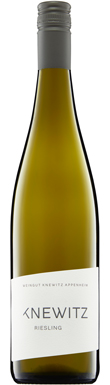
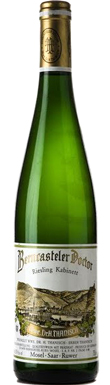
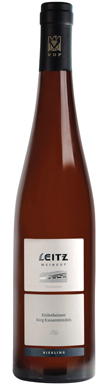
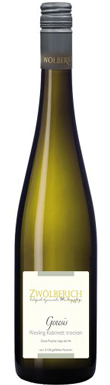
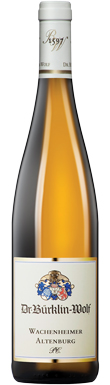
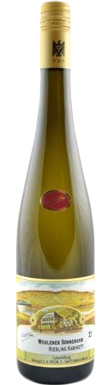
Margaret Rand’s pick of dry and off-dry Rieslings