Top Provence red wines: panel tasting results

France’s hot southeast has traditionally been known for its big, chunky reds, but the pendulum is swinging in favour of grape and terroir...
Scroll down to see the wines
Decanter’s experts tasted and discussed Provence red wine for the September 2017 issue of Decanter magazine.
Provence’s micro-appellations, especially hot, coastal Bandol, shone in this tasting, offering distinctive reds of elegance and longevity.
The scores:
94 wines tasted
Exceptional – 0
Outstanding – 2
Highly Recommended – 15
Recommended – 66
Commended – 8
Fair – 3
Poor – 0
Faulty – 0
The judges:
Andy Howard MW; James Lawther MW; Marcel Orford-Williams
Click here to view the full results of the Provence red wine panel tasting
Provence’s main appellations represented 85% of wines in the tasting, but with such a broad range of appellations and grape varieties, it wasn’t surprising that our panelists reported a diversity of styles and quality.
‘It’s hard to define regional taste profiles because of the variation of the blends and the individual quality of winemaking,’ said James Lawther MW.
‘If present, Cabernet Sauvignon can be a dominant factor – in which case the wine is either slightly on the leafy side or the Cabernet will add a bit of a welcome cassis tone.’
Andy Howard MW agreed: ‘I certainly couldn’t find any regional characteristics coming through. You have some which are perhaps a bit more Rhône in style, with both Grenache and Syrah dominating.
‘I did find a lot of them rather New World in style as well, and that didn’t make me think of Provence. I was expecting more of a southern French garrigue influence.’
Continue reading below
Provence red wine panel tasting top scorers:
To read Decanter’s full panel tasting reports, subscribe to Decanter magazine – available in print and digital.
Improvements
Has new investment proved a mixed blessing, in raising average quality but at the cost of local character?
‘I recall not that long ago the reds were undrinkable,’ noted Orford-Williams. ‘Lately, producers have put a huge amount of effort into making really top-quality wines, egged on by sommeliers from the Côte d’Azur and all their wealthy customers.
That’s had a big and beneficial effect. When you visit Provence estates you can see there’s no lack of money, no lack of resource, but the wines can often taste a bit formulaic.’
While rosé is the money spinner for many producers, red often remains their passion, and there is a noticeable shift towards more fruit-driven reds that reflect variety and location.
Larger demi-muid barrels are replacing barriques, taming the tannins, and a growing number of estates are now returning to the original, Provence-style foudres – Provence red wines rarely have an overt toast or vanilla character, with the wood being used to give structure rather than taste. A handful of producers are experimenting with amphorae or going back to cement tanks.
Variety
Provence’s diverse geology and altitude, climate and proximity to the sea provides interesting variety.
In the cooler uplands of northern Coteaux d’Aix-en-Provence, Cabernet Sauvignon-Syrah blends show a distinctive freshness and structure. In Les Baux, the reds are also fresher and more structured. Palette to the west of Aix has more Mourvèdre, reflecting a warmer climate.
In the extreme heat of the coastal vineyards – notably in Bandol, but also the coastal regions of La Londe or in Pierrefeu in the Côtes de Provence – Mourvèdre produces wines of deep, black-fruit power and elegance.
Syrah, blended with Mourvèdre and Grenache on the volcanic soils of Fréjus, has a tighter, mineral structure.
The key is to look out for the regional dénominations de terroir of La Londe, Pierrefeu, Fréjus and Ste-Victoire on Côtes de Provence bottles, or to know your geography.
Star appellations
The real stars of this tasting were the microappellations, in particular Bandol. ‘Bandol is quite different to anywhere else because it faces the sea and is influenced by it,’ said Orford-Williams. ‘It’s also very hot – perfect for growing Mourvèdre, which does exceptionally well.’
Howard found the Bandol wines very serious with great individuality: ‘They had a lot of spice and real finesse with great ageing potential.’ The only wine submitted from the tiny appellation of Bellet also impressed our judges.
Orford-Williams concluded that it was ‘the old estates from the micro-appellations making wines of elegance – but they have been making wines for 50 to 100 years’. At their best, he added, ‘reds from Bandol, Bellet, Palette and Beaux can stand shoulder to shoulder with any top red wine from the southern Rhône.’
Related content:

Decanter travel guide: Cassis & Bandol, Provence
Stunning coastline, great wines, superb gastronomy, protected national parks...

Southern Rhône 2015: Châteauneuf-du-Pape, Gigondas and Vacqueyras – part one
Read our review and see our top wines...

Credit: Mike Prior/Decanter
Southern Rhône 2015: Côtes du Rhône Crus and more – part two
See the top wines and read our overview...
Château Simone, Palette, Provence, France, 2012
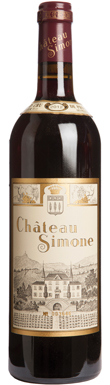

AH: An intriguing pot-pourri of aromas and flavours, showing some appealing maturity, with beautifully textured red cherry, raspberry and plum fruit all marrying together with...
2012
Château SimonePalette

Domaine de Terrebrune, Terroir du Trias, Bandol, Provence, France, 2010
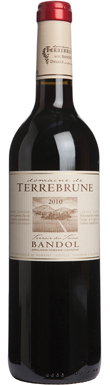
AH: Bright, lively and approachable with rich, dark fruit, while smooth, evolved tannins impart magnificent complexity and interest. It finishes with a lovely purity and...
2010
Domaine de TerrebruneBandol
Château de Pibarnon, Bandol, Provence, France, 2012
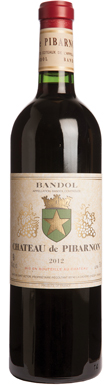
A generous 'fireside' red, with a resplendent mélange and depth of roasted fruit, sweet-spice and herbal characters, enveloped by firm but ripe tannins and swelled...
2012
Château de PibarnonBandol
Domaine de Toasc, Bellet, Provence, France, 2014
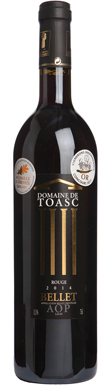
A refined and individual style, with beautifully elegant and perfumed aromas of floral-edged red fruit reinforced on the palate - long, bright and intriguing.
2014
Domaine de ToascBellet
Domaines Bunan, Mas de la Rouvière, Bandol, Provence, France, 2014
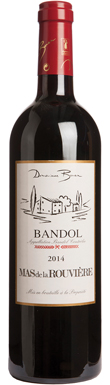
Full-flavoured, long and spicy, with unctuous and smooth black cherry flavours emboldened by crisp yet firm tannins. Youthful now, with very good ageing potential.
2014
Domaines BunanBandol
Château Vignelaure, Coteaux d'Aix-en-Provence, Provence, France, 2010
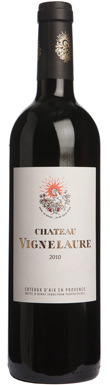
Fresh and lively - seems youthful despite the additional age - with mouth-coating fleshy dark fruit partnering mint and cassis flavours, encircled by beautifully integrated...
2010
Château VignelaureCoteaux d'Aix-en-Provence
