Great value Champagne made by growers – panel tasting results


Step outside of the usual brands and see some of the great things Champagne growers are doing on their own. Our experts praised these non-vintage grower Champagnes for their individuality and value in the July 2017 issue of Decanter magazine.
Decanter’s experts tasted non-vintage grower Champagne in the extra brut and brut categories in the July 2017 issue of Decanter magazine, and the results were impressive, with the top four wines all priced at under £40.
Diversity of style and sheer strength of character made for a challenging tasting, yet there was real value and interest.
The scores:
100 wines tasted
Exceptional – 1
Outstanding – 3
Highly Recommended – 27
Recommended – 60
Commended – 7
Fair – 2
Poor – 0
Faulty – 0
The judges:
Michael Edwards; Simon Field MW; Tim Hall
Click here to view the tasting notes and scores for all 100 grower Champagnes
Pierre Peters, Lahaye, Larmandier-Bernier and Geoffroy might not be names on the tip of our tongues in the UK, yet these growers are seen on the wine lists of some of the hippest places in New York.
But while it’s currently fashionable to embrace grower Champagne, it’s a fallacy to say that it’s intrinsically better than négociant Champagne.
Historically, most Champagnes have been made by négociant houses, who purchase most of their grapes from growers. It’s arguably the houses that retain the upper hand when it comes to consistency of quality, as the spectrum of grower-producers in Champagne is so diverse.
Overall the panel found the tasting quite hard work, but at the end they came up with some real winners.
Continue reading below
Our panel’s top non vintage grower Champagne:
To read Decanter’s full Panel Tasting reports, subscribe to Decanter magazine – available in print and digital.
Diversity
Some of these growers have produced their own champagnes since the early 20th century, or even the late 19th, and it’s this diversity that makes grower champagne so fascinating: they demonstrate an unprecedented variety of style, offering us a much wider array of expressions than were available even just a couple of decades ago.
Despite remaining in the minority in terms of market share, these growers have had a significant impact on the way that wine consumers approach champagne.
The top four wines in the tasting were all very good, with one rated Exceptional. Michael Edwards found this totally justified, as ‘some of the grower champagnes have the greatest terroirs’.
A lack of freshness
But the panel found too many wines lacking freshness. Field commented that ‘there’s a paradox in what we tasted. We were getting wines that only had the bare minimum ageing and yet were missing that autolytic charm – a yeasty character that only Champagne has’.
Low dosage categories
When comparing the brut and the low dosage categories the panel had mixed views, finding the latter to struggle for consistency due to the region’s marginal climatic conditions.
Some caveats notwithstanding, Edwards found the brut natures more controlled, without the rasping acidity which marked some zero dosages of the past: ‘I think it’s a new avenue. A lot of people, especially experts, feel that in the past there has been too much masking of the fruit, but I think this is the way winemaking is going in Champagne’.
Conclusion
‘This was a real helter-skelter result but the tasting met my expectations,’ Field concluded. ‘I was expecting a lot of variety, a lot of different characteristics, and a lot of experimentation, some of which isn’t going to work, obviously. But it’s a positive thing that these champagnes don’t all taste the same, as in this way they stand apart from the grandes marques.’
Edited for Decanter.com by James Button.
This copy originally appeared in Decanter magazine’s July 2017 issue. Subscribe to the magazine here
Related content:

10 top grower Champagnes to try
Champagne resident and expert Peter Liem picks out 10 top grower Champagnes to try...

Grower Champagne: 10 estates to know

Top rated rosé Champagne – Full panel tasting results
Our experts rate 99 bottles of pink Champagne...

Top value supermarket Champagne
Stock up on Champagne without breaking the bank...
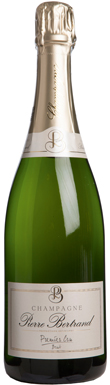
Pierre Bertrand, 1er Cru, Champagne, France
98
ME: Green-gold, this has power and definition, with length and potential. SF: Bold colour and aromatics, a very complete and commercially savvy Champagne. Excellent Pinot weight and Chardonnay lift; muscular and spicy, with the generous sweet fruit finish the work of nature rather than human intervention. Iodine on the finish. TH: Sherbet-like grip and texture. This shows depth of fresh citric fruit and lemon posset notes. Incredible vitality but nicely harmonious. Singing.
Pierre Bertrand
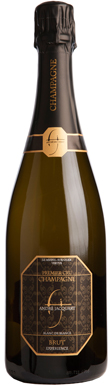
André Jacquart, Expérience Blanc de Blancs 1er Cru, Champagne, France
95
ME: Bright yellow-gold. Fine Chardonnay maturing well. Excellent harmony & vinosity. SF: Persuasive mousse and very attractive aromatics of summer flowers, honeydew melon and Mirabelle plum. The palate has definition, concentration and amazing, intense fruit character. It somehow draws from the red fruit end of the spectrum despite its white grape provenance. Impressive, if a little oaky. TH: A touch ashy with old lemon peel on the nose. But the palate of vellum and assertive citric fruit has a lovely light weight and subtlety to it. It speaks on its feet, imploring attention, and grows on me.
André Jacquart
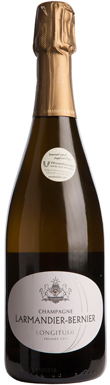
Larmandier-Bernier, Longitude Blanc de Blancs Premier Cru, Champagne, France
95
ME: Lovely classy green-gold colour shouts Chardonnay. Minerals, chalk, a hint of spices, and fine, fine tension in the mouth. Moreish and complete, a fine long wine. SF: Lively and energetic. The palate is spicy and firm with a soft white pepper backdrop. An accessible and ripe style, fresh and poised at the same time. TH: Slightly closed nose with grapefruit. Pretty high-pitched lemon pith notes coming through. It's a little uncompromising and hard for general champagne drinkers maybe, but this is a winner for those who like it honed, dry and persistent.
Larmandier-Bernier
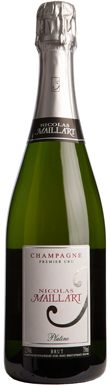
Nicolas Maillart, Platine 1er Cru, Champagne, France
95
ME: Opulent and finessed. SF: Fulsome colour and temperamentally big-boned , this is an impressive example. The six grams of residual sugar finely knit into a texture of ripe, red-berried fruit. The finish has an ethereal poise, brought down to earth by just a hint of spice. TH: Immediately vital in the mouth. Very chewy and demanding, a serious champagne but pretty exciting. Citrus character but with complex fruit and a pretty lingering finish. I like this!
Nicolas Maillart
Guy Larmandier, Cramant Blanc de Blancs Grand Cru, Champagne, France
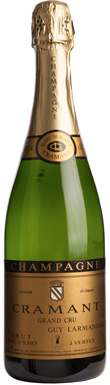
94
A powerful example, with almost a tannic grip and hints of gunpowder and incense. Feels drier than most, perhaps due to a lower dosage - there is a serious rigour here, offering plenty of gastronomic potential.
Guy Larmandier
André Jacquart, Expérience Blanc de Blancs Grand Cru, Champagne, France
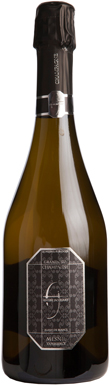
17.5
Slightly evolved nose with hints of praline and hazelnut, but also displaying fresh citrus, chalk, and mineral nuances. Mouth-filling palate with a creamy texture, elegant fizz and fresh acidity. Very much in balance with some exotic notes to finish.
André Jacquart
