Champagne styles explained
Decanter explains the factors differentiating Champagne styles.


Traditional-method sparkling – made via a second fermentation in bottle – is made in regions around the wine world, and yet Champagne continues to enjoy the widest recognition, thanks to its esteemed history, the power of its brands and its range of styles.
Sweetness
This is determined by the amount of residual sugar in the dosage – a mixture of sugar and wine added to the Champagne before the final bottling. Brut, by some distance, is the most popular. The most rasping category is brut nature, which also goes by the name zero dosage and, as the wording suggests, contains no added sugar. The next rung on the ladder is extra brut (0-6 grams of sugar per litre) before we hit the ubiquitous brut (less than 12g/L). The confusingly titled extra dry category contains between 12g and 17g/L, followed by the increasingly sweet sec, demi-sec and doux bottlings.
Grapes
The art of blending different grapes is vital in maintaining ‘house style’, and ironing out vintage variation. While there are seven permitted varieties, the dominant triumvirate is Chardonnay (which gives citrus, acidity and finesse), Pinot Noir (red fruits and body) and Pinot Meunier (bright, youthful fruit).
Blanc de noirs on a label means it has been made only from dark-skinned grapes such as Pinot Noir and/or Meunier. The former trumps Meunier for popularity, with sought-after examples including Krug’s Clos d’Ambonnay and Billecart-Salmon’s Le Clos St-Hilaire. Blanc de blancs is crafted from pale-skinned grapes and almost certainly means it’s pure Chardonnay.
Vintages
While the term ‘vintage Champagne’ is largely self-explanatory (all grapes coming from one year), non-vintage (NV) Champagne requires a bit more unpacking and is where a Champagne house’s chef de cave (cellar master) earns their corn. The arguably unachievable goal of NV is to create a house style which remains consistent, year after year.
While NV is a marriage of grapes, crus (vineyard sites) and vintages, the blend will still be dominated by a foundation wine that comes from a single, recent harvest. This is seasoned with reserve wines from older vintages which bring more evolved flavours and richness.
The ambition of NV may be to remain true to a signature style, yet in reality vintage variation – not to mention the manner in which NV is incrementally released to market – means that this is probably a pipe dream. In recognition of this, many producers (including Bruno Paillard, Jacquesson and, more recently, Krug) mark the labels of their NVs – in varying degrees of prominence and clarity – with the base wine’s vintage.
Colour
Rosé Champagne can be made using a couple of different methods such as direct pressing and short maceration. The latter involves leaving red grapes to macerate for 24-72 hours before pressing, thereby extracting colour from the dark skins. Although some Champagne is made this way, most is created by simply adding about 15% of still red wine (usually Pinot Noir) to the blend of base wines. Top houses own vineyards dedicated solely to the growing of premium red grapes.
Related articles
- What is a ‘perpetual reserve’? – Ask Decanter
- What does ‘Brut’ mean on a Champagne label? – ask Decanter
- Top Champagne hotels off the beaten track
Bollinger, PN TX17, Champagne, France
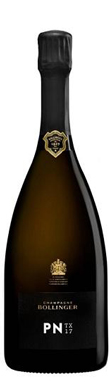

The nose is remarkably fine and complex, expressing scents of orchard fruit, white peach, apricot, and lemon with a touch of verbena. On the palate, the immediate impression is of a certain unctuosity providing great charm, and even the structure has round contours, but it seems to tighten on the chalky, airborne finish. The salinity that marked the previous two iterations of this PN series seems less present, with this one having more notes of pastry and hazelnuts as well as some zesty citrus, but airing adds an iodine-like tang. This is a Champagne that should pair well with fresh fish and shellfish dishes. 100% Pinot Noir. Dosage: 4 g/L. Disgorgement: January 2022.
Bollinger

Collet, Millésime Brut, Champagne, France, 2008
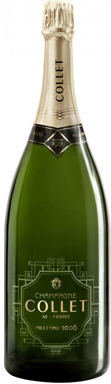
Pure and flinty, with a smouldery note, like the wispy smoke from a tinder twig. All delivered sotto voce and with freshness, a citrus whiff always not far behind. Rather attractive and showing all the forceful swell on the palate of the very superior 2008 vintage. Showing convincing pungency and length, with a velvetine texture showing early on the palate. Finishes quite long with cream and notes of cooked berries and toffee crisp with a salty sprinkle. This seems a little unresolved, yet youthful and with no doubt much more to come. Eight years on lees. Dosage: 8g/L
2008
Collet
