Harlan Estate: Producer profile


William Kelley tastes a 12 vintage vertical of this 'Californian first growth', and Elin McCoy delves into the estate's past, present and future
Harlan Estate at a glance
Vineyard 16ha
Elevation 100m to 160m
Grapes Cabernet Sauvignon (70%), Merlot (20%), Cabernet Franc (8%), Petit Verdot (2%)
Average annual production 2,000 cases
Second wine The Maiden
Other projects Bond, Promontory
The views from Harlan Estate’s winery – steep terraced vines with layers of fog below and Mount St Helena in the distance – always remind me how wild some parts of the Napa valley still are.
On my last visit, the winery’s lean, rangy owner Bill Harlan seemed satisfied (well, almost) with what he’s achieved since he bought this forested land above Oakville 30 years ago and began sketching out his 200 year plan for a great wine estate.
Harlan’s vaulting ambition has never changed: to create a Californian first growth that would command the same prestige and permanence as Bordeaux’s Mouton-Rothschild.
Mouton comes up more than once in conversation. It’s not a model for his wine – ‘we want to be purely Californian’ – but he clearly admires the esteem in which it has long been held.
Now that he’s laid the groundwork, he’s obsessed with handing the estate and the philosophy behind it to the next generation. His son Will, 26, joined the estate’s team with the 2012 harvest.
Exclusively for Decanter Premium members – William Kelley rates a 12 vintage vertical of Harlan Estate:
Scroll down to continue reading Elin Mccoy’s profile of Harlan Estate
Of the so-called ‘cult’ wineries that burst on the scene in the 1990s, Harlan is the one I find most fascinating. It’s a true estate, where every detail, from vineyards to label to winery design, reflects the aesthetics of a relentless drive for quality. The wines are bold, sumptuous and rich, yet polished and balanced, despite their alcohol. The many older vintages I’ve sampled have aged impressively.
Over the years, they’ve attained global success. Demand outstrips supply even with a $600 pre-release bottle price. Robert Parker has awarded 100 points to five of the 21 released vintages, which hasn’t hurt. The wines are auction staples, and the estate’s annual 2,000 cases are sold in 45 international markets.
Yet Harlan Estate remains very much the expression of its founder, who channels an especially American mythos. It’s all about a personal dream, fierce determination, money and risk-taking hubris in the quest for perfection and maybe some kind of immortality.
Over the years I’ve known him, Bill Harlan looks most comfortable gazing out over his vines, his hands jammed in the pockets of worn jeans, giving off a successful rancher’s quiet elegance. His curling white hair, now thinning, could usually do with a trim. Ditto the short white beard that partially hides his jutting, determined chin.
Chasing a dream
A southern California native, Harlan first encountered the Napa Valley and fine wine while attending the University of California at Berkeley. A visit to the Robert Mondavi Winery in 1966, during its opening week, inspired a dream of owning one himself.
Back then, Harlan was still young and restless; he hitchhiked around Africa, raced motorcycles, supported himself by playing poker while living in a casino hotel, and eventually co-founded Pacific Union, a real-estate development firm that made him a fortune.
By the late 1970s he was looking for vineyard land. On impulse he bought the run-down Meadowood country club in St Helena, but quickly realised the land wouldn’t make quality wine. Then, in 1980, Mondavi invited Harlan on a trip to Burgundy and Bordeaux, with visits to the first growths.
‘I was in awe,’ Harlan says. ‘It gave me a different time perspective, a vision of wine as place and permanence, family and history, the heritage that is the art of wine, the expression of land.’
Harlan believes that the best vineyards are on hillsides, though Napa Valley’s great wines historically came from the Oakville and Rutherford benchland on the valley floor, where Inglenook planted vines in the 19th century.
He found what he wanted on the rocky, forested lower slopes of the Mayacamas mountains on the valley’s western side, just above Martha’s Vineyard, bought the first 16ha in 1984 from its Canadian owner and added 80ha more over the next 10 years.
From the winery’s stone terrace you can see that first 16ha forms a dramatic horseshoe shape. What’s unique are the multiple exposures to sun and wind, and the two distinct soils: volcanic and sandstone bedrock.
Most of the vines are Cabernet Sauvignon, the rest Merlot, Cabernet Franc and a tiny amount of Petit Verdot. Early plantings are on terraces; later ones are spaced at three times the density. Yields are low, about two tonnes a hectare.
In the past six years, the estate has adopted more organic and biodynamic practices. It now dry farms about 40% of the vineyards, which has increased acidity and slowed sugar accumulation in the grapes.
Only about half the grapes go into the top wine – some go into a second wine, The Maiden, whose first release was 1995. Last fall, Will Harlan debuted The Mascot 2008, a $75 Cabernet blend made from Harlan Estate’s younger vines and purchased grapes.
Where the estate excels is in its meticulous attention to the tiniest details, whether in the vineyard, the cellar, design or marketing. This is helped by the fact that the key team – chief winemaker Bob Levy and estate manager and president Don Weaver – have been working together for years.
Levy has worked with Harlan since 1983 at Merryvale winery, which Harlan co-founded in 1982. It became a laboratory for their wine ideas. Winemaker Cory Empting and vineyard manager Mary Maher arrived in 2001.
Delayed launch
Winemaking at Harlan Estate has evolved less than the viticulture. The first three vintages – 1987, 1988 and 1989 – were never released, and Michel Rolland signed on as consultant in 1989, which led to picking grapes riper, hand sorting and refining techniques. They produced nine vintages before launching the 1990 in 1996 for $65.
Over the past six years, fermenting with native yeasts and reducing maceration time to 30-35 days to preserve freshness have become the norm.
Extraction is gentle – they hand punch to spread the cap but not break the skins. The wine is aged at least 24 months in oak, but they’re refining the oak regime, an improvement in my view.
‘We want to capture the power of the hillside,’ says Levy, ‘which means supple, soft textures and mouthfilling tannins.’
To get that in difficult 1998, they cut off half the crop, ending up with only 800 bottles. For the first 12 years, Harlan adds, they didn’t get a nickel of revenue. It took 20 years to make a profit.
Nowhere is Harlan’s obsession with symbols clearer than in the search for the right label. The aim was ‘to express intrinsic worth and artistry and convey confidence in the wines’ authenticity’, Weaver explains.
The 19th-century image that adorns the label came from the 250-year-old American Bank Note Company and it’s printed on banknote paper, way ahead on the anti-counterfeit curve. Even the winery, which looks like a sprawling stone and log cabin, has a link to America’s Western past. It’s built from repurposed lumber and salvaged sandstone blocks from an abandoned historic railroad building in Carson City, Nevada.
Given Harlan’s focus on creating a great estate, it may seem surprising that he has started other wine projects. Bond, which makes superb vineyard-designated wines from purchased grapes, began in 1997. His latest is Promontory, whose vineyards are just 2.5km south from Harlan Estate.
When it comes to price, Harlan Estate, which averages $800 at retail, is definitely in first growth Bordeaux territory. But the wines, while rich and lush, haven’t yet achieved first-growth complexity. As the vines are just coming into maturity that may change.
To make his 200 year plan work, Harlan has been ‘grooming the next generation in the right philosophy and passing on the culture’. He married Deborah Beck in 1986. Son Will was born the following year, and a daughter, Amanda, in 1989. Now that Will has joined the business, Harlan doesn’t seem too worried about the future.
A winemaker in Bordeaux once told me that when it comes to wine estates, the first 200 years are the hardest. Harlan Estate only has 170 more to go.
Harlan Estate: a timeline
1957 Bill Harlan visits Napa Valley for the first time
1966 Harlan attends opening of Robert Mondavi’s winery
1980 Harlan tours Burgundy and Bordeaux; decides to create a Napa Valley first growth
1982 Starts first winery, Merryvale, and hires Bob Levy
1984 Buys first16ha of Harlan property
1985 Marries Deborah Beck
1987 Son Will is born; first vintage of Harlan
1989 Daughter Amanda is born; Michael Rolland hired as consultant
1995 First vintage of second wine, The Maiden
1996 First Harlan Estate release, the 1990 vintage, for $65
2000 A 10 vintage vertical of Harlan in magnums goes for a record $700,000 at the Napa Valley Wine Auction
2001 Mary Maher joins as vineyard manager; Cory Empting as winemaker
2002 Winery completed
2004 Napa Valley Reserve founded
2012 Son Will joins the business
Promontory: a new Napa first growth?
Is Bill Harlan trying to create another Napa Valley first growth with his new Promontory Estate? It sure looks like it. He calls the project ‘maybe my most exciting since getting into the wine business’.
He pursued the spectacular piece of land on a rugged ridge above Dominus Winery, south of Harlan Estate and Bond, for nearly 25 years, ever since he saw its potential on a hiking trek in 1985.
When he got a call that it was available in 2008, he snapped up 195 hectares, then added two more parcels in 2009 and 2013 to bring the total area under vine to 340ha.
The topography has greater diversity of soils and elevation, and the micro-climate is cooler than Harlan Estate’s. Vineyards planted by a previous owner span elevations from 150m to 340m. The Harlan team is making wine from the best blocks of 11ha of those vines, replanting another 16ha and expanding by another 5ha.
So far the winemaking approach at Promontory is in experimental mode, a way for the next generation to try new things, and winemaker Cory Empting has produced seven vintages of the Cabernet blend.
Related content:

Credit: www.dominusestate.com
Dominus Estate Vertical: Our top wines
William Kelley's top wines from this special vertical...

William Kelley – ‘Was the 1997 Napa vintage the catalyst for a stylistic shift?’
How does the 1997 vintage in Napa compare to today's wines? William Kelley investigates...

Oregon: the Burgundy connection
William Kelley on the history of Oregon Pinot...
Harlan Estate, Napa Valley, California, USA, 1995
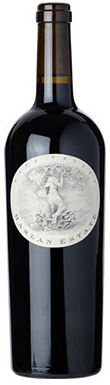

The 1995 Harlan Estate is a massive, luscious wine, laden with blackberry fruit, mocha and more evolved aromas of plums and cedar. This packs quite...
1995
Harlan EstateNapa Valley

Harlan Estate, Napa Valley, California, USA, 1996
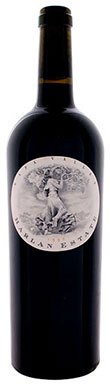
Aromas of ripe plum, cassis, tar, woodsmoke, cocoa powder and espresso roast introduce a powerful, fine-grained wine with a chassis of richly extracted tannin, underpinned...
1996
Harlan EstateNapa Valley
Harlan Estate, Napa Valley, California, USA, 1997
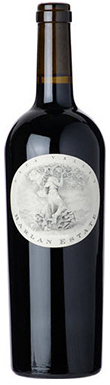
Ample rain fell during winter, leading to an early bud break in late March. From May through September, temperatures hovered between 26°C and 32°C, only...
1997
Harlan EstateNapa Valley
Harlan Estate, Napa Valley, California, USA, 1999
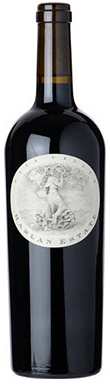
The 1999 Harlan Estate is particularly aromatically expressive, offering up vivid aromas of blackberry and violets intermingled with mature tones of cedar and scorched earth....
1999
Harlan EstateNapa Valley
Harlan Estate, Napa Valley, California, USA, 2000
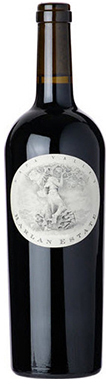
The 2000 Harlan Estate, a wine uncannily reminiscent of a 1990 Médoc, is at what seems to be a peak - or a plateau -...
2000
Harlan EstateNapa Valley
Harlan Estate, Napa Valley, California, USA, 2001
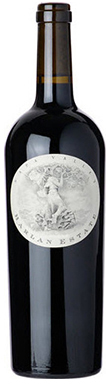
By the 2001 vintage, the vines at Harlan Estate were entering their 17th year of life and adapting to the method of dry farming that...
2001
Harlan EstateNapa Valley
Harlan Estate, Napa Valley, California, USA, 2003
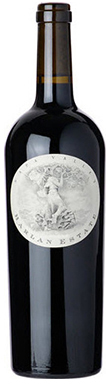
The 2003 ranks as one of the less successful Harlan Estates of the last decade, with a bouquet of ripe blackberry that struggles to contain...
2003
Harlan EstateNapa Valley
Harlan Estate, Napa Valley, California, USA, 2005
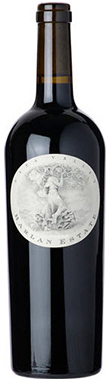
At Harlan Estate, ask Will Harlan himself what the aim is with each, and the answer he’ll give is simple and even expected from this...
2005
Harlan EstateNapa Valley
Harlan Estate, Napa Valley, Oakville, California, USA, 2009
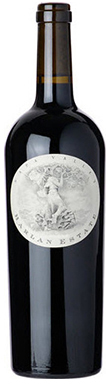
The 2009 Harlan Estate is texturally more accessible than the 2010, and its sweet attack is beguilingly immediate. In its bouquet, notions of ripe red...
2009
Harlan EstateNapa Valley
Harlan Estate, Napa Valley, Oakville, California, USA, 2010
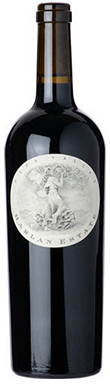
The 2010 Harlan Estate exhibits an attractively vibrant and detailed bouquet of graphite, cigar and a melange of ripe black fruits. A strikingly concentrated, dense...
2010
Harlan EstateNapa Valley
Harlan Estate, Napa Valley, Oakville, California, USA, 2013
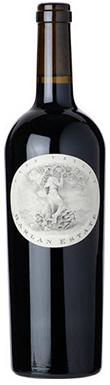
Alluring aromas of juicy mulberry, black raspberry, graphite, dried herbs and rich cigar tobacco introduce a large-scaled wine framed by an ample and refined tannic...
2013
Harlan EstateNapa Valley
Harlan Estate, Napa Valley, Oakville, California, USA, 2014
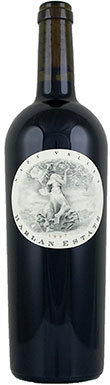
Aromas of red and black fruit, rich spice, cocoa powder and Harlan's signature of baked earth and dried herbs. The 2014 is a rich, layered...
2014
Harlan EstateNapa Valley
