When five of the Douro’s leading producers came together in 2003, imbued by the same maverick energy as the Barolo Boys, the group that stirred a revolution in Piedmont, they were equally determined to bring about change and mischief to another classical region in need of a shake-up.
The five founding members – Quinta do Crasto, Niepoort, Quinta do Vale Meão, Quinta do Vallado and Van Zellers & Co – embarked on a globetrotting whirlwind of presentations, tastings and auctions that helped position the Douro as one of the world’s leading fine wine regions and travel destinations.
Covid-19’s hard stop led to an extended pause that dovetailed with inevitable generational changes.
A window of opportunity opened for necessary stocktaking and recalibration in light of changes within the members’ businesses, the Douro’s viticulture and the wine world at large.
In 2024, Cristiano Van Zeller decided to step back to focus on Van Zeller & Co’s XIX Rare Port Collection.
Meanwhile, the remaining four members are finding their own inner and collective dynamics anew, facing different but equally challenging obstacles to those that first motivated the creation of their shared brand.
Dramatic evolution
The Douro’s visibility and reputation as a source of both Port and table wines has evolved dramatically in the intervening years, not least thanks to the group’s efforts.
Decanter newsletter
Get our daily fine wine reviews, latest wine ratings, news and travel guides delivered straight to your inbox.
But if showing the singularity of the Douro’s dramatic meanders and the quality of the wines it produces is no longer a primary preoccupation, the struggles are no less meaningful.
Volatile markets, labour shortages, climate change and changes in consumer behaviour serve as a fluid, complex background to the ongoing (and much-needed) restructuring of the Douro and Port production ecosystems.
So what’s ahead for the four storied and intrepid producers?
They share a past full of larger-than-life characters whose legacy they’ve been tasked with preserving – albeit with their own strong, very distinct identities.
And they are doing just that, spurred by the desire to leave a mark of their own and build a sustainable, thriving future for their estates, all the while dealing with the opportunities and frictions of running a family-owned company.
After spending time with each of the Douro Boys/Girls it became clear that, at this particularly turbulent crossroads of past and future, they share two key goals: rediscovering the essence of the Douro – a sometimes elusive balance between elegance and rusticity – through the lenses of both its fortified and table wines; and reclaiming a clear voice in a very crowded and loud world.
Miguel & Tomás Roquette - Quinta do Crasto
From left: Miguel Roquette and Tomás Roquette
(Image credit: Pedro Lobo)
Like many a febrile architecture student, I first heard of Quinta do Crasto as the place for which star architect Eduardo Souto de Moura designed, in a simple if puzzling exercise, an infinity-pool perched over the Douro.
The seemingly random commission somehow captures the essence of Quinta do Crasto: assertive gestures justified by the landscape they serve.
It’s easy to understand this ‘landscape first’ philosophy: the promontory-like outline of the estate, with vineyards crawling along the northern bank of the Douro up to 650m, is enthralling and self-evidently promising of great wines.
It was to bear out that promise that Jorge Roquette set out to restructure the vineyards upon taking control of the estate, alongside his wife (and third-generation owner) Leonor, in 1981.
‘My father was a visionary. He believed that this is a special place,’ says their son, Miguel.
‘Our major investment and focus is, and has always been, the vineyard; my brother and I simply carried on the path my father set.’
Indeed, the technical programme at Crasto remains paramount.
The core, longstanding technical team – director of winemaking Cátia Barbeta, director of viticulture Tiago Nogueira and consultant Manuel Lobo – oversees rigorous management and research.
Their work is spearheaded by the PatGenVineyard project, which is painstakingly propagating, and compiling geo-referenced genetic profiles of, the vines in Crasto’s two renowned centenary plots, Vinha Maria Teresa and Vinha da Ponte.
‘The genetic erosion that happened in the Douro Valley – as in most European wine regions – throughout the 20th century is heartbreaking,’ explains Barbeta. ‘This is our humble but deliberate effort to counter that.’
Preserving old vines and vineyards
A replica of the Maria Teresa vineyard – with 48 of the grape varieties identified in the storied parcel – has already been planted and the team’s excitement is palpable.
‘We can’t wait to make wine from that vineyard. Hopefully it will motivate others to follow suit [in preserving their old vineyards] so that our unique genetic heritage is not lost,’ says Nogueira.
Alongside the ambitious R&D projects, the Roquette brothers are also preparing to invest significantly, for the first time, in wine tourism.
‘So far – perhaps a bit arrogantly – our main focus has been the vineyards,’ says Miguel.
‘But we need to explore [the wine tourism side of the business] as well; there’s demand and we acknowledge the need to do it properly.’
Another priority is opening new markets, especially in these troubled times.
‘There’s a lot of volatility. But it’s also a matter of potential; we all [the Douro Boys] make great wines – and we need to make noise about it,’ he concludes.
Daniel Niepoort - Niepoort Wines
Daniel Niepoort (left) with his father Dirk and his dog Pisca
(Image credit: Jorge Simao)
If there are big shoes to fill, they are definitely those of Dirk Niepoort, the charismatic 2023 Decanter Hall of Fame recipient who completely transformed his family’s eponymous Port house, questioning all assumptions – refreshingly rustling many feathers along the way.
Having known both Dirk and his son Daniel for many years, I often wondered how what sometimes felt like an impossible handover would be handled. I shouldn’t have worried.
Although personal circumstances precipitated a more brusque transition than both would have wished for, Daniel is easing into the leadership of Niepoort Wines with the blooming confidence of someone who is also finding himself along the way – and crucially avoiding a self-destructive emulation of his father.
Aware of, but unburdened by, an incredible, colourful legacy, Daniel’s approach is informed by his own openness, gregariousness and generosity.
Indeed, the shift from singular to plural is one of his main priorities.
‘Until now there was, inevitably, a big focus on my father. Now I want to open it more to the team,’ he explains.
‘Niepoort went through a period of spectacular growth and expansion. I believe we need to enter a period of consolidation and focus.’
In practical terms this means that he’s not seeking to expand the large number of projects and wines his father restlessly developed across Portugal.
Instead, he wants to develop the teams and the growers behind them, and take a deeper, holistic look at estate management.
He’s introducing biodynamic and soft-pruning practices at scale and considering how to bring back a certain ‘Douro edge’ to a range of wines that has long been defined by worldly sophistication.
Ultimately, however, it’s people that matter: ‘The relationships, the sense of community [among the team and local growers] are very important. It’s a source of confidence and joy for everyone.’
Jaime, Francisco (Xito) and Luísa Olazabal - Quinta do Vale Meão
From left: Jaime, Francisco (Xito) and Luísa Olazabal
(Image credit: Pedro Lobo)
Located in a secluded corner of Douro Superior, Quinta do Vale Meão is remote even within the Douro – a beautiful one-hour train ride away from Pinhão in the region’s heart.
As one approaches from the opposite bank of the river, the first building to emerge, tentatively, from the sculpted hills is the old, original Barca Velha warehouse, where Douro’s first premium table wine (still without a DOC stamp) was first produced and stored in 1952.
If there’s such a thing as ‘sense of place’, this is a quintessential example: an easily forgotten patch of landscape, cradled by a cursive meander, given a name and identity by Dona Antónia Ferreira, who first bought the land in 1877.
The estate was partitioned, over the years, with each generation’s passing, the grapes sold to Casa Ferreira, where Francisco ‘Vito’ Olazabal, a direct descendant of the matriarch, was president.
Vito’s umbilical relationship with Vale do Meão led him to painstakingly purchase the patchwork of parcels from his relatives.
In 1998, he left his gilded role to produce wines, alongside son Francisco ‘Xito’ at Vale do Meão.
A family affair
His daughter Luísa joined the project in 2005 to oversee marketing and exports; son Jaime followed in 2018 and is now responsible for national sales.
Following Vito’s passing in September 2025, the siblings are now adapting to a joint leadership without their father’s advice.
‘It hasn’t been easy. He was such an important reference point for us,’ says Luísa.
All three have a palpable, emotional connection with the estate; the setting for some of their most treasured memories, from childhood mischiefs to weddings.
On the other hand, their deep knowledge of its intricacies – not least its peculiar geology.
Unlike the heart of the Douro, which is almost exclusively schist, the soils at Vale do Meão are a mix of schist and granite, with alluvial sandy deposits close to the river – is allowing them to fine tune both vineyard management and wine production with confidence.
Under Xito’s technical direction, the wines have gained definition and poise and he’s increasingly leaning into the singular potential of each parcel. (Xito also consults at Vallado.)
The siblings are candid about the challenges of working together and for the family company; the emotional aspect is inescapable.
At the same time, this gives them a ruthless motivation and laser focus.
‘Our job – at Vale do Meão and with the Douro Boys – is to make the best wines so that people understand how special this place is,’ concludes Xito.
João Roquette and Francisco Ferreira - Quinta do Vallado
(Image credit: Maria Joao Gala/Luxury Tours Portugal)
Another thread of Dona Antónia’s outstanding heritage, Quinta do Vallado has remained in the hands of the Ferreira family since the matriarch's uncle and father-in-law, António Bernardo Ferreira, bought it in 1818.
It started bottling its own wines in 1993, under the leadership of Guilherme Alvares Ribeiro and his wife (and fifth-generation) Maria Antónia Ferreira, following Sogrape’s acquisition of Casa Ferreira in 1987.
After the recent (reluctant) retirement of sixth-generation João Ferreira Alvares Ribeiro, his son João Roquette (related to the owners of Quinta do Crasto through his mother’s side of the family) has taken the helm alongside cousin Francisco Ferreira.
The two complement each other in both expertise and demeanour: Roquette overseeing marketing and exports, animated by a preppy entrepreneurial verve; Ferreira in charge of vineyard and cellar management, with a calm, listening energy running through his words.
Quinta do Vallado stands out – among the Douro Boys and most of the region’s producers – by having invested early and purposefully in wine tourism. Its on-site hotel opened in 2005 and has since been expanded.
Mindfully designed – as is the new cellar built in 2009 – to follow the character of the original estate and the outline of the terraced slopes, it embodies the relaxed sophistication also found in the estate’s wines.
But defining the style of a Vallado Douro DOC wine is an ongoing process.
A long journey of discovery
‘The Douro is a very old region; but also a very new one if you consider that we’ve only had a DOC for unfortified wines since 1979,’ says Roquette.
‘And we’re still discovering how best to do things.’
Ferreira echoes this exploration while describing the work he oversees in the vineyards and winery.
‘We’re only now truly understanding the best way to grow the best grapes for unfortified wines after centuries focusing on power and ripeness [for Port production],’ he explains.
‘It’s a change in paradigm and also an opportunity to reassess the value of our old vineyards and grape varieties,’ which his team has been genetically profiling across their older plots, echoing the efforts at Crasto.
A fundamental guiding principle at Vallado is to not follow trends and stay true to the quinta’s history and identity.
‘It’s perhaps the most important thing we can learn from Dona Antónia. And it’s also one of the core principles shared by all Douro Boys,’ Roquette concludes.
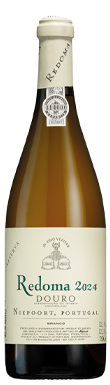
Niepoort, Redoma Reserva Branco, Douro Valley, Portugal 2024
My wines
Flinty smokiness and subtle nuttiness mingle on the nose, with orange blossom and jasmine dancing in the background. The palate follows with delicious, mouth-coating waxiness...
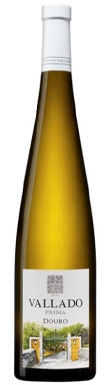
Quinta do Vallado, Prima, Douro Valley, Portugal 2025
My wines
Seductive and harmonious, this single-varietal Moscatel opens in the glass with playful rose petals, camomile, linden and clementine peel, preluding an unexpectedly vibrant palate in...
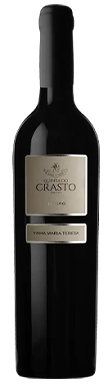
Quinta do Crasto, Vinha Maria Teresa, Douro Valley, Portugal 2020
My wines
One of Crasto's flagship plots, Vinha Maria Teresa never fails to deliver incredible texture and nuance, layering fragrant dried lavender and violets with black olive...
The 2021-2022 growing season was challenging, plagued by very low precipitation, but has delivered surprising nuanced wines that will surely be long lived – such...
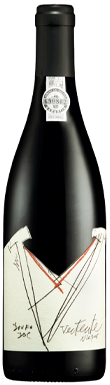
With an eye-catching label created by Eduardo Souto de Moura, this wine is, like its bottle, ready for (playful) business. It captures the essence of...
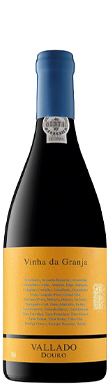
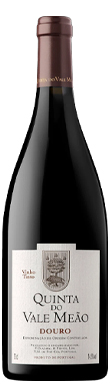
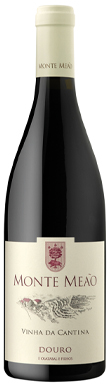
Quinta do Vale Meão, Monte Meão Vinha da Cantina, Douro Valley, Portugal 2023
My wines
This is the 10th release of this supremely interesting Baga, from grapes grown on the estate's granite soils, whole-bunch fermented and aged for 16 months...
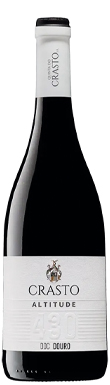
Quinta do Crasto, Altitude 430, Douro Valley, Portugal 2022
My wines
Hailing, as the name suggests, from north-facing vineyards located at 430m, this reveals a fresher side of the Douro, balancing levity and drinkability with joyful...
Niepoort, Redoma Reserva Branco, Douro Valley, Portugal 2024
My wines
Flinty smokiness and subtle nuttiness mingle on the nose, with orange blossom and jasmine dancing in the background. The palate follows with delicious, mouth-coating waxiness...
Quinta do Vallado, Prima, Douro Valley, Portugal 2025
My wines
Seductive and harmonious, this single-varietal Moscatel opens in the glass with playful rose petals, camomile, linden and clementine peel, preluding an unexpectedly vibrant palate in...
Quinta do Crasto, Vinha Maria Teresa, Douro Valley, Portugal 2020
My wines
One of Crasto's flagship plots, Vinha Maria Teresa never fails to deliver incredible texture and nuance, layering fragrant dried lavender and violets with black olive...
The 2021-2022 growing season was challenging, plagued by very low precipitation, but has delivered surprising nuanced wines that will surely be long lived – such...
With an eye-catching label created by Eduardo Souto de Moura, this wine is, like its bottle, ready for (playful) business. It captures the essence of...
Quinta do Vale Meão, Monte Meão Vinha da Cantina, Douro Valley, Portugal 2023
My wines
This is the 10th release of this supremely interesting Baga, from grapes grown on the estate's granite soils, whole-bunch fermented and aged for 16 months...
Quinta do Crasto, Altitude 430, Douro Valley, Portugal 2022
My wines
Hailing, as the name suggests, from north-facing vineyards located at 430m, this reveals a fresher side of the Douro, balancing levity and drinkability with joyful...
Ines is Decanter’s regional editor for Spain, Portugal and South America. Born and raised in Lisbon, Portugal, she grew up chasing her grandfather among his vines in Ribatejo and thus her love for all things wine began. After completing her Masters Degree in Architecture, Ines worked as a project manager while writing about wine and doing cellar consulting on the side. After moving to London in 2015, she decided to dedicate herself fully to the wine industry and joined the sommelier team at Michelin-starred Spring, Somerset House. Stints at Noble Rot and The Laughing Heart followed, while completing her WSET Diploma in Wines and Spirits. Her work as a judge and writer eventually became her full time commitment and she joined Decanter in 2019 as wine database editor.