
St-Emilion vertical: Tasting 20 years of Clos Fourtet
Panos Kakaviatos profiles this renowned St-Emilion château, which hosted a 20-year vertical this year of wines reaching back to 2001.


An original Premier Grand Cru Classé, since St-Emilion established its revisable classification in 1955, Clos Fourtet benefits from the unique clay-over-limestone plateau of the appellation. But it has never obtained the requisite promotion plaudits to reach the classification’s top tier.
Scroll down to see tasting notes and scores for a 19-vintage vertical of Clos Fourtet
When Château Angélus and Château Pavie joined the official Premier Grand Cru Classé A level ranking of long-time greats Château Ausone and Château Cheval Blanc in the classification’s 2012 edition, some thought of Clos Fourtet (along with Château Canon) on the limestone plateau as more obvious candidates.
Following the 2012 revision, for example, Franck Dubourdieu, of Bordeaux Classic Wine, criticised what he called the ‘anti-classical, modern, globalised style’ of Angélus and Pavie as compared to Canon and Clos Fourtet, ‘revered by the great amateurs of France and elsewhere, as having deserved promotion just as much if not more’.
By the 2022 ranking, controversy had mired the classification. One year before results of last year’s revision were determined, Châteaux Ausone and Cheval Blanc criticised ranking criteria for excessive emphasis on product placement, how often an estate appears in media, along with wine tourism infrastructure. As a result, they left. Château Angélus, which for so many years publicised its hard-fought promotion to the A level, also left.
Today, only Château Pavie and Château Figeac, promoted last year, hold the A grade. But Clos Fourtet and Canon again did not reach that top level. This article focuses on Clos Fourtet, which hosted a 20-year vertical of wines reaching back to 2001, when Philippe Cuvelier acquired the property.

The vertical tasting at Clos Fourtet in April 2023 showed not only the high quality of the wines, but also the terroir. Given vintage differences, the Cuvelier family divided the tasting according to style. They dubbed one flight Les Frais, which included lighter years like 2002 and 2013. Another, Les Lumineux, included sunny vintages like 2003 and 2009. But every vintage reflected the inimitable freshness of the famous limestone plateau.
I can understand the logic of Dubourdieu. Even today, the limestone plateau lacks enough recognition, partly because ranking criteria do not stress terroir potential as much as it should. As for media attention, some participants at the vertical pointed out that as the estate rarely holds such tastings for media, Clos Fourtet had not generated the level of media buzz that Angélus or Pavie did ahead of their promotions in 2012.
As a result, one senses deficient market notoriety for a wine of such a high pedigree. In the US, buyers like Jeff Zacharia of Zachy’s in New York and Shaun Bishop of JJ Buckley in California profess lacking knowledge of the label. In answer to my question ‘What makes Clos Fourtet a special Premier Grand Cru Classé?’, Bishop replied: ‘I am not as familiar with Clos Fourtet, although I love the wines, and so not qualified to answer,’ while acknowledging that ‘the terroir is spectacular and the wines are always so good!’ Zacharia replied that he has not tasted enough recent vintages to comment on quality while respecting its ‘long history on the limestone terroir’.
Furthermore, even if Clos Fourtet has long exuded Merlot succulence with limestone minerality, the wines rarely obtained the high Parker points needed for higher pricing, another factor for promotion. At his height, US wine critic Robert Parker significantly influenced St-Emilion’s path to what critics called ‘Parkerised’ wines, crafted from ultra-ripe grapes, extracting excessive wood tannin. The revisable rankings necessarily are based on tastings of older vintages, when a particular style was predominant, even if these days people appreciate wines lighter in alcohol, with less new oak extraction.
‘We never try to follow fashion,’ says Clos Fourtet co-owner Matthieu Cuvelier, son of Philippe. Back then, the issue was being “Parkerised” but today, we are in an anti-Parker mode, in a “Duclotised” world, he says, referring to currently popular wine consultant Thomas Duclos, who favours earlier picking and less new oak extraction, with clients like Château Troplong Mondot, once known for picking grapes extra late and super high alcohol levels. In more recent years, Troplong Mondot has become a poster child for freshness. Cuvelier praises Duclos for ‘remarkable’ work for such estates that had gone too far in following the so-called Parker fashion.
Clos Fourtet in brief
13th century Originally a Middle Ages military fort
17th century First records of vineyards
1867 Name changes from Campfourtet to Clos Fourtet
Late 1800s Prize-winning winemaker Elie Rulleau earns medals featured on the label
1919 Ginestet family acquires the estate
1949 Lurton family acquires the estate
1955 Clos Fourtet ranked Premier Grand Cru Classé B, just behind Château Ausone and Cheval Blanc – and it has maintained this ranking ever since, although the B no longer exists
1973 André and Lucien Lurton take control of the estate with nephew Pierre Lurton
2001 Philippe Cuvelier, shareholder of Guilbert paper mills, purchases the estate
2001-2012 Cellar renovations and replanting programme
2013 Acquisition of Clos St-Martin, Les Grandes Murailles, Côte du Baleau
2014 Installation of stainless-steel tanks with a capacity varying from 40 to 70 hectolitres.
2022 Vineyard of Château Les Grandes Murailles merged into that of Clos Fourtet
Owner Philippe Cuvelier
Director Emmanuel de Saint-Salvy
Appellation and classification St-Emilion 1er Grand Cru Classé
Surface 22ha of clay over limestone (20ha along the plateau and 2ha that once were Les Grandes Murailles)
Varieties 85% Merlot, 10% Cabernet Sauvignon, 5% Cabernet Franc
Planting density 6,000 to 9,200 vines per hectare
Average vine age 35 years
Consultants Stéphane Derenoncourt and Jean-Claude Berrouet
A belief in evolution rather than revolution saw the Cuvelier family hire Stéphane Derenoncourt and Jean-Claude Berrouet as consultants. Berrouet – especially famous for having directed winemaking at Petrus and other top Pomerol estates – has been saying for decades that higher alcohol leaches more tannin from new oak, risking overly oaky wines. ‘Thanks to Jean-Claude, we have been progressing in a direction of less new oak,’ says Cuvelier, ‘from 100% to 80%, then to 70% and around 60%, and in 2022, 40%.’ Meanwhile Derenoncourt helps especially with extractions, Cuvelier says. ‘He has insisted on working with pigeages (punch downs) rather than pumping over, taking a Burgundian approach with the result of more precision.’
And while a shift towards greater elegance has not been as dramatic as with some other estates, industry observers like Matthew O’Connell of London’s Bordeaux Index say that a ‘change of emphasis at Clos Fourtet has been impressive’ and that ‘we’ve noted that in vintages such as 2019 and 2022, where the risk of over-extraction and richness abounded, there is impressive clarity and elegance to the wine.’ Despite such praise, O’Connell says that the estate ‘remains a minor player in our Bordeaux distribution’.
Cooler vineyard advantage
An increasing advantage for Clos Fourtet in the climate change era is a cooler, northern exposure for part of its vineyard. Indeed, the estate was never among the first to harvest, Cuvelier says. Savvy buyers should note that hot vintages like 2003 were especially successful at Clos Fourtet, at least partly because of this northern vineyard aspect.
Furthermore, the wines should gain freshness with a plan to increase Cabernet Franc plantings. Back in the 1950s, the vineyard included 20% Cabernet Franc, but the Cuvelier family found that too much of that variety was not ‘qualitative enough’, or that it had been planted in the ‘wrong’ (cooler) part of the vineyard. In the last two decades, the Cuvelier family has replanted one-third of the vineyard, including replanting Cabernet Franc in the last 10 years.
Matthieu Cuvelier on the style of Clos Fourtet
‘We always have had suave and smooth fruit, with Merlot at the heart of the wine, lending velvety roundness and no aggression. The Cabernet Sauvignon driven wines of the Médoc are fantastic, but this heart of Merlot offers more roundness and friendly accessibility for wine lovers, which is a force for us. Just as important is maintaining the limestone typicity, which is not so easy. If you get too ripe, you lose that freshness. So, it is a question of balance, to retain that iodine freshness, that salinity. You must have winemaking to get a balance that is exactly right.’
The estate set up a plot of eight different Cabernet Franc clones, chosen from the Chambre d’Agriculture in Bordeaux and from ‘illustrious neighbours who prefer to be anonymous’, Cuvelier says. ‘We have been doing micro-vinification of all eight in recent years and now we have picked four that interest us and for which we planted 1.5ha, already in production.’
Will Clos Fourtet ever reach the coveted A grade? In the end, fans care less about the St-Emilion classification. ‘I love this wine, and again it is great in 2022,’ says Jeremy Stockman, managing director at Watson’s Wine in Hong Kong. ‘The classification system now means very little,’ he adds, referring to the controversies. ‘I think most consumers are confused over what it means and most importantly nowadays follow châteaux that they like.’ There is much to like in Clos Fourtet, not least of which an excellent price/quality ratio, as prices have not yet caught up with quality.
Clos Fourtet vertical: Notes and scores going back to 2001
Related articles
- Producer profile: Domaine de Chevalier & 12 wines tasted
- Bordeaux 1980s: Vintage guides plus the wines to seek out
- Best wine shops in St-Emilion
- Buy final tickets to the Moueix: St-Emilion v Pomerol Masterclass at LFWE
Clos Fourtet, St-Émilion, 1er Grand Cru Classé B, Bordeaux, France, 2020
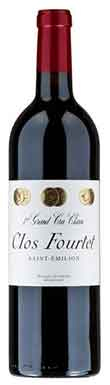

Gorgeous violet and blackberry aromas presage a palate with tannins at first creamy and enveloping but then powerful and structured. In the famous 2018-2019-2020 trio,...
2020
Clos FourtetSt-Émilion

Clos Fourtet, St-Émilion, 1er Grand Cru Classé B, Bordeaux, France, 2019
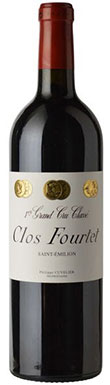
Compared to the 2018, this vintage displays a cooler aspect to go with the ripe red and black fruit: more tobacco leaf than glycerine. Even...
2019
Clos FourtetSt-Émilion
Clos Fourtet, St-Émilion, 1er Grand Cru Classé B, Bordeaux, France, 2018
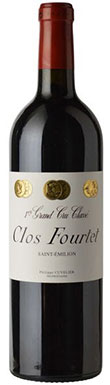
While the 2018 vintage got plenty of buzz, following the less heralded 2017, I remain less enthusiastic when compared to the stellar 2016. The 2018...
2018
Clos FourtetSt-Émilion
Clos Fourtet, St-Émilion, 1er Grand Cru Classé B, Bordeaux, France, 2017
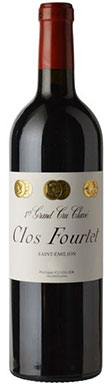
While lacking aromatic intensity, the palate exudes breadth and density. One encounters some palate steeliness akin to the 2011 vintage and 2006 ripe fruit warmth,...
2017
Clos FourtetSt-Émilion
Clos Fourtet, St-Émilion, 1er Grand Cru Classé B, Bordeaux, France, 2016
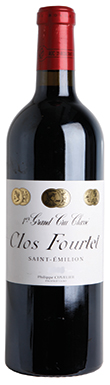
So amazingly nuanced, such elegance combined with ripeness, a vintage that many say is wonderful, as do I. Blackberry and dark cherry, cool blueberry and...
2016
Clos FourtetSt-Émilion
Clos Fourtet, St-Émilion, 1er Grand Cru Classé B, Bordeaux, France, 2015
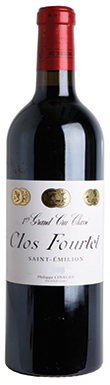
Gorgeously fresh and floral, the aromatics presage a wine of immense pleasure, marked by ripe red and black berries enhanced by accents of espresso. Ample,...
2015
Clos FourtetSt-Émilion
Clos Fourtet, St-Émilion, 1er Grand Cru Classé B, Bordeaux, France, 2014
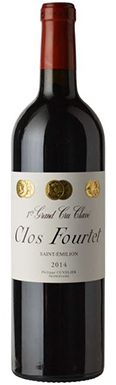
Far too early to enjoy, this 2014 is at first imperceptible aromatically, suggesting lead pencil. The palate has some 2011 like steeliness but more three...
2014
Clos FourtetSt-Émilion
Clos Fourtet, St-Émilion, 1er Grand Cru Classé B, Bordeaux, France, 2013
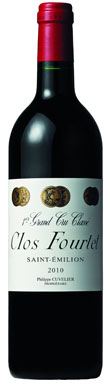
87
A diffuse nose disappoints. The fruit is more like a plum (just) ripe enough to eat. Light body leading to a rather drying and short finish. Drink up. 3.48pH.
2013
Clos FourtetSt-Émilion
Clos Fourtet, St-Émilion, 1er Grand Cru Classé B, Bordeaux, France, 2012
95
Tasted after the 2008, the 2012 seems fatter and less interesting as it lacks the tension of the 2008. However, I like its ripe black cherry, plum, blackberry and wet stone freshness, delivered in a full-bodied, enveloping palate. Give it time to develop endearing tertiary aspects. 3.7pH.
2012
Clos FourtetSt-Émilion
Clos Fourtet, St-Émilion 1er Grand Cru Classé B, Bordeaux, France, 2011
A wonderful nose of bright red fruit precedes a brisk and exciting attack. But I sense much steeliness on the mid palate, lacking the invitingly...
2011
Clos FourtetSt-Émilion 1er Grand Cru Classé B
Clos Fourtet, St-Émilion 1er Grand Cru Classé B, Bordeaux, France, 2010
Very similar to the 2005, but at this stage not quite as pristine, the 2010 exudes even more power and tannic structure, making it clearly...
2010
Clos FourtetSt-Émilion 1er Grand Cru Classé B
Clos Fourtet, St-Émilion, 1er Grand Cru Classé, Bordeaux, France, 2009
A gorgeous wine mirroring the superb vintage, both charming and powerful revealing opulence while maintaining what owner Mattheiu Cuvelier calls the 'ethereal finesse' of the...
2009
Clos FourtetSt-Émilion
Clos Fourtet, St-Émilion, 1er Grand Cru Classé B, Bordeaux, France, 2008
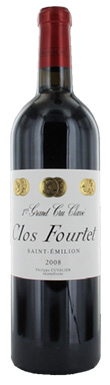
Like the 2004, cool blue fruit with floral flourishes. But the 2008 has superior mid-palate concentration, revealing yet another underrated vintage that you should purchase,...
2008
Clos FourtetSt-Émilion
Clos Fourtet, St-Émilion, 1er Grand Cru Classé B, Bordeaux, France, 2006
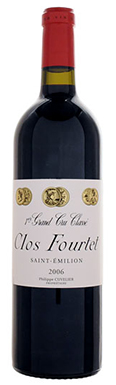
With a sweeter nose compared to the 2002, this wine showcases upfront ripe fruit and chocolate cake rather than light brownie. It is hard not...
2006
Clos FourtetSt-Émilion
Clos Fourtet, St-Émilion 1er Grand Cru Classé B, Bordeaux, France, 2005
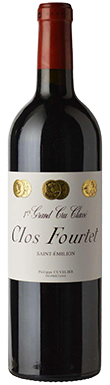
This vintage deserves the 'of the century' hype, combining 2008 freshness with 2003 allure. You have gorgeous ripeness, superb grip and vivacity. The 14.7%...
2005
Clos FourtetSt-Émilion 1er Grand Cru Classé B
Clos Fourtet, St-Émilion 1er Grand Cru Classé B, Bordeaux, France, 2004
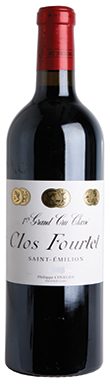
A thoroughly underrated vintage, the 2004 exudes violet freshness and wonderful cool blue fruit purity. The nuanced palate is on a slower evolutionary track than...
2004
Clos FourtetSt-Émilion 1er Grand Cru Classé B
Clos Fourtet, St-Émilion 1er Grand Cru Classé B, Bordeaux, France, 2003
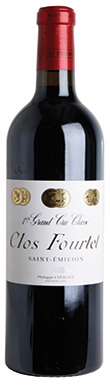
Surprisingly bright for the infamously torrid vintage, with fresh wet leaf and sexy truffle. Clos Fourtet defies the vintage, proving just as exciting as a...
2003
Clos FourtetSt-Émilion 1er Grand Cru Classé B
Clos Fourtet, St-Émilion 1er Grand Cru Classé B, Bordeaux, France, 2002
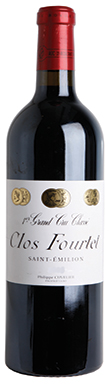
Light tobacco, brownie and burgeoning wet leaf reveal freshness and elegance. Far better than the image of the vintage (August downpours, frowning vintners), the wine...
2002
Clos FourtetSt-Émilion 1er Grand Cru Classé B
Clos Fourtet, St-Émilion 1er Grand Cru Classé B, Bordeaux, France, 2001
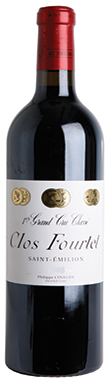
Unfairly forgotten after all the media attention from the 2000 vintage, this wine exemplifies finesse even if it may be getting overly earthy. What I...
2001
Clos FourtetSt-Émilion 1er Grand Cru Classé B
