
Back in form: The return of South Africa's Bordeaux blends
Having helped to establish South Africa’s winemaking credentials before falling out of fashion, its Bordeaux blends are back in the spotlight – and for good reason.


Keeping up with the fast-paced South African wine scene can feel like following Fashion Week.
One year, the trend is old-vine Chenin Blanc, the next it’s Syrah. Varieties such as Grenache burst onto the scene, while niche varieties such as Tinta Barroca move in and out of favour with open-minded and experimental winemakers.
Yet there’s one style for which South Africa has long been known: Bordeaux blends, wines made from a combination of the main grape varieties of the French region, generally Cabernet Sauvignon, Merlot, Cabernet Franc and Petit Verdot.
‘If you go back 30 years, it was Bordeaux blends that first built momentum for South Africa on the world stage,’ says Mike Ratcliffe, co-founder of Vilafonté, maker of one of the Cape’s most successful premium Bordeaux blends.
Here, change has been less headline-grabbing than in regions such as Swartland, but no less significant. Today the Cape’s Bordeaux blends are better than ever, as was proved in the results of the South African red blends panel tasting in last month’s issue (March 2026).
‘It was Bordeaux blends that first built momentum for South Africa on the world stage’
Mike Ratcliffe, Vilafonté
Beyond imitation

Mike Ratcliffe, Vilafonté
The least technical but perhaps most important change has been a growth in confidence among the estates and winemakers working with the classic Bordeaux varieties.
Luke O’Cuinneagain has two decades’ experience working with them, from Rustenberg to Glenelly and, since 2022, as head winemaker at Vergelegen.
He has lived through an era in which the wines chased ripeness, richness and impact in order to compete in the market.
‘In the past, we were terrified that someone would describe our wines as green, so we waited until the grapes were really ripe,’ he recalls.
‘In the early 2000s, everyone seemed to want to make bigger and bigger wines.’ But as winemakers gained experience with these varieties, they started to believe that their wines could be more than just a version of red Bordeaux.
‘We’re not trying to make Margaux in the Cape,’ O’Cuinneagain says. ‘Our wines often have a taste of dried herbs or the local fynbos, which Bordeaux wines don’t have.’
Letting go of Bordeaux dogma and embracing local variation has been a liberating move for many winemakers. Some now choose to add a dash of Syrah to their Bordeaux blends for spice; others are experimenting with varieties such as Cinsault to add perfume and bring lightness of touch.
Some celebrated vintages helped; the 2015 and 2017 harvests produced critically acclaimed wines for the Bordeaux varieties and, as O’Cuinneagain puts it, ‘gave us the courage to embrace vintage expression rather than trying to make things to a style’.
Zero tolerance approach

Luke O'Cuinneagain, Vergelegen
An increased focus on viticulture has also been fundamental to improving quality and refining South Africa’s Bordeaux blends.
The drought vintages of 2016-2018 were a major challenge, but they forced winemakers to deal with the Cape’s elephant in the room: grapevine leafroll disease.
As its name suggests, this viral vine malady causes leaves to curl, reducing the plant’s ability to ripen grapes evenly, which is especially problematic for later-ripening red varieties such as Cabernet Sauvignon.
It has been widespread in South Africa’s Cabernet vineyards for decades and, while many estates have learned to work around it, in the glass it typically dulls fruit definition, mutes aromatic lift and makes a wine’s ‘shape’ feel less clear – a contrast that has become more obvious as producers replant with virus-free material.
Vergelegen was among the early pioneers in combating leafroll. André van Rensburg, winemaker there until 2022, established the estate’s influential zero-tolerance stance and is characteristically blunt about the trade-off.
‘Virus control is non-negotiable,’ he says. ‘You can make good wine from virus-affected blocks, but you can make better wine from healthy material.’
In reality, many wineries tolerated leaf-roll, precisely because they were still making good wine. In addition, it had been difficult to guarantee virus-free material from local vine nurseries until relatively recently, meaning wineries that thought they had bought virus-free plants were disappointed, yet unable to fund another round of replanting.
Lessons from the drought

Wim Truter, Meerlust
The first post-drought vintage in 2019 made it clear that a large number of old Cabernet Sauvignon vines were exhausted and many estates decided that the time was right to replant.
At that point, the conversation moved from coping strategies to hard decisions about grubbing up and starting again. ‘At Meerlust, we started to replant in 2019 and that’s continued since,’ says winemaker Wim Truter, whose first full vintage as winemaker was 2021.
‘We took a hard line: if it didn’t belong in the Rubicon blend, we ripped the Band-Aid off and pulled it out. We replanted with the best clones, on the best sites, with the right rootstocks.’
This new plant material has been a vital driver of improved quality in South Africa’s Bordeaux blends over the last decade and, as the vines age, wine quality is only expected to improve.
While virus-infected vines needed longer for their grapes to reach proper ripeness, the new plant material ripens earlier and more predictably. This has been transformational in cooler, longer growing seasons such as 2023.
‘If we hadn’t replanted with clean material, we wouldn’t have made a wine at all in 2023, because the grapes would not have ripened before the March rains came,’ Truter points out.
Freshness over force

Bruwer Raats, Raats Family Wines
It’s not just about improvement in vineyards, however. Back in the cellars, winemaking has become more sensitive and winemakers have adapted their blending and ageing techniques to prioritise freshness rather than power.
The result has been the emergence of a new wave of Stellenbosch wines with more poised fruit, crisper tannins and lower alcohol than during the 2000s. That doesn’t mean leaner, more austere wines, however, nor does it necessarily mean less oak.
Despite international trends, few grapes work as well with new French oak as Cabernet Sauvignon, and the maturation of wines in barrique remains fundamental for the Bordeaux blends in the Cape.
While new oak remains important, wines are aged in barrel for shorter periods. O’Cuinneagain notes that South Africa’s wines don’t often need the typical 24 months in barrel afforded to top red Bordeaux, for example.
‘With our warmer climate, at 14 months I get the level of wood expression that Bordeaux winemakers get at 24,’ he reveals.
Cape winemaking approaches to Bordeaux varieties are now about more measured extraction, extended post-ferment skin contact to soften tannin texture and ever more precise choices around the coopers who supply the barrels, time in barrel and toast levels (the open-fire charring of the inside of the staves) to allow wood to frame and complement the fruit without dominating it.
‘Our wines often have a taste of dried herbs or the local fynbos, which Bordeaux wines don’t have’
Luke O’Cuinneagain, Vergelegen
Cabernet Franc and the Helderberg renaissance

The Cordoba farm in the Helderberg, now known as Taaibosch
Much of the finesse of this new era’s Bordeaux blends is down to one variety in particular: Cabernet Franc.
It’s a speciality of two cooler-climate areas in southern Stellenbosch – Polkadraai and Helderberg – both of which are strongly influenced by maritime breezes coming up from nearby False Bay.
It was Bruwer Raats of Raats Family Wines in Polkadraai who led the charge for Cabernet Franc, signalling that cooler corners of Stellenbosch could do something special with the variety.
Alongside Raats, wineries such as Reyneke and De Toren have also embraced it, both as a varietal wine and as part of a Bordeaux blend.
However, its most significant re-emergence in terms of blended wines is on the cool Helderberg mountain in the southeast of Stellenbosch, where vineyards experience less sunlight exposure than in northern Stellenbosch and sit a few kilometres from the sea.
As early as 1995, the Helderberg had captured attention with the production of a wine called Crescendo from the Cordoba farm. It was widely praised for its finesse, but at the turn of the century, this wasn’t the trait that most South African Bordeaux blends were chasing and the last official release was the 2003 vintage.
At the same time, attention shifted away from Stellenbosch and the Helderberg seemed to slip off the radar.
The Cordoba farm continued to supply blending fruit to top winemakers, but without a flagship label to champion the site, it drifted into relative obscurity, even as the 1995 Crescendo gained legendary status among collectors and drinkers.
In 2017, the Cordoba vineyards were acquired by Oddo Vins & Domaines and the estate was renamed Taaibosch.
A Bordeaux blend based on Cabernet Franc, consciously styled in homage to the original Cordoba wine, was released under the Crescendo label with the 2018 vintage. Alongside estates such as Uva Mira, one of the most serious proponents of Cabernet Franc on the mountain, Taaibosch emerged as a standard-bearer for the Helderberg renaissance.
‘Cordoba Crescendo was one of the first Cape blends built around Cabernet Franc, and the Helderberg fruit has a tannin structure that feels completely different,’ says Schalk-Willem Joubert, winemaker at Taaibosch.
‘Cabernet Franc can be picked at the red-fruit stage here without resulting in overly herbaceous flavours in the wine, but with natural acidity and really refined tannins.’
Constantia calling

Megan van der Merwe, Beau Constantia
If the cool climate of southern Stellenbosch was helping to change the perception of that region’s Bordeaux blends, the same was happening near the coast to the west in Constantia.
Here, too, Cabernet Franc has emerged as an important variety that has brought more finesse and perfume to the region’s Bordeaux blends.
‘I prefer the term “Constantia red”,’ says Beau Constantia winemaker Megan van der Merwe with a smile. ‘We have the ocean on three sides so we’re as maritime as it gets. Cabernet Franc and Merlot are the cornerstone varieties here as we are on the cooler part of the ward.’
Freshness is a given in Constantia: high rainfall means irrigation is unnecessary and fewer sunlight hours leads to gentler ripening than in the warmer northern wards of Stellenbosch.
For van der Merwe, winemaker since 2019, the challenge has been about understanding what Constantia’s red varieties have to offer in their coastal climate.
‘From 2019, we’ve consciously softened our touch, both in the vineyard and the cellar, to allow the site to speak more clearly,’ she says.
‘By getting more involved in the vineyards, the individuality of our blocks has come through more distinctly and the wines have gained a greater sense of clarity and balance.’
Beyond fashion

The last decade has seen two standout vintages, a game-changing drought, extensive investment and a reappraisal of where the Western Cape’s strengths lie, particularly with cooler-climate zones and Cabernet Franc.
South Africa’s winemakers know that premium Bordeaux blends might not set the pulse racing among trend-chasing journalists, but the many refinements in the category over the last decade have brought a fresh sense of focus to the wines.
If the Cape’s trend cycle changes with the seasons, Bordeaux blends are a quiet constant and today they’re in serious form.
‘There is a comfort and familiarity in Bordeaux blends,’ concludes Mike Ratcliffe. ‘Their ability to consistently deliver and not disappoint is important. They are still our top-selling premium wines. We might have stopped talking about them, but I don’t think they ever went out of fashion.’
Cape classics: Millar's pick of 12 Bordeaux Blends
Related articles

Sweet like chocolate: Boekenhoutskloof and the creation of a South African icon

Swartland in a bottle: The stellar wines of David & Nadia Sadie

We recommend the best of South Africa's red blends
Meerlust, Rubicon, Stellenbosch, South Africa, 2021
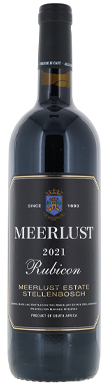

One of Stellenbosch's benchmark Bordeaux blends continues to refine and improve; the exceptional 2021 vintage is also a new benchmark for elegance at Meerlust. A...
2021
Meerlust

Vilafonté, Series M, Paarl, South Africa, 2022
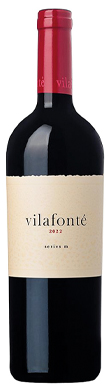
Vilafonté’s beguiling Series M is particularly gorgeous in the warm, generous 2022 vintage. Based on 40% Merlot and 39% Malbec, with 16% Cabernet Sauvignon and...
2022
Vilafonté
Restless River, Main Road & Dignity, Hemel-en-Aarde, South Africa, 2021
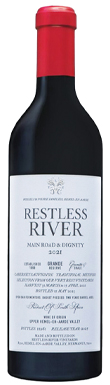
First made in 2005, this wine is strictly speaking not a Bordeaux blend, being 100% Cabernet Sauvignon, but it has the sensibility of Left Bank...
2021
Restless River
Taaibosch, Crescendo, Helderberg, Stellenbosch, South Africa, 2021
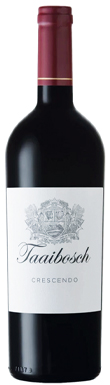
Having taken over the old Cordoba farm in 2017, Taaibosch has confirmed Cabernet Franc as a Helderberg speciality. Crescendo debuted with the 2018 vintage and...
2021
TaaiboschHelderberg
Beau Constantia, Lucca, Constantia, South Africa, 2021
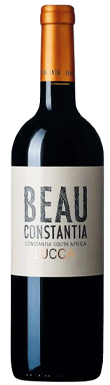
The combination of Merlot and Cabernet Franc works brilliantly here, offering notes of green peppercorn and sage on the nose and delivering a sculpted, fluid...
2021
Beau Constantia
Ernie Els, Signature, Stellenbosch, South Africa, 2021
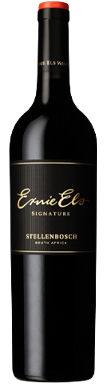
This vivacious, energetic red blend is based on 60% Cabernet Sauvignon, with Merlot, Malbec, Petit Verdot and Cabernet Franc, aged for 18 months in 50%...
2021
Ernie Els
Rustenberg, John X Merriman, Simonsberg, Stellenbosch, South Africa, 2022
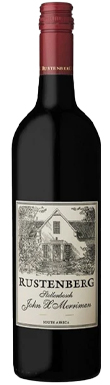
This nimble blend of Cabernet Sauvignon, Merlot, Petit Verdot and Malbec has a captivatingly bright nose of interleaved raspberry and blackcurrant. Midweight on the palate,...
2022
RustenbergSimonsberg
Blankbottle, Confessions of a White Glove Chaser, Stellenbosch, South Africa, 2022
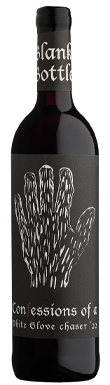
With vibrant red cherry, raspberry and even strawberry fruit, this is suave, perfumed and stylish, with real flair. There’s no heaviness here, just neat, ripe,...
2022
Blankbottle
Constantia Glen, Three, Constantia, South Africa, 2022
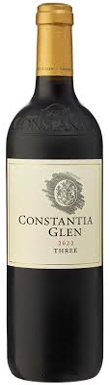
As the name suggests, this is a blend of three Bordeaux varieties; the 2022 comprises 54% Merlot, 28% Cabernet Sauvignon and 18% Cabernet Franc. Winemaker...
2022
Constantia Glen
Vergelegen, Estate Red, Stellenbosch, South Africa, 2023
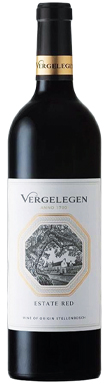
A blend of 41% Cabernet Sauvignon and 39% Merlot, with Cabernet Franc, Malbec and Petit Verdot, the cool 2023 vintage has resulted in an Estate...
2023
Vergelegen
Steenberg, Catharina, Constantia, South Africa, 2021
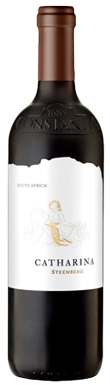
Located on the windy southern tip of Constantia, Steenberg’s red blends epitomise the cool, ocean-inflected climate of this historic ward. Catharina is named after the...
2021
Steenberg
Van Biljon, Cinq, Polkadraai Hills, Stellenbosch, South Africa, 2019
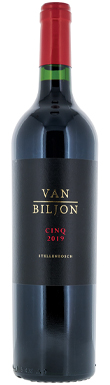
Spicy charred herbs with a smoky mezcal-like character. Dark berries, blackcurrant and liquorice with a rugged, earthy base. Rustic tannins and clementine zest carry the...
2019
Van BiljonPolkadraai Hills
