South American Pinot Noir: 20 to try
Stepping out of the shadow of Burgundy, winemakers in Chile, Argentina and Uruguay have championed styles of Pinot Noir that express their own unique terroirs. Alejandro Iglesias finds out more and recommends 20 top bottles to buy.


The world of Pinot Noir is a complex one. It’s well known that Pinot is a variety that’s as demanding as its consumers are. With the reds of Burgundy leading the way, you wouldn’t have thought there was much leeway for Pinot Noirs from other regions in the world to impress.
But California and Oregon have already shown that it’s possible to make good Pinot Noirs in the New World. While in South America today, producers in Chile, Argentina and Uruguay are making varietal wines that demand attention.

Chile
At the turn of the century, producers in Chile began to plant Pinot Noir in different regions of its viticultural landscape. The method they adopted was to replace the existing old vines with quality healthy clones such as 777, 667, 115 and massal selections from Burgundy.
But the key ingredient to the success of these ventures was time. In the early stages, the majority of wines produced from these new plantings were concentrated; quite different from what one might expect from a Pinot Noir.
‘In Chile, we’ve always followed the Bordelais tradition and we initially handled Pinot Noir in the same way as we did Cabernet,’ remembers Francisco Baettig, winemaker at Viña Errazuriz. ‘It took us time to understand how to exploit the potential of our new vineyards but today we’re confident we’re on the right path.’
And so, with focus and dedication, Pinot Noir became a serious business in Chile. In addition to the increased surface area, which now stands at 4,144ha under vine (compared to 1,434 in 2001), there is the work in different regions and, especially, research into soils.
‘Between 1995 and 1998 we expanded into coastal terroirs with cooler climates where varieties such as Pinot Noir produce better results,’ says Viviana Navarrete, the oenologist at Viña Leyda, a leading producer of Pinot Noirs in Chile. ‘Today Pinot Noir is grown from Elqui to Osorno – a distance of about a thousand miles – and that results in different styles.’
However this diversity of terroir required greater research and study. ‘Pinot Noir needs a lot of attention,’ says Felipe Muller, the winemaker at Tabalí. ‘We’ve learned that it’s not just a cool climate variety, but also very demanding in terms of the soils it needs. Planting in calcareous soils was key to achieving better expressions.’
Today, some of the best New World Pinot Noirs are to be found in Chile. While areas closer to the sea are producing styles similar to Oregon and sunnier vineyards make wines more like those in Sonoma, the greatest work is being done to produce a refined style of Pinot Noir with its own identity. A Pinot Noir which reflects both its place of origin and the vision of its winemakers.

Argentina
The history of Pinot Noir in Argentina is fairly brief. Until the early 2000s, the variety didn’t attract much attention. All the focus was on Malbec. Eventually, from an old vineyard in Patagonia, Piero Incisa della Rochetta began to put the country on the Pinot Noir map with his Bodega Chacra wines.
This inspired several other producers to seek out old vineyards of their own or find clones better suited to Argentinian terroirs. There was also a move to identify regions where they would truly thrive.
Surprisingly, Pinot Noir is grown in more regions of Argentina than Malbec. Not just in Mendoza and Patagonia, but also in the highest vineyards of the country at 3,100m above sea level in Salta, and near the Atlantic Ocean in Buenos Aires.
‘Back in 1992, we started to plant Pinot Noir in high altitude vineyards in the Uco Valley,’ remembers Laura Catena, who founded Domaine Nico, a project in which she makes Pinot Noir from five different vineyards at altitudes of between 1,000m and 1,500m above sea level in Tupungato. ‘Our work with cool mountain areas convinced us that there was great potential.’
About 1,450km to the south of the Uco Valley in the province of Chubut, the team at Bodega Otronia was thinking similarly. ‘We decided to bet on an extreme, virgin terroir where the temperatures are extremely low and the Pinot Noir is very rewarding,’ says Juan Pablo Murgia, the project’s winemaker. ‘We feel that we have a unique style.’
The same enthusiasm can be observed in each of the producers who have set themselves the goal of making Pinot Noir to satisfy the most demanding palates in the world. Among them – with the exception of the old vineyards of Río Negro such as Chacra or Humberto Canale, who achieve a classical European style – the majority of Pinot Noirs from Argentina take on profiles similar to either Sonoma or Martinborough in New Zealand. These wines are concentrated and lively with vivid flavours of cherry and other red fruit.

Uruguay
Today, Uruguay has 60ha of Pinot Noir under vine where the vineyards are influenced by the Atlantic Ocean or the Río de la Plata, depending on the region. In both cases, the result is a mild, relatively cloudy climate which results in benefits and challenges.
‘Pinot Noir has great potential in Uruguay although the climate presents difficulties in the field,’ says Germán Bruzzone, winemaker at Bodega Garzón. ‘However, with care and precise winemaking we’re producing refined wines that we’re getting excited about.’
There are at least two discernible styles developing, each related to its region’s history. On the one hand, there are the older vineyards located in the historic Department of Canelones by the Río de la Plata, which present a traditional profile with tertiary evoltion.
Meanwhile the younger vineyards, clustered in the Department of Maldonado – which is influenced by the ocean and has poor, rocky soils – produce wines that are more modern and intense in the classical New World vein.
However, in addition to the age of the vines, it’s important to note that in both terroirs, when Pinot Noir is tended to diligently, the results can be very interesting as works in progress. These include wines from wineries such as Garzón, Deicas and Viña Edén in Maldonado or Cerro del Toro in Piriápolis. Or, in the more traditional region of Canelones: Familia Pisano, Marichal and Pizzorno.
Top 20 South American Pinot Noirs to try
Related articles
- Chilean Pinot Noir: panel tasting results
- South American trendsetters: five names to know
- Amanda Barnes: my top 10 South American wines of 2021
Bodega Chacra, 55 Pinot Noir, Río Negro, Mainqué, Patagonia, Argentina, 2021
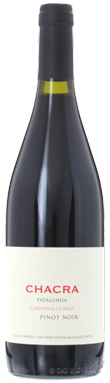
96
An eloquent Pinot Noir made by Piero Incisa della Rocchetta at his biodynamic vineyard in Mainqué, Patagonia, which was first planted in 1955. Adopting a minimal intervention approach and aged – or rather cultivated – in concrete and Burgundian barrels for 11 months, it’s bright ruby red in the glass and has a perfumed nose of cherry and forest fruits, black tea, mushrooms, herbs and mineral aromas. On the palate it’s complex, layered and vibrant with chewy tannins and lasting flavour.
2021
Bodega ChacraRío Negro
Tabalí, Pai Pinot Noir, Limarí Valley, Chile, 2018
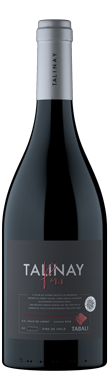
96
Talinay is a vineyard in Limarí with calcareous-rich granite soils where Felipe Muller and Héctor Rojas have direct planted massal selections of Gevry Chambertin and Vosne-Romenée. Thus was born this exceptional Pinot, with an austere but complex aromatic profile of dried rose, turmeric, wet stone and gunpowder before the energetic flow which delivers lively freshness, a chalky texture and a vivid finish.
2018
Tabalí
Baettig, Vino de Parcelas Los Primos Pinot Noir, Traiguén, Malleco Valley, Chile, 2020
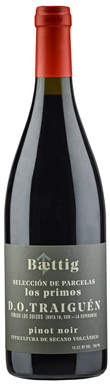
95
Francisco Baettig and Carlos de Carlo make this refined Pinot Noir from grapes selected from a couple of parcels of a dry-farmed vineyard in Traiguén (Malleco), a cool area with mild sunlight and volcanic soils. The fragrant nose presents notes of lavender, violet, sweet tobacco, mint, cherries and wet stone; while it’s vibrant and tense in the mouth with differently textured layers, chalky, grippy tannins and a lengthy finish.
2020
BaettigTraiguén
Bodega Chacra, Lunita Pinot Noir, Río Negro, Mainqué, Patagonia, Argentina, 2021
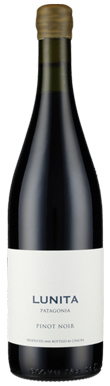
94
Piero Incisa della Rocchetta’s most recent creation for Bodega Chacra (Mainqué, Patagonia) is this exquisite Pinot Noir made with biodynamic grapes from an old, diminutive vineyard allowed to run fairly wild. Aged in concrete and old barrels, the nose delivers pure mineral and floral aromas accompanied by sour red fruit and hints of citrus. In the mouth, it’s medium-bodied with a tense, linear feel and insistent, characterful tannins.
2021
Bodega ChacraRío Negro
Domaine Nico, La Savante Pinot Noir, Uco Valley, Gualtallary, Mendoza, Argentina, 2020
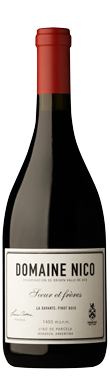
94
Domaine Nico – one of Laura Catena’s projects – is revealing the potential of Pinot Noir in Uco Valley's Tupungato. La Savante hails from Gualtallary (1,400m above sea level) where the soil is mostly sand and stone with a calcareous layer underneath. The subtle but complex aromatic profile features sour red fruit, rose, mushrooms and hints of truffle; while the flow is voluminous and refined with good freshness and polished tannins.
2020
Domaine NicoUco Valley
Reta Wines, Quebrada de Chalinga Pinot Noir, Limarí Valley, Chile, 2020
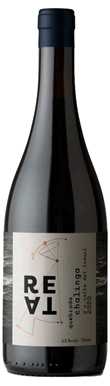
94
A refined Pinot Noir from Marcelo Retamal made with grapes from a parcel of granite and limestone soils in the Talinay vineyard (Limarí Valley). 50% fermented with whole bunches, it’s a light ruby red in the glass while the nose is austere but complex with aromas of earth, truffle, wet stone and cherry. In the mouth, it’s fresh and energetic with rewardingly grippy tannins and a perfumed finish.
2020
Reta Wines
Leyda, Lot 21 Pinot Noir, Leyda Valley, San Antonio, Chile, 2020
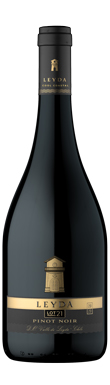
94
This Pinot Noir by Viviana Navarrete combines grapes from three calcareous polygons (also rich in iron and granite) in a vineyard just a couple of miles from the sea. 35% fermented in whole bunches with native yeasts, it is aged in concrete and foudres, resulting in an expressive, vibrant nose of fresh cherry, wild strawberry, spice, earth notes and hints of herb. In the mouth the flow is velvety with good energy and tension before the long, fragrant finish.
2020
LeydaLeyda Valley
Bemberg Estate Wines, La Linterna Parcela No.12 Finca Las Piedras Pinot Noir, Uco Valley, Los Árboles, Mendoza, Argentina, 2016
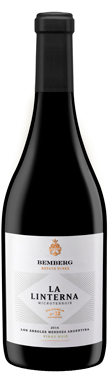
93
One of Daniel Pi’s more ambitious projects, this Pinot is made with grapes from a vineyard in Los Arboles, Uco Valley at 1,400m above sea level, where the soils are rocky and climate cool. Aged for six months in foudres, this is a refined, austere wine initially before the oxygen gets to work, bringing out aromas of fresh cherry, blackberry, violet, liquorice, clove and mushroom. In the mouth it’s balanced and fresh with granulated tannins and a lasting finish.
2016
Bemberg Estate WinesUco Valley
Bodegas Salentein, Single Vineyard Los Jabalíes Pinot Noir, Uco Valley, Mendoza, Argentina, 2019
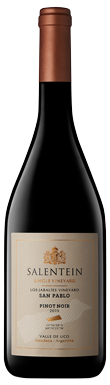
93
Salentein has been experimenting with Pinot Noir for some time, with the best results coming from its vineyard in San Pablo, a cold part of the Uco Valley 1,400m above sea level. There, Jorge Cabeza and Gabriela García produce this refined wine, which boasts a nose of wild cherries and strawberries, allspice and gunpowder. In the mouth, it’s tacky and fresh with subtle tannins that make for a lovely, easygoing finish.
2019
Bodegas SalenteinUco Valley
Canopous, Pintom Pinot Noir, Uco Valley, San Carlos, Mendoza, Argentina, 2020
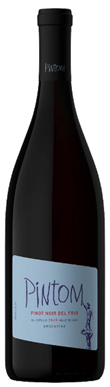
93
Gabriel Dvoskin selects grapes from his vineyard in Pampa El Cepillo – an especially cool area of the Uco Valley rich in caliche deposits – to make this extremely elegant Pinot Noir. A light red colour, the expressive nose offers cherries, wet leaves, Earl Grey tea and mushrooms, while on the palate it’s rewardingly intense and subtle with layers of different textures, refined tannins and a fragrant finish.
2020
CanopousUco Valley
Concha y Toro, Amelia Quebrada Seca Pinot Noir, Limarí Valley, Chile, 2020
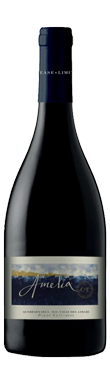
93
The proximity of the sea – with no mountain ranges to get in the way – and the red clay soils, which are also rich in stone and calcium carbonate, are the two keys to this skeletal Pinot Noir made by Marcelo Papa with grapes from the northern shore of the Limarí River. Concentrated and expressive, the nose features cherry, spice and rose, while it’s velvety on the palate with refined, compact tannins.
2020
Concha y Toro
Coteaux de Trumao, Pinot Noir, Austral, Chile, 2021
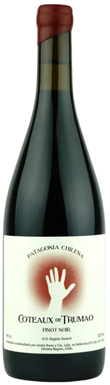
93
Hailing from Los Lagos, then southernmost edge of Chilean viticulture, this Pinot Noir, made with a minimal intervention approach, is a delicious find for fans of natural wines. The cold climate and volcanic soils bring out the fruitiness of the Pinot in a nose of tangy red fruit, rose, mushrooms and wet stone, while in the mouth it’s sharp with lively freshness and a polished texture.
2021
Coteaux de Trumao
Errazuriz, Las Pizarras Pinot Noir, Aconcagua Costa, Aconcagua Valley, Chile, 2020
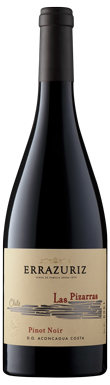
93
A Burgundy-style Pinot Noir made by Francisco Baettig with grapes from a vineyard in Aconcagua Costa where the soils are rich in slate and iron, this wine is wild fermented, 10% with whole bunches, and aged in 300-litre barrels. The complex nose features sweet, smoky spices, rose, cherry and blood aromas, while on the palate it’s harmonious and fresh with compact tannins that channel the flow.
2020
ErrazurizAconcagua Costa
Otronia, Block I Pinot Noir, Chubut, Patagonia, Argentina, 2019
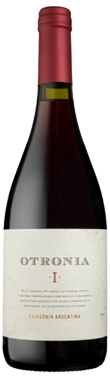
93
Otronia is a vineyard in Chubut, in the far south of Patagonia, where the cool climate is ideal for varieties with a short ripening cycle such as Pinot Noir. Made by Juan Pablo Murgia and Alberto Antonini, Block I comes from the most calcareous section resulting in an expressive nose of cherry, raspberry, liquorice, damp earth, graphite and a hint of clove. In the mouth it’s tense with a good tannic structure and a refined but intense character.
2019
OtroniaChubut
Viña Progreso, Overground Pinot Noir, Progreso, Canelones, Uruguay, 2020
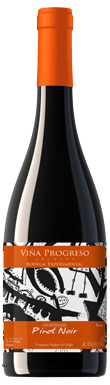
93
Gabriel Pisano is a curious-minded winemaker who has made a name for himself on the Uruguayan viticultural scene with his precise, expressive wines. Using grapes from the Progreso region near the Río de la Plata, this fruity red has a rich nose of cherry, raspberry and strawberry with notes of mushroom and wet leaves. Fluid and flavourful in the mouth, the freshness is accomplished while the tannins are a little rugged.
2020
Viña ProgresoProgreso
Bodega Colomé, Altura Máxima Pinot Noir, Calchaquí Valley, Salta, Argentina, 2020
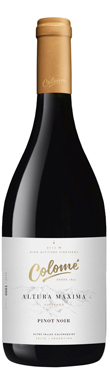
92
This exotic Pinot Noir is made by Thibaut Delmotte with grapes from a vineyard planted 3,100m above sea level in the Calchaquí Valley. 30% fermented with whole bunches, it’s a vivid ruby red in the glass with a nose of wild strawberries, redcurrants, stems, herbs and earthy notes. On the palate it’s harmonious and fresh with refined tannins that sculpt the loquacious finish.
2020
Bodega ColoméCalchaquí Valley
Bodega Garzon, Single Vineyard Pinot Noir, Garzón, Maldonado, Uruguay, 2020
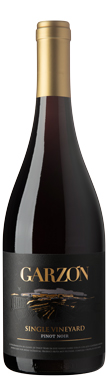
92
The proximity of the Atlantic Ocean is a key factor in this fresh, expressive Pinot Noir fermented by Germán Bruzzone in cement tulips before ageing in oak casks. Complex, with rewardingly fruity notes of sweet and sour cherry, plus mineral and spice aromas. In the mouth it’s dense, harmonious and elegant with firm, compact tannins.
2020
Bodega GarzonGarzón
Undurraga, Trama Pinot Noir, Leyda Valley, San Antonio, Chile, 2021
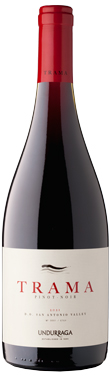
92
It took 15 years of vineyard studies and experimentation at the winery for Rafael Orrejuela to achieve this modern, sophisticated Pinot Noir from a spot 8km from the sea with calcaire soils. Aged for 11 months in concrete vessels, it delivers a vivid ruby red in the glass, the fragrant nose presents notes of cherry and violet with hints of spice and minerals. On the palate it’s balanced with good body and freshness and firm, refined tannins.
2021
UndurragaLeyda Valley
Viña San Pedro Tarapacá, 1865 Tayu Pinot Noir, Malleco Valley, Chile, 2020
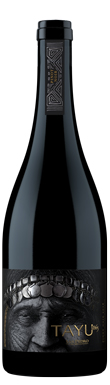
92
This exciting Pinot Noir is a socially responsible collaboration between Viña San Pedro and a Mapuche community from Araucania who tend to vineyards in Malleco. Viviana Navarrete looks to preserve the essence of the terroir through brief macerations, 20% in whole bunches, and by only ageing 20% of the wine. The nose brims over with red fruit, cherry, lavender and notes of menthol. It’s fresh and linear in the mouth, where the granulated tannins bring out the expressive flavours.
2020
Viña San Pedro Tarapacá
Familia Pisano, Rio de Los Pájaros Pinot Noir, Progreso, Canelones, Uruguay, 2020
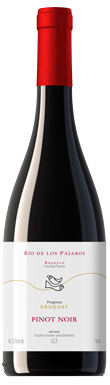
91
Near the Río de la Plata, the vineyards of the Pisano family are planted in clay/calcium soils that are well-suited to Pinot Noir, as shown by this wine. A simple, easydrinking red, the nose offers cherry, raspberry and fruit coulis accompanied by mushroom and tobacco aromas. In the mouth, the flow is light, fresh and juicy with polished tannins.
2020
Familia PisanoProgreso
