Jefford on Monday: The Chablis difference


Andrew Jefford wonders how ‘Burgundian’ Chablis is.
Chablis occupied around 500 ha in the 1960s; now it has grown more than tenfold, to 5,600 ha. That’s 23 per cent of all Burgundy’s vineyards. Its unique variety is Chardonnay; its best climats are nuanced into a suite of Premiers Cru and Grand Cru names. All very reassuring; all very ducal; all very lustrous. But … all very misleading?
Chablis is so different from the rest of Burgundy that this universal assimilation, I’m beginning to think, does it no favours. This hallmark terroir wine is best understood as a unique wine kingdom of its own. Here’s why.
- Follow the rain. Chablis occupies part of the drainage basin of the Seine river, and the rain that falls on its hills will eventually reach the North Sea. Rain in the rest of Burgundy, by contrast, drains south to the Mediterranean, via the Saône and Rhône rivers. River basins furnish the chapter headings of a landscape, and by this measure, Chablis and the rest of Burgundy belong in different chapters of the French wine book.
- Gauge the light. In Chablis, you’re well north of Sancerre. In Chablis, you’re closer to Troyes in Champagne than you are to Dijon, let alone Beaune, Chalon or Mâcon. Chablis’ cool phosphorescence of flavour is a reflection of that location and its geometrical, carefully dosed light. It’s a flowering of hill slopes where you can suddenly tease Chardonnay vines towards ripeness rather than plodding on with wheat or barley like all the surrounding farmers. In wine style terms, we are half way between the shock, slice and lash of a still white Coteaux Champenois and the more pliant and yielding grace of a Chassagne or a Puligny. Between – yet unaligned with either. (Historically, this was a marchland: the boundary between the dominions of the Dukes of Champagne and of Burgundy.)
- Flourish your compass. If you do, you’ll find that Chablis’ vineyards face east, south, west and north – to all points of that compass. That’s utterly different to the Côte d’Or and most of the Côte Chalonnaise, where south and south-easterly aspects dominate most white-wine plantings. It’s not a single, broken slope on the western edge of a wide valley, but a watery series of cuts and gouges along the little river Serein on the edge of Morvan hill country. Chablis, like Bordeaux, has a right bank and a left bank as a consequence – and each shows a different character. The right-bank sites are a little softer, ampler and warmer; the left-bank sites are zestier, edgier and fresher. You won’t find that distinction, nor such a wide range of aspects, in other parts of Burgundy.
- Dig. All the soils, stones and fossils are different here from those you’ll find elsewhere in Burgundy – though they are similar to those of Sancerre and the Aube sector of Champagne. That may be a reason why, despite the grape variety difference, good Chablis is easier to confuse with Sancerre than it is with Côte de Beaune whites.
- Compare the crus and climats. As soon as you do that, you’ll realise that the terroir of Chablis functions in a very different way to that of the Côte d’Or. Forget the great mid-slope fetish of the Côte d’Or here, and the way that a glorious Grand Cru can unseam, within a couple of hundred metres, into indifferent flatland village wine; in Chablis, a single vineyard is generally an entire slope, at least until the soft Kimmeridgean marls give way to the tough white Portlandian limestone rubble up at the top.
- Talk to the administrators. You may be surprised to find that Chablis has only four appellations: another stark contrast to the rest of Burgundy. Administratively, the region is regarded as a single if gigantic ‘village’ (though in fact Chablis itself is a small town and the region contains at least a dozen villages and hamlets). The Grand Cru is a single swirling swathe of vines, divided into seven principal climats. Chablis Premier Cru is a capacious suitcase full of Russian dolls, with over eighty unused or little-used lieux-dits names being folded and sealed away inside a series of ‘principal’ climats and significant sites on both sides of the Serein. Chablis, the ‘village’ wine, accounts for everything else – except for Petit Chablis, which tends to be for those cooler, stonier sites on Portlandian limestone.
The end result of ‘the Chablis difference’, for the drinker, is that there is a greater level of consistency within Chablis than elsewhere in Burgundy. Every level of Chablis offers fine-value terroir wine, mouthwatering and unique, with a little canny buying; even Petit Chablis can be memorable in a way that its Côte d’Or equivalent, the Hautes Côtes, struggles to match. This is both the chief asset of Chablis (consistency means that the appellation acts as a robust global brand of huge international popularity) but also its greatest weakness (consistency also means that Chablis’s greatest wines never quite succeed in taking off into the stratosphere of both quality and price as the rest of Burgundy’s great white Grands Crus and Premiers Crus do).
I was back in this ‘kingdom of cool’ recently, where in general everyone was looking cheery: an early-loaded, frost-free spring has seen good fruit set. It’s been wet, so there is disease pressure, but assuming summer keeps the celestial artillery of hail at bay, Chablis might be in the running for a generous 2018 vintage. Here are eleven of the best wines I tried from the ample 2015 harvest, the delicious if tiny 2016 harvest and the slightly riper but still short 2017 harvest (some producers, like Guillaume Michel, lost half their crop over the two most recent vintages).
Tasting the Chablis difference
Read more Andrew Jefford columns on Decanter.com
Domaine William Fèvre, Chablis, Petit Chablis, Burgundy, France, 2016
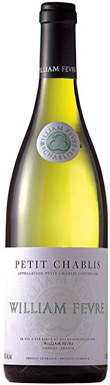

This non-domaine wine has a very attractive, articulate lemon, lime and leaf scent, with fresh, crunchy and very faintly bready flavours. Great value for this...
2016
Domaine William FèvreChablis

Domaine Billaud-Simon, Tête d’Or, Chablis, Burgundy, France, 2016
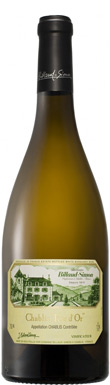
This is one of the most attractive Chablis wines on the market. The Tête d’Or comes from selected parcels advantageously sited near to premier and...
2016
Domaine Billaud-SimonChablis
Domaine Laroche, Cuvée St Martin, Chablis, Burgundy, France, 2017
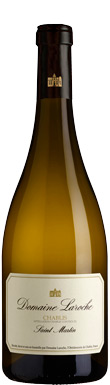
Laroche remains more committed than most to the continuing use of oak in Chablis, but this village Chablis is steel only, made from two right...
2017
Domaine LarocheChablis
Domaine Louis Michel, Chablis, Burgundy, France, 2016
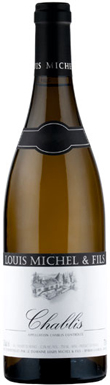
89
Guillaume Gicqueau-Michel produced 70% less Chablis AOC in 2016 than usual, so this will not be an easy wine to track down. Aromas of citrus zest, white flowers and salty soil tones precede a medium-full, elegantly textural wine with nice depth and tension, and a classily mineral finish. Recommended.
2016
Domaine Louis MichelChablis
Domaine Billaud-Simon, Chablis, 1er Cru Montée de Tonnerre, Burgundy, France, 2016
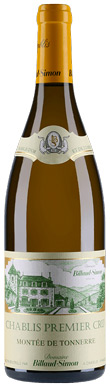
This great vineyard can, in some incarnations and for no obvious reason, almost seem to acquire a seaweedy, marine allure and an umami intrigue inside...
2016
Domaine Billaud-SimonChablis
Domaine William Fèvre, Chablis, 1er Cru Vaillons, Burgundy, France, 2015
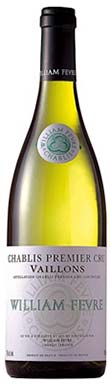
A parcel selection from one hectare of 50 year old vines, aged in older oak barrels. Discreet and elegant on the nose, with aromas of...
2015
Domaine William FèvreChablis
Domaine William Fèvre, Chablis, 1er Cru Vaulorent, Burgundy, France, 2015
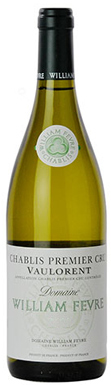
Firm dense nose, with a light toastiness. Taut attack, racy and concentrated, with a lifted and assertive character supported by a fine acidity that gives...
2015
Domaine William FèvreChablis
Domaine Louis Michel, Chablis, 1er Cru Montée de Tonnerre, Burgundy, France, 2012
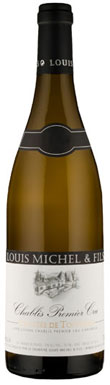
Pure terroir expression with intense flavour of wet stones, minerals and flint. A linear, classic Montée de Tonnerre. Lingering finish.
2012
Domaine Louis MichelChablis
Domaine Billaud-Simon, Chablis, Les Clos Grand Cru, Burgundy, France, 2016
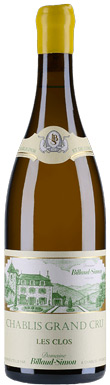
From a fine site towards the top of the hill, and with some ageing in steel, this is an authoritative, structured, commanding grand cru Chablis...
2016
Domaine Billaud-SimonChablis
Albert Bichot, Domaine Long-Depaquit, Chablis, Moutonne Grand Cru Monopole, Burgundy, France, 2015
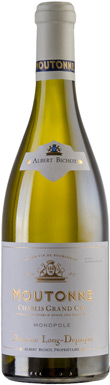
The Long Depaquit monopole of La Moutonne covers 2.24ha of Vaudésir, plus a sliver of Preuses. It has produced a luxurious grand cru in 2015,...
2015
Albert BichotChablis
Domaine Louis Michel, Chablis, Grenouilles Grand Cru, Burgundy, France, 2015
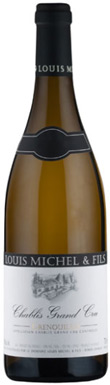
This is the only unoaked version of Grenouilles available from any of the landholders, and it makes a fascinating glass of wine. The warmer vintage...
2015
Domaine Louis MichelChablis
