
Jefford on Monday: Tasting history


Andrew Jefford tastes 19 vintages from the Morey-St Denis Grand Cru vineyard of Clos de Tart...
The primary pleasure of wine waits for you in its aroma, its flavour and its effect: a source of daily happiness for millions. Then come a number of secondary pleasures. Searching for the ways in which skies and soils might be inscribed in flavour is one. Another lies in historical reverie. There isn’t much in the texture of your life or mine which we might share with the twelfth-century popes in Avignon or the fourteenth-century Dukes of Burgundy. A glass of one or two particular Grand Cru burgundies of medieval monastic origin, though, is one.
Scroll down to see Andrew Jefford’s tasting notes and ratings for Clos de Tart wines
These thoughts always come jostling when I walk up the stone steps and through the great oak door of Clos de Tart in Morey-St Denis. There’s a private little courtyard of utter tranquillity, shielded from the world. The wines sleep below, in an astonishing two-storey cellar constructed, with what must have been vast expense of labour, in 1850. The vines constitute a very large 7.53-ha garden which stretches away up the hill behind the buildings, just as they must have done … in 1141, when this Clos came into being.
They’d have been planted en foule back then – higgledy-piggledy; but, astonishingly, the vineyard boundaries have never changed since. It’s no less astonishing that there have only been three owners of this piece of land since that time: the Bernardine nuns of the Abbaye de Tart until the French Revolution; the Marey-Monge family until 1932 (the last survivor became a nun); and the Mommessin family ever since. There can be few morsels of land in Europe of which this could be said. Most will have changed hands hundreds of times.

There’s a little statue of la vierge du Tart in a niche in the courtyard. Nowadays, the one positioned outside is a reproduction, and the original has been moved to sheltered retirement inside, after countless snowy winters. Countless? The owners recently had the little wooden statue carbon-dated. The result revealed that she’d been carved in 1372, just twenty years after the Black Death had killed around half of Europe’s population.
Want to know what grape pressing technology was like in 1570? In that case, make your way into the old press house at Clos de Tart, and marvel at the beautifully preserved ‘parrot press’ inside: ambitious sixteenth-century technology. It was last used for the 1924 vintage. How many modern presses will last 454 years?
In September 2015, I took part in a vertical tasting at dinner at the domain, organised to mark another historical event: the transition of stewardship of these wines from Sylvain Pitiot (who made the vintages between 1996 and 2014) to Jacques Devauges, who took over at the beginning of 2015. Pitiot’s predecessor (1969 to 1995) had been Henri Perraut. Some notes on the kind of wines which Pope Gregory XI and Duke Philip the Bold of Burgundy (and Flanders) might have recognised and enjoyed with us are given below.
Where does Clos de Tart stand in the hierarchy of Côtes de Nuits and other Morey Grand Crus? This is a question which only specialists and the wealthy can answer with any authority (I’m neither), but as Jasper Morris’s indispensible book Inside Burgundy reveals, the vineyard was regarded as better than Clos des Lambrays, Clos de la Roche and Clos St-Denis by Jules Lavalle in 1855, and the equal of Clos des Lambrays and above Clos de la Roche and Clos St-Denis by Camille Rodier in 1920. Morris’s modern verdict is that all four deserve Grand Cru status equally (and with none of the partial demotions he suggests for some other Grands Crus), but that none reach the ‘exceptional’ Grand Cru status of Romanée-Conti, La Tâche, Richebourg, La Romanée, Chambertin, Chambertin-Clos de Bèze and Musigny. The market concurs.
Decanter Premium members can read more analysis below
See all of Andrew Jefford’s Clos de Tart ratings and tasting notes here – spanning every vintage from 1996 to 2014
Tasting Clos de Tart
This vineyard commands the mid-slope, between 269 m and 302 m. There is a gradual transition in the soils and sub-soils: thinner, more marly and with more active lime higher up; deeper and more decarbonised lower down; and it is cultivated as 25 separate parcels divided into six sections. The vineyard has been organically cultivated (uncertified) for over a decade.Since 1890, the vines have been planted in transverse rows rather than up and down the slope, to minimize erosion: advantageous for its shade at midday on hot days, and to maximize the wind-drying effect of the north wind, but difficult to work because of the gradient. Harvesting in the Pitiot era has tended to be late, and a wine called La Forge de Tart is produced in some years from younger vines (those under 25 years old).Fermentation is in stainless steel, with a variable percentage of whole-bunch fruit; it is aged in new medium-toast Tronçais oak barrels, the wood being purchased prior to coopering and given extensive ageing first. The wines are bottled in the cellars directly from the barrels by gravity, without fining or filtering.The following notes were mainly drawn from the September 2015 tasting and dinner, but also include material gathered during visits to the domain in June 2015 and November 2012.
See a selection of Clos de Tart wines below and see all of Andrew Jefford’s Clos De Tart reviews here
Clos de Tart, Clos de Tart Grand Cru Monopole, Burgundy, France, 2014
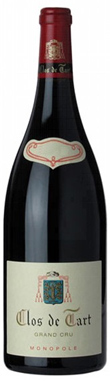

Vibrant, ripe blackberry plus delicate notes of rose, a gorgeously silky texture and sweet-spice finish. I tasted the seven parcels that make up this final...
2014
Clos de TartClos de Tart Grand Cru Monopole

Clos de Tart, Clos de Tart Grand Cru Monopole, Burgundy, France, 2012
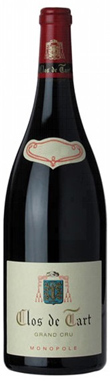
A deep, clear red in colour. Softly focused yet very attractive aromas in which classic raspberry fruits mingle with more autumnal scents of bramble banks...
2012
Clos de TartClos de Tart Grand Cru Monopole
Clos de Tart, Clos de Tart Grand Cru Monopole, Burgundy, France, 2010
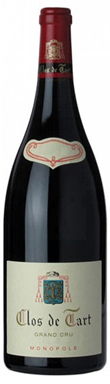
Mellow, refined, expressive cherry and raspberry fruits dominate the aromas of this clear, bright red burgundy. It’s firm, thrusting and pungent on the palate; the...
2010
Clos de TartClos de Tart Grand Cru Monopole
Clos de Tart, Clos de Tart Grand Cru Monopole, Burgundy, France, 2007
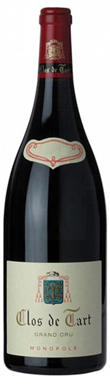
This attractive wine doesn’t have the focus or purity of its peers. Red fruits linger in the glass like mist on a river; while the...
2007
Clos de TartClos de Tart Grand Cru Monopole
Clos de Tart, Clos de Tart Grand Cru Monopole, Burgundy, France, 2005
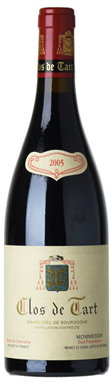
The 2005 vintage was among the sunniest in memory: more than 90 hours above the 30-year average. The bright sun and drought conditions produced thick...
2005
Clos de TartClos de Tart Grand Cru Monopole
Clos de Tart, Clos de Tart Grand Cru Monopole, Burgundy, France, 2004
As with the 2011, herbaceous notes have the upper hand in this wine, and it is now smooth in texture, with subdued tannins and leafy...
2004
Clos de TartClos de Tart Grand Cru Monopole
Clos de Tart, Clos de Tart Grand Cru Monopole, Burgundy, France, 2002
The antithesis, at present, of the 2003: fresh, lively and aromatically precise, with a cologne-like charm, with a smooth, pure, open cascade of flavour on...
2002
Clos de TartClos de Tart Grand Cru Monopole
Clos de Tart, Clos de Tart Grand Cru Monopole, Burgundy, France, 2000
Glowing, resonant, rounded aromas and flavours, with fruit and texture perfectly synthesized. This is ripe enough for there to be a little meaty warmth beginning...
2000
Clos de TartClos de Tart Grand Cru Monopole
Clos de Tart, Clos de Tart Grand Cru Monopole, Burgundy, France, 1997
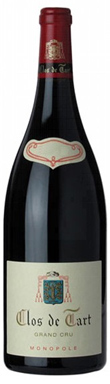
Clos de Tart produced a hugely enjoyable wine in this much-underrated vintage: soft and creamy in scent, with generous, brambly autumnal flavours and deliciously soft,...
1997
Clos de TartClos de Tart Grand Cru Monopole
Clos de Tart, Clos de Tart Grand Cru Monopole, Burgundy, France, 1996
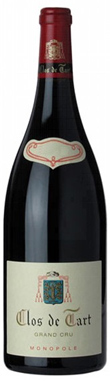
Still deep in colour, with elegant, pure scents more dominated now by refined spice, mushroom and violet than fruit. On the palate, the wine seemed...
1996
Clos de TartClos de Tart Grand Cru Monopole
