Taste like a pro: 12 classic French wines to test your skills
Natasha Hughes MW draws on her experience of devising tasting papers for Master of Wine students to recommend bottles that can train your palate, from classic Sancerre to quintessential Côte-Rôtie.


I’ve just spent four years working on one of the best gigs in the wine world. As the former co-ordinator of tasting papers for the Master of Wine education programme, students probably saw my role in a similar light to that of an inquisitor general.
I prefer to think the skills I’ve used when setting papers are similar to those employed by devisers of moustache-twirlingly-tricky crossword puzzles.
Two of these feature white wines, another two are devoted exclusively to reds. The third papers in each set focus on rosés, sparkling, sweet and fortified wines, while the final papers are ‘mixed bag’ mock exams.
It’s a simple enough framework, yet within these broad outlines my challenge was to capture the diversity of the wine world in 96 wines and to create the perfect conditions for students to hone their skills at answering a range of questions.
Recently, Decanter asked me to select a dozen classic French wines that might make the cut the next time I set a paper.
The wines I’ve chosen would not only test students at MW level, they also make an excellent starting point for anyone wanting to improve their tasting skills.
What are classic French wines?
The 12 wines list below are a combination of red, white and rosé, with one sparkling wine, spanning the regions of Provence, Burgundy, Beaujolais, Bordeaux, Northern and Southern Rhône, Alsace, Loire and Champagne.
They come from classic regions, ones with which every serious taster should be familiar.
They also hit a range of price points, because MW students don’t just get to taste the expensive stuff, and all of them demonstrate terrific typicity in terms of both style and flavour profile.
That search for typicity is usually the biggest challenge, because there’s often huge variation in style from one producer to the next, not to mention vintage variation.
The art lies in finding wines that won’t mislead the taster. A Meursault that lacks opulence or an overly ripe Sancerre with lush tropical fruit just won’t make the grade.
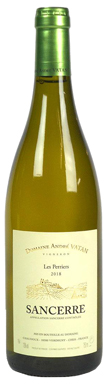
Instead, the fresh green herbs, lemon zest and smoky minerality in the Domaine André Vatan ‘Les Perriers’ 2018 listed below points clearly in the direction of Sancerre.
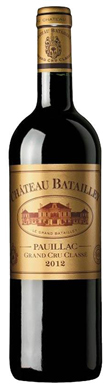
On the Château Batailley 2012, fine tannins, oak and complex aromas of dark fruits, leather, bitter chocolate and game lead you straight to Bordeaux’s Left Bank – that polish on the wine telling you to zero-in on Pauillac.
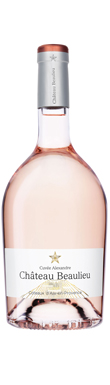
Château Beaulieu’s Cuvée Alexandre 2019, meanwhile, is quintessential Provence rosé, from its pale hue to the way it combines fresh berries, a tinge of garrigue and a refreshingly dry palate.
Don’t be afraid to ask
For every wine that makes it into an MW education paper, I’ll have tasted somewhere in the region of a dozen possible alternatives before finalising my selection. It’s the same process with the recommendations here.
I’ve been lucky; the job allowed me to conduct these kinds of exhaustive tastings almost on a daily basis.
The next best option for anyone wanting to organise a blind tasting is to throw yourself on the mercy of a good independent merchant.
Explain what you’re looking for, and why, and they should be able to help you make some appropriate choices. In the interim, these 12 wines make a good starting point.
Master of wine vs Master Sommelier: What’s the difference?
Adding complexity: Lessons from the MW programme
It’s widely believed that passing the tasting part of the MW exam relies on an ability to identify the origin of a wine and the grapes from which it was made.
Although this is a key skill, even more emphasis is placed on commercially relevant assessments. Candidates are expected to appraise the quality of a wine, to understand where and how to sell it, to make accurate predictions about its state of maturity and ability to age, and to comment on how the wine has been made.
Students who go on to pass the exam will have learned not only how to taste with great precision, but also how to put the wines they’re tasting into a truly global context.
My job was to set a series of exercises that allowed candidates to flex both their tasting muscles and their theoretical framework.
My first step was to think about the kinds of wines that I might use to populate my papers. I could, for instance, use the Sancerre I’ve recommended in a flight of Sauvignon Blancs from around the world, or as part of a Loire line-up featuring Chenin Blanc and a Muscadet.
It could even feature alongside a series of wines based on Semillon, Sauvignon Blanc and blends of the two grapes.
The wines covered in the papers aren’t just Old World classics, either. Students should be aware of trends in consumption and be match-ready for any curve balls I throw their way.
Orange wines from Northern Italy, kvevri-aged cuvees from Georgia, South African Cinsaults, big-brand Aussies and the hugely popular Apothic, a medium-dry red blend from California, have all made their way into papers I’ve set.
In terms of geography, I try and cover the entire wine world over the course of the eight papers.
In the MW programme, it was important to set the broad parameters before selecting specific wines.
Remember that typicity rules. If I’ve picked a Côte-Rôtie, it should fit in with the platonic ideal for this kind of wine; Syrah, of course, but of higher quality than either a Crozes-Hermitage or a St-Joseph, and with a distinctive elegance and perfume, especially when compared to a more powerful Hermitage or a savoury Cornas.
Getting the wines right is so important.
On the MW programme, a small group of MWs put themselves, their tasting skills and their reputations on the line every September to come in and work through the papers blind.
This would allow me to weed out wines that didn’t really fit the bill; the rate of attrition was around 5%.
This year, for the first time in nearly five years, I won’t be there to watch them unpick the puzzles I’ve so painstakingly set. Maybe next year I should step up to the plate myself and find out whether I can take the punishment I’ve dished out with such relish over the past few years.
Classic French wines to try at home
You might also like:
Spanish wines you should have in your cellar: The top 24
Twenty great value French red and rosé wines
How to write wine tasting notes
Château Beaulieu, Cuvee Alexandre, Coteaux d'Aix en Provence, Provence, France, 2019
90
Warming nutty aromas with citrus peel and spice; full and creamy with a contrasting zesty cassis acidity.
2019
Château BeaulieuCoteaux d'Aix en Provence
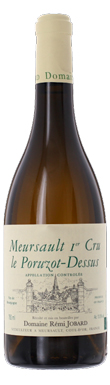
Domaine Remi Jobard, Meursault, 1er Cru Porusot-Dessus, Burgundy, France, 2013
95
Absolutely classic Meursault, with all the opulence one would expect from the appellation. Complex and elegant, with some nutty, honeyed notes indicative of some bottle age and creamy mid-palate texture.
2013
Domaine Remi JobardMeursault
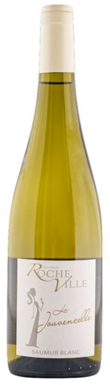
Domaine de Rocheville, La Jouvencelle, Saumur, Loire, France, 2018
88
Zesty, crunchy green apple and chamomile notes, allied to a dry palate and crisp acidity point directly to Chenin Blanc. Better than many Saumurs, but distinctly Loire in character.
2018
Domaine de RochevilleSaumur
Andre Vatan, Les Perriers, Sancerre, Loire, France, 2018
92
Clearly Sauvignon Blanc, but those restrained notes of fresh green herbs, lemon zest and smoky minerality point clearly in the direction of Sancerre. The poise and precision of this cuvee is another clue to its quality.
2018
Andre VatanSancerre
Albert Boxler, Grand Cru Sommerberg, Alsace, France, 2014
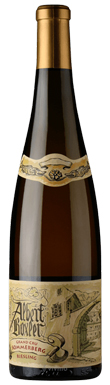
94
Ultra-classic Alsace Riesling, with a steely, focused palate and a whiff of kerosene. The power and concentration points straight towards a Grand Cru origin.
2014
Albert Boxler
Jean Guiton, Les Petits Poisots, Volnay, Burgundy, France, 2017
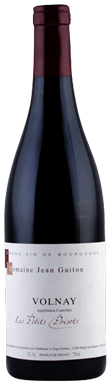
92
Incredibly pretty and perfumed, just as you would expect from a Volnay. A hint of oak and broad, fine tannins complete the picture.
2017
Jean GuitonVolnay
Château du Moulin-à-Vent, Beaujolais, Moulin-à-Vent, Burgundy, France, 2017
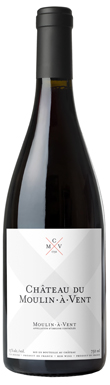
91
After a cold and dry winter, budding started in early-March, with flowering before end-May. Then came devastating hail on July 10, wil 75% of the crop destroyed. July/August was hot and dry. Harvest commenced September and hail-reduced yields were down to 12hl/ha. Although the colour of the wine suggests more maturity, the nose is floral with fine, pure red-fruit. On the palate, typical spice notes are evident with plenty of finesse. Not a blockbuster but a wine with elegance and freshness.
2017
Château du Moulin-à-VentBeaujolais
Château Billeron Bouquey, Calice, St-Émilion, Grand Cru, Bordeaux, France, 2015
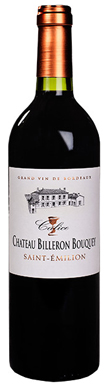
91
A dense palate packed with dark berries and spiced red plums and typically fleshy Merlot tannins. A touch of cedary oak lends class, pointing firmly towards Bordeaux's Right Bank and Saint Emilion as the origin.
2015
Château Billeron BouqueySt-Émilion
Château Batailley, Pauillac, Bordeaux, France, 2012
95
Linear and precise, with fine-grained chalky tannins, generous oak and complex flavours of dark fruits, leather, bitter chocolate and game. The power and weight of this wine leads straight to a Cru Classé from the Left Bank, and the polish is very Pauillac.
2012
Château BatailleyPauillac
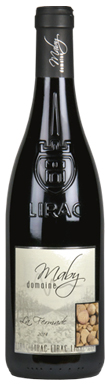
Domaine Maby, La Fermade, Lirac, Rhône, France, 2016
93
Meaty dark fruit, liquorice and garrigue all point to the Southern Rhône. Too plush and concentrated for a Côtes du Rhône, but not weighty and serious enough for Châteauneuf-du-Pape. Nailing its precise origin is tricky, but who cares when it's so enjoyable?
2016
Domaine MabyLirac
Maison Les Alexandrins, Côte-Rôtie, Rhône, France, 2017
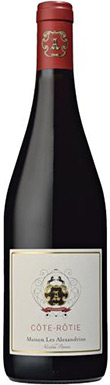

A bit of smoke, a touch of cracked black pepper, some brooding damson fruit, all draped across sinewy tannins. Definitely Northern Rhône and shows the...
2017
Maison Les AlexandrinsCôte-Rôtie

Larmandier-Bernier, Latitude Extra Brut 1er Cru, Champagne, France
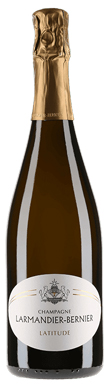
Chalky minerality, lemon peel and spring blossom on the palate and the smell of freshly-baked bread. Tiny bubbles. I'd expect most students to get this...
Larmandier-Bernier
