Beyond Champagne: French Crémant to try
French Crémant - such as Crémant de Loire and Crémant de Bourgogne - can offer good value alternatives to Champagne and a different style to Prosecco. Here are some recommendations to try this Christmas...


There are eight appellations in France where Crémant sparkling wines can be produced, including well-known names such as the Loire, Burgundy and Alsace, but did you know that Crémant can also be made in the Rhône and the Jura?
The grape varieties used in the production of Crémant across France vary, and depend largely on each region’s production rules. But what remains the same across all eight Crémant appellations is the production method – the way in which the wine achieves its sparkle.
Crémants are made using the traditional method – the same method used for Champagne, where the second fermentation takes place in the bottle.
Which grape varieties are used in Crémant wines?
Grape varieties depend on locality and will draw on the varieties used to make the still wines of each region.
Chenin Blanc dominates Crémant de Loire, while Pinot Noir and Chardonnay form the backbone of Burgundy Crémant.
Crémant d’Alsace will use mostly Pinot Blanc, whereas in Bordeaux, red varieties tend to be used – Merlot, Cabernet Franc and Cabernet Sauvignon, alongside the region’s whites such as Sauvignon Blanc and Semillon.
The Clairette grape variety holds the fort in Crémant de Die wines, often alongside Muscat Blanc à Petits Grains and Aligoté.
While Chardonnay is used for Crémants from the Jura, Limoux and Savoie, it is often blended with corresponding local varieties: Pinot Noir, Poulsard and Savagnin for Jura; Chenin Blanc, Mauzac and Pinot Noir for Limoux; and Jacquère, Altesse and Chasselas for Savoie.
The use of these local varieties in blends lends a unique flavour profile to each Crémant.
See a complete style guide to French Crémant, plus 120 wines tasted
Crémant has been making waves with retailers for the past few years and is now commonplace in both independents and supermarkets. This partly reflects the wines’ ability to offer value-for-money, but also extends and adds interest to a retailer’s range beyond Champagne, Prosecco and Cava.
Which French regions produce Crémant?
In order to label a sparkling wine as Crémant, each region must seek approval from France’s national appellation body, the INAO; an often joyless, bureaucratic procedure that can take years to reach fruition.
The following are the eight Crémant appellations in France, of which Crémant de Savoie is the most recent, approved by the INAO in 2014:
- Crémant de Bordeaux
- Crémant de Bourgogne
- Crémant d’Alsace
- Crémant de Loire
- Crémant de Die (Rhône)
- Crémant de Jura
- Crémant de Limoux (Languedoc-Roussillon)
- Crémant de Savoie
Can you age Crémant?
As so often in wine, there isn’t a hard and fast rule about this. That said, you can generally expect a good quality Champagne to out-live a good quality Crémant.
‘Crémants generally have a higher pH and phenolic content than Champagne, with low levels of both being crucial for longevity in sparkling wine,’ said Rob MacCulloch MW, in this response to a query on ageing Crémant.
Which food pairs well with Crémant?
Most Crémant sparkling wines will have fairly high acidity so will stand up well to rich, oily or fatty dishes.
Sommelier Bert Blaize suggests pairing salmon en croûte with Crémant de Bourgogne. In his book Which Wine When, published in 2020, Blaize says ‘salmon en croûte is an indulgent way to serve what is already one of the richest fish there is, surrounding it in a layer of buttery pastry that would overwhelm more delicate flavours’.
Crémant de Bourgogne has ‘refreshing green apple and citrus flavours that will lift and showcase the fish’, says Blaize, while the ‘rich, buttery fullness’ found in the wine will work wonders with the pastry.
10 French Crémant sparkling wines to try:
Wines updated 15th December, 2021. Recommendations by Decanter’s editorial team.
See also:
Crémant: style guide plus 120 tasted
Wines to have with Christmas turkey
What’s the difference between Champagne and Prosecco – ask Decanter
Antech, Méthode Ancestrale Doux, Blanquette de Limoux, Languedoc-Roussillon, France
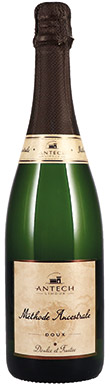

Limoux’s ancestral-method sweet fizz leaps from the glass, with pear, peach and apple sauce aromas filling the room. That fruity trio become even more intense...
AntechBlanquette de Limoux

Willy Gisselbrecht, Blanc de Noirs, Crémant d’Alsace, Alsace, France
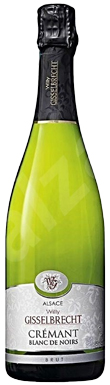
Lemon and raspberries on the nose, smells lively and inviting. Fine, elegant and persistent bubbles, this feels really well-made and rounded. It's light and delicate...
Willy GisselbrechtCrémant d’Alsace
Domaine Fernand Engel, Trilogie, Crémant d’Alsace, Alsace, France, 2013
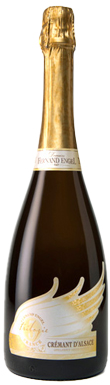
Toasted, woody and aged notes on the nose. This has more of a golden yellow colour in the glass hinting its age. It's rich on...
2013
Domaine Fernand EngelCrémant d’Alsace
Château de Menjoud, Les Bulles d'Hortense, Crémant de Savoie, Savoie, France
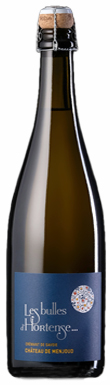
An aromatic nose full of interest - lemon, honey, toast, apple and lime. The bubbles effervesce straight away filling the mouth completely with a creamy...
Château de MenjoudCrémant de Savoie
Marks & Spencer, Etoile de Timberlay Brut, Crémant de Bordeaux, Bordeaux, France
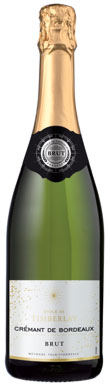
French crémants are a wallet-friendly alternative to Champagne – and this one from Bordeaux is a real crowd-pleaser. A blend of 70% Merlot, 20% Cabernet Franc...
Marks & SpencerCrémant de Bordeaux
Louis Bouillot, Crémant de Bourgogne NV, Burgundy, France
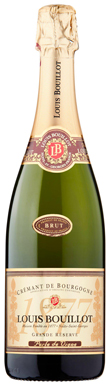
90
Creamy, yeasty aromas, with hints of citrus, beeswax and nuts. Fresh and well-balanced; lifted citrus, clean mineral character, finishes with notes of freshly sliced green apple.
Louis Bouillot
Maison du Vin, Cremant, Loire, France
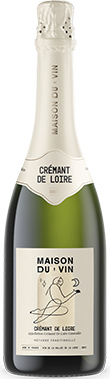
90
New to the Co-op sparkling range, this Loire Cremant features a fresh, bready nose of white blossom, candied pear and a hint of flint. Crisp green fruits with honeyed depth on the palate. A blend of 70% Chenin Blanc, 20% Chardonnay and 10% Cabernet Franc, it's a serious, good-value sparkling wine calling for food.
Maison du Vin
Marks & Spencer, Classics no12, Crémant de Bourgogne, Burgundy, France
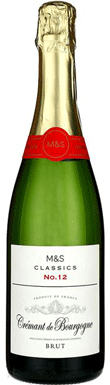
90
<p>Always a great-value sparkling, made the same way as Champagne and left on its lees for 18 months for toasty, yeasty complexity. The 2024 release uses 2021 base wine from vines averaging 20 years, it's 43% Pinot Noir and 24% Aligote, supported by Gamay and Chardonnay. Crisp acidity, ripe red apple juiciness and a tart redcurrant finish.</p>
Marks & SpencerCrémant de Bourgogne
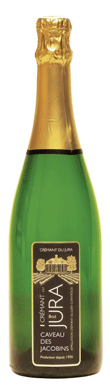
Caveau de Jacobins, Crémant du Jura, Jura, France
89
Made using the traditional method, like Champagne, crémant can be a great-value alternative. Caveau de Jacobins in Jura has 100 years of winemaking know-how under its belt and here fields a mellow, green appley and almost honeyed blend of 80% Chardonnay and 20% Pinot Noir. It has spent 12 months on lees, giving it a more rounded texture and some brioche bready notes. A lovely autumn fizz – perfect for the season of mists and mellow fruitfulness.
Caveau de JacobinsCrémant du Jura
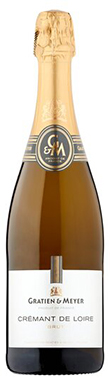
Gratien & Meyer, Brut, Crémant de Loire, Loire, France
88
France's diverse selection of Crémants offer great alternatives to Champagne, and this one from the Loire is no exception. The blend is predominantly Chenin Blanc with some Cabernet Franc and Chardonnay, giving simple, pretty scents of apples, pears and white peaches enveloped by a veil of white blossom. With 12g/L residual sugar, this is at the sweeter end of the Brut style and you can feel that peachy, honeyed sweetness on the tongue, just balanced by some acidity.
Gratien & MeyerCrémant de Loire
