
In search of Austria’s greatest vineyards plus 12 wines to try
Selecting the finest vineyard sites is a fraught matter in any country, and Austria is no exception. Stephen Brook explores the top white wine terroirs in Lower Austria and picks 10 top wines to try.

Selecting the finest vineyard sites is a fraught matter in any country, and Austria is no exception. Owners of specific sites are understandably keen to have them validated; other owners have less of a vested interest. Moreover, in some areas, precise boundaries between vineyards have sometimes been difficult to pin down, and some vineyards, such as Gaisberg in Kamptal, belong to more than one village.
Scroll down to see tasting notes and scores for 12 top white wine picks from Lower Austria
Despite all this, the growers’ association called the Oesterreichische Traditionsweingüter (Austrian traditional wine estates) has – off its own bat – created a selection of what its members consider the finest vineyards (Rieden) in Lower Austria. The association has no official standing, but is widely respected and few would quarrel with its choice of some 90 sites as Erste Lagen (first growths).
Not many are household names, but the same might well be true of the premier cru vineyards of Santenay or St Aubin. As with the official DAC classification, only traditional varieties win the association’s seal of approval for each site.
There is one serious flaw in the Erste Lage classification: the Wachau, arguably Austria’s most prestigious wine region, is not included, as Wachau growers have their own growers’ association, Vinea Wachau. And by definition, regions outside Lower Austria, such as the Burgenland and Styria, are excluded.
Nonetheless, there is widespread agreement about which vineyards repeatedly deliver outstanding results. The selection below cannot be definitive, as it is dependent on other factors such as the competence of owners.
Wachau
Achleiten (22 ha): For Heinz Frischengruber, technical director of the fine cooperative Domäne Wachau, this is the greatest vineyard in all of Austria. That may be hyperbole, but many would agree that it’s the top site of the Wachau.
It lies within the village of Weissenkirchen. Its soils, with mica schist lower down and gneiss higher up, as well as patches of loess and limestone, generate highly mineral wines that are exceptionally pungent and expressive. Elevation is an important factor, as it ranges from 200 to 360 metres, all on terraces with very little topsoil.
Most of the terraces, which enjoy excellent ventilation, face south and southwest. Both Riesling and Grüner Veltliner are structured and long-lived, though Toni Bodenstein of the Prager estate describes them as relatively feminine.
Kellerberg (15 ha): The Wachau is not immune from global warming, and some growers fear that certain esteemed sites, such as Loibenberg, are now becoming too hot for ideal ripening. Vineyards in Spitz, the most westerly and coolest village, are consequently becoming more prized. Nonetheless, certain traditionally renowned vineyards have maintained their reputation.
Dürnsteiner Kellerberg is one example. The sandy loess topsoil is a bit deeper than that of Achleiten, but not far from the surface there’s primary rock, with gneiss and quartz.
Kellerberg produces powerful wines, but a side valley brings in cooler air to refresh the vines.
Kamptal
Zöbinger Heiligenstein (35 ha): If Achleiten is Austria’s most revered vineyard, then Heiligenstein is surely its best known. It rises loftily above surrounding vineyards, which have mostly loam and loess soils, and offers a more complex soil profile. The elevation ranges from 240 to 350 metres, and the technical name for its geological structure is ‘perm’, a mind of brittle volcanic sandstone and feldspar.
This bedrock is sufficiently fissured to allow roots to descend in search of nutrients. South-facing, it’s a very warm location, but cool winds from the north help to maintain acidity. The vineyards are terraced and this is one of the few spots in the Kamptal where Riesling reigns supreme.
Heiligenstein is a large site, with over a dozen proprietors. So quality is not always that consistent, but the owners include some of Austria’s most illustrious names: Bründlmayer, Gobelsburg, Jurtschitsch, Hirsch, and Loimer. Bründlmayer actually produces three different Rieslings from here.
Given its size and the diversity of producers, it’s hard to generalise about flavour profiles, but Heiligenstein Riesling often displays a pronounced citric character and the wines can be very long-lived, rivalling the top growths of the Wachau.
Kammerner Lamm (25 ha): Lamm is situated on the southeastern flank of Heiligenstein, and is largely composed of the loam and loess that are absent from its neighbour, although the highest sector has some sandstone too. It offers a completely different expression of Kamptal terroir. For a start, it is planted solely with Grüner Veltliner, and its lower elevation, up to 280 metres, means that the site is exceptionally warm. That warmth is mitigated by excellent ventilation. In the 1990s, when super-rich wines were in vigour, it was not uncommon to encounter Lamm wines with over 15% alcohol.
Fortunately, today’s wines show more restraint and elegance. Nonetheless, these are broad-shouldered wines with considerable power, but the best of them age well too.
Here too there are multiple owners. Bründlmayer and Gobelsburg are the best known, but excellent wines are also produced by Eichinger, Jurtschitsch, and Hirsch.
Kremstal

This is the most diverse Lower Austrian region in terms of its geological makeup. Most of the vineyards are calcareous, but may also contain deep beds of loess near or below the surface. The same applies to the flatter vineyards on the south side of the Danube. Sites close to the river may also contain a significant proportion of gravel. However, just west of Krems itself, behind the adjoining town of Stein, are steeply terraced sites of primary rock, often gneiss or mica, that resemble the vineyards of the Wachau, which they border.
In addition, around Senftenberg, well away from the river, is a group of dramatic and steep terraced vineyards. Here there may be patches of loam and loess, but the sites are dominated by primary rock that often lies close to the surface.
Hochäcker (14 ha): This medium-sized terraced vineyard is in the village of Senftenberg and is the upward extension of another well-known suite, Pellingen. It was first documented in 1425. Some years ago Hochäcker was not that esteemed, because of its cold and windy microclimate, since the elevation rises to 380 metres. But with global warming, those very conditions are seen as advantageous.
The wild landscape here protects an abundance of flora and fauna which provide Hockäcker with its biodiversity. The wines are very concentrated and mineral, with exemplary finesse and good ageing potential. The weathered soil is rich in iron and gneiss, making it ideal for Riesling. There are two principal proprietors: Proidl and Nigl.
Vienna

Until recently the over 600 hectares of vineyards within the capital’s city limits were not that highly regarded, as most of the grapes were used to supply the numerous Heurigen, or wine inns, in villages such as Grinzing, Heiligenstadt, and Neustift. Most of those who flocked to the Heurigen were more interested in quantity than quality, so standards were not especially high, although the top wineries, such as Wieninger and Mayer, have always sold their best wines in bottle, and not just in Vienna.
The most famous vineyard, overlooking the city’s most bucolic suburbs, is the Nussberg, but it’s a very large site that isn’t uniform in quality. The best producers bottle wines from sectors within the Nussberg, such as Gollin or Preussen.
Preussen (11.5 ha): First documented in 1277, Preussen has a rather complex geological structure with sandstone, quartz, limestone, and some marine sediments too. It’s a fine source of Rieslings and also of Vienna’s DAC wine Wiener Gemischter Satz, which honours the ancient tradition of field blends that are still common in this area.
Stephen Brook’s top white wine picks from Lower Austria
Related articles
- Austrian Grüner Veltliner: top wines from 2019, 2020 and 2021
- Austrian indigenous grape: Roter Veltliner
- Domäne Wachau: producer profile
FX Pichler, Kellerberg Smaragd Riesling, Wachau, Niederösterreich, Austria, 2018
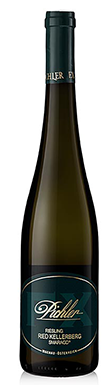

One of the grand old men of the Wachau, F.X.Pichler is now in his eighties, and the estate has been run for many years by...
2018
FX PichlerWachau

Nigl, Hochäcker Privat Riesling, Kremstal, Niederösterreich, Austria, 2019
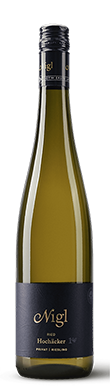
Aged entirely in stainless steel, which may explain the brilliant nose, with its aromas of apricots and pears and wet stones. The attack is bright...
2019
NiglKremstal
Allram, Heiligenstein Reserve Riesling, Kamptal, Niederösterreich, Austria, 2019
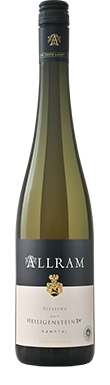
Allram's Haas family farm 12 terraces on Heiigenstein and have long made delectable wines from them. This vintage shows more weight than usual, with a...
2019
AllramKamptal
Weingut Prager, Achleiten Smaragd Grüner Veltliner, Wachau, Niederösterreich, Austria, 2019
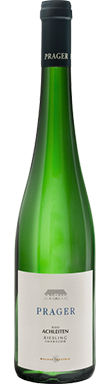
Toni Bodenstein, a great authority on the terroirs of the Wachau, is handing over to his son Robert, but the style remains the same.The nose...
2019
Weingut PragerWachau
Rudi Pichler, Achleithen Smaragd Grüner Veltliner, Wachau, Niederösterreich, Austria, 2021
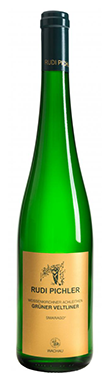
Rudi Pichler always favours an austere rather than an opulent style, which may be why his wines age so well. The nose is citric,...
2021
Rudi PichlerWachau
Domäne Wachau, Kellerberg Smaragd Riesling, Wachau, Niederösterreich, Austria, 2018
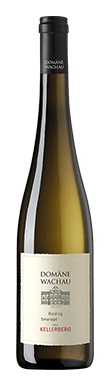
The parcels vinified by this excellent cooperative lie high on the slope and thus benefit especially from cool nighttime temperatures. There's considerable richness on the...
2018
Domäne WachauWachau
Jurtschitsch, Heiligenstein Reserve Riesling, Kamptal, Niederösterreich, Austria, 2018
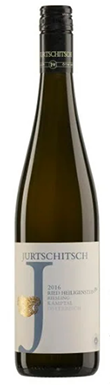
Since he took over the family estate in 2009, Alwin Jurtschitsch has not hesitated to experiment and innovate, but his organic Heiligenstein is a wine...
2018
JurtschitschKamptal
Proidl, Hochäcker Riesling, Kremstal, Niederösterreich, Austria, 2018
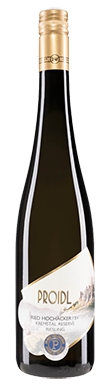
The nose is highly aromatic, with assertive but poised citrus fruit. Compact and vigorous, this shows excellent depth of fruit and exuberant minerality, evident in...
2018
ProidlKremstal
Schloss Gobelsburg, Lamm Grüner Veltliner, Kamptal, Niederösterreich, Austria, 2018
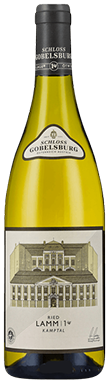
This offers a charming nose of apricots and mirabelles, giving a yellow-fruits profile to the aromas. It's rich and weighty, without being heavy or clumsy....
2018
Schloss GobelsburgKamptal
Birgit Eichinger, Lamm Grüner Veltliner, Kamptal, Niederösterreich, Austria, 2019
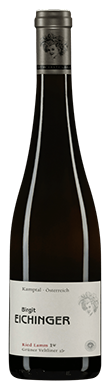
Birgit Eichinger owns parcels in many of the Kamptal's top vineyards, and produces a powerful wine from Lamm. The nose is lush, forceful, and almost...
2019
Birgit EichingerKamptal
Mayer am Pfarrplatz, Preussen Nussberg Riesling, Wien, Austria, 2017
This venerable Heurige, which was founded in 1683, adjoins the house where Beethoven wrote his 9th Symphony. The inn is deservedly popular, but the winery...
2017
Mayer am Pfarrplatz
Wieninger, Preussen Nussberg Grüner Veltliner, Wien, Austria, 2019
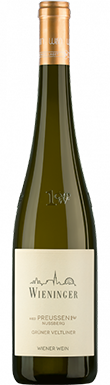
Fritz Wieninger is probably Vienna's most esteemed producer, and his wines, red and white, show great sophistication. He has made a point of vinifying single...
2019
Wieninger
