
10 great Spanish winemakers you need to know
With a focus on site specificity and wines that are made in the vineyard, a new wave of wine-growers is demonstrating the potential of Spain’s varied and distinctive terroirs. Darren Smith profiles the names you need to know and recommends bottles to buy.


Authentic wines, hard work and a dedication to their land and its traditions – these are characteristics common to all the emerging winemaking talents featured here. In every case, the wines they produce are made without artifice. In every case, they are a demonstration of the truth that, now more than ever before, quality-oriented producers across Spain are seeking to make wines that express geographic specificity.
The shift towards vineyard and site focus and towards more traditional (ie, non-industrial) winemaking practices is not news. But its near-ubiquity here may be. Every producer featured considers their wines to be made in the vineyard, not the cellar. Every one eschews agrochemicals, working organically and, more often than not, incorporating elements of biodynamics in the field. Forget the nomenclature of ‘winemaker’, think more in terms of ‘wine-grower’.
Since 2019, I have spent several months in Spain, making wine in the bodega of Victoria Torres in La Palma, Canary Islands (one of Decanter’s up-and-coming Spanish winemaking talents of last year). During that time, as well as witnessing the terroir-wine revolution happening on this volcanic archipelago, I came to appreciate the hard work and dedication that defines the lives of these emerging talents.
It isn’t romantic, it’s a struggle – against the capricious elements; to secure land and grapes in communities where growers do not value the important work these producers are doing; to recuperate vineyards when there is little support or momentum for change. But it is thanks to the industrious work of the winemakers highlighted below, and the many others we do not have the space to include here, that we are able to drink from the thriving and diverse wellspring of terroir wines that Spain is today – and, of course, to savour the wines themselves.
Orly Lumbreras – Sierra de Gredos, Castilla y Leon
At 52, Orly Lumbreras is proof that it’s never too late to pursue the winemaking dream. Still working as a radio sound engineer, this late- blooming natural winemaker has followed the path of Alfredo Maestro and Comando G into the Gredos region, to the Alto Alberche valley, to make fine, granite-based Garnacha.
Thanks to his friendship with Maestro, Lumbreras acquired a 70-year-old vineyard, located at 1,100m altitude in the town of Navarredondilla, Avila. In 2012, he made his first 600 bottles of Punto G, which is an uncompromising, whole-bunch-macerated mountain Garnacha. From 2013 to 2016 he was also busy honing his skills with whites, embarking on a white wine project with Rubén Díaz in nearby Cebreros.
All this time, a passion for low-intervention winemaking and the terroir of northern Gredos was simmering away and in 2016 he struck out on his own. Still making whites (and orange wines) from Albillo and Chasselas Doré in Cebreros, as well as collaborating on a small Mencía project at Adega Sernande in the wild Vilachá de Salvadur area of Ribeira Sacra, Lumbreras has spent four years recovering old-vine Garnacha plots at 1,000m-1,130m altitude in Navalmoral de la Sierra (where he as his winery) and neighbouring villages such as Navatalgordo, Navarredondilla and San Juan de la Nava. These are natural terroir wines of great individuality, showing the personality of old-vine Garnacha and Albillo from this re-energised and increasingly celebrated mountain region.
Alvar de Dios – Toro/Arribes Castilla y Leon
Although 35-year-old Alvar de Dios is harnessed to the red wine tradition of his family’s native Toro, he confesses to not being overly inspired by Tinta de Toro (the region’s name for Tempranillo). Since 2015 his pursuit of the highest-quality terroir wines has led him an hour’s drive west, to Arribes – a DO region only since 2007. Here, in Villadepera, he is tuned into something very exciting.
Just 2km from the Portuguese border, Villadepera is a rugged area of pure volcanic schist, whereas most of Arribes is granite and sand. Benefitting from the cooling influence of the Duero river, it is greener, hillier and fresher than further south. There’s a strong Galician/Bierzo influence too: natives of these regions who migrated to work in Villadepera’s silver mines co-planted varieties such as Mencía, Merenzao and Verdejo Negro in small family plots. De Dios works with 36 of these plots covering just 5ha.
De Dios is close friends with Comando G’s Fernando García and Daniel Landi and was the cellarmaster at Bodega Marañones from 2010 to 2015. His feel for white wines is clear through his work with the Albillo grape at Marañones, and it’s fascinating to taste his contrasting expressions of Doña Blanca side by side: Vagüera, from a plot of iron-rich clay and limestone in Toro, is bold and opulent; Las Vidres, from poor schistous soil in Arribes, is all delicacy and petrichor minerality. Look out, too, for his Yavallo red from Villadepera. An old-vine Merenzao-dominant field blend, it is several worlds apart from the bull-necked reds of Toro, showing an earthy, floral delicacy that has more in common with the Jura.

Verónica Ortega – Bierzo, Castilla y Leon
Though hardly new on the scene, Cádiz-born Verónica Ortega is yet to achieve the recognition in the UK that her wines deserve. Since the early 2000s, Ortega has amassed some enviable winemaking credentials. Before moving to Bierzo in 2012, she worked for Clos Erasmus in Priorat, spent two years in Burgundy (at Comte Armand in Pommard and Domaine de la Romanée-Conti) and two years in the northern Rhône as winemaker at Domaine Combier, interspersed with harvests in the Douro and New Zealand.
It was while working at Clos Erasmus that Ortega met Bierzo lynchpins Ricardo Palacios and Raúl Pérez, and began visiting the region, quickly realising that here she had everything she needed to make the great wines she had always been shaping up to make. With the help of Palacios and Pérez, Ortega gradually pieced together holdings of 5ha of old vines, which she farms biodynamically.
She also rents plots from growers who work well in the vineyard. The Mencías of Valtuille de Abajo are the foundation of her work, though she also works with Mencía at higher elevation in Cobrana, and Godello planted on a chalk quarry in San Juan de la Mata. It’s not in their high quality alone that these wines identify Ortega as a special winemaker, it is that each has a distinct personality. From her deep and concentrated yet beautifully defined Roc cuvée from Valtuille to the latest addition to her range, Kinki, which is a high-toned and perfumed early-picked Mencía (blended with some white varieties) from Cobrana, her exceptional talent is plain to see.
César Márquez – Bierzo, Castilla y Leon
Let’s face it, César Márquez had an advantageous start in wine: his uncle is Raúl Pérez, and through his family’s deep roots in Bierzo (Castro Ventosa was founded by the Pérez family in 1752) he has access to some of that region’s best vineyard plots. But it’s what you do with your advantage that counts. Márquez’s introduction to winemaking came via his uncle in 2011, the year Pérez founded La Vizcaína and began to explore the cru vineyards of Valtuille.
After working in Argentina with the Michelini brothers, Márquez began shaping his own project, just as Bierzo was formalising its own Burgundy-style vineyard classification system. In 2017, still only 29 years old, he was also made head winemaker at Castro Ventosa, becoming the 10th generation of the Pérez family winemaking saga.
Márquez makes a fantastic white, La Salvación, from centenarian Godello, but the lifeblood of his project is Mencía. Benefitting from his family’s 80ha of Valtuille vineyards, he works with 3ha from different terroirs, plus 1.5ha outside Valtuille and 2ha of plots owned by growers: all vines between 80 and 130 years old.
From his outstanding-value Parajes to his single-vineyard El Rapolao (arguably the most prized plot in Bierzo), the project eloquently reflects the Burgundian system, differentiating between regional wine, village wine (grapes from Valtuille only) and three single-parcel wines. These are profound, nuanced expressions of Mencía and mark out Márquez as a terroir-wine star of the future.
Julia Casado, La del Terreno – Bullas, Murcia
Having switched from an intended career as a cellist to that of a winemaker, Julia Casado took a modest bank loan in 2015 and constructed a ‘prefab’ modular winery in the middle of a nature reserve in Bullas, Murcia. Despite having no connections to the region, she managed to forge links with local growers and establish a thriving natural wine label.
Many readers will be familiar with Jumilla, even Yecla; fewer will know of Bullas. Yet Casado believes this is the best region in southeast Spain in which to make pure, expressive Monastrell. In contrast to the hot, semi-arid Jumilla, Bullas is a relatively cool, verdant region in which old dry-farmed bush vines grow at high elevation (about 800m). Casado’s La del Terreno (the local name for Monastrell) exemplifies her lightness of touch. Avoiding oak, her focus is on the fruit and aromatic expression of this variety, which she describes as ‘tough… but with a really tender heart, like wood enveloping a flower’.
In summer 2020, Casado moved her winery 50km east from its original site in Venta del Pino to Caravaca in Comarca del Noroeste. Already working with 3ha of rented vines, in Caravaca she has planted a further 6ha as part of a collective working to preserve the area’s agricultural tradition and promote regenerative agriculture. This move feels like the next phase of an inspiring solo project from this resourceful young winemaker.

Sabino Quirós & Isabel García: Orulisa – Liebana, Cantabria
Situated at the foot of the Picos de Europa National Park, one of Spain’s most imposing mountain ranges, Liébana is an extraordinary place in which to make wine. Although there is a long wine tradition here (the first evidence is from 826), the area is best known for distilling. Sabino Quirós and Isabel García are a husband-and-wife team – García is in fact a third-generation distiller, and makes artisan pomace brandy under the Orulisa brand that’s served in Spain’s Michelin-starred restaurants.
Since 2015, Quirós has managed a natural wine project alongside the distillery operation. The project is committed to the uphill task (literally – at 500m, some of the vineyards have a 30% gradient) of recuperating vineyards – many over a century old and typically mixed plantings of Bierzo Alto varieties (Merenzao, Albillo, Mencía, Garnacha Tintorera, Godello, Palomino, Albarín) on poor, slate (pizarra) soils. This is vital work in a region where mechanisation is not possible (they use mules and horses) and viticulture is in steep decline: in 1889, there were 676ha of vineyards here, today just 50ha remain.
The pair deserve plaudits simply for the dedication they show in preserving the wine-growing tradition of this spectacular region, but the wines Quirós makes are becoming equally worthy of praise.
Alejandro Narváez & Rocío Aspera: Bodega de Forlong – Jerez, Andalucia
It’s Sherry, Jim, but not as we know it. Based in El Puerto de Santa María, young couple Alejandro (Alex) Narváez and Rocío Aspera plough their own idiosyncratic furrow through the albariza soils of Jerez. Working outside the regulatory framework of the Sherry DO, they produce a fascinatingly diverse wine range – single-site unfortified Palominos, amphora-aged reds, orange wines, ancestral-method sparkling.
Although the duo made their first wine back in 2012, it’s only since 2014 that Narváez and Aspera have worked from their own cellar. Narváez previously spent two years working at Château Smith Haut Lafitte in Graves, from where they take some barriques. They have a strong focus on organic farming – indeed Bodega de Forlong is the only winery in the Sherry triangle whose entire range is organically certified – and natural methods of stabilising and preserving their wines.
Initially focusing on Tintilla reds, in 2015 they started the Sherry side of their project. They make it without fortification – instead grapes are partially dried to concentrate sugars and reach 15 degrees potential alcohol, in order for flor to develop. Their major passion, however, is reviving vino de pasto – essentially high-quality table wines using local grapes (mainly Palomino Fino). Made without fortification, oxidative or biological ageing, soleras or criaderas, they serve to highlight the region’s prime vineyard sites and under-appreciated albariza-based terroir.
Carmelo Peña Santana: Bien de Altura – Gran Canaria, Canary Islands
Having worked for Dirk Niepoort in Portugal’s Douro Valley for two years, and helped on vintages in Itata, Chile with Pedro Parra and in in Bierzo on the Spanish mainland with Raúl Peréz, 33-year-old Peña returned to his homeland of Gran Canaria in 2017. Once back, he wasted no time establishing projects that will help to define the terroir focus of Canary Islands wines for years to come.
Peña’s main project is Bien de Altura, which focuses on organic farming, local varieties and high-altitude sites (1,100-1,500m) in the hills above San Mateo. The first label is Ikewen, which aims ‘to express Gran Canaria in a bottle’. From the 2019 vintage it’s joined by Tidao, from a centenarian parcel of Listán Negro, Listán Blanco and Listán Prieto.
A further strand to Bien de Altura, named El3mento, is a pan-Gran Canaria-Douro collaboration with his friend Luís Pedro Cândido (table winemaker for Niepoort). Peña is also busy in Lanzarote: the Puro Rofe project sees him make wine with Rayco Fernández. Whether it’s his peppery, volcanic reds or taut, crystalline whites, there’s a striking freshness and finesse to Peña’s wines, which are a faithful application of the Niepoort principle of ‘infusion, not extraction’ to the Canaries’ Atlantic-influenced volcanic terroir.

Tatjana Peceric: Coreografía – Montsant, Catalonia
Tatjana Peceric was a professional folk dancer in her native Serbia until the age of 24; it was then, inspired by the gastronomic culture she witnessed while touring France as part of her dance group, that the wine bug bit. A diverse wine apprenticeship took her to Switzerland, New Zealand, Bordeaux and Canada before Priorat captured her imagination.
Peceric first travelled to the region in 2016 after meeting Terroir al Limít’s Dominik Huber while working in Switzerland. Although she only intended to stay briefly, her sensibility for Garnacha quickly resulted in her becoming Huber’s head winemaker, not just for Terroir al Limít, but also Terroir Sense Fronteres, his spin-off project in neighbouring Montsant.
Her personal project, Coreografía (first vintage 2018), takes her further into Montsant to explore the region’s cooler, higher-altitude vineyard sites. Her one wine so far, Pas de Deux, is a Garnacha-Cariñena blend named in homage to her previous life as a dancer. Winemaking is much the same as for Terroir Sense Fronteres – gentle extraction, whole-bunch fermentations, eschewing oak, aiming for low alcohol. What’s different is the terroir: for Pas de Deux, Peceric sources grapes from two biodynamically farmed vineyards in Cornudella de Montsant, the coolest area of the region. These elevated plots of iron-rich clay with gypsum provide a fine, floral expression of Garnacha and an expressive, energetic Cariñena. Peceric makes them dance together gracefully.
For so long in the shadow of Priorat, Montsant is undoubtedly now entering the wine world spotlight. Expect to hear more of both Peceric and her wines as the region’s ascent continues.
Pablo Matallana: La Bardona, Bimbache, Taro – Canary Islands
Born of a 0.5ha rented parcel of Listán Negro in Tegueste, northern Tenerife, La Bardona is the wine with which Pablo Matallana, then aged 26, started his winemaking career in 2015. Following a spell in Chile in 2016, he resumed work on La Bardona in 2017, also setting to work on two projects that form the nucleus of his current endeavours: Taro in Lanzarote and Bimbache in El Hierro, the latter a co-venture with Rayco Fernández of Puro Rofe (see above).
Using indigenous grape varieties, natural ferments and minimal sulphur, the aim is to express the personality of each island. El Hierro enjoys much greater variance of altitude, the most important grape is the high-acid Verijadiego Blanco del Hierro; in Lanzarote’s mainly volcanic gravel-based vineyards, Malvasía Volcánica, Listán Blanco and Tinto, and Diego predominate.
Because El Hierro – the smallest and least-populated Canary islands – is relatively uncharted territory, Bimbache is perhaps the most intriguing of Matallana’s ventures. While he and Fernández are pioneering terroir wines for the modern palate here, they are also attempting to revive tradition with El Hierro vino de pata – a Madeira-style wine with amazing ageing potential.
The wines: Darren Smith selects one from each producer to try
Verónica Ortega, Cal Godello, Bierzo, Castilla y Léon, Spain, 2017
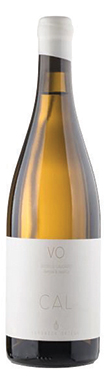

While Ortega’s Mencías are magnificent, this Godello from organically farmed vines planted on an old chalk quarry – Godello is uncommon in Bierzo, limestone even...
2017
Verónica OrtegaBierzo

César Márquez, Pico Ferreira, Bierzo, Bierzo, Spain, 2018
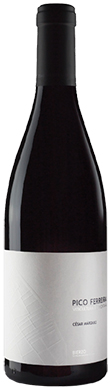
Real spicy, whole bunch depth on the nose. Clove, sandalwood, cola cubes; with a lovely high note of violets. Iron-y red and black fruit, with...
2018
César MárquezBierzo
Valientes Vinos, Bimbache Grand Cruz del Calvario, El Hierro, The Islands, Spain, 2019
The tiny Canary island of El Hierro positively swaggers into the world of fine wine here thanks to the winemaking of Pablo Matallana and the...
2019
Valientes VinosEl Hierro
Alvar de Dios, Las Vidres, Arribes, Castilla y Léon, Spain, 2018
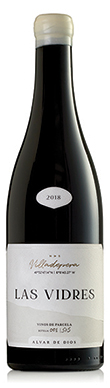
Alvar’s ‘Pouilly-Fumé’, from the top of an isolated hill of mica-inflected white schist in Villadepera, where the botrytis-prone Doña Blanca prospers. Luminous. Crushed oyster shells,...
2018
Alvar de DiosArribes
Coreografía, Pas de Deux, Montsant, Catalonia, Spain, 2018
From biodynamically farmed vineyards located high above the village of Cornudella de Montsant, at the foot of Montsant mountain. Whole-bunch fermented, then aged in steel...
2018
CoreografíaMontsant
Bien de Altura, Ikewen, Gran Canaria, The Islands, Spain, 2018
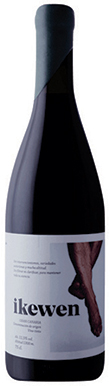
Mostly Listán Negro, plus some Listán Prieto and various minority whites. Own-rooted old vines at up to 1,400m. 40 days of maceration, 40% whole bunch....
2018
Bien de AlturaGran Canaria
Forlong, La Fleur, Jerez, Spain, 2016
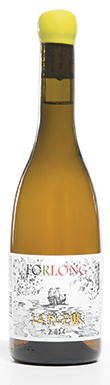
Made how fino used to be made, which is to say, unfortified. The grapes are sun-dried for up to 36 hours to concentrate sugars and...
2016
Forlong
La Del Terreno, La Del Terreno, Bullas, Spain, 2018
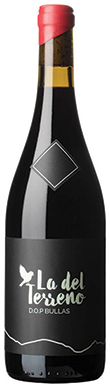
From a single vineyard at 800m elevation in the village of Cehegín, DO Bullas. Far from the oak-monster Monastrells of Jumilla. No oak plus the...
2018
La Del Terreno
Orulisa, Pum de Pumareña, Cantabria, Northern Spain, Spain, 2018
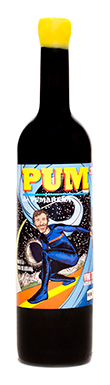
Purely centenarian vines, mainly Mencía, Garnacha Tintorera, Merenzao and Albarín Tinto. Mercurial wild-berry nose with intense herbal-balsamic aromatics – a real punch of lavender and...
2018
OrulisaCantabria
Orly Lumbreras Viñador, Punto G, Gredos, Spain, 2018
From a remote, 70- to 75-year-old Garnacha plot at 1,100m in Avila. Biodynamically farmed. Ripe red and black fruits with baked earth and saline minerality....
2018
Orly Lumbreras Viñador
