
A guide to Etna’s diverse wine styles
Established winemakers and young guns alike have fallen under the spell of Europe’s highest active volcano and the potential of its myriad soils, altitudes and aspects. Ever-shifting, what lies beneath really does influence the styles of the wine you taste here.


Homer’s Odyssey tells of a place on Earth where the inhabitants ‘plant nothing with their hands nor plough; but all these things spring up for them without sowing or ploughing, wheat, and barley, and vines, which bear the rich clusters of wine, and the rain of Zeus gives them increase’.
Scroll down to see tasting notes and scores for 10 top Etna wines
According to Odysseus, this place, the home of the Cyclopes, is in Sicily, on the slopes of Mount Etna.
Europe’s highest active volcano lies in the province of Catania, and, leaving legend aside, the fact remains that at the end of the 19th century the province had the most vines on the island, with about 90,000ha. That’s not much less than the total area under vine across all of Sicily today – back then, a flourishing economy revolved around wine.
In the 1890s, a railway, the Circumetnea, was even built to transport the precious product to the port of Riposto (which, in local dialect, means ‘cellar’) from where it was shipped around Europe.
But phylloxera and post-war agricultural reforms led to the abandonment of the volcano’s vineyards in favour of other crops. All traces of the Cyclopes’ paradise were lost.
Starting over
‘Many of us came to Etna in a short time. But there’s a reason: there was nothing left here, so there was space to start over.’ Marc de Grazia speaks with a pioneer spirit. His Tenuta delle Terre Nere is now 20 years old – an age that, around here, gives it ‘historic winery’ status.
As he talks, de Grazia is looking through his home library for old texts that mention Etna’s viticulture, knowing full well that they are few and far between. Unlike other renowned terroirs, there are no sources to draw on with regard to style or tradition. ‘We have to start from this aspect in order to understand the strong push towards experimentation that characterises this area,’ he says.
While the Italian-American de Grazia belongs to the romantic wave that also carried the late Andrea Franchetti (of Tenuta di Trinoro in Tuscany) and Belgian-born natural wine exponent Frank Cornelissen to Etna’s slopes in the early 2000s, Antonio and Salvino Benanti represent a generation born and brought up in the volcano’s shadow. Their family winery was founded by their father, Giuseppe Benanti, in 1988. Benanti wines, refined and of great character, are considered ‘classics’ today, but in the 1990s they were perceived as surprisingly new.
Innovation is a distinctive feature of everyone who engages with Etna’s diverse terroir. Those rare wineries of long standing, such as Scammacca del Murgo and Barone di Villagrande, with their austere wines, seem to have come straight out of the pages of Giuseppe di Lampedusa’s 19th century-set Il Gattopardo.
Etna’s funnel is forever smouldering. In the past decade, with the exception of the rainy 2018 vintage, production has increased by 20% a year on average, arriving at 4m bottles of Etna DOC annually, according to the regional consorzio – in effect, the volume of grapes harvested in 2020 was double that of 2014. ‘Freedom of growth and creativity have been the values underpinning the area’s success, but Etna is not infinite. Now we need to focus on scientific research and control of the production zone,’ reflects Antonio Benanti, who until recently chaired the local consorzio.
Beyond reds
While every new vigneron arriving in Etna has contributed to shaping the wide-ranging styles of its wines, the common path forward has remained focused on quality. ‘The best wine in the world will come out of Etna, and it might be “not red”.’ An ambitious pronouncement from Alberto Graci, another ‘volcano millennial’, brings up an interesting concept – what we could perhaps call oenological ‘gender’.
Etna is one of the few wine-growing areas in the world where red and white grapes produce equally happy outcomes. The most obvious parallel is Burgundy. Yet the first type of wine that comes to mind when thinking about these ambidextrous areas is red.
In the Sicilian case, Nerello Mascalese, the base for Etna Rosso, prevails over Carricante, the backbone of Etna Bianco, even if the white grape is catching up. In 10 years, the consorzio says, the ratio has shifted from 85% Nerello Mascalese and 15% Carricante to 65% and 35% respectively.
And when it comes to quality, the gap is even smaller. ‘Our great reds are our great whites,’ says Graci, winking. An enigmatic provocation, or is Etna really ready for a historic overtaking?
‘It’s too early to say; we lack experience,’ maintains de Grazia. ‘Nerello is more versatile and resistant, there’s no competition,’ says Benanti.

On the slopes
The volcano has its own response. The area planted with vines curves like a horseshoe, a scarf wrapped around the mountain’s neck. Nerello Mascalese is the undisputed ruler of the northern slope (the municipalities of Randazzo and Castiglione di Sicilia).
The reds are influenced by the cool, dry climate and they take on a mineral character. While opulence was not disdained in the past, now refinement is prioritised, obtained thanks to longer macerations and less-invasive wood ageing.
What counts most of all, however, is harvesting fully ripened grapes, to avoid ending up with what Graci calls ‘tannins like paper’. Work is also being done on retaining the stalks during fermentation, to tone down the alcohol without losing energy.
Carricante, meanwhile, has conquered the eastern side (Milo and Santa Venerina), looking out over the Gulf of Taormina. When it stops raining (this is the rainiest part of Sicily) and the clouds open, the sun reflects off the shimmering sea, flooding the mountain with light. The white grapes lap it up. Vinified with the idea of maintaining the integral expression of the fruit, they give profound, pure wines impregnated with the scents of the Mediterranean scrub, minerally and lingering. And they’re capable of ageing, too – a source of palpable pride for wine-growers.
The influence of the sea continues to the southeast (Trecastagni and Viagrande), then the volcano ‘turns’ and the land becomes wilder, almost arid. The new frontier is here, between Belpasso and Biancavilla, where producers in search of a challenge are enthusiastically exploring.
The arrival of a legendary name, Gaja from Piedmont, already has an air of consecration. Both red and white grapes grow together as equals here, often above the 1,000m line. The harvest is early and the soil varies from white and smooth to black and sharp. The reds made here are moody, with a soul that is a bit decadent, while the whites are citrussy, electric and sapid. Graci’s prophecy could also be an allusion to the rosés, a wine type in constant ascension that today accounts for 10% of all Etna DOC production. The winemakers consider them comparable to the finest sparkling wines, and the comparison holds up: the rosé grapes come from an initial early harvest of the vineyards used for red wines – crisp bunches full of acidity. The style veers towards a muted vinosity and a thirst-quenching quality. Freshness, however, can be maintained for two to three years.
Growing on lava
While it might be rash to hypothesise that Etna’s greatest wine could be a white or a rosé, it would certainly fit with the chameleon-like nature of the place, where the landscape is constantly being reshaped based on the rhythms of the volcano’s breath. ‘That’s where the 1981 flow stopped,’ de Grazia points out. ‘It buried the Circumetnea railway and came to a halt a kilometre from the town of Randazzo.’ He has counted Etna’s ‘breaths’ one by one, and loves to show them off.
But this is not some kind of macabre tourism. Between the pattern of historic eruptions and that of Etna’s viticulture lies a relationship of cause and effect. Tomorrow’s vines grow on yesterday’s lava, after the magma has cooled, the rock has split from heat and cold, and time has reduced everything to a soft, face-powder dust or a layer of stones so thick it seems unending.
This is the wonderful, unique world of the contrade – a concept introduced by Baron Villagrande but translated into the bottle by the ‘Etna boys’. One mustn’t give in to the temptation to compare the contrade with the French crus, because that ignores what really distinguishes them: not geography, but time.
The boundaries of a contrada are established by the age of the lava flow, meaning they can have any one of 60 different types of soil: sandy, basaltic, porous, gravelly… The viticultural map faithfully follows the geological one. ‘It’s impossible not to be enchanted by so much variety in such a small area,’ says Antonio Rallo from the Donnafugata winery, who, like the Tasca d’Almerita family, came here from the wide valleys of western Sicily.
Benanti feels the same: ‘In building the wines’ character, soil comes before grape variety.’ The consorzio is working on a map of the contrade. There are 133 and they form a girdle of vineyards around the volcano’s great mouth. To echo the evocative words of oenologist Salvo Foti, here the land is made of what comes down from the sky.
Anyone keen to get into Etna wine, however, won’t find the means to do so falling from the sky. Investing in the volcano is a difficult business, although the area is still managing to maintain its dynamism. Small wineries such as Monteleone on the northern slope or Tenute di Nuna to the east have sprung up and are worth keeping an eye on. Other projects are still in the planning stage.
If Etna can support its talented children, it will truly have triumphed over its challenges. And who knows, maybe one of its proponents will, one day soon, actually make the greatest wine in the world.
Of the soil: Gaia’s 10 Etna wines worth seeking out
Related content
Etna wines: A rising force
Tasting IDDA wines: Angelo Gaja and Alberto Graci’s Etna project
Benanti, Pietra Marina, Etna, Superiore, Sicily, Italy, 2017
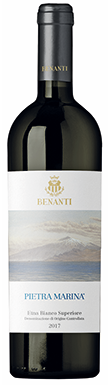

From the head-trained vines of Milo, the only area for which the Superiore designation can be used for Carricante. Straw yellow with bright greenish reflections,...
2017
BenantiEtna

Graci, Arcurìa, Etna, Sicily, Italy, 2019
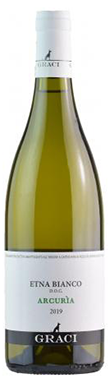
From the renowned area of Passopisciaro, this is a Carricante white of great character. Aged partially in concrete tank and partially in large oak barrel,...
2019
GraciEtna
Cantine Nicosia, Contrada Monte Gorna, Etna, Sicily, Italy, 2020
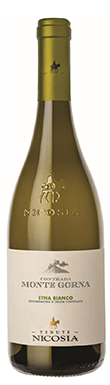
Made from Carricante (90%) and Catarratto (10%) grown on the steep slopes of Monte Gorna, one of the dormant volcano cones surrounding the village of...
2020
Cantine NicosiaEtna
Graci, Etna, Sicily, Italy, 2020
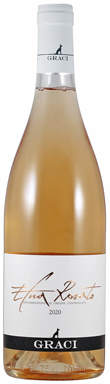
The intriguing pale pink colour makes you think of Provence, but the first impression is deceiving because this is pure Etna – the Nerello Mascalese...
2020
GraciEtna
Tenuta delle Terre Nere, Calderara Sottana, Etna, Sicily, Italy, 2019
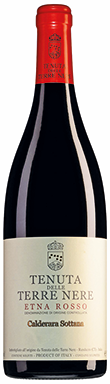
Sottana lies on an ancient lava flow and hosts centenarian vines. Spice and graphite blends with aromas of violet, berry fruits and Mediterranean scrub. Long...
2019
Tenuta delle Terre NereEtna
Donnafugata, Contrada Marchesa, Etna, Sicily, Italy, 2018
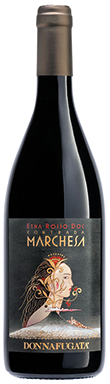
Located inside a natural amphitheatre surrounded by millenary sciare (lava flows) and bare of vegetation, this site experiences a notable temperature range. 100% Nerello Mascalese,...
2018
DonnafugataEtna
Giovanni Rosso, Etna, Sicily, Italy, 2017
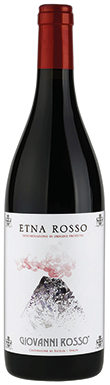
Piedmontese Davide Rosso captures the soul of Etna in this vibrant red, which is mostly Nerello Mascalese with small amounts of 'other local varieties'. The...
2017
Giovanni RossoEtna
Tenuta Tascante, Contrada Rampante, Etna, Sicily, Italy, 2017
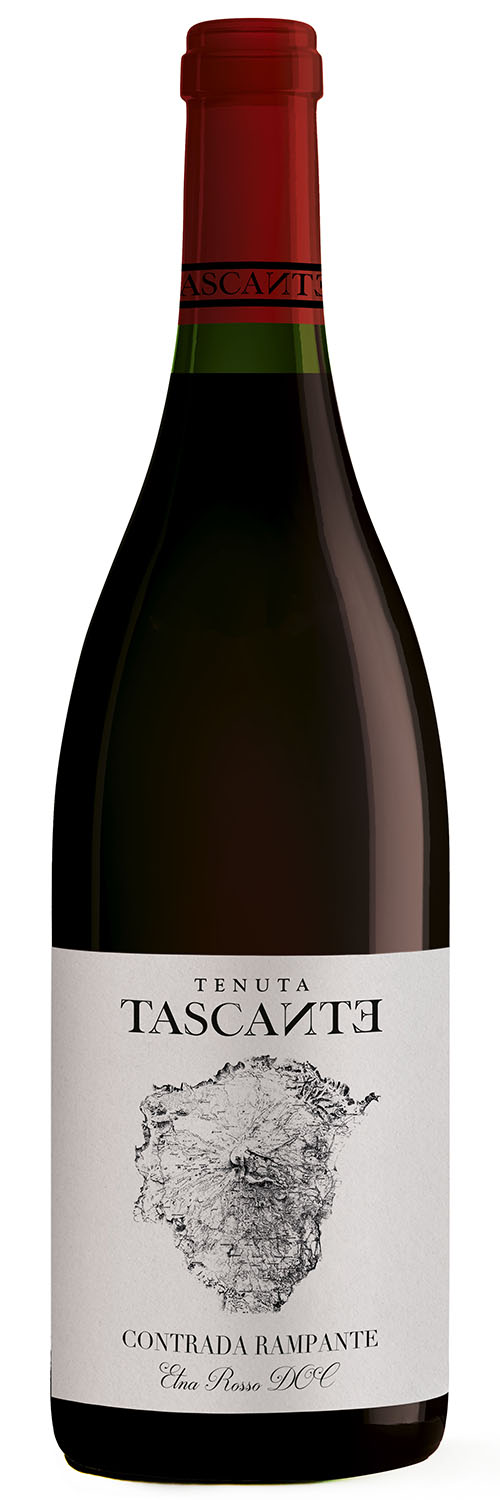
Tasca d’Almerita’s Etna estate produces this 100% Nerello Mascalese wine. It has a ruby red colour with an orange rim. The nose combines red berry...
2017
Tenuta TascanteEtna
Torre Mora, Cauru, Etna, Sicily, Italy, 2020
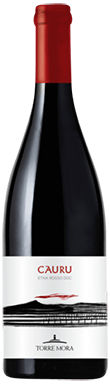
Torre Mora belongs to historic Tuscan wine family Piccini. The name Cauru (‘hot’ in Sicilian), referring to the endless fire of the bubbling volcano, suits...
2020
Torre MoraEtna
