
A new dawn beckons for the Médoc’s white wines
With a new Médoc Blanc appellation under consideration, Bordeaux’s world-famous red wine region is increasing its production of dry white wines.


So much has been written in recent years about growing consumer demand for lighter, lower alcohol wines, and at the same time, according to the ‘Focus’ report released by the OIV (International Organisation of Vine and Wine) in early December last year, white and rosé now account for more than half of global wine consumption.
Such a backdrop perhaps gives context to a decision by Bordeaux’s Médoc region, so long celebrated for its world-class reds, to be jumping on the bandwagon with an application to introduce regulations for white wines as part of the existing Médoc appellation.
Opinions vary, it must be said, over a ‘Médoc Blanc’ designation, which is currently still under consideration by the French national appellation authority INAO. The Médoc has long been known for its Cabernet-driven reds from warm gravel soils.
However, it also has pockets of clay and limestone – as well as cooler microclimates in its northern reaches nearer the Atlantic – that are amenable for crafting dry white wines.
Scroll down to see notes and scores for 17 brilliant dry whites from the Médoc
Tasting dry whites from the Médoc this past spring, merchants and winemakers based in Strasbourg, Alsace professed elation over the ‘surprising freshness’ of the wines. ‘Coming from Bordeaux, I was expecting oaky wines,’ said Sylvain Girard, who hosted the tasting at his wine boutique Cave à Terroirs in the city.
The Médoc, Haut-Médoc and Listrac-Médoc ODG wine producers’ council supports the application and according to its director Hélène Larrieu, such a designation would ‘highlight the terroirs and the knowhow of Médoc vintners, guaranteeing the Médoc location for wines whose characteristics are distinguished from [the rest of] Bordeaux by their notes of exotic fruits with a certain minerality and salinity, given the proximity of the Gironde estuary and the Atlantic ocean’.

Why Médoc blanc?
The best-reputed Bordeaux whites come from the classified Graves region – specifically from the Pessac-Léognan appellation created in 1987, which lies within it. Given Pessac-Léognan’s established prominence, industry observers might reasonably be dubious about the Médoc Blanc proposal.
‘A well-behaved Médoc must always be red,’ says Washington DC-based wine educator and former Washington Post wine columnist Ben Giliberti. ‘Not a single white wine was included in the 1855 classification of the Médoc, and over the centuries, the word claret has become synonymous with the Médoc: well balanced, well structured, and red,’ he tells Decanter. ‘For as long as Graves continues to exist, white Médocs are the answer to a question that nobody asked.’
But, evidently, backers of Médoc Blanc have asked that question, and they point to the region’s long history of white production, reaching back to the 18th century. Furthermore, of the four first growth estates in the Médoc, two – Châteaux Margaux and Mouton Rothschild (in Pauillac) – craft dry whites.
The former was already making white wine by the 18th century, says managing director Philippe Bascaules, although its Pavillon Blanc brand was established in 1920. Château Loudenne, in St-Yzans-de-Médoc further north along the Gironde estuary, bills itself as the oldest continual producer of dry whites, with yearly production having started in 1880.

Taste of the future
Historically, the Médoc made more white wine than readers might imagine. According to comprehensive background research presented by the ODG regional body, by 1929, the Féret guide (a well-known French Bordeaux wine directory) recorded 1.7 million litres of white wine production, or 2.2 million bottles.
On the other hand, in the past, whites from the Médoc ‘were not dry’, says Christophe Gouache, who acquired Château Loudenne in early 2022. ‘It would be wrong to believe that the white wines originally produced were dry,’ he says. ‘On the contrary, the taste was for semi-dry or even sweet wines until the 1960s.’
During the 20th century, red wine came to dominate production in the Médoc. By 1969, the Féret guide cites white wine production decreasing to just 180,000 litres. Fast-forward to 2023, however, and the ODG reports that figure having grown to more than 500,000 litres – and all thoroughly dry.
Other estates more recently started producing dry white wine commercially, including Château Mouton Rothschild, where Baroness Philippine de Rothschild decided the 1991 would be the first release of its Aile d’Argent white
While Médoc white wines account for only 3% of the total production of dry whites across Bordeaux, the number has increased dramatically over the last decade: in 2023, according to ODG figures provided by Hélène Larrieu, 89 producers across the eight major appellations of the greater Médoc region crafted dry white wines from 208ha under vine – more than double the 90ha of vines (and only 50 producers) back in 2017.
Market demand is a factor, says viticulture director Etienne Charrier of Château Prieuré Lichine in Margaux, which has a five-year objective of doubling the current surface area for white grape vines. José Sanfins of Château Cantenac Brown says the estate planted 1.8ha of 90% Sauvignon Blanc and 10% Semillon for its first vintage in 2011, but it has more than doubled in size with three new hectares planted in 2022 to be first used for the 2025 vintage.
At Château Loudenne, out of 9ha currently planted with white varieties, only 6.5ha were in production in 2023. However, the estate is bringing new varieties into its range, Gouache says, having already planted 1ha of Chardonnay in 2023, with plans to add 1ha each of Chenin Blanc and Viognier in the coming years.
The rules: what will Médoc Blanc be?
In 2023, the Pauillac-based Médoc, Haut-Médoc and Listrac-Médoc ODG wine producers’ council submitted the ‘cahier des charges‘ (dossier) for a Médoc Blanc AOP designation. If approved by INAO, the new appellation’s stipulations will allow for varietal flexibility: blends will have to include a minimum of 85% of the traditional Bordeaux white wine grapes Sauvignon Blanc, Sauvignon Gris, Sémillon and Muscadelle.
But Médoc Blanc will also allow for a maximum of 15% Chardonnay and/or up to 10% of other varieties, including Floreal, Sauvignac, Souvignier Gris, Liliorila, Alvarinho and Viognier.
‘No one can predict what varieties will be planted in our vineyards in 20-30 years’ time,’ says Hélène Larrieu, the ODG council’s director. ‘So our cahier des charges application is at once ambitious and humble, in terms of allowing for more grapes while also acknowledging we cannot know what our experience of changing conditions and the climate will dictate.’

Hand harvesting will not be a requirement. Existing practices mean that more than 80% of Médoc white-grape vineyards are already harvested by hand, Larrieu explains, so this hasn’t been made a stipulation of the proposed appellation rules. Larrieu adds that machine harvesting does have its advantages, such as enabling more efficient harvests in the cool of the morning.
Required maturation time: At least six months; at least 30% in oak. ‘This is not because we want oak flavours in the wines,’ Larrieu says, but because it proves ‘essential’ for palate structure. Tasted blind, many wines that had not been aged in oak at all ‘did not emerge as characteristic of the Médoc, due to a lack of structure on the palate’.
Location: Only from vines in the eight Médoc appellations – Médoc, Haut-Médoc, Listrac-Médoc, Moulis en Médoc, Margaux, St-Julien, St-Estèphe and Pauillac.
Maximum yield: 55hl/ha
A fresh take on styles
When I joined merchants to taste more than 15 wines for this article, the notion that was held among the group – that Médoc white wines would intrinsically be oak-dominated – is based on Bordeaux’s well-known use of barrel-ageing for its wines.
And in the recent past, the wines were indeed more influenced – including, for example, a Blanc de Lynch Bages 2004 tasted some years ago. But when, in 2007, Jean-Charles Cazes took over direction of Château Lynch-Bages, he reduced the percentage of new oak for ageing of the white wine. He also reduced the proportion of Sémillon in the blend to favour Sauvignon Blanc – in order to increase palate tension, he says.
At Château Lagrange (St-Julien), changes took place at about the same time. ‘After my arrival, from the 2007 vintage,’ recalls general manager Matthieu Bordes, ‘I immediately worked to protect the grapes during pressing and the musts during vinification with carbon dioxide in the form of gas or dry ice. We are now equipped with a bottling line under inert gas (nitrogen), and I have lowered the percentage of new barrels from 80% to 40%-50%.’
In a recent tasting at Château Mouton Rothschild, technical director Jean-Emmanuel Danjoy explained how the estate had also progressively lowered its new oak for ageing for white wines, from about 60% to 40%.
Beyond the oak aspect of Médoc whites, styles vary. Some estates use more non-traditional varieties than others. Both Château du Tertre and Château Retout include percentages of grapes such as Gros Manseng in their blends that would not fit the specifications for the proposed Médoc Blanc AOP.
Some estates choose to pick earlier than others, to preserve freshness in the wine, even though it may increase the risk of attaining more prominent greenish tones characteristic of the varieties used, particularly in the case of Sauvignon Blanc.
Others opt for a richer style. Château Talbot’s Caillou Blanc, which started in the early 1950s, has evolved over the past 15 years, under the leadership of cellar master Jean-Max Drouilhet.
‘From a classic Sauvignon style, today we produce more of a gourmet white,’ explains Jean-Michel Laporte, Château Talbot’s general manager. ‘And we harvest the whites late, generally a week or so after our colleagues, in order to obtain maximum fat, especially with the Semillon, and to degrade the volatile thiol aromas [commonly associated with tropical fruit characters] of the Sauvignon.’

Pros & cons
Producers appear split over the Médoc Blanc proposal. Those with strong existing brands are neutral or unenthusiastic. In the 2022 vintage, Château Margaux introduced a second dry white wine – Pavillon Blanc Second Vin. The selection for its Pavillon Blanc is incredibly strict, but the winemakers decided the remaining grapes were too good to waste.
‘The reputation of the Pavillon Blanc du Château Margaux is such today that the appellation is not essential, so if the name of it were to change it would probably not have a big impact – for it to continue as Bordeaux Blanc would be perfectly acceptable,’ Bascaules told me.
Michel Reybier, owner of St-Estèphe second growth Cos d’Estournel – whose first white wine vintage was 2005 – is more open to the idea: ‘We strongly believe in the potential of these terroirs to produce great white wines, and the question of a Médoc appellation for white wines deserves to be asked and studied,’ he says, ‘even if in certain cases a wine’s brand has largely overtaken the appellation as a benchmark for the end consumer.’
On the one hand, says Château Clarke’s technical director Fabrice Darmaillacq, a new designation could ‘make Médoc wines distinct from Pessac-Léognan or Bordeaux, offering an alternative with a Blanc du Médoc style, unique and in tune with the times’, and it would ‘create a family identity and common recognition for these wines’.
On the other hand, he adds: ‘The new designation could further complicate consumer understanding in an already complex market, particularly in the face of New World wines, and imposing additional specifications may not be accepted by all producers, thus leading to division within the industry.’
An increasing number of Médoc estates are crafting fresh dry whites with fruit purity that are not over-oaked and are appreciated by the wine trade and by consumers. It now remains to be seen if a specific Médoc white wine style can emerge from the symphony of expressions currently on offer.
See notes and scores for 17 of the best dry whites from the Médoc
Related articles
- Rare Bordeaux stars as Christie’s Avery cellar auction tops £2.5m
- Renewal, renovation and innovation in Bordeaux: Five revitalised estates to follow
- Bordeaux 2010: Reappraising the grands crus of the Médoc
Château Cos d'Estournel, Blanc, Bordeaux Blanc, Bordeaux, France, 2021
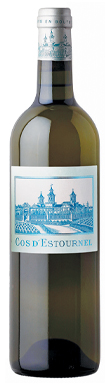

Clementine and lemon/lime brightness, spring flowers, white pepper and wet stone. Cool ocean breezes near the mouth of the Gironde estuary and the clay and...
2021
Château Cos d'EstournelBordeaux Blanc

Château Tronquoy-Lalande, Blanc, Bordeaux Blanc, Bordeaux, France, 2019
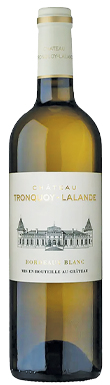
Vivid aromatics of peach, quince, pear, acacia and liquorice reveal a wine of sumptuous elegance, with the zing and creaminess of lemon meringue. The vineyard...
2019
Château Tronquoy-LalandeBordeaux Blanc
Château du Tertre, Tertre Blanc, Vin de France, Bordeaux, France, 2021
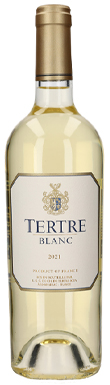
Vivid aromas of white stone fruit, grapefruit and acacia, showing fine density, concentration and vivacity. A Vin de France because of the non-traditional grapes in...
2021
Château du TertreVin de France
Château Lynch-Bages, Blanc de Lynch Bages, Bordeaux Blanc, Bordeaux, France, 2021
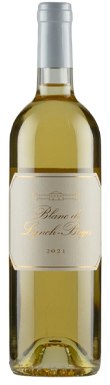
Everything about this wine, from the citrus and floral aromatics to a medium-bodied, subtle opulence, reflects balance, including the well-integrated oak and smooth finish. It...
2021
Château Lynch-BagesBordeaux Blanc
Château Talbot, Caillou Blanc, Bordeaux Blanc, Bordeaux, France, 2019
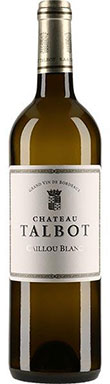
Acacia aromas, very ripe and almost confected, but there’s freshness of juicy quince and pear. A slight hint of bitterness on quite a long finish;...
2019
Château TalbotBordeaux Blanc
Château Brane-Cantenac, Blanc, Bordeaux Blanc, Bordeaux, France, 2021
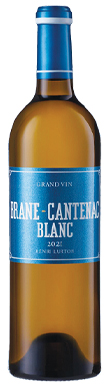
Engaging red apple, acacia and lemon aromas, bright on the palate with energy, depth and balanced, well-integrated oak. One of the more recent white wines...
2021
Château Brane-CantenacBordeaux Blanc
Château Clarke, Le Merle Blanc, Bordeaux Blanc, Bordeaux, France, 2021
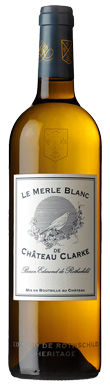
Brisk lime citrus with herbal touches, then a balanced palate that’s both subtle in its opulence and energetic. The diversity of cool clay and limestone...
2021
Château ClarkeBordeaux Blanc
Château Mouton Rothschild, Aile d'Argent, Bordeaux Blanc, Bordeaux, France, 2021
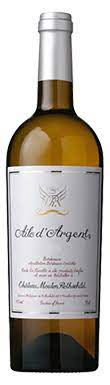
Exotic aromas of quince, white chocolate and cocoa butter leap from the glass along with rather evolved notes (for such a young wine) of toffee...
2021
Château Mouton RothschildBordeaux Blanc
Château Prieuré-Lichine, Le Blanc du Château Prieuré-Lichine, Bordeaux Blanc, Bordeaux, France, 2021
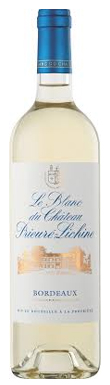
An opulent style, combining juicy peach, citrus and subtle white tobacco aromas. Rich yet balanced and fresh, with both density and polish, the Semillon lending...
2021
Château Prieuré-LichineBordeaux Blanc
Château Cantenac Brown, Alto de Cantenac Brown, Bordeaux Blanc, Bordeaux, France, 2021
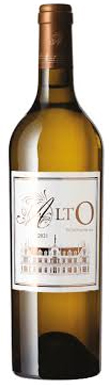
Peach and apricot aromas with notes of clementine. The palate is rather rich, yet has balance, and the yellow stone fruit aspects of the Semillon...
2021
Château Cantenac BrownBordeaux Blanc
Château du Retout, Le Retout Blanc, Vin de France, Bordeaux, France, 2021
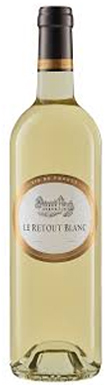
An eclectic style, blended from 56% Gros Manseng, 35% Sauvignon Gris and 4.5% each of Savagnin and Mondeuse Blanche, with fermentation in a mix of...
2021
Château du RetoutVin de France
Château Fonréaud, Le Cygne, Bordeaux Blanc, Bordeaux, France, 2020
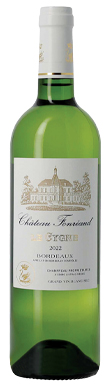
Reflecting a sunny and warm vintage, with aromas of peach, Mirabelle plum jelly, lemon and oak toast. The palate has a rather viscous texture yet...
2020
Château FonréaudBordeaux Blanc
Château Lagrange, Les Arums de Lagrange, Bordeaux Blanc, Bordeaux, France, 2021
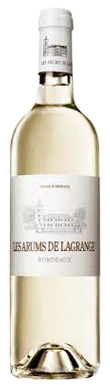
Pleasing aromas of lime and lemon, with grassy varietal aspects. The palate is brisk and pleasurable, combining tangy energy with a svelte texture. After a...
2021
Château LagrangeBordeaux Blanc
Château Lestage, La Mouette, Bordeaux Blanc, Bordeaux, France, 2020
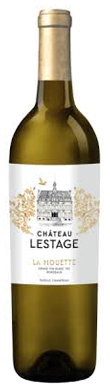
You can tell that this comes from a warmer vintage, with more ripe, fleshy peach and apricot than lively citrus. Aged in 45% new oak,...
2020
Château LestageBordeaux Blanc
Château Loudenne, Blanc, Bordeaux Blanc, Bordeaux, France, 2021
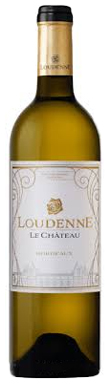
Aromas of lemon and grapefruit, the palate is straightforward and linear, delivering a tasty wine to serve for a summer garden party or to try...
2021
Château LoudenneBordeaux Blanc
Château Lagrange, Les Arums de Lagrange, Bordeaux Blanc, Bordeaux, France, 2019
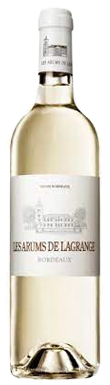
Attractive aromas of white stone fruit and acacia. The palate is smooth but a burgeoning hazelnut note shows evolution and the heat of the vintage....
2019
Château LagrangeBordeaux Blanc
Château Loudenne, Blanc, Bordeaux Blanc, Bordeaux, France, 2019
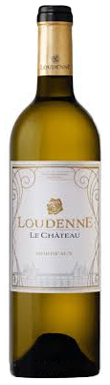
Pleasing white stone fruit and acacia aromas presage a creamy palate that has noticeable warmth.
2019
Château LoudenneBordeaux Blanc
