
Ageing Grower Champagne: The peaks and pitfalls
Knowing how long to age fine wine is already a ticklish conundrum, but with Champagne the variables can be even more complex. Tom Hewson explores the world of old Grower Champagnes.


Where in the world might you find a £100 wine that won’t benefit from a decade in the cellar?
The list is certainly short, though Champagne is arguably on it. The ageworthiness of Champagne’s Grandes Marques is fairly well understood: entry level wines will usually benefit from a year or two, vintage wines should still be going strong a decade after release, and any prestige cuvée worth its salt ought to still be shining well beyond that.
Scroll down to see notes and scores for five older Grower Champagnes
Expanding the theory
However, does this formula still work when we step outside of the neatly formalised expectations built into a famous house’s portfolio, and into the world of growers, independent producers and boutique houses?
Does cost, or renown, guarantee safe passage in the cellar? How easy is it to make expensive mistakes?
Peter Crawford is a Champagne collector and one half of independent importer/retailer Sip! which specialises in limited-production, independent Champagnes.
‘Émilien Allouchery is a new producer we’ve brought on. His wines are delicious,’ says Crawford, ‘but would I want to age them? No! They’re delicious now. Do I think he’s a great winemaker, and will make more ageworthy wines in the future? Absolutely.’
At £65 per bottle, Allouchery’s entry-level Champagne is nipping at the heels of many vintage Grandes Marques which are designed for ageing.
Yet in this case, £65 is considered entry level, as it is for established independent names such as Bérêche, Savart, Lassaigne and a host of others. Some non-vintage cuvées from particularly lauded independent names run close to £100 per bottle.
A rule of thumb often referred to in Champagne is that the period of time a bottle spends on lees should match the period of time to keep it once it has been disgorged (when the lees are removed and the bottles are sold).
So a non-vintage wine – even one that costs £100 – with 24 months on lees might be unlikely to outlast a cheaper wine built as a vintage with time on lees.
How to do the sums?
Any Champagne that carries a year on its label is classified as vintage (or millésimé) and must have spent at least three years in the cellars before release.
In comparison, non-vintage wines can spend as little as 15 months before release. In addition, many Champagnes now print a disgorgement date on the back label.
So, if the base year (année de base, or the harvest year) or the year of tirage (when the Champagne is bottled, the following spring) is printed, as it often is, then it is possible to work out how long the bottle has spent on lees.
For example, a Champagne with a 2019 base year that was disgorged in spring 2023 will have had three years on lees. On the other hand, a Champagne that saw its tirage in 2022 and was disgorged in autumn 2023 might only have had 15 months on lees.
Rules of thumb, though, are hardly exact when you get to some of the more extreme examples. One of the wines tasted below is a 2004 from Champagne Tarlant in the Marne Valley that has seen 15 years on lees.
‘If anything this has had too long,’ says Crawford. The idea of doubling up lees ageing time here holds little appeal; extremely long-aged cuvées often bloom within just a few years of disgorgement.

The ageing lottery
Crawford is keen to point out that, even with his level of experience, knowing how long to leave it can be a lottery. He opens a 1995 Le Mesnil blanc de blancs from biodynamic grower Pascal Doquet that is quite astonishingly pristine: ‘I was worried about this one…but it’s a great wine!’
A fellow collector (who wishes to remain anonymous) sounds a note of caution after buying a case from the same producer a decade ago.
‘It was great on release,’ he explains. ‘Every bottle I’ve had since, though, has been progressively worse, tasting tired with browned apple flavours.’
He feels that independent producers can be prone to dropping levels of sulphites too low. ‘Take [Ambonnay-based grower] Marguet. The wines just prematurely oxidise.’
At a visit to the estate in 2022, though, I asked Benoît Marguet about his view on ageing. ‘I don’t care about the ageing potential of my wines. My wines are extremely low in sulphur, and they age very well…there are a lot of cheaters in the world of wine, and you can add a ton of sulphur and have it age 200 years. But that’s not what I want to do.’
Marguet’s single-village vintage wines regularly fetch over £85 per bottle. While they can benefit from a short period of cellar ageing to open up, long-term ageing is unlikely to be the first thing on the minds of anyone who knows the wines.
If in doubt…
But do we really have to get as in-depth as understanding a producer’s sulphite regime in order to know whether the bottle is going to survive for long?
Perhaps not, but some research certainly helps. Queena Wong, collector and frequent traveller to Champagne, relies on some, ‘pre-existing knowledge of the producer and the style.’
She also points out that the expectations for ageing vary depending on the consumer: ‘Most consumers might look at 2008, 15 years on, and think “wow”, but collectors are thinking “god, that’s so young!”’
Away from the top prestige and vintage cuvées from the large houses, though, 2008 is starting to look fully mature. There are signs, too, that the market for mature Champagne may be catching on to its unpredictability.
In February 2024, UK fine wine dealer Seckford Wines offered something that would have been unthinkable in the red-hot market of 2022 – a Champagne sale which offered, among other things, savings of up to £400 on cases of previous vintages of ultra-rare grower Champagnes from Cedric Bouchard and Jacques Selosse.
As with most wine, too young is always better than too old. If in doubt though, the advice seems clear: just pop the cork.
To drink or to age? Five top tips:
- Look for vintage (or tirage) date and disgorgement date on the bottle.
- A good rule of thumb for younger wines is not to age them for longer post-release than they had on lees.
- Be cautious ageing wines that advertise ultra-low (or zero) sulphites.
- Magnums age more slowly.
- Chardonnay-based blends often age less oxidatively.
Notes and scores for five older Grower Champagnes:
Related articles
- Collector’s Guide: Champagne
- First Taste: La Grande Dame Rosé 2015
- Egly-Ouriet: Maestro of the Montagne de Reims
Pascal Doquet, Grand Cru Le Mesnil-sur-Oger, Côte des Blancs, Champagne, France, 1995
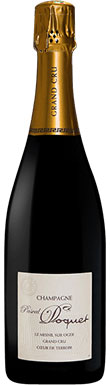

This was the surprise star of a tasting of aged grower Champagnes, stored in one cellar since the original release in 2000. The pure, steely...
1995
Pascal Doquet

Jacques Selosse, Initial Blanc de Blancs Grand Cru, Champagne, France
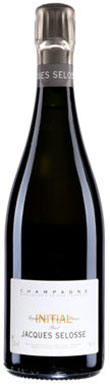
Lovely intense and invitingly rich baked bread aromas lead to a very dry, ripe, rich and powerful palate. Oxidative, fat and autolytic, it has a...
Jacques Selosse
De Sousa, Cuvée des Caudalies Grand Cru Blanc de Blancs, Champagne, France, 2006
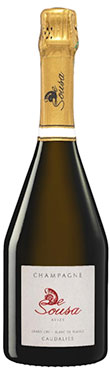
2006 was a warm, wide and sometimes ungainly vintage for Chardonnay, but the magnum format and the natural tension of the grand cru fruit here...
2006
De Sousa
Champagne Alexis, Arietis, Champagne, France
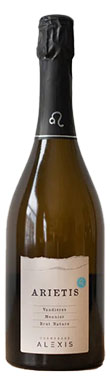
A wine from Alexis Leconte in Troissy that demonstrates that the period of time a bottle spends on lees should match the period of time...
Champagne Alexis
Tarlant, L'Aérienne Prestige Rosé, Champagne, France, 2004
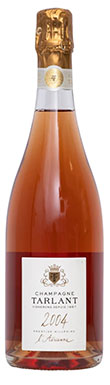
A highly individual rosé from long-lees ageing specialists Tarlant, this is great example of when not to submit a Champagne to further ageing, despite its...
2004
Tarlant
