On a bitter January morning, as a snowstorm catches Champagne’s gritting lorries unawares, 10 barrels sit unceremoniously under one of two Coquard presses, their bungs stained pale cherry.
The new Champagne base wines from the 2023 vintage are downstairs in the cellar, but here, making use of what ought to be slightly warmer temperatures above ground, is Francis Egly’s still red, Coteaux Champenois.
Scroll down to see notes and scores for Egly-Ouriet’s latest Champagne releases
‘It took 300 hours to sort the grapes for just these 10 barrels,’ says Egly as we steal a taste of the new vintage. His daughter Clémence shoots across a knowing look.
2023 was a vintage of considerable difficulty in Champagne, with botrytis, sour rot and desiccation of grapes presenting a challenge that only the best-equipped and most meticulous vignerons could overcome without a scratch. Francis Egly is one of those vignerons.
King of the Montagne
Francis and Clémence Egly.
(Image credit: Tim Hall, Scala Wine)
Egly is the fourth generation to farm the 10 hectare estate which consists primarily of Pinot Noir planted in the grand cru village of Ambonnay on the south-facing slopes of the Montagne de Reims – Champagne’s most northerly sub-region.
There are also parcels in neighbouring Bouzy as well as in Verzenay on the northern slopes. The vineyards of Egly’s wife, Annick, have also been added to the estate, giving rise to two wines from nearer Reims: ‘Les Vignes de Vrigny’, a Meunier from the sandy soils of Vrigny in the Petite Montagne, and ‘Les Prémices’ from plots of Meunier, Pinot Noir and Chardonnay in Trigny, just to the north in the Massif de St Thierry.
Egly also purchased an important Chardonnay-dominated vineyard in chalky, south-facing Bisseuil (also on the south face of the Montagne) in 2016.
Decanter newsletter
Get our daily fine wine reviews, latest wine ratings, news and travel guides delivered straight to your inbox.
The Bisseuil vineyard is, ‘more like Ambonnay,’ Egly says, because of its almost severe chalkiness and southern exposure. Given its location, adjoining the celebrated village of Mareuil-sur-Aÿ, Bisseuil is a village that perhaps deserves to be better recognised.
Egly’s holding is almost entirely Chardonnay here, although he believes the reason for the village’s unusual Chardonnay dominance has more to do with commerce than terroir: ‘it used to be that growers were paid more for Chardonnay here than for Pinot Noir, so they replanted,’ he says with a slight shrug.
Egly-Ouriet is a récoltant-manipulant, or a true grower estate (often shortened to RM on wine labels), with an admirable spread of villages, terroirs and grape varieties under its remit. One might assume, then, that Egly would have in mind a sort of entry-level blend to represent the whole estate, rather like a small house would consider.
‘We’ve never been tempted to blend,’ he answers without hesitation. While they make a blend of the Grand Cru villages for the Brut Grand Cru, blending between these and what were historically the lower-rated villages holds little appeal. ‘We find it more interesting to keep them separate, to retain their character’.
Avant-garde
Today, single-varietal Meunier wines are a fixture in independent Champagne, with many producers in the Petite Montagne and Vallée de la Marne making cuvées that celebrate Champagne’s somewhat maligned grape.
Egly, however, debuted his cuvée Les Vignes de Vrigny in 2000, when the landscape was rather different. ‘Meunier was only used in the assemblages. We were one of the first to do it.’
Egly is not a vigneron to wax lyrical – or philosophical – about his wines, although one does sense that he holds particular affection for this cuvée.
As both this and the Brut Grand Cru became more and more in demand throughout the 2010s, however, there was a call to open up the entry point to the portfolio with a new cuvée: Les Prémices.
Les Prémices: The gateway cuvée
Heading north from Vrigny, skirting around the western edge of Reims, the Petite Montagne is left behind and the Massif de St Thierry looms. This is Champagne’s most northerly zone, little-known by anyone other than the most dedicated of followers.
Off the beaten path, Meunier blooms in these colder villages on soils of marl and sand. Rather like the nearby Ardre Valley, the gentle undulations offer up a little more variation than is found in the Petite Montagne.
In the village of Trigny, the vineyards that came into the estate via Egly’s wife cover 3.5ha across all three grape varieties, and the first vintage made from these vines was 2016.
Egly-Ouriet’s wines have become heavily allocated over the last decade, so the introduction of Les Prémices was ‘a way to open up our offering,’ says Clémence. The vineyard in Trigny is roughly the same size as those of Vrigny (2ha) and Bisseuil (1.3ha) combined, so represents a sizeable addition to the estate.
It’s a welcome opportunity to taste an Egly-Ouriet wine for those who previously found themselves staring too often at a ‘sold out’ button.
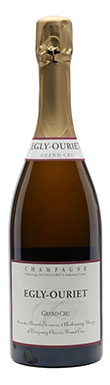
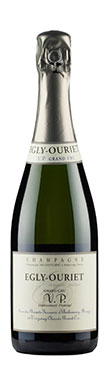
Key wines:Brut Grand Cru, ‘V.P’ Extra Brut, Millésime
On climate and hard work
Champagne as a region is keen to tell its story of adaptation to climate change, extreme vintages and innovative viticulture, but Egly, an old hand in his quest for quality over quantity, offers up a pithy counterpoint: ‘The only change is that I have bought earlier airline tickets,’ he quips; earlier harvests mean earlier summer holidays.
‘We don’t harvest riper than we used to…we always harvested ripe, we never chapitalised. The change is that others used not to harvest ripe, and now they do!’
Egly is keen to point out that Champagne has long had its share of climate chaos. ‘I remember being a child in Ambonnay and seeing the village entirely flooded, huge hailstorms, frosts in the 1980s like we haven’t seen since’. While far from denying the excesses of climate change, it’s refreshing to meet some sangfroid, even on these warm slopes.
Work is simple, at least when it comes to the winery: the grand cru wines ferment in barrel, with no hard-and-fast rules on malolactic fermentation, while the wines from Trigny, Vrigny and Bisseuil ferment in steel.
Non-vintage releases receive young reserve wines from the previous two or three harvests, often at around 50% of the blend – the depth and completeness of these wines is coming straight from the vineyards rather than from large quantities of old reserves.
Ageing on lees is long and patient: three to four years at non-vintage level; seven or more for the remarkable VP – ‘vieillissement prolongé’, or prolonged ageing – version of the Brut Grand Cru; and six or more at vintage level.
It’s the vineyard work that has long marked out the estate; working the soils, restricting yields (Egly green harvested in 2023, removing excess yield early in the season in a way that is still far from the norm in high-yielding years in Champagne) and paying the sort of relentless attention that results in truly ripe grapes and exceptional crop health, even in difficult years such as 2011.
Egly has never certified organic or biodynamic, the long history of eschewing herbicides, pesticides and chemical fertilisation more of a logical step in improving quality and ripeness than an attempt to garner green credentials.
This approach needs a nimble vineyard team, though; even though the Petite Montagne is a mere 20 minute’s drive away, Egly has a team of three vineyard workers solely dedicated to the sites here, able to respond at speed to the slightly different conditions on this side of the mountain.
If anything, it is the wines from less well-regarded vintages that cement Egly’s formidable reputation. Patience, though, is required; while the wines are released with adequate time post-disgorgement, even at entry level they are often a long way from their best upon release.
Full aromatic range and resonance arrive with time on cork; perhaps a year for Les Prémices, two or more for the other non-vintage wines and much longer for the Blanc de Noirs Grand Cru and the vintage wines.
Next to the patience detailed in Egly’s work over the last four decades, a little extra patience before opening these wines is worth the wait.
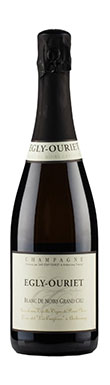
Egly-Ouriet, Blanc de Noirs Grand Cru, Champagne, France
My wines
Initially reticent upon release, this cuvée's explosive, char-fuelled energy of fruits of the forest, dried apple and subtle roasted spices is delivered with a beautifully...
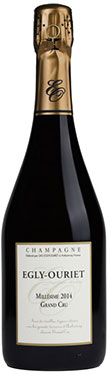
Egly-Ouriet, Grand Cru Millésime, Champagne, France 2014
My wines
The freshness of the 2014 vintage is felt without any of its slacker, looser characteristics in yet another example of Egly-Ouriet excelling in a variable...
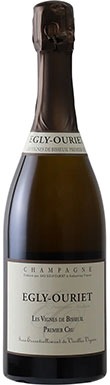
Egly-Ouriet, Les Vignes de Bisseuil Premier Cru, Champagne, France
My wines
A solitary Chardonnay-led cuvée in the Egly-Ouriet portfolio, this nevertheless feels like one of the family with its expressive Mirabelle plum, tangy lemon and toasted...
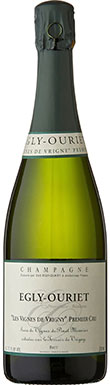
Egly-Ouriet, Les Vignes de Vrigny Premier Cru, Champagne, France
My wines
This cuvée is always such a clear-eyed picture of snappy, fragrant Meunier full of just-ripe apricot, fresh almonds and an almost citric focus on the...
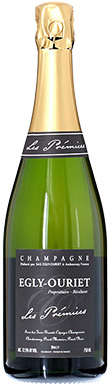
Egly-Ouriet, Les Premices Brut, Champagne, France NV
My wines
The most accessible and open-knit of Egly-Ouriet's cuvées, Les Prémices carries an appetising brown bread, honey and spice complexity behind the fragrant, rounded orchard fruit...
Tom Hewson writes about Champagne and sparkling wine. He authored the Tim Atkin Champagne Special Report in 2022, featuring over 600 wines and insights from five weeks spent in the region. As well as writing freelance, reviewing and presenting sparkling wines, Tom runs his own newsletter Six Atmospheres, reaching Champagne and sparkling wine enthusiasts all over the world every week.