
Ageworthy Italian whites: 10 to try
Raffaele Mosca selects five pairs of Italian whites to illustrate that it's not just the reds which can age well.


Who would have imagined that mature Vernaccia di San Gimignano could offer an almost Burgundian combination of luscious creaminess and mouthwatering salinity at age 25?
The 1997 Carato by Montenidoli left assembled professionals in awe during a masterclass held as part of the annual anteprima event in San Gimignano earlier this year.
Scroll down to see tasting notes and scores for 10 ageworthy Italian white wines
Vernaccia di San Gimignano was the first Italian white wine to carry the Riserva designation, so the fact that it ages gracefully should be no surprise. Its actual potential, however, isn’t always evident when sampling young examples, which often hit the market too early and display either simple fermentative aromas or unintegrated oak.
The (slow) rise of ageworthy whites
While drinking Italian whites within a couple of years from harvest continues to be the norm, the demand for top-shelf examples with some bottle age has slowly but steadily grown over the last few years, especially in fine-dining restaurants: Per Se in New York City and The Ledbury in London are two examples of world-famous establishments currently featuring back-vintages of Italian whites in their extensive wine lists.
‘Restaurants do request back-vintages of premium Italian whites,’ stated Mark Perna, sales and marketing director at UK importer Astrum Wine Cellars, ‘mostly from regions such as Alto-Adige, Sicily and Campania, which are building a reputation for their ability to produce ageworthy whites.’
One of the main strengths of the category is the excellent quality-to-price ratio: ‘Dramatic price increases in other countries such as France have opened the door for Italy,’ Perna noted.
Versatility with food is another factor: mature white wines have the aromatic breadth and poise required to match a wide variety of dishes, including those featuring vegetables, cheese, mushrooms or truffles as main ingredients.
Northeast
Northeast Italy offers the country’s largest variety of whites built for the long haul. Friuli-Venezia Giulia shines for its skin-contact (orange) wines, which are often held back for years before release and age like fine reds, while Alto Adige’s cooperatives have mastered the art of making premium non-macerated whites.
Sebastian Stocker, head winemaker at Terlano – Alto Adige’s oldest cooperative – from 1954 to 1993, kick-started the tradition by keeping stainless steel casks containing Pinot Bianco, Chardonnay, and Sauvignon on the fine lees aside. ‘There was no knowledge and no market for aged whites in the early going, yet Stocker wanted to show the potential of low-yielding vineyards on Terlano’s volcanic soils,’ explained Rudi Kofler, current winemaker at Terlano. ‘He loved Champagne, and aimed to make still whites that offered the same leesy complexity.’ Starting from the 1979 vintage – released in 1991 – these wines began giving life to the Rarity collection, Italy’s most critically-acclaimed set of late releases.
Nowadays, the entire production of Terlano is made to last: Kofler suggests even entry-level offerings drink well for at least 10 years. The selections go even further: a recently tasted 1998 Nova Domus proved remarkably youthful. It was poured alongside an awe-inspiring 1957 Terlaner Vinoteca Storica, reaffirming the immortality of the wines from this terroir.
Northwest
Virtually unknown until 20 years ago, Timorasso from the Colli Tortonesi area of southeast Piedmont is the only Italian white wine that bases its entire reputation on the ability to improve with age. Late ripening, sensitive to rot, and suffering from millerandage (uneven ripening of the berries), it faced extinction before producer Walter Massa rediscovered a tiny 0.5-hectare parcel in the late-1980s. Thanks to him and a small number of other producers, by the late-1990s there were 40 hectares of Timorasso planted, while today there are over 330 hectares.
The key to Timorasso’s success lies in an almost unique combination of Riesling-like mineral complexity, enticing savouriness thanks to soils similar to those found in the Barolo area, and substantial palate weight given by the warmest and driest climate in Piedmont. ‘Time is the main ingredient to make great Timorasso,’ explained Massa.
In line with this principle, the soon-to-be-approved Derthona Timorasso DOC will require at least one year of ageing for the annata wines and two years for Riserva, while also introducing the Chablis-like Piccolo Derthona category for those wishing to focus on early-drinking styles.
Central Italy
Central-Eastern Italy’s favourable environment, with verdant hills stretching from the foothills of the Appenine mountains to the Adriatic coast, hasn’t always been exploited for quality winemaking: Verdicchio from the Marche region, for example, still struggles to overcome stereotypes deriving from the lean crowd-pleasers sold in amphora-shaped bottles that flooded international markets in the past.
Top examples of Verdicchio can age very well, however: Riserva from Castelli di Jesi shows some affinity with aged white Burgundy, developing nutty aromas and a bold yet savoury palate over eight to 15 years in the cellar. Meanwhile, those from the inland valley of Matelica recall alpine wines with their herbal nuances and long-running acidity balanced by a richer structure. Look out for examples by Bisci, Bucci, Fattoria Coroncino and La Monacesca.
South of Marche, the native Trebbiano Abruzzese is an inherently qualitative grape, but the workhorse Trebbiano Toscano still accounts for the lion’s share of Trebbiano d’Abruzzo DOC production. Stubborn advocates of the former, such as Valentini and Emidio Pepe, make almost immortal low-intervention wines that often develop Montrachet-like aromas of mushrooms, white chocolate and L’ Aquila saffron.
Pecorino has also proved capable of producing long-lived wines that are slimmer and less flamboyant, but equally distinctive. Top versions by Cataldi Madonna, Pasetti, and Masciarelli (Castello di Semivicoli) exuded herbal freshness after several years in bottle at a recent tasting.
The ‘white queen of Tuscany’, Vernaccia di San Gimignano usually shows moderate acidity levels and therefore mainly relies on salinity, phenol-driven tanginess, and a rich texture to stay lively in the long run. ‘Vernaccia’s mid-palate concentration is its armour to defy time,’ stated Gabriele Gorelli MW during a masterclass on their ageability.
While the Riserva category gives plenty of ageworthy wines, even the less ambitious and deceptively uncomplicated ‘annata’ wines evolve slowly. A vertical tasting of Selvabianca, the entry-level offering by Il Colombaio di Santa Chiara, made a case for that, with the 2014 and 2013 vintages still not showing any signs of oxidation.
Making ageworthy white wine
Common practices for the production of ageworthy whites include cold soaking before fermentation, and extended lees ageing. ‘Lees ageing is essential to stabilise the wines and make them less prone to oxidation,’ explained Rudi Kofler.
Ageing vessels also play a fundamental role: while barrels suit international grapes best, wines made with native grapes typically undergo fermentation and maturation in stainless steel or larger oak vessels, which helps to preserve varietal character by denying or minimising the uptake of oak flavours.
South
Southern Italy’s best known white wine-producing region, Campania shares a similar story with Colli Tortonesi: the vineyard surface has grown at a slower pace, but the number of commercial wineries in the region has risen from fewer than 10 to over 200 in the last 40 years.
Top Fiano di Avellino and Greco di Tufo always shine in the long run, the high diurnal swings in the inland Irpinia region favouring the development of ripe acidity and stable aromatic compounds. Aged examples may be hard to find, however, as most producers are too small and/or lack the history to be able to offer older vintages.
Di Meo is an exception to this rule, and their late releases prove the potential of both grapes: Vittorio reflects the bolder and earthier style of mature Greco, while Alessandria and Erminia highlight the inoxidisable vibrancy of Fiano.
Coastal whites such as Falanghina from the Campi Flegrei area also deserve attention: 10- to 15-year-old versions poured recently offered attractive honeyed flavours complicated by smoky nuances and zingy salinity.
‘The key to the longevity of our Falanghina lies in the volcanic soils,’ said Gerardo Vernazzaro, owner of Cantine Astroni. ‘Despite not being as acidity-driven as Fiano or Greco, our wines are rich in long-lasting aromatic molecules and mineral flavours.’
A bright future
The sheer variety of cellar-worthy white wine options from Italy is exhilarating, and this is likely to become even greater in the future as new ageable whites are emerging.
Carricante from Etna looks especially promising, with prolonged cellaring allowing it to flesh out without losing its distinctive steeliness. And so, too, do top-shelf Vermentino, Trebbiano Spoletino from Umbria, and Lugana from the shores of Lake Garda.
Ageworthy Italian white wines
Five pairs of wines illustrating the ageability of white wines from around Italy
Related articles
- Ageing Italian whites: A (patient) wine lover’s guide
- Italy’s finest white wines: 20 top bottles, region by region
- Want to sell your wine cellar? Here’s how
Cantina Terlano, Nova Domus Riserva, Alto Adige/Südtirol, Terlaner, Trentino-Alto Adige, Italy, 2020
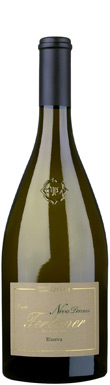

A blend of of Pinot Bianco (70%), Chardonnay (25%), and Sauvignon Blanc (5%) from over 40-year-old vineyards, the 2020 Nova Domus displays exuberant aromas of...
2020
Cantina TerlanoAlto Adige/Südtirol

Cantina Terlano, Vinoteca Storica, Alto Adige/Südtirol, Terlaner, Trentino-Alto Adige, Italy, 1957
Mainly consisting of Pinot Bianco, with dollops of Chardonnay and Sauvignon Blanc, the 1957 Terlaner displays a luminous golden colour and opens up to Rioja...
1957
Cantina TerlanoAlto Adige/Südtirol
Di Meo, Erminia Riserva, Fiano di Avellino, Campania, Italy, 2004
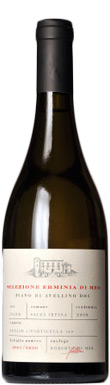
Having rested for about 18 years before release – including approximately 10 years in stainless steel – the 2004 Erminia exudes the flamboyance of mature...
2004
Di MeoFiano di Avellino
Di Meo, Fiano di Avellino, Campania, Italy, 2022
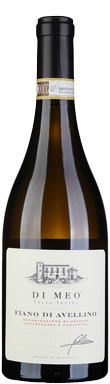
Like most Fiano in their youth, the 2022 by Di Meo is initially quite shy. Pear, camomile, lemongrass and hazelnuts slowly emerge and anticipate a...
2022
Di MeoFiano di Avellino
Cataldi Madonna, Frontone, Terre Aquilane, Abruzzo, Italy, 2020
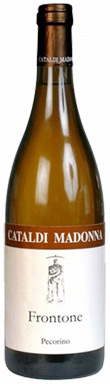
Sourced from the vineyard that gave the first-ever single-varietal Pecorino from Abruzzo in 1996, this new release boasts lovely leesy complexity, with hints of marzipan...
2020
Cataldi MadonnaTerre Aquilane
Cataldi Madonna, Pecorino, Terre Aquilane, Abruzzo, Italy, 2010
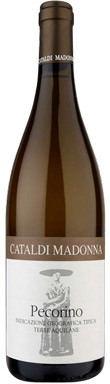
First released in 1996, this pioneering wine has been replaced by Giulia, Supergiulia and Frontone in recent vintages. Impressively youthful for its age, subtle nuances...
2010
Cataldi MadonnaTerre Aquilane
La Colombera, Derthona Timorasso, Colli Tortonesi, Piedmont, Italy, 2006
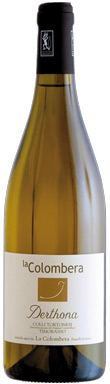
Pre-dating the introduction of La Colombera’s single-vineyard wine, Il Montino, the 2006 Timorasso consists of a blend of all the plots owned by the Semino...
2006
La ColomberaColli Tortonesi
La Colombera, Derthona Timorasso, Colli Tortonesi, Piedmont, Italy, 2021
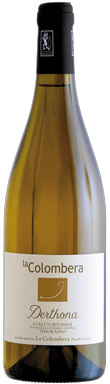
While being La Colombera’s entry-level offering, this wine usually proves exceptionally ageworthy. Keep it aside for at least two years. Youthfully subdued aromas of zesty...
2021
La ColomberaColli Tortonesi
Montenidoli, Carato, Vernaccia di San Gimignano, Tuscany, Italy, 1997
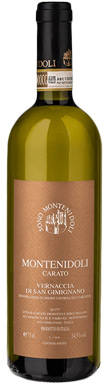
From the ripe and generous 1997 vintage, Carato is sourced from vines in the centre of the DOCG planted on marine sediments at 350 and...
1997
MontenidoliVernaccia di San Gimignano
Il Colombaio di Santa Chiara, L' Albereta Riserva, Vernaccia di San Gimignano, Tuscany, Italy, 2020
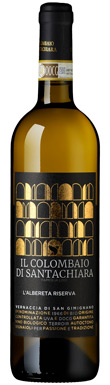
Spending 12 months in oak casks (70%) and concrete (30%), and then one more year in bottle, L’ Albereta already hints at its long-term potential,...
2020
Il Colombaio di Santa ChiaraVernaccia di San Gimignano
