
Alsace Riesling: Comparing grand cru sites


Grands Crus on limestone, granite, marl and volcanic soils all produce differing styles of wine, but is there more to it than this? Stephen Brook investigates, exclusively for Premium members...
In creating its 51 grands crus, a process which began in 1975, Alsace was following the proud French tradition of identifying its best terroirs.
This would seem to give consumers a valuable guide to a wine’s quality, but it’s more complicated than that.
Scroll down to see Stephen’s ratings on Riesling grand cru wines from this tasting
Sticking points
Alsace is home to numerous grape varieties, and so a potentially superb site for Riesling may be less suited to Pinot Gris, for example, due to its terroir or exposition.
Additionally, it is widely acknowledged that the awarding of grand cru status was rather generous – when boundaries were drawn, political considerations inevitably came into play.
As Burgundy lovers know well, it is possible to make wretched wine from a great site. A producer can over-crop or vinify clumsily, so a grand cru or single vineyard name on a label is no guarantee of quality on its own; it needs to be allied to the name of a respected producer with a good track record.
Vineyard origins
Fortunately, instances of this combination are plentiful enough in Alsace. For example, Zind-Humbrecht, which owns one third of the volcanic Rangen, has undeniably helped firm up this site’s reputation as a sensational grand cru.
Riesling reflects its vineyard origins with more precision and nuance than most grape varieties in Alsace.
A recent eye-opening tasting in London of mostly grand cru Rieslings allowed comparisons between wines that could claim to be the region’s outstanding expressions of this inexhaustible grape. Almost 60 wines were presented, each bottle colour-coded to indicate the soil type.
But it’s not always so clear-cut. One celebrated producer intoned, ‘limestone gives more horizontal wines, granite more vertical wines.’ Sounds good, but does it mean anything?
This tasting demonstrated that, as in Burgundy, each producer – without necessarily overriding terroir characteristics – can impose a certain style and balance.
The vineyard remains the crucial element, but the full picture is far more complex.
A picture of terroir
Limestone
Great purity and finesse.
Granite
The wines from Schlossberg were very consistent in character, with their linear structure, purity, and raciness. It may help that the proprietors of Schlossberg vines include some of Alsace’s greatest names.
Boxler’s wine from another granite vineyard, Sommerberg, showed a similar personality.
Volcanic
Rangen produced fiery, energetic wines from Zind-Humbrecht and Schoffitt.
Ostertag’s Muenchberg, however – another volcanic grand cru – was more restrained, tangy and mineral, and less explosive than the Rangen wines.
Marl
For Schoenenbourg, Jean-Christophe Bott of Bott-Geyl explains: ‘The main soil is marl, but it’s geologically complex. It’s a heavy soil that gives wines of depth, weight, and complexity, but with freshness too.’
But for Jean-Louis Trapet of Domaine Trapet, Schoenenbourg offers ‘fine, elegant Rieslings, and because of the slow ripening here the wines are never too opulent.’
Indeed, their wines are very different. This shouldn’t come as a surprise, since there are 53ha of vines here, with varying elevations, expositions, and micro-terroirs.
Stephen’s top Alsace terroirs for Riesling:
Related content:
Jefford on Monday: Alsace notebook
Australian Riesling: Panel tasting results
Jane Anson: Alsace is finally gettings its act together
Trimbach, Clos Ste Hune Riesling, Alsace, France, 2012
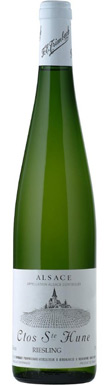

Arguably Alsace's most highly regarded Riesling, Clos Ste Hune comes from a 1.6ha parcel inside Grand Cru Rosacker, a limestone site with 50 year old...
2012
Trimbach

Domaine Zind-Humbrecht, Clos St Urbain Riesling, Grand Cru Rangen de Thann, Alsace, France, 2015
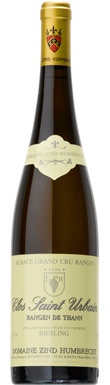
The apple and apricot fruit nose is now becoming more reserved, but the palate remains evidently rich and weighty, with great power and concentration that’s...
2015
Domaine Zind-HumbrechtGrand Cru Rangen de Thann
Domaine Weinbach, Riesling, Grand Cru Schlossberg, Alsace, France, 2016
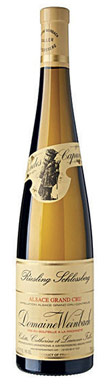
Domaine Weinbach has long been the estate of the Faller family, and most of its wines come from the Schlossberg, a granitic site of exceptional...
2016
Domaine WeinbachGrand Cru Schlossberg
Muré - Domaine du Clos St Landelin, Clos St Landelin Riesling, Alsace, France, 2016
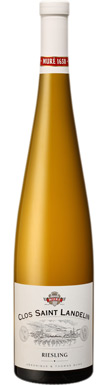
Clos St Landelin is a south-facing, 12ha enclave in the finest sector of Grand Cru Vorbourg, a large site with limestone and loess soils. The...
2016
Muré - Domaine du Clos St Landelin
Albert Mann, Riesling, Grand Cru Schlossberg, Alsace, France, 2016
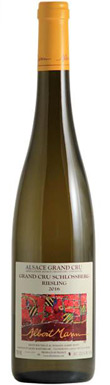
While Mann's Rieslings from the limestone site of Furstentum can be showy and opulent, their wine from the granitic Schlossberg shows more finesse. There are...
2016
Albert MannGrand Cru Schlossberg
Schlumberger, Riesling, Grand Cru Kitterlé, Alsace, France, 2015
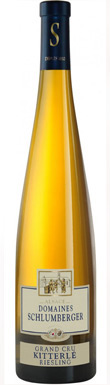
There’s rich apple and apricot fruit on the nose, though it’s still subdued. It’s fully ripe, but still youthful, with a vigorous linear character, a...
2015
SchlumbergerGrand Cru Kitterlé
Schoffit, Clos St Théobald Riesling, Grand Cru Rangen de Thann, Alsace, France, 2016
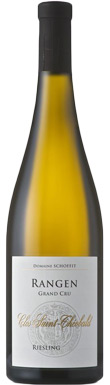
Exceptionally lush, smoky nose, packed with stone fruits and mandarin aromas. The attack is lean, precise and fiery, the mineral tone highlighted by fine acidity....
2016
SchoffitGrand Cru Rangen de Thann
Albert Boxler, Eckberg Riesling, Grand Cru Sommerberg, Alsace, France, 2013
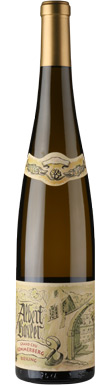
The nose is all about delicacy and poise, with lifted apricot aromas. Yet the palate shows the admirable ripeness of the wine, delivering a suave...
2013
Albert BoxlerGrand Cru Sommerberg
Domaine Marc Kreydenweiss, Riesling, Grand Cru Wiebelsberg, Alsace, France, 2015
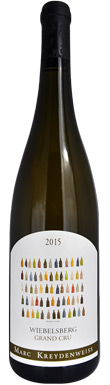
Alsace is thick in biodynamic estates, but Marc Kreydenweiss was one of the pioneers back in 1989, and he has always favoured a tightly-wound style...
2015
Domaine Marc KreydenweissGrand Cru Wiebelsberg
Bott-Geyl, Riesling, Grand Cru Schoenenbourg, Alsace, France, 2014
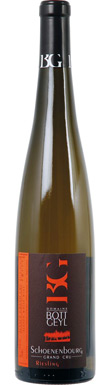
Schoenenbourg is a large site composed of complex marl soils, and is capable of delivering sumptuous wines. Bott-Geyl's version certainly heads in that direction with...
2014
Bott-GeylGrand Cru Schoenenbourg
