
It’s not often a Bordeaux first growth releases a new wine. Indeed, you’d have to go back more than 100 years to the end of the 19th century, when Château Lafite Rothschild created its second wine – formally settling on the name Carruades in the 1980s. So the unveiling of Anseillan was bound to get people talking.
Not technically a ‘new wine’ as such, as the 12ha ‘Anseillan’ vineyard zone that can be used for production has been an integral part of the wider Lafite estate since it was purchased, along with the adjoining 16th-century hamlet of the same name (that also features on the strikingly modern label), by Baron Elie de Rothschild in 1970.
Scroll down to see scores and tasting notes from the first Anseillan vintages
The grapes had historically been used in the blends of both Château Lafite and Carruades, and may be again, given the right conditions; however, in 2014, a blending session hinted at the possibility of a new expression of the Lafite terroir. This in turn gave birth to the project that has culminated in the first release of Anseillan 2018 – coincidentally, the same year that marked 150 years of family ownership and a clear signifier that traditions are not standing still at this premier grand cru classé Pauillac estate.
Situated just across Bordeaux’s famous D2 ‘château route’ road, within direct sight of Lafite’s prestigious château building and lush grounds – and around the corner from Cos d’Estournel in the neighbouring St-Estèphe appellation – the Anseillan plot extends on steep, north-facing slopes reaching a peak that measures roughly the same height as both the Lafite and Carruades plateau at about 27m. The vineyards – more than half of which have been uprooted and replanted in the years since the new concept arose – are flanked at the bottom by increasing biodiversity zones including areas of marsh and forest land, as well as newly integrated ‘green channels’ of hedgerows and tree lines to stimulate and promote beneficial ecosystems.
Stylistic standout

So, why create a separate brand now? And particularly one that is made primarily for consumption in restaurants, and therefore on sale at an appreciably lower price than both Lafite’s grand vin and its second wine?
Two reasons, as Saskia de Rothschild, CEO of Domaines Barons de Rothschild, told me during a recent visit to the vineyard and subsequent tasting of Anseillan’s inaugural three vintages. Firstly, ‘the challenge we were having is that as Carruades was becoming more wanted and coveted, we had to put up the quality’. This issue kick-started the Anseillan project, prompting the technical team, led by vineyard manager Louis Caillard, to implement a meticulous micro-plot analysis within the vineyard.
Initial findings – and subsequent in-bottle results – revealed that some Merlot plots, notably those on sections where there is more clay beneath the gravels than at Lafite itself, gave an entirely different expression and personality of the grapes, and didn’t fit stylistically with either of the estate’s two existing wines.
‘We could tell the difference in character from the grapes on these plots, which were delivering more of a fun, rich, fruit-forward style,’ Saskia explained. ‘Of course, we could be tempted to use the grapes in other ways, but at the same time we have a duty to make Lafite and Carruades as good as possible’. However, she maintained: ‘As much as it’s a question of quality, it’s also a question of style. You can have plots that deliver excellent wines but they just don’t match the personality of what we’re trying to create – and often those of Anseillan are speaking another language.’
Anseillan vineyard at a glance
- A potential area of 12ha in total with provenance for Anseillan wines (4ha currently being restructured)
- The terroir comprises plots of gravel, gravel on deep clay, limestone and sand
- 4ha were uprooted in 2020 and are to be replanted with grape varieties and rootstocks adapted to specific terroirs
- Old-vine Merlot planted in the 1960s was kept, as well as a small plot of Petit Verdot
- Vines will be replanted in new alignments, orientations and densities according to the contours of the surrounding land
- Cabernet Franc will be planted for the first time on this plot, up to 1.1ha
- Biodiverse ‘green corridors’ of trees and hedges will be respected and planted accordingly among the new vines
- Once finished, the vineyard will comprise Cabernet Sauvignon, Cabernet Franc, Merlot and Petit Verdot
- Production will vary over the next few years before the new plantations can be harvested
Value for diners
This in turn led naturally to the second reason: to ‘put a different identity of bottles in front of consumers’. Joining the debate about the price of Carruades going up, ‘we started thinking there’s no more of our wines in restaurants’, Saskia said. ‘The idea was not to be a third wine or compete with what we’re already doing at Lafite’ – a conspicuous reason why the words ‘Lafite Rothschild’ were relegated to Anseillan’s back label.
They also didn’t want to use the potential ‘Château Anseillan’ title, despite owning the rights to the name and given the history of previous use by Saskia’s father in the 1980s for cuveés destined for international markets. ‘The type of easy-drinking wine we want to make, and the relationship to the hamlet [of the same name] and everything sustainable we’re doing in terms of viticulture, is more important than being attached to a specific château.’
Efforts for Anseillan in this respect are extremely conscientious, with Lafite [since 2021] being on the path to certification in organic farming, along with focus on cover crop plantings and making room for hedgerows and fruit trees. Even at Lafite, a total of 4ha will have been uprooted in the name of environmental sustainability by 2030. The price of this land alone makes this a costly consideration, but ‘we’re coming back from the past temptations to plant a lot, and it’s a way to give the rest of the grapes a chance at a longer life’, Saskia asserted.
Decades ahead
Within the Anseillan land, a special 0.6ha planting program named Phare (‘Lighthouse’) is also underway. The area is being used to house the estate’s massal selection vines that have been painstakingly gathered from Lafite’s pre-1970 vines [propagated via cuttings from high-quality existing stock on the estate] over a five-year period. It is also the basis of a long-term case study to anticipate the effects of climate change by monitoring the adaptability of 30 Mediterranean and resistant grape varieties. ‘We don’t know what might happen in 20 years, but at least we might have a track record to go on.’
The team also manage Lafite’s other 90ha currently under vine, so this is a small side-project for them with a production of roughly 20,000 bottles per year, give or take vintage variations. Bottles will be held at the property until they’re ready to drink and will not be sold through Bordeaux’s traditional La Place marketplace, instead being offered to a select number of importers solely for on-trade in Europe and the US.
Ultimately, ‘we’re telling a different story with this wine’, Saskia says. ‘The 2018 vintage of Anseillan is the first step for us in a project we are building for the next 50 to 100 years to come. The objective for this wine, with its accessible price, is to be shared at tables in restaurants around the world, where it has sometimes been forgotten how good it is to open a bottle of Bordeaux.’
A noble effort, and wines worth seeking out next time you see them on a list…
Anseillan: the first vintages
Related articles
- Vignobles Cruse-Lorenzetti: producer profile & 12 wines tasted
- Château Branaire-Ducru: producer profile
- Château Léoville Poyferré: producer profile
Château Lafite Rothschild, Anseillan, Pauillac, Bordeaux, France, 2020
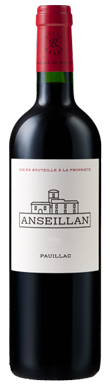

Ripe tones on the nose; bramble fruit with perfumed scents - gorgeous rose scents appear after a few minutes, expanding and becoming more expressive. Juicy and succulent, vibrant and thrilling on the palate, there's a sense of energy here, a liveliness straight away with high acidity and a saline, slate mineral edge to the blackcurrant and blackberry fruit. Lovely clarity and purity with textured tannins that are well integrated but give the taut and refined frame. Great focus and complexity, less textured in terms of tannins compared with 2019 but this is wide and expansive, suggesting plenty of ageing potential.
2020
Château Lafite RothschildPauillac

Château Lafite Rothschild, Anseillan, Pauillac, Bordeaux, France, 2019
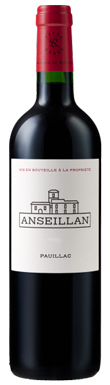
Dark chocolate and floral notes on the nose. This has an appealing density on the palate, lovely weight, with a sculpted feel to the softly chewy tannins and dark fruit. Less immediately lively, bright and accessible than the 2018 but still stylish with a sense of character. Cool blue fruits meld with mint, liquorice, flint and touches of toast. A blend of 85% Merlot and 15% Cabernet Sauvignon, aged in ex-Lafite barrels as well as stainless steel and cement vats.
2019
Château Lafite RothschildPauillac
Château Lafite Rothschild, Anseillan, Pauillac, Bordeaux, France, 2018
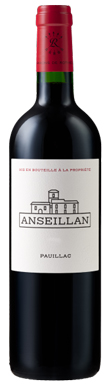
The first bottled vintage of Lafite’s new wine shows Pauillac swagger with salivating purity and a sense of openness and fun. A seriously drinkable style with blackcurrants and fragrant cherries, subtle herbal spice as well as liquorice and pencil-led mineral touches giving a nice crisp finish. This has energy, a clearly wide and expansive frame but retains refinement. A majority of Merlot at 48% with 39% Cabernet Sauvignon and 13% Petit Verdot. Ageing in ex-Lafite barrels of one vintage for 16 months.
2018
Château Lafite RothschildPauillac