
Anson: Why Château Lafleur ‘doesn’t play by the usual rules of Bordeaux’
Jane Anson reports from a vertical tasting of this famed Pomerol estate, covering 8 wines from 6 vintages including 2 Les Pensées de Lafleur wines, led by cellar master Omri Ram, at the Decanter Fine Wine Encounter 2019...


A vertical of Lafleur is not an everyday occurrence, to put it mildly. ‘Not because we don’t like people’, as cellar master Omri Ram puts in, ‘but because we prefer our wines to be drunk and enjoyed, not tasted and analysed. Our preference is to let its beauty steal up on you around a dinner table rather than looking for it as soon as you take a sip.’
That, combined with the fact that at 4.5ha Lafleur is a tiny estate where demand far outstrips supply, explains why this tasting was so unusual.
Scroll down for Jane Anson’s Lafleur vertical tasting notes and scores
Eight extremely well-chosen vintages that offered a number of thought-provoking pairings – starting with the 2001 and 2002 that fell on either side of Jacques Guinaudeau becoming sole owner of this iconic Pomerol château, years after renting the vineyard from his aunt. We also tasted both 2003 and 2013, polar opposite vintages where Bordeaux was dealing with extreme heat then 10 years later extreme rain. There was also the chance to compare Pensées de Lafleur and Château Lafleur in both 2010 and 2013, seeing how the two wines produced from the same property reveal different facets of the soils. And to be reminded of how Lafleur doesn’t play by the usual rules of Bordeaux, over-performing in undervalued years like 2007.
Any time you get to taste a wine that means so much within a specific appellation it is fascinating, but the approach of Jacques, and now his son Baptiste, to looking after their vineyard with its near even mix of Cabernet Franc and Merlot makes this a much richer experience.
Simple things are taken extremely seriously here. Harvest, for example, takes place not just from one side of the vineyard to the other, or from one soil type to the next, but truly within rows, even on occasion within a single vine, because so much old genetic material is preserved that it is not at all unusual to have older vines planted next to younger ones, with each one treated differently.
Many of the old vines have extremely low yields, so where a ‘typical’ red grape vine in Bordeaux gives around one bottle per plant, Lafleur vines give an average of half a bottle (‘we are not fans of low yields,’ says Ram, ‘and barely green harvest unless absolutely necessary, but that’s what our vines give’).
The approach to Pensées de Lafleur is also instructive. First introduced in 1987, the third vintage after Guinaudeau arrived at the property following the death of Thérèse Robin, Marie’s sister. Both 1985 and 1986 had been such good vintages that he hadn’t felt the need to separate out different parts of the vineyard, but 1987 was so difficult that the entire crop went into a newly-created Pensées de Lafleur (‘if you see a 1987 Lafleur,’ says Ram, ‘you know it’s a fake. But you also know it’s an incredible Pensées’).
It remained a traditional second wine (made from sorting in the cellar) until the end of the 1990s, when a soil map finished in 1999 showed that there were 13 different soils across Lafleur, with 12 from the same family of gravel and clay (with differing amounts of each, and unusually they plant the Merlot on the heavier gravels and Cabernet Franc on the heavier clays). The 13th type is a mix of clay, gravel but also sand, so more typical of a classic Pomerol soil. Lafleur vines are in almost a perfect square, but they are not flat, and this strip comes from a lower 0.7ha section that runs in a diagonal across the vineyard between rises on either side. They now make Pensées only from this section – with one or two more of less vines from either side depending on vintage, so a little less in 2015, a little more in 2013 for example – and no longer see it as a second wine, but as an expression of this very different soil, so joining wines such as Croix de Beaucaillou or Clos de Marquis.
It’s only by tasting their different takes on the same vintage side by side, as we did here in two separate years, that you can really see what this means – and understand how difficult vintages show the skill of winemakers. ‘You need to be reactive to follow your vines through difficult seasons,’ as Ram says. ‘It’s a combination of intuition, experience and luck, but mostly just being there and paying attention’.
And all but one of the wines we tasted could have been very different, because although Lafleur had been in Jacques’ family since 1915, it wasn’t immediately obvious that he was going to be able to keep it after the death of Marie Robin in 2000. As you might expect, when the last of the Robin sisters died, there was intense interest surrounding Lafleur, with many wanting to buy it who had deeper pockets than Jacques and Sylvie Guinaudeau. They were clear that they didn’t want outside investors, because they didn’t want to have to answer to board members for permission to replant, or to pursue whatever part of their obsessive viticulture policy they felt was needed. It took two years to secure the necessary funds to get full control, and every year since then has proved just why we should all be glad they did.
See Jane Anson’s Lafleur vertical tasting notes and scores
You may also like
Taming Château Trotanoy: Wines from 1998 to 2018Best Pomerol 2018 wines: A ‘signature’ yearAnson: Pauillac vs PomerolAnson: Top five Bordeaux vintages ready to drink now
Château Lafleur, Pomerol, Bordeaux, France, 2002
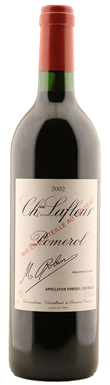

Always one of the most aromatic of Bordeaux wines, the 2002 is on its way to becoming a classic Lafleur, effortlessly overperforming the vintage. 2002...
2002
Château LafleurPomerol

Château Lafleur, Pomerol, Bordeaux, France, 2001
This captures the magic of Lafleur and is utterly moreish. It is so silky, with hints of truffle, tobacco and sweet blackberry fruits from the...
2001
Château LafleurPomerol
Château Lafleur, Pomerol, Bordeaux, France, 2007
A winemaker's vintage ('extreme Oceanic' is how Lafleur's cellar master Omri Ram put it), where you really had to know how to react to the...
2007
Château LafleurPomerol
Château Lafleur, Pomerol, Bordeaux, France, 2003
From the first minute your nose hovers over the glass, you get a burst of saffron and black pepper spice. This is a different interpretation...
2003
Château LafleurPomerol
Château Lafleur, Pomerol, Bordeaux, France, 2010
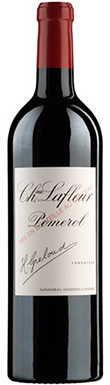
The paradox of Bordeaux is that some of the greatest vintages are almost unapproachable until they are 20 years old or more. 2010 almost certainly...
2010
Château LafleurPomerol
Château Lafleur, Pomerol, Bordeaux, France, 2013
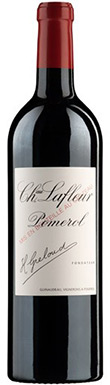
The reticent blackberry nose has lift and charm, and the palate is medium-bodied rather than intense and powerful. It's graceful and stylish, yet doesn't lack...
2013
Château LafleurPomerol
