
Anson: Pauillac vs Pomerol
Jane Anson compares and contrasts these two Bordeaux appellations from the 2009 vintage at an exclusive tasting held for , members in New York....


I love tastings that set one thing against the other. Not to turn it into a competition, but to allow the differences to illuminate both sides. The usual way to do this is by comparing two contrasting vintages, but to really up the ante, I suggest trying it out with two contrasting appellations.
Pauillac and Pomerol make for a particularly special pairing. Not only because they are names that always provoke a thrill when you’re sat in front of a bottle, but because the way in which they reflect and contrast each other highlights a number of useful things about Bordeaux.
The history
For a start, and most obviously, Pauillac is set on the Left Bank of the Garonne river and Pomerol is over on the Right Bank (of the Garonne and the Dordogne, if we want to get picky). The history of Pauillac dates back a full 2,000 years, with the Romans first heading there to make bronze coins for the Holy Roman Empire, although viticulture had to wait until the 16th and 17th centuries to really get going with the draining of the land by the Dutch. Pomerol took even longer. There were vines off-and-on for many centuries in Pomerol – certainly when the pilgrims were heading through there during the Middle Ages, but things were always quieter than in neighbouring St-Emilion. Widespread viticulture only really started in the 19th century in Pomerol, with polyculture typical until relatively recently. The name of the appellation didn’t make much of an impact internationally until the 20th century, and the arrival of Petrus in America, by which time Pauillac had already long been controlling auction markets worldwide.
The size
You can see the result of this in dozens of tiny – and not so tiny – details. Where Pauillac is 1,200ha in size, Pomerol is around a third smaller at 800ha. If you’re anything like me, you might actually be surprised that the size difference isn’t bigger, given the difference in image of the two appellations; Pomerol all artisan craftsmanship and Pauillac all powerful millionaires. But when you break down the numbers a little further, it starts to make more sense. Pauillac has just 57 winemakers in those 1,200ha giving an average estate size of something like 22ha. The big guys have far more than that – Lafite 110ha, Latour 92ha, Mouton 83ha. When you take into account all of their other properties, the biggest names – not just those three, but around 15 properties – account for something like 90% of the vineyard land in Pauillac.
Compare that with Pomerol, where there are close to 135 wine producers across the 800ha, giving an average size of under 6ha. The biggest château in Pomerol is de Sales at 47ha, but the majority have vines that they can easily walk through, from one side to the other, in little more time than it takes to brew a pot of tea.
The owners
And there’s undoubtedly a difference also in the type of owners. Many live on-site in their properties in Pomerol, sending their children to the local school in the village such as Olivier Techer-Laval at Gombaude-Guillot or, far more typically, in neighbouring Libourne or St-Emilion. In Pauillac, pretty much the only owner that I know of who went to the local school is François-Xavier Borie at Grand-Puy-Lacoste. Most of the big châteaux owners send their children to school 50km away in Bordeaux, or up in Paris, where they also tend to live full-time.
Classifications
And then there are the classifications – the daddy of them all in Pauillac in the form of 1855, with a full 18 Cru Classés – three firsts, two seconds, one fourth and 12 fifth growths. Over in Pomerol there are precisely no classified châteaux, as the appellation has chosen to go low-key instead and let the market decide pricing and prestige – though they did flirt with the idea at various points as you can see the words 1er Cru carved on a few walls around the appellation. This also helps to explain why you’ll find sprawling, architect-designed 18th and 19th century châteaux dotted around Pauillac that have become almost as famous as the wines – the spires of Pichon Baron being perhaps the best example. Pomerol also has a few classical châteaux (de Sales and Beauregard among them), but many properties are unmarked and little more than country houses or small farms, making finding your way around this appellation much more of a challenge.
Grapes
Next up; the grapes. In terms of plantings, Pauillac is the land of Cabernet Sauvignon while in Pomerol, Merlot rules – giving a nice window into the two grape varieties that define Bordeaux. The exact plantings are, for Pauillac; 62% Cabernet Sauvignon, 32% Merlot, 4% Cabernet Franc and 2% Petit Verdot. In Pomerol, the vineyards are planted instead to 80% Merlot, 15% Cabernet Franc and 5% Cabernet Sauvignon. Underground, things are also not quite as different as you might think when looking at those plantings. Yes, Pauillac has more gravel than Pomerol (up to 9m in depth at Lafite, and not far behind at Grand-Puy-Lacoste), but there are large areas of clay and even limestone around Pauillac. And Pomerol has lots of clay, but also plenty of areas of both sand and also gravel. The difference is, that where Pauillac estates will pretty much always plant Cabernet on gravel, you’ll find Merlot on the same soil type over in Pomerol. This means an early-ripening grape planted on early-ripening soils (gravel is hotter than clay) and goes a long way to explaining why the tannins in Pomerol can be quite so fleshy and inviting.
All in all, comparing the two is an utterly fascinating exercise – particularly in brilliant vintages such as 2009, as we did here. And no feeling sorry for Pomerol. Not only are names such as Moueix in Pomerol every bit as powerful as the Rothschilds in Pauillac, you’ll find that both areas have vineyard land that average close to €2 million per hectare, the highest in Bordeaux. The average bottle price in both is way above the average of the region – good luck finding a bottle of either Pauillac or Pomerol for much less than €20, and you’ll soon be heading upwards of €100 as the names climb in prestige. These are two appellations that can more than hold their own.
The wines: Pauillac vs Pomerol
The wines below were tasted at a Decanter Premium tasting in New York
Bordeaux 2009: Ten years on
Bordeaux 1989 vs 1990: Battle of the vintages
Comparing the last fives great Bordeaux vintages
Château La Pointe, Pomerol, Bordeaux, France, 2009
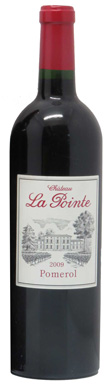

The 2009 vintage came two years after new owners, Generali France, took over at La Pointe. They brought in Eric Monneret as director and Hubert...
2009
Château La PointePomerol

Château Rouget, Pomerol, Bordeaux, France, 2009
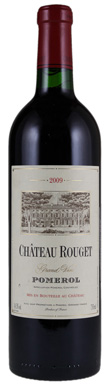
This 18ha estate was the first in Bordeaux to be bought by a Burgundian family, the Labruyères, back in 1992, and appropriately enough they decided...
2009
Château RougetPomerol
Château Gazin, Pomerol, Bordeaux, France, 2009
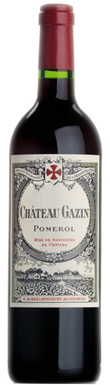
Gazin has vines at the highest point in Pomerol, at just over 40m, right next to Petrus. This is a powerful, upright wine that's just...
2009
Château GazinPomerol
Château Clinet, Pomerol, Bordeaux, France, 2009
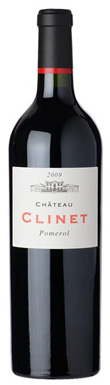
A big-shouldered, powerful and classic Pomerol. Inky black in colour even at 11 years old, this is concentrated yet juicy and built for pleasure, filled...
2009
Château ClinetPomerol
Château La Conseillante, Pomerol, Bordeaux, France, 2009
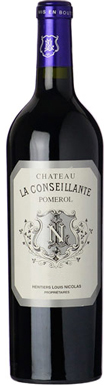
Beautifully ripe plum colour here, this has an opulent texture with creamy fruit and cigar box, with a confident interplay between ripe generous fruits, soft-spoken...
2009
Château La ConseillantePomerol
Château Grand-Puy Ducasse, Pauillac, 5ème Cru Classé, Bordeaux, France, 2009
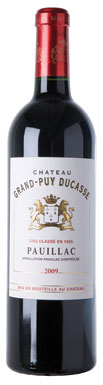
A good yield in Pauillac for Grand-Puy Ducasse at 46hl/ha, this is juicy with well-extracted black fruits and lots of Médoc typicity. It’s not always...
2009
Château Grand-Puy DucassePauillac
Château Batailley, Pauillac, 5ème Cru Classé, Bordeaux, France, 2009
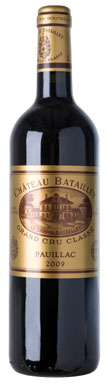
This wine showed exceptionally well, both at the the Bordeaux 10 Years On tasting in London a few weeks ago and in the Decanter Premium...
2009
Château BatailleyPauillac
Château Grand-Puy-Lacoste, Pauillac, 5ème Cru Classé, Bordeaux, France, 2009
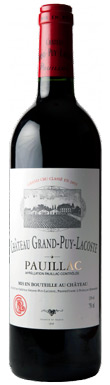
A full 80% Cabernet Sauvignon in the blend of 2009, giving it an unmistakably Pauillac character in terms of its dense tannins, and its pencil...
2009
Château Grand-Puy-LacostePauillac
Château Pichon Longueville Comtesse de Lalande, Pauillac, 2ème Cru Classé, Bordeaux, France, 2009
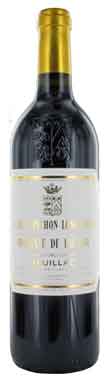
Roederer Estates had owned Pichon Comtesse for three years prior to the 2009 vintage, having taken over in 2006, with Gildas d'Ollone as managing director...
2009
Château Pichon Longueville Comtesse de LalandePauillac
Château Pichon Baron, Pauillac, 2ème Cru Classé, Bordeaux, France, 2009
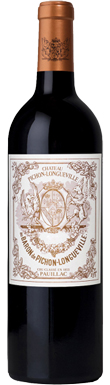
<p>Straight away the deep, rich colour tells you that this is a sexy, powerful wine, barely hitting the next stage of evolution at seven years...
2009
Château Pichon BaronPauillac
