
Ata Rangi: The Pinot Noir pioneer of Martinborough
Among the very first to recognise the viticultural potential of Martinborough on New Zealand’s North Island, Ata Rangi has built a reputation for serious, ageworthy Pinot Noir.


Selling your dairy herd to buy a vineyard may not raise too many eyebrows these days, but back in 1980 when Clive Paton purchased five barren, stony hectares to plant Pinot Noir near the tiny backwater farming town of Martinborough, New Zealand, it was positively bonkers.
Apart from Dry River Wines, established the year before (and an ill-fated venture started in 1978 by publisher Alister Taylor), there were no other vineyards in Martinborough, and quality wine production of any sort in New Zealand was nascent, to say the least. A government report published in 1978 had suggested Martinborough might be well suited to Burgundian varieties, but Paton and his sister Alison, who had bought an adjoining 2ha, were still taking a very big punt indeed in planting the first vines at Ata Rangi.
Scroll down to see notes and scores for 21 Ata Rangi wines, including a mini vertical of Pinot Noir
Thankfully, there were soon a few other mad neighbours. Martinborough Vineyards, also planted in 1980, was followed by Chifney Estate (now part of Margrain) and Te Kairanga. In time, further producers slowly followed these bold pioneers. To this day, Wairarapa as a whole only produces 1% of New Zealand’s wine (itself less than 2% of global wine production), the majority of which is produced in Martinborough, but thanks to producers such as Ata Rangi, its 60-odd wineries have built an impressive international reputation that far eclipses its size.
These days, ‘Ata Rangi’ – ‘dawn sky’ or ‘new beginnings’ in the Māori language – farms about 32ha spread across 12 vineyards situated on the Martinborough Terrace, a swathe of 25m-30m deep alluvial gravels surrounding the still tiny but now thriving township. As well as the original Home Block vineyard – now 44 years old and planted to the local Abel clone – it owns seven other nearby vineyards, farms two others under long-term leases and sources fruit from winemaker Helen Masters’ vineyard and the Dara Vineyard, owned by Kim and Gordana Dara.
Family roots
Alongside Pinot Noir, there are plantings of Chardonnay, Sauvignon Blanc, Pinot Gris, Riesling, Syrah, Merlot, Malbec and Cabernet Franc. Ata Rangi first achieved full organic certification for two of its vineyards, McCrone and Home Block, in 2014, with the rest following soon after, and is also unusual in New Zealand in that a large percentage of its vines remain on their own roots. This is not without risk, but Paton feels the benefits of extra concentration and consistency they perceive in the fruit outweigh any additional phylloxera hazard potential.
Widely regarded as one of New Zealand’s best wineries, Ata Rangi’s stylish, complex Pinot Noirs have a solid track record for ageing beautifully. Its reputation is equally likely due to the charming, self-effacing nature of its people.
Paton – who married fellow winemaker Phyll Pattie in 1987 – and his sister Alison Paton remain at the helm. Helen Masters has just celebrated 20 years at the winery, and the vineyard team is overseen by former Villa Maria viticulturist Ian Ewart. It’s a tight-knit, humble group, with great respect for their land and a clear vision of what they want to produce from it.
In the Home and McCrone vineyards, weeds are managed using under-vine tools, combined with cultivation and mowing. ‘Our vineyards’ biodiversity is enhanced by a mixture of native and exotic shelter belts and inter-row wildflower planting that provide havens for native predatory and beneficial insects,’ explains Masters.
‘We make compost on site from grape stalks, skins and yeast lees, mixed with seaweed, forest floor duff and harvested green crops. This mix is utilised in the vineyard to make compost tea for vine health and boost organic matter within the soil. Our dedicated vineyard team does all the vine work by hand – from pruning in winter through to harvest in autumn.’
Martinborough and the Abel clone
Martinborough is a sub-region of the wider Wairarapa wine region, which also includes Gladstone and Masterton. The first vines, planted in 1883, fell victim to the temperance movement just a few decades later. Today, at 527ha (according to New Zealand Wine), Pinot Noir makes up about half the plantings in Wairarapa as a whole, another third are Sauvignon Blanc, followed by Chardonnay, Pinot Gris and 23 other varieties. The Martinborough sub-region enjoys cool, windy springs and warm, relatively dry summers, buffeted by strong southerly winds. Soils are deep, free-draining gravels, with a mixture of shallow sandy/clay loam topsoils.
The Martinborough Pinot Noir style is expressive, structured and savoury – the best are very ageworthy. Most plantings are of the Abel (‘gumboot’) clone – purported to be from an illicit cutting from one of Burgundy’s most famous vineyards [said to be Romanée Conti], hidden in a wellington boot and confiscated by customs officer Malcolm Abel. Abel, a winemaker himself, thankfully realised the cutting’s significance and sent it to be put through quarantine at Te Kauwhata, the then-government viticulture research station, and subsequently planted cuttings that resulted from this in his own small vineyard in Auckland (now long overrun by the city).
He died a few years later, but not before becoming friendly with Clive Paton, who worked a vintage with him and took cuttings of his own back to Ata Rangi, which became the vines of its Home Block. The Abel clone is now planted throughout New Zealand, but is arguably at its very best in Martinborough, Wairarapa.

Hands-off approach
In the cellar, by contrast, Masters says the biggest winemaking shift has been simply to do less and less. ‘The wines are made increasingly by the vines rather than in the winery. I am keen to not let winemaking get in front of the fruit.’ Chardonnay is whole-bunch pressed to larger barrels and undergoes natural ferments, with minimal stirring and sulphur additions, and new oak is kept to around 20%-30%.
She has a similarly hands-off approach to the Pinots, though since 2015 has gradually increased the whole-bunch percentage, appreciating the slower, cooler fermentation temperatures this delivers. The wines are prettier as a result, with more spice and better balance. Punchdowns [breaking up the cap of grape skins and other solids that forms on the surface of fermenting red wine and submerging it in the liquid below] have been swapped for more gentle plunging, aiding tannin management, an element the region’s Pinots can at times struggle to tame.
Martinborough’s position in a wide valley open to the south-southwest means the bracing southerlies that sweep in from the Cook Strait naturally reduce yields and disease pressure, and thicken grape skins. The resulting phenolics give its Pinots a structured, savoury, smoky/earthy expression unique in the New Zealand style spectrum. The best have a very satisfying ageworthiness and presence.
The Ata Rangi vineyards
Kotinga vineyard
Established in 2000; 4ha, of which 3.2ha planted on free-draining alluvial gravels, no clay influence. Planted with three Dijon clones. Ata Rangi took over the vineyard in 2015, and purchased it in 2017; it was certified organic in 2018. The first single-vineyard release was the 2020.
Masters vineyard
Planted in 2001, the vineyard has provided fruit for Ata Rangi since 2007. It was purchased and renamed by winemaker Helen Masters and her husband Ben in 2015. Located 4km south of the township; 2.5ha of gravels with well-mixed clays. Fruit ripens about one or two weeks later than other Ata Rangi sites. Planted to Pinot Noir (Abel, Pommard and Dijon clones) and Chardonnay (Mendoza and 15); certified organic in 2020 – the year of the first single-vineyard release.
McCrone vineyard
Planted in 2001 with a mix of Abel, Dijon and Clone 5 Pinot Noir clones. Gravels mixed with clay from ridges on either side of the vineyard. Purchased in 2012 and certified organic in 2014. The first single vineyard release was the 2006; there will be no 2021 due to frost.
Retrospective
In late 2022, Ata Rangi celebrated the opening of its beautiful new tasting room (which won an award from the Te Kāhui Whaihanga New Zealand Institute of Architects), nestled in the Home vineyard, with a thrilling tasting of 31 wines, encompassing a retrospective of every Pinot Noir release back to 1994, plus the 2020 single-vineyard bottlings.
Wines were poured from magnums, with vintages missing from the Ata Rangi cellar kindly donated by a local collector. It was a fascinating opportunity to observe both the subtle evolution of the wines as the vineyards and team have matured, and the strong house style that has emerged over time.

The release of two new single-vineyard Pinots, from the Kotinga and Masters vineyards, represents another step along the road – one that Masters sees as necessary for the region if it’s to start showcasing and underscoring its differences in terroir. This is especially interesting in a region such as Martinborough where the minuscule size of most producers means that there’s little scope for such delineation – most have only just enough wine for one Pinot produced off their home block.
Ata Rangi itself faces a tricky supply/demand balance. ‘We just don’t have the supply,’ says Masters. ‘2021, 2022 and 2023 were all way below what we needed.’ Collectors take note.
Tasting nearly three decades’ worth of past Ata Rangi wines, it’s exciting to think about what the future holds. Masters sums up: ‘We are eccentric here, but we make wines we love.’ Long may that continue.
Ata Rangi: Emma Jenkins MW reviews 21 wines
Wines are listed white then red in descending score order
Related articles
- Ultimate Marlborough road trip
- Australia, New Zealand & South Africa Pinot Noir: Panel tasting results
- New Zealand aromatic whites: 20 top wines to discover
Ata Rangi, Masters Chardonnay, Martinborough, Wairarapa, New Zealand, 2020
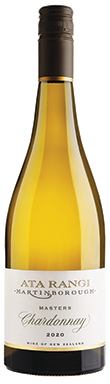

The Masters Vineyard is more exposed and has a clay soil influence, as such it ripens around two weeks later than Potiki. A subtle nose...
2020
Ata RangiMartinborough

Ata Rangi, Masters Chardonnay, Martinborough, Wairarapa, New Zealand, 2021
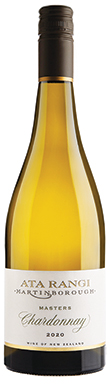
A little more upfront and generous than the 2020 but with the same nutty/white peach profile, and minerally/savoury persona. A flick of pink grapefruit reduction...
2021
Ata RangiMartinborough
Ata Rangi, Potiki Chardonnay, Martinborough, Wairarapa, New Zealand, 2020
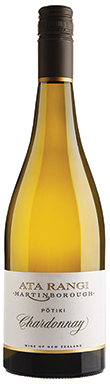
Helen Masters says Potiki’s younger vines see it regarded as the ‘younger sibling.’ More aromatically upfront than the Masters Vineyard, it’s fragrant with lots of...
2020
Ata RangiMartinborough
Ata Rangi, Potiki Chardonnay, Martinborough, Wairarapa, New Zealand, 2021
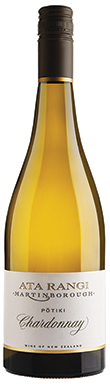
A slight change in emphasis from the 2020, a cooler expression with more obvious citrus notes on the nose, plus sizzled butter, nuts and a...
2021
Ata RangiMartinborough
Ata Rangi, Pinot Noir, Martinborough, Wairarapa, New Zealand, 2010
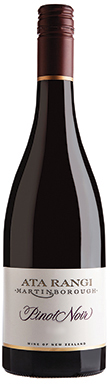
96
Such an inviting nose, drawing you in with a beguiling mix of fruit, florals, minerals and earth. Very classic, everything is knitted together with great skill, such a nicely contained wine with lots of calmness and harmony. Lovely length and freshness. This is in a great place for drinking now. Slow cool start then settled weather, later than usual but great fruit condition.
2010
Ata RangiMartinborough
Ata Rangi, Pinot Noir, Martinborough, Wairarapa, New Zealand, 2000
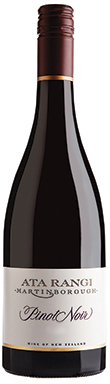
Layered, complex aromatics, plenty of fruit here as well as forest floor/mushroomy richness, savoury tomatoes and spice. Rounded, generous palate, fine silken tannins, very good...
2000
Ata RangiMartinborough
Ata Rangi, Masters Pinot Noir, Martinborough, Wairarapa, New Zealand, 2020
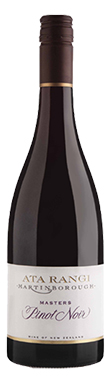
Very upfront with lots of spice and florals (this wine is Helen’s 'negroni') but there’s a savoury, quite brooding presence beneath it all – forest...
2020
Ata RangiMartinborough
Ata Rangi, Pinot Noir, Martinborough, Wairarapa, New Zealand, 2015
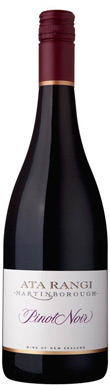
Very textbook nose but with an added lift of blue florals: lavender and borage. Lots of ripe fruit (blackberries especially) and whole bunch spice notes...
2015
Ata RangiMartinborough
Ata Rangi, Pinot Noir, Martinborough, Wairarapa, New Zealand, 2008
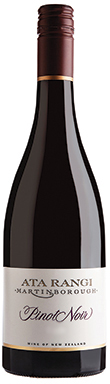
Initially quite contained, then the layers start to open up. Lots of savoury spice and fruit, sweet hay, iodine and a delicious sort of creaminess....
2008
Ata RangiMartinborough
Ata Rangi, Pinot Noir, Martinborough, Wairarapa, New Zealand, 2019
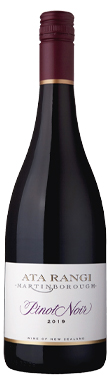
Bright and lively, with red fruits, Campari spice, earth and a lovely floral lift. Youthful and very compact in structure, this is still fairly shy...
2019
Ata RangiMartinborough
Ata Rangi, Pinot Noir, Martinborough, Wairarapa, New Zealand, 2012
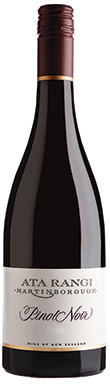
Vibrant with fruit and florals, quite lifted with good intensity, plenty of fruit but in a very contained, elegant package. Good energy and finesse, tannins...
2012
Ata RangiMartinborough
Ata Rangi, Pinot Noir, Martinborough, Wairarapa, New Zealand, 1994
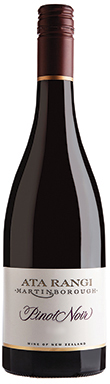
A revelation to kick off a vertical with such a wonderful beauty. Faded yes, but gloriously so, with mushrooms, autumn leaves, and a surprising amount...
1994
Ata RangiMartinborough
Ata Rangi, Pinot Noir, Martinborough, Wairarapa, New Zealand, 2020
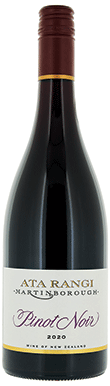
Very perfumed and pretty with orange blossom, cloves and lots of bright fruit – more reds than blacks (though ripe blackberry is a recurrent theme...
2020
Ata RangiMartinborough
Ata Rangi, Pinot Noir, Martinborough, Wairarapa, New Zealand, 2014
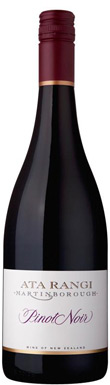
Initially quite closed on the nose, subtle with smoky oak and bacon fat threading through red plum, cherry and berry, iodine, sweet hay and spice....
2014
Ata RangiMartinborough
Ata Rangi, Pinot Noir, Martinborough, Wairarapa, New Zealand, 1998
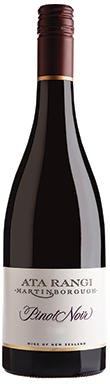
Lovely nose – cherries, berries and spice, quite intense and ‘big’ compared to the other vintages. Velvety, intense, rich fruit core, silty tannins and a...
1998
Ata RangiMartinborough
Ata Rangi, Abel Old Vines Pinot Noir, Martinborough, Wairarapa, New Zealand, 2019
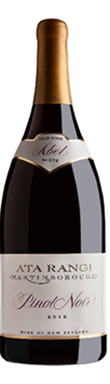
A much more buttoned-down nose; has the sweet hay but not the florals of the usual Ata Rangi Pinots. Subtle cherry, blackberry, redcurrant notes, dark...
2019
Ata RangiMartinborough
Ata Rangi, Kotinga Pinot Noir, Martinborough, Wairarapa, New Zealand, 2020
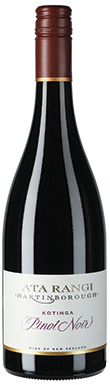
Kotinga is the most free-draining of the single vineyards. This has more earth, spice and a touch darker fruit profile than the Estate, in many...
2020
Ata RangiMartinborough
Ata Rangi, Pinot Noir, Martinborough, Wairarapa, New Zealand, 2006
Perfumed with a lift of Campari, masses of ripe fruit and sweet spices, leading to a surprisingly taut and savoury palate with a pleasing herbal...
2006
Ata RangiMartinborough
Ata Rangi, McCrone Pinot Noir, Martinborough, Wairarapa, New Zealand, 2020
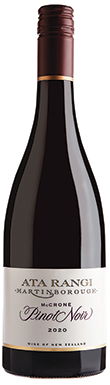
A touch paler than the Masters and Kotinga, this has a perfumed, pretty nose with lovely orange blossom notes. The palate is fine and silky,...
2020
Ata RangiMartinborough
Ata Rangi, Pinot Noir, Martinborough, Wairarapa, New Zealand, 2013
Very attractive nose with lots of layers sweet hay, lavender, cherries/berries, iodine and Campari. A similar spectrum on the palate, which is very structured with...
2013
Ata RangiMartinborough
Ata Rangi, Pinot Noir, Martinborough, Wairarapa, New Zealand, 2003
An intriguing wine, with an aromatic character I found hard to place – sweet soy and smoky mango? – that wasn't apparent elsewhere. The palate...
2003
Ata RangiMartinborough
