
Barbadillo releases rare old Reliquia Sherries
Decanter tastes and rates the historic limited-release Reliquia range from Sherry producer Barbadillo, made from soleras dating back to the 1800s.


Founded in 1821, Bodegas Barbadillo is celebrating its 200th anniversary this year with the release of four exceptional old Sherries.
The Reliquia range includes an Amontillado, Oloroso and Palo Cortado; just 81 numbered half-bottles of each are being released, alongside 17 half-bottles of Pedro Ximénez.
Scroll down to see the tasting notes and scores for Barbadillo’s limited-release Reliquia range
Drawn from soleras that have been maturing in the Barbadillo cellars in Sanlúcar de Barrameda for centuries, the selection has been curated by winemaker Montse Molina. ‘These wines are very special. They’re a way to taste the 200 years of Barbadillo history,’ she comments.
Acquired by Bodegas Barbadillo in 1939, the 18th-century La Casa de la Cilla (The House of Cilla) contains the ‘Reliquias de Barbadillo’ (relics of Barbadillo) – a number of Sherries dating back to the company’s 19th century origins. The Amontillado and Oloroso Reliquia casks rest in a small cellar alongside family reserve single-cask Sherries. Meanwhile the extremely rare Palo Cortado and Pedro Ximénez Reliquias are aged in a special section of the cellar called the La Sacristía (The Sacristy).
With no detailed records, the exact origins of these Sherries is shrouded in mystery. ‘We don’t know the vineyard source or the origin of these wines,’ explains Molina. ‘We know the butts go back to the 19th century but we can’t even guarantee that it’s the Palomino grape inside.’
Barbadillo’s international area director, Tim Holt, adds: ‘It’s not possible to know exactly how old these wines are, but it’s around 100 years. The Oloroso is the oldest.’ Technically the Sherries would be categorised as VROS (wines over 30 years) but as they are so much older than that – essentially placing them in a category of their own – Barbadillo has eschewed the appellation label.

Individual character
The Reliquia Amontillado traces its roots back to Barbadillo’s Pedro Rodriguez winery in the 1870s. In the 1920s it was blended with Soberana Amontillado and an 1890s Amontillado called Hindenburg. ‘We keep the casks completely full, so oxidation is light,’ says Molina. With acidity at 10g/litre and 22% abv, it’s an intensely concentrated wine that reveals a hint of salinity from its distant biological ageing as a Manzanilla.
Reliquia Palo Cortado originates from the 1850s, when Barbadillo purchased a number of old wines from Don Manuel Argüeso – paying 14,000 pesos per butt at a time when a single butt of Manzanilla cost just 1,200 pesos. These casks contained wine from Sanlúcar de Barrameda’s most prestigious wineries and formed the basis of Barbadillo’s first Palo Cortado solera. They are now at the last stage in a slow-moving nine-cask Palo Cortado solera.
‘It’s really an oloroso, made by oxidative ageing,’ comments Molina. ‘The humidity of Sanlúcar helps a lot; it’s a good place for this slow ageing.’ Also at 22% alcohol, but with 12g/litre acidity, this mahogany-coloured wine is less dry than the Amontillado, but equally concentrated in terms of its flavours and aromas.
See all Decanter Barbadillo tasting notes and scores
The origins of the oldest Sherry, Reliquia Oloroso, can be traced back to the death of Antonio Barbadillo Ambrossy in 1921. His will included a number of wines that were noted as belonging to ‘the grandfather’. His grandfather was Benigno Barbadillo Hortigüela, who founded the winery in 1821. These wines continued to be passed down through the family for over 150 years, until they reached today’s sixth generation.
‘The oloroso is really, really old – you can taste this age in the wine and the nose is very different,’ notes Molina. ‘This wine is concentration, concentration, concentration!’ With 15g/litre acidity, it has an intense and powerful palate.
Released in tiny quantities, Reliquia Pedro Ximénez originates from casks of PX that were left to Don Antonio Barbadillo Ambrossy at the end of the 19th century, making up a solera established in 1921 in the Potro winery. With 350g of sugar, the sweet, opulent palate is intensely dark and viscous.
Lasting impression
All of the Reliquia Sherries offer a unique tasting experience, thanks to their phenomenal concentration. ‘Stay with these wines for half an hour, an hour,’ advises Molina. ‘They have a lot of complexity, so find a moment to taste just a sip.’ After six hours in the glass, these wines are still opening up and offering more nuanced flavours and aromas: a little certainly goes a long way. ‘An open bottle can last for months,’ adds Molina.
Barbadillo’s previous Reliquia releases were packaged in distinctive decanter-shaped bottles, but due to both practical reasons (these bottles are no longer produced) and to place more emphasis on the liquid than the packaging, the range has a new look. The traditional Sherry bottles are wax-sealed, with distinctive labels by Spanish calligraphy artist Goyo Valmorisco. The label for every numbered bottle is drawn by hand. ‘Each bottle is individual and unique in this sense,’ says Holt.
Given the scarcity and age of these wines, it’s no surprise that they are being sold on allocation, mostly in Spain but also to key markets such as Japan and the UK. London retailer Hedonism will be taking most of the UK allocation, with individual half-bottles retailing for around £365 each. ‘Compared with similar-aged wines, it’s great value,’ believes Holt.
See below for full tasting notes and scores for the 2021 release of Barbadillo Reliquia by Simon Field MW…
See the tasting notes and scores for Barbadillo’s limited-release Reliquia range
You might also like:
Decanter’s Complete Guide to Sherry
Rare Sherry Versos 1891 released at £8,000 per bottle
Bodegas Barbadillo, Reliquia Amontillado, Jerez, Spain
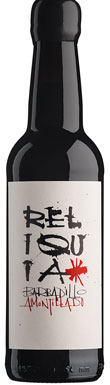

Attractive old gold colour, bright and welcoming; the aromatics fill the room with Seville orange, roasted chestnut and the perfumer’s finest pot pourri; the manzanilla...
Bodegas Barbadillo

Bodegas Barbadillo, Reliquia Palo Cortado, Jerez, Spain
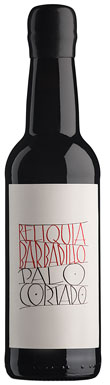
Appropriately enigmatic, its oloroso heritage betrayed by a deep mahogany colour and a richly textured nutty personality, this is a quintessential palo cortado in that...
Bodegas Barbadillo
Bodegas Barbadillo, Reliquia Oloroso, Jerez, Spain
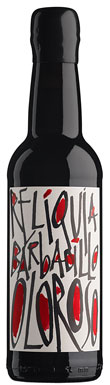
Deep mahogany in colour; an intimation of profundity in every sense; college libraries and a cabellero’s antique saddle. The high natural acidity, one of Sherry’s...
Bodegas Barbadillo
Bodegas Barbadillo, Reliquia Pedro Ximénez, Jerez, Spain
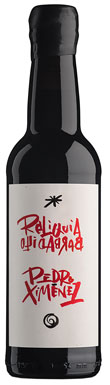
Of all the magical surprises imparted by the Reliquias, those of the Pedo Ximénez are perhaps the most wonderful. Forget gloopy caramelised sugar pills to...
Bodegas Barbadillo
