
From the archive: Barolo 2009 panel tasting results


Following on from the recently re-published Barolo 2010 panel tasting, we have delved deeper into our archive to bring Premium subscribers the Barolo 2009 results - lauded by our experts as a vintage that confirms Barolo's greatness. See the full report with all 140 tasting notes and scores below.
Published in the November 2013 issue of Decanter magazine and now available online and in full, exclusively for Premium subscribers.
140 Barolo 2009 wines tasted, with nine rated Outstanding
‘Quite an achievement when you consider the vintage conditions,’ agreed our panel of Paolo Basso, Ian D’Agata and Michael Garner
Barolo 2009 vintage summary:
Rating by Stephen Brook in 2018
Drink or Keep
A hot year, delivering lush succulent wines, but with moderate acidity. Can already be enjoyed for their abundant fruitiness.
4.5/5
Summary
This was a tasting that confirmed Barolo’s general greatness. Encouragingly, we saw top performances from a mix of more established and younger producers, reports Ian D’Agata in Decanter’s November 2013 issue…
An admirable performance, everyone agreed. I was surprised by just how luscious and downright enjoyable almost all the wines were – and, though they might not be the most ageworthy Barolos of the past few decades, the better wines will improve over the next 10 years and have enough acid and tannic spine to age for another 20.
Quick link See all 140 wines from this panel tasting
A number of very interesting observations arise. First, that great Barolos were…
…made across sub-zones in 2009, with splendid wines from both famous and less famous crus: Monvigliero in Verduno (Fratelli Alessandria) and Ravera and Bergera Pezzolle in Novello (respectively by Elvio Cogno and Le Strette). The Scuola Enologica d’Alba also turned in a very good effort from Grinzane Cavour.
Scroll down to see the top wines from the panel tasting
However, there is no clear-cut winner among the communes: Barolo and Monforte each placed six wines in the top 20, La Morra four; and, at two each, Castiglione Falletto and Serralunga are perhaps somewhat less represented than current wisdom might have led one to imagine.
The big five communes of Barolo, La Morra, Castiglione Falletto, Monforte and Serralunga remain the source of the vast majority of great Barolo, an observation further strengthened by the fact that those producers who own vineyards and make wines in other communes still chose to send in a wine from one of the big five (producers were allowed to send in only one wine each).
A very encouraging finding is the many up-and-coming producers confirming the many good things being said about them: Bric Cenciurio, Diego Conterno, Bruna Grimaldi, Ciabot Berton, Giacomo Grimaldi, Ferdinando Principiano, Rivetto, Serradenari, Sobrero and Virna are just some of the many rising stars of the region.
Another plus is that some estates appear to have made one of their best wines in a decade – I don’t believe I have ever tasted a better wine from Stefano Farina or from Serio & Battista Borgogno.
Last but not least, all the usual suspects have confirmed their star status, with outstanding wines made by the likes of Brezza, Ceretto, Conterno Fantino, Renato Corino, Marengo, Paolo Scavino and many more.
There were some usually very great wines that performed poorly (Sandrone, E Pira & Figli, Castello di Verduno and Cavallotto); though on other recent occasions I had personally found them to be better – a slight tannic grittiness may have held less appeal on the day of this particular tasting. Time will tell.
The scores
140 wines tasted
Outstanding 9
Highly Recommended 56
Recommended 69
Fair 6
Poor 0
Faulty 0
Continue reading below
See all 140 wines from the panel tasting
The results
It was a warm year, but Barolo producers came up trumps in 2009, crafting wines that bowled our judges over with their drinkability, refinement and sheer deliciousness. Christelle Guibert reports…
With more than 95% of wines recommended and nine Outstanding wines, the Barolo 2009s definitely impressed our judges.
After two days of tasting, they were blown away by the quality of the wines. ‘I can’t remember having been to a Decanter tasting before where I saw such a high standard across the board,’ enthused Michael Garner. Indeed, judges deemed 2009 one of the best vintages in the last couple of decades.
Quite an achievement when you consider the vintage conditions. ‘It’s a great year, but a warm year,’ explained Ian D’Agata. ‘August was very hot and some vineyards underwent metabolic stress and blockage which can cause green and astringent tannins.’ Thankfully, with only a handful of these wines not recommended, consumers can feel confident in their purchase.
Paolo Basso noticed an evolution in winemaking style: ‘2009 was hot but the wines tasted prove that today, producers have a better understanding of their terroir and can master hot vintages, which wasn’t the case 10 years ago. The 2009s don’t display the characteristics of a hot year, which means Barolo producers had better control of the picking window.’
Communes
Communes were pretty consistent. Garner commented: ‘I’ve never seen such a clear-cut demonstration of the different styles of the main communes.’ The best were Barolo and La Morra. Garner felt the La Morra wines ‘were very accessible, aromatic, ripe, seductive and lovely’.
Serralunga d’Alba, the darling of Barolo, was the most criticised. D’Agata explained ‘there is no kind way to say it, but producers’ skill level in Serralunga is not as high as in La Morra or Monforte. In the past, every producer wanted to buy grapes from Serralunga because they all knew it was the best commune for Nebbiolo. And as growers had no problem selling their grapes, they had no reason to make their own wines.’
Basso echoed this view: ‘Terroir is essential but it always comes back to the producers. Even a great terroir will not express itself in the glass without a producer who understands it.’
Garner praised the structure of wines in the tasting: ‘They’re so well-balanced, they have a bit of everything: beautiful structure, really good acid, just the right amount of tannin, lovely ripe fruit – delightful.’ D’Agata also described them as ‘fleshy, charming and immediately delicious,’ not typical of Barolo.
Surprisingly, the judges felt many wines were drinking well already, though some would improve over the next 10 to 15 years. D’Agata elaborated: ‘The vintage will probably age a little less well than 2001 and 1996, but it will age, and there will be wines that are great for beginners who see Barolo as a behemoth. With 2009, people have a chance to taste Barolo when it’s fleshy and fun – a bonus for everyone: restaurants, consumers and producers.’
Barolo has a reputation for being over-oaked but judges felt the use in 2009 was more controlled. D’Agata found that in this tasting those wines matured in big oak casks ‘that have no sexy wood spice, no vanilla’, came out on top – ‘the strength of the fruit came out first’, he said.
Basso added: ‘A decade ago, small barriques were fashionable, and it’s nice to see producers going back to traditional methods.
Garner summed up: ‘Classic Barolo is getting better and better. The winemaking approach is quite rightly being consistently refined and I think we’ve hit a new high with 2009.’
Our tasters each pick their top 3 wines from the tasting:
Paolo Basso
Basso is the regional chair for Switzerland at the Decanter World Wine Awards. He is a wine trader and consultant through his own company, Paolo Basso Wine in Lugano, Switzerland, as well as a wine producer. His first own label red wine, ‘Il Rosso di Chiara’, was dedicated to his daughter.
Basso has won many awards, including Best Sommelier of Switzerland 1997, Best Sommelier of Europe 2010, and Best Sommelier of the World 2013. He is one of just six sommeliers to hold both the European and world titles. Since 2014 he has been in charge of the wine selection for Air France and he is a member of the technical committee of the International Sommelier Association.
‘After this amazing tasting of Barolo 2009, we can highlight two important facts: the high quality of the vintage and the increasing sensibility of the winemakers to the use of wood.
‘2009 is an outstanding vintage that has allowed producers to bring grapes to a high level of maturity. The balance between alcohol and acidity has given well-concentrated and harmonious wines with great personality. There is a lot of high-end wine from all villages, with an outstanding performance from the Cannubi vineyard in Barolo.
‘One key fact of this vintage is the high maturity of the tannins, which allow wines to be drinkable in the short term, as well as having good ageing potential. The other good news is the increasing sensibility of the winemakers to better calibrate the use of wood. The trend to use bigger barrels seems to be a good way for maturing Nebbiolo, which traditionally was aged in large botte in the past.
‘Barolo producers are generally moving together toward a high level of quality, improving their knowledge and integrating modern winemaking techniques with traditional methods.’
Virna, Cannubi Boschis 2009
The seductive nose of wild strawberries is mixed with aromas of balsamic, eucalyptus and anise. The wood is well-integrated and gives notes of vanilla and sweet spices. A rich, complex mouthfeel, complemented by round, ripe tannins and a long, savoury aftertaste. 96/100 Drink 2015–2025
Rocche dei Manzoni, Perno Vigna Cappella di Santo Stefano 2009
A refined wine from one of the lesser-known crus of Monforte d’Alba. Violet, roses, sweet spices and blackcurrant introduce a wine of great personality, deep taste, velvety tannins and very long finish. You can enjoy it young, but it will age well. 95 Drink 2015–2035
Paolo Manzone, Meriame 2009
This lovely wine from Serralunga d’Alba displays aromas of ripe plums, cloves, dried violets and black pepper. The gentle winemaking technique gives a round, soft and well-extracted, full-bodied wine. This is a very pleasant Barolo with a great price-to-quality ratio. 91 Drink 2015–2025
Ian D’Agata
At the time of this tasting D’Agata was a DWWA Regional co-Chair for Italy and was named Italy’s best wine journalist 2012 by the Comitato Grandi Cru d’Italia. He is an award-winning author of The Ecco Guide to the Best Wines of Italy, and The Native Wine Grapes of Italy.
‘I do not recall ever taking part in a better panel tasting at Decanter. The quality of the wines was absurdly high overall, with bottle after bottle that was, at worse, very good, but with most superb and many downright outstanding, as shown by our very high scores.
‘The 2009 vintage is a great one, and the wines are in the hot weather style of 2001 and 2007 – but due to good day-night temperature differentials, the vintage avoids the excessive traits of an unsuccessful year such as 2003.
‘It follows that the 2009s are fleshy, soft and offer plenty of early appeal: ideal for those who wish to know Barolo better or those turned off by the wine’s “monster tannins” reputation.
‘The only wines that disappoint are those made with very young vines or in very sandy soils, as the strong heat of the summer caused some wines to have less than perfectly ripe tannins. Less successful wines – happily, a minority – are marred by a green streak and rough tannins. There were excellent wines made in all the various crus and townships – another plus.’
Luigi Pira, Marenca 2009
A Serralunga d’Alba Barolo that is slightly more approachable than most, given the tough-as-nails tannins this area is known for. This result is a fitting tribute to a family that has been making outstanding wines for decades. 94 Drink 2015–2024
Oddero, Rocche di Castiglione 2009
There might be better traditional Barolos than Oddero’s, but not many. Mariacristina Oddero runs the estate with passion, grace and charm, and this wine, though less famous than her Vigna Rionda or Brunate, is an excellent introduction to the house style and to Barolo. 91 Drink 2014–2025
Francesco Rinaldi & Figli, Cannubbio 2009
You’d never guess this sat for 36 months in oak: it’s an absolutely splendid rendition of the Cannubi vineyard. Like at Oddero, women run the show here, and run it well. 90 Drink 2014–2022
Michael Garner
Garner has worked in the wine business for more than 30 years and has specialised in Italian wine for more than 25 of them. He is the co-author of Barolo: Tar and Roses, writes and judges for Decanter and has taught for the Wine & Spirit Education Trust.
‘I was really impressed with this tasting: there were so many good wines. Above all else, I saw definite stylistic traits from each of the five major communes, which can be seen as a clear indication of just how good a vintage 2009 is.
‘The wines are fairly forward, perfumed and very well-balanced, with beautifully ripe tannins. And, while they are very approachable already, they should also last well in the medium term – five to seven years.
‘So I’m delighted that the overall standard was high with reassuringly little evidence of careless cellar practice – many of the smaller up-and-coming producers gave a very good account of themselves, which bodes well for the immediate future of Barolo.
‘I must put in a word for the wines of Castiglione Falleto, the smallest of the major communes. While correspondingly there were fewer examples on show, I found the general level of the wines to be first-rate. Castiglione Falletto is traditionally said to combine the elegance and approachability of the more westerly communes with some of the power and structure of those to the east (Monforte and Serralunga d’Alba) – and that showed through on the day.
‘How drinkable these wines are and will continue to be!’
Fratelli Savigliano, Barolo 2009
This is from a Dolcetto specialist at Diano d’Alba. I loved the unrestrained exuberance of the wine – its fleshy, ripe and scented character is so typical of La Morra. 96
Drink 2013–2022
Virna, Cannubi Boschis 2009
Barolo’s most famous vineyard doesn’t always deliver, but this example was seductively aromatic and expressive, yet with decent structure too, highlighting the tendency for the wines from this commune to show a little more substance than those from La Morra. 96 Drink 2015–2025
Sobrero, Ciabot Tanasio 2009
nother winery I had not come across before: tasting this traditionally styled wine was a little like stepping back in time. Lovely aromas with good texture and a tight structure, which promises the ability to age well. Classic Nebbiolo. 96 Drink 2014–2022
About Barolo
Barolo is one of the world’s best wines and one of its most beautiful wine tourism destinations. The bucolic countryside located near the charming town of Alba in Piedmont, Italy, is blessed with a truly noble grape, Nebbiolo, which delivers full-bodied wines exuding unforgettable aromas of sour red cherries and red roses, with noteworthy ageing potential.
Barolo demonstrates extreme site-specificity, with hundreds of small, family-owned estates, and cuisine that rivals the best of Italy’s many regions. It’s not surprising that many believe Piedmont bears more than a passing resemblance to Burgundy.
Barolo wines have never been better, with a string of strong vintages in the first decade of the 21st century. The producers are, for the most part, a united bunch, greatly helped by institutions such as the Enoteca Regionale del Barolo and the local consorzio, both of which help promote the wine and the area.
Witness the Menzioni Geografiche Aggiuntive (delimiting the individual vineyards), a rarity in Italy. Though the creation of the MGAs has attracted some criticism (some are simply too large), everyone in Barolo can, largely, be happy with the result. The classification is not a quality scale of the single vineyards, but rather characterises the area in which a specific Barolo wine is made – a good idea given the geological variation of the production zone.
Styles and trends
The wines can be remarkably different: the extremes are represented by the communes of La Morra and Barolo, which produce earlier maturing, perfumed, less tannic wines, while wines from Serralunga d’Alba and Monforte d’Alba are bigger, tougher and slower developing.
The wines of Castiglione Falletto fall somewhere in between in style, and Barolos from Verduno, Roddi and Novello are different still.
Current trends include an increasing number of small-production wineries as more enthusiasts try their hand at making Barolo; wines being aged in bigger oak casks or tonneaux (500-litre barrels) rather than barriques (225 litres); and a marked shift towards organic growing.
Except for some limited-quantity collector items, prices are reasonable. An unfortunate development would be further enlargement of the Barolo production zone: being very site-sensitive, Nebbiolo can give truly world-class, unique wines only in specific areas. There is already a chasm between wines made from the best sites of Monforte or Barolo and those made in Cherasco or Roddi.
Barolo 2009
The outstanding 2009 vintage offers Barolos with plenty of early appeal, fun to taste even when young, though the best will age 30 years or more.
The vintage qualifies as a warm-weather one, similar to 2007 – the wines have greater flesh than 2005 (but less perfume) and are less tannic than 2006. A minority are marred by vegetal notes and rough, unripe tannins, either because of the brief but extreme summer heat causing metabolic blockage in younger vines and those in sandier soil, or over-extraction.
However, there are great wines to be had from virtually every Barolo sub-zone.
See Stephen Brook’s vintage summaries for Piedmont going back to 1990
-Updated in 2018-
Top Barolo 2009 from the panel tasting:
You might also like:
Barolo 2010 panel tasting results
Ten of the best Italian vineyards & terroirs
Tasting Borgogno Barolo Riserva back to 1937
10 hidden gems in Southern Italy
Virna Borgogno, Cannubi Boschis, Barolo, Barolo, Piedmont, Italy, 2009
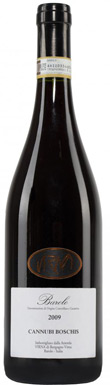

<p>Virna Borgogno graduated in 1991 from the oenology school in Alba, and only 10 years later founded the estate that she runs with sister Ivana...
2009
Virna BorgognoBarolo

Brezza, Sarmassa, Barolo, Barolo, Piedmont, Italy, 2009
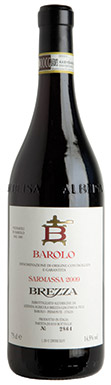
<p>The Brezza family owns a guest house in the heart of the town of Barolo, which offers the traditional Piedmontese home cooking and excellent wines....
2009
BrezzaBarolo
Diego Conterno, Le Coste, Barolo, Monforte d’Alba, Piedmont, Italy, 2009
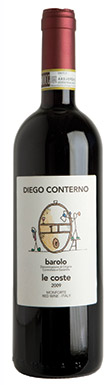
<p>Not to be confused with one of the many other Conterno wine producers of the Monforte area, this estate’s wines only have a 10-year history...
2009
Diego ConternoBarolo
Pecchenino, Le Coste, Barolo, Monforte d’Alba, Piedmont, Italy, 2009
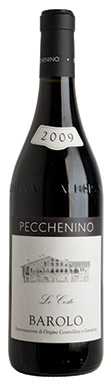
Orlando and Attilio Pecchenino are perhaps best known for outstanding Dolcetto di Dogliani (the Siri d’Jermu immediately comes to mind), but the rich Le Coste...
2009
PeccheninoBarolo
Sobrero, Ciabot Tanasio, Barolo, Castiglione Falletto, Piedmont, Italy, 2009
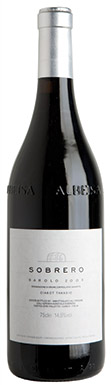
Sobrero is a famous name in Castiglione Falletto as Violante Sobrero made some of the area’s best wines in the 1960s and 1970s, but this...
2009
SobreroBarolo
Stefano Farina, Barolo, Piedmont, Italy, 2009
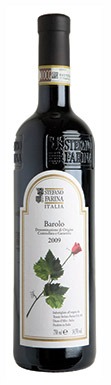
<p>Founded in the 1930s, this is a large producer with vineyard holdings and estates in many regions of Italy, including Tuscany’s Fattoria Le Bocce and...
2009
Stefano FarinaBarolo
Fratelli Serio & Battista Borgogno, Cannubi, Barolo, Barolo, Piedmont, Italy, 2009
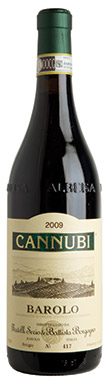
<p>Over 100 years and counting making wine, this estate is now run by Anna and Paola Borgogno, with the new generations (Federica and Emanuela, daughters...
2009
Fratelli Serio & Battista BorgognoBarolo
Rocche dei Manzoni, Perno Vigna Cappella di Santo Stefano, Barolo, Monforte d’Alba, Piedmont, Italy, 2009
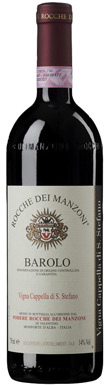
Founded in 1976 by Valentino Migliorini (Rodolfo Migliorini runs things today), who quickly made a name for himself with very impressive wines. Always an innovator,...
2009
Rocche dei ManzoniBarolo
Giulia Negri, Serradenari, Barolo, La Morra, Piedmont, Italy, 2009
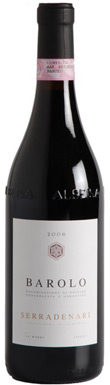
<p>Serradenari is located in the highest part of the La Morra production zone and is quite a new estate – 10 years ago the main...
2009
Giulia NegriBarolo
Damilano, Cannubi, Barolo, Barolo, Piedmont, Italy, 2009
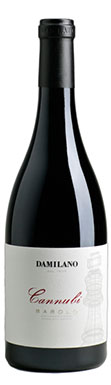
Hay and prunes. Ripe cherries, cloves and cinnamon. Rich, full-bodied with great personality, persistent aromas, chocolatey tones, along with ripe and savoury tannins.
2009
DamilanoBarolo
Luigi Pira, Marenca, Barolo, Serralunga d’Alba, Piedmont, Italy, 2009
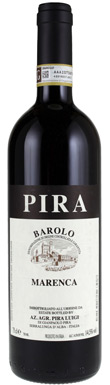
Balsamic aromas of pine, anise, cinnamon, camphor, plum, violets and roses. Rich, round with an expressive body. Clean and fresh, with peppery tannins at the...
2009
Luigi PiraBarolo
