
From the archive: Barolo 2010 panel tasting results


The Barolo 2010 vintage is a keeper, and there's still time for the canny buyer to stock up. See our in-depth report below...
Originally published in Decanter magazine's April 2015 issue and now available online in full, exclusively for Premium members
134 Barolo 2010 wines submitted and tasted, with three rated Outstanding
‘Quality in the region is better than ever before, particularly at the lower levels,’ said our panel of Ian D’Agata, Michael Garner and Emily O’Hare
Barolo 2010 vintage summary:
Keep
Superb weather in late summer and September, giving slow ripening. The wines are vibrant and structured, with admirable tension and ageability. Marginally less successful in Barbaresco.
5/5
Scroll down to see the top wines from this panel tasting
With the major communes all faring well, plus a strong showing from most leading producers and some up-and-coming names, you can buy the 2010s with confidence, says Ian D’Agata…
Our results confirm Barolo 2010 as an above-average, at times even memorable vintage.
Those who like richer-bodied, fleshier Barolos tend to score the 2010s especially high; others who prefer slightly lower alcohol levels, more penetrating perfume and grace generally come away less impressed. Still, there is no denying that these wines performed admirably, with an impressive 55% of the wines in our tasting scoring 90 or above.
For the most part, all the well-known estates performed admirably, and it’s interesting to see that just about every commune produced wines of note, with each of the five major communes having a wine in the top 10.
Quick link See 133 tasting notes & scores from this panel tasting
Top communes
Castiglione Falletto and Monforte d’Alba confirm themselves as Barolo sure bets, with a high overall average score.
Also, the superb showing of many Serralunga wines underscores why this commune is so popular. Given the generally warm year, it is not surprising that Serralunga (with higher limestone in its soils and partially cooler microclimates) allowed for wines with more penetrating, racier aromas and flavours.
Top producers
As for individual producers, this is not the first time that a wine from Brezza comes out on top in a Decanter panel tasting, and I dare say it won’t be the last either. Its wines are excellently made, balanced and pure.
Other Barolo notables also showed well, with wines from all the usual suspects proving sure buys: look out for Aldo Conterno, Andrea Oberto, Ceretto, Chiarlo, Francesco Rinaldi, Giacomo Fenocchio, Massolino, Paolo Scavino, Renato Ratti, Rocche dei Manzoni, Vietti and many others.
Wines from usually stellar producers like Boglietti, Bric Cenciurio, Cavallotto, Ciabot Berton, Cogno and Le Strette were less successful, probably due to too ripe aroma and flavour profiles that are not every taster’s preference. In this light it is interesting to note that Novello’s top two producers, Elvio Cogno and Le Strette, both produced very good wines but that slightly underperformed. Unfortunately, Sandrone’s single bottle sent for the tasting was hopelessly corked.
In fact, a negative aspect of this tasting was the high number of corked bottles – this was not the case in our panel tasting of 2009 Barolos.
But a very positive note (and one that was also evident in our 2009 tasting) is the increasingly high number of slightly less famous but extremely capable and/or promising estates making great wines: Cascina Adelaide, Attilio Ghisolfi, Bruna Grimaldi, Cascina Ballarin, Cascina Bongiovanni, Negretti, Rivetto, Serradenari, Sobrero and Tenuta Rocca were just some that shone. Without doubt, this bodes very well for Barolo’s future.
The scores
134 wines tasted
Entry criteria: Producers and UK agents were invited to submit their 2010 Barolos. Only one wine per producer was permitted.
3 Outstanding
71 Highly recommended
53 Recommended
6 Fair
0 Poor
1 Faulty
The results
Wine critics have heaped praise on the 2010 Barolos – so would they live up to their reputation here? The answer: a qualified yes, with high scores awarded. Amy Wislocki reports on the post-tasting discussion…
2010 is clearly an extremely good vintage for Barolo. Is it the best vintage of the century so far? Ian D’Agata would say not, though concedes that his is generally a minority view:
‘2010 is undoubtedly a very good year. But it has been touted as a possible vintage of the century and in that context, for me, it fails. Granted, there are some spectacular wines, but there are also a bunch of wines that disappointed with syrupy, super-ripe aromas and flavours, and little of the floral, red rose characteristics that you look for in Barolo.’
D’Agata went on to criticise the high alcohol level of many wines – ‘We tasted 134, and only four of them were 13.5% or less’ – and the astringent tannins of others – ‘The tannins may be more prominent at the moment because the fruit is muted, but some of the tannins are distinctly green,’ he observed.
‘The vintage has enjoyed the same level of hype as 2000 and 2004,’ continued D’Agata, ‘and while both of those were also very good – even excellent – neither is a vintage of the century. I’d choose 2001 or 2006 over any of them.
‘2008 is also a classic vintage, with some great wines, but has gone under the radar for some reason.’
Michael Garner was more positive about 2010. ‘These are tremendous wines, with an amazing freshness and a fine acid balance. I think the vintage just about deserves the praise that has been heaped on it. Perhaps they’re showing slightly less well than the 2009s were at this stage last year, but I think the 2010s have longer legs and will continue to develop for far longer. I’m a big fan of the vintage.’
Garner also praised the evolution of the region in general: ‘Barolo production has doubled over the past 25 years, and that would usually come at the expense of quality. But, on the contrary, today’s tasting has shown that quality is better than ever, and that’s particularly noticeable at the lower levels.’
It was the typicity of the wines that won Emily O’Hare over. ‘You could understand the Nebbiolo grape immediately when you tasted these 2010s,’ she said. ‘They showed an attractive classicism, despite the high alcohol, and there was a clarity to the wines – nothing opaque in the glass, which was a relief.’
The tasters all agreed that the wines were going through a ‘difficult’ or ‘dumb’ phase, described poetically by O’Hare as a ‘wave of quietness’. So when will they be at their best?
Drinkability
O’Hare found a refreshing readiness to drink in general. ‘Yes, I might enjoy them more in three to five years’ time, and some will go 10 years or more, but there’s a jubilance and joyousness to them in youth that would make them great to drink now, especially with food.’
‘What impresses me about Nebbiolo is its high level of drinkability over a sustained period,’ said Garner. ‘I think 2010 will hit a peak of drinkability in around 2020, and from then onwards we will be looking at some very special wines.
‘They have the right level of tannins and acidity, matched on the whole by body and substance.’
D’Agata agreed, suggesting that some wines might even be ready to drink in 2018. ‘I’d drink most before 2030, except for the best, which could go to 2045.’
In terms of communes, both Serralunga and Castiglione Falletto earned praise. ‘We tend to forget about the latter, but it is consistently high scoring,’ said Garner. ‘It’s a great introduction to Barolo too, as it’s geographically in the centre of the region and boasts aspects of the other communes.’
Serralunga is on the rise, and has the bonus of being the only commune with a lot of limestone in the soil,’ added D’Agata. Both are worth special attention in 2010.
Our tasters each pick their top 3 wines from the tasting:
Ian D’Agata
At the time of this tasting D’Agata was a DWWA Regional co-Chair for Italy and was named Italy’s best wine journalist 2012 by the Comitato Grandi Cru d’Italia. He is an award-winning author of The Ecco Guide to the Best Wines of Italy, and The Native Wine Grapes of Italy.
‘Serralunga stole the show since the wines had better acidity and more precise flavours, thanks to generally cooler sites and limestone in the soils. Castiglione Falletto also confirmed its role as the commue that provides the most balanced of all Barolos (there was a noteworthy high overall standard and a level consistency in the wines we tasted).
‘Many wines from La Morra, Barolo, Monforte and other communes were overripe and high in alcohol.
‘With just four wines at 13.5% alcohol or less, it is clear to see that 2010 is a hot vintage with all that entails. Many have touted it as exceptional and, while good, I think this vintage will fall into a category that includes 1997 and 2004: highly touted at the outset but then critically re-evaluated over the following years. Very good years all, but vintages of the century? Hardly.
‘If Decanter readers want a truly great bottle of Barolo, perfumed and precise, from a recent vintage, go for 2001, 2006 and even 2008 which are all beautifully classic.’
Giovanni Rosso, Cerretta, Serralunga d’Alba 2010
This Barolo is a paragon of Nebbiolo from Serralunga (sour red cherry, raspberry, high acid, steely tannins and very ageworthy), and a great spot for the still relatively unknown but top-quality Cerretta vineyard. 96/100 Drink 2019-2040
Massolino, Parafada, Seralunga d’Alba 2010
Though Massolino is most famous for his great Vigna Rionda bottling, the Parafada rarely misses a beat, offering a typical Serralunga deep, brooding personality and lots of Nebbiolo purity and perfume. Very ageworthy. 94 Drink 2019-2040
Cordero di Montezemolo, Bricco Gattera, La Morra 2010
There are sexier names in Barolo, but Cordero di Montezemolo is one of the most dependable, solid producers in the region. Its entry-level Monfalletto is always outstanding (a sure sign of care and competence), while this super-premium Bricco Gattera is made from the best grapes from the top, and finest, part of the La Morra hill. 92 Drink 2018-2030
Michael Garner
Garner has worked in the wine business for more than 30 years and has specialised in Italian wine for more than 25 of them. He is the co-author of Barolo: Tar and Roses, writes and judges for Decanter and has taught for the Wine & Spirit Education Trust.
‘Time alone will tell just how good the 2010 vintage is. Whether it will turn out to be the vintage of the century so far is already open to debate: after the recent release of the excellent 2011s, there will still be another eight vintages to consider (some of which, 2013 for example, already promise great things.)
‘There is no doubt, however, that 2010 can be rated as very good to excellent. On the whole the wines show excellent freshness with very good levels of acidity, firm but ripe tannins and quite high alcohol levels. At the moment they have entered a slightly dumb phase and are less forthcoming in terms of aroma than they were last autumn. But I am convinced that they will come round fairly quickly and show the full breadth and depth of aroma that earlier tastings promised.
‘Despite this being a difficult phase for the wines, 96% of them came in at Recommended and above, and will provide excellent medium- to long-term drinking. Were I to be really picky, I might raise a slight doubt about their intensity of fruit and therefore their ultimate long-term future, but we’re splitting hairs here: 2010 is a lovely vintage which is well worth investing in.’
Brezza, Sarmassa, Barolo 2010
A richly deserved Outstanding score. Enzo Brezza has transformed this estate, introducing organic methods to realise the full potential of some excellently sited vineyards. This Sarmassa 2010 is a beautifully aromatic wine which should age well. 95/100 Drink 2018-2030
Massolino, Parafada, Seralunga d’Alba 2010
Serralunga is the hot commune in Barolo, and Massolino one of the best producers. This Parafada is a rich and intense, fullerbodied style of Barolo which combines power and precision. 95 Drink 2019-2040
Sobrero, Ciabot Tanasio, Castiglione Falletto 2010
Castiglione Falletto is the smallest of the major Barolo producing communes, yet the wines showed remarkable consistency here. Sobrero is an up-and-coming name producing ripe, juicy, balanced and drinkable Barolo. 93 Drink 2017-2030
Emily O’Hare
O’Hare left her role as head sommelier/wine buyer at London’s River Café to take part in the 2014 harvest at estates in Tuscany, Campania and Piedmont. She is co-founder of the London Wine Sessions festivals, as well as a wine judge, educator and freelancer writer. She lives in Florence where, at the time of this tasting, she was studying to become an Italian Ambassador of Wine at the Vinitaly International Academy.
‘If ever there was a vintage to draw in new fans to Nebbiolo (or tempt lovers of Pinot Noir away), then 2010 is the year: these Barolos are transparent and bright in colour, with complex aromas that are floral, exuberantly fruity and exotically spicy, and base notes of fresh meat.
‘But it is the nature and quality of the tannins that really mark this vintage out. The tannins are expectedly high but do not dominate the impression of the wine – instead they are supple and supporting and, in many cases, unexpectedly soft.
‘Having worked in restaurants, I know that customers have an impression of Barolo as this rather intimidating, full-bodied, full-on, powerful red that is best drunk at least 10 years after bottling.
‘But with the 2010s such impressions can be challenged – the wines really can be enjoyed now. They smell and taste thrillingly pure and, although full flavoured, they are medium-bodied with satisfying (not scary!) tannins. 2010 is a Barolo vintage to woo with!’
Brezza, Sarmassa, Barolo 2010
From a 2.5ha parcel of vines bordering La Morra, this wine is utterly beautiful, scented and finely tuned. The wine to pit against any grand cru Burgundy. The Brezzas say that it is best nine to 10 years after the harvest. 95/100 Drink 2018-2030
Aldo Conterno, Bussia, Monforte d’Alba 2010
The Conterno family has been making wine since the 1700s and its wines reflect those generations of expertise. Aged for over two years in large Slavonian oak, the tannins support, the acidity refreshes and the fruit is glorious. 94 Drink 2018-2035
Ferdinando Principiano, Serralunga d’Alba 2010
Fragrant and fresh, winemaker Ferdinando Principiano says this is the most immediate of the Barolos he produces. Made from the ‘younger’ vines – 25 years old! – in his Boscareto vineyard, it shows a very sensitive side to Serralunga. 93 Drink 2019-2040
About Barolo
Barolo has never been better, and a seemingly endless run of successful vintages should help it conquer new markets and generations of wine lovers.
Aside from the rain-plagued 2002 and incredibly hot 2003 vintage, there have been nothing but above-average, classic or outstanding years since 1999, and 2010 looks to be one of the best of recent times.
The year began with a snowy winter that guaranteed lots of water reserves – a good thing given the high average temperatures of April and May, and especially of the last part of August and September.
This led to very ripe, sugar-rich grapes, and most 2010 Barolos are not shy about their high octane levels. If the high temperatures caused Barolo’s magical floral perfume to get lost in some 2010s, the wines do present a creamy charm and a ripe, fruity personality that makes them easier to approach when young.
It also means that the wines will probably evolve slightly faster than some other vintages, like 2001 or 2006.
Comparisons with Burgundy
When well made, Barolo is one of the world’s truly great wines, characterised by a perfume of roses, violets, sweet spices, minerals and sour red cherry, and an uncommon blend of powerful tannins yet delicate flavours similar to the aromas. Barolo is also one of the world’s most ageworthy wines (a well kept 1947 or 1961 Barolo is unforgettable), so it’s easy to understand why many wine lovers and collectors hold it in such high esteem.
Another plus is that Barolo, much like red Burgundy (to which it is often compared) is very site-specific, with evident differences between the communes.
Generally speaking, wines from La Morra and Barolo, with their magnesium- and manganese-rich soils, develop faster and are drinkable at five to eight years from the vintage (though wines from great vintages will easily keep 40 years or more).
Those from Castiglione Falletto, Monforte d’Alba and Serralunga d’Alba are slower to develop, given their harder soils, and are best opened eight to 15 years from the vintage; clearly, they can live even longer when cellared well.
Other less well known communes that are producing wonderful wines are Novello (similar to those from Serralunga and Monforte) and Verduno, where wines from the extremely high quality Monvigliero cru are starting to turn heads.
Just like with Burgundy, it pays to know the names of the most dependable producers. Though the astringently hard, brutally tannic wines devoid of fruit and flesh are mainly a thing of the past, some poor Barolos are still being made.
Such Barolos are most often light-bodied, quickly maturing wines with little depth or concentration of perfume and fruit. That said, those who still think that Barolos are tough and unenjoyable simply don’t know enough about the wine or the producers.
One last word: as Barolo is 100% Nebbiolo, it will never be pitch black in colour; it is light to medium-dark garnet. Never make the mistake of thinking that the deep, inky wines are the best.
Wine lovers can turn confidently to the 2010 Barolos, just as they could to the lovely 2009 and classic 2008s before them. There are many great bottles to choose from.
Barolo: the facts
Total hectares 1,800ha
Annual production 12,000,000 bottles
Production area 11 communes in the DOCG; 85% of wine coming from Barolo, La Morra, Castiglione Falletto, Serralunga d’Alba and Monforte d’Alba. Other communes are: Cherasco, Diano d’Alba, Grinzane Cavour, Novello, Roddi and Verduno.
Production guidelines 100% Nebbiolo. Must be aged at least two years in oak and at least one year in bottle before release. Riservas are aged five years, with at least three in oak.
Barolo: know your vintages
Written by Stephen Brook
1996 5*
Storms and cool spells meant the summer was imperfect, but a fine September brought full ripeness. Excellent in Barbaresco. Robust, structured wines with high acidity the long haul. Drink or keep
1997 3.5*
A hot and precocious summer led to some overripeness, though fresher in Barbaresco. Plump wines with immediate appeal, but limited structure. Drink up
1998 4*
A hot summer and cool September, but the grapes did ripen, although the wines are tannic and sturdy. Keep
1999 4.5*
A fine vintage despite some September rains. Elegant and balanced wines with ageing potential. Drink or keep
2000 4*
A hot late summer led to very ripe wines with moderate acidity and some jamminess. Appealing but initially overrated. Drink up
2001 5*
After a hot summer, a cool September slowed ripening. Those who waited made superbly structured wines with excellent balance. Drink or keep
2002 1.5*
Hail after a poor August damaged grapes. Only the most selective growers made decent wines. Drink up
2003 2.5*
Intense summer heat, although refreshed by late August rains, led to super-ripe wines high in alcohol. Many cooked and dry wines. Drink up
2004 4*
A mild summer was followed by a dry autumn, yielding fruity wines with immediate appeal. But they have evolved fast. Drink up
2005 4*
The cool August and some autumn rains made this a tricky vintage, but the best wines, especially from Barbaresco, are fresh and lively. Drink or keep
2006 5*
A tricky growing season but a classic year, delivering bold, tannic, and sometimes austere wines that will repay cellaring. Keep
2007 4*
Warm weather led to an early harvest of fruity grapes with fairly low acidity. Many delicious wines, best enjoyed young. Drink or keep
2008 5*
A difficult summer with some hail, but September was fine. Wines with firm tannins that require ageing. Excellent in La Morra. Keep
2009 4.5*
A hot year, delivering lush succulent wines, but with moderate acidity. Can already be enjoyed for their abundant fruitiness. Drink or keep
2010 5*
Superb weather in late summer and September, giving slow ripening. The wines are vibrant and structured, with admirable tension and ageability. Marginally less successful in Barbaresco. Keep
2011 4.5*
Hot humid conditions led to wines that are ripe and sumptuous, but already beginning to drink well. Excellent wines from Barbaresco. Drink or keep
2012 3*
Hail and sunburn were just some of the problems this year, and growers had to respond adroitly in the vineyards. Some fine wines, but others are soft and forward. Drink or keep
2013 4.5*
A cool summer and an abundant crop that need to be thinned to achieve full ripeness. A year of fragrant, elegant wines that are now gaining in structure. Keep
2014 4*
After a stormy summer, a fine September saved the vintage, although hail did much damage. Yet top growers produced fine, elegant wines. Better in Barbaresco. Keep
2015 5*
Torrid July but cooler, moister conditions in August and September brought the grapes to ripeness, especially in Barbaresco. A small crop of charming wines. Keep
2016 4.5*
Very warm weather in early September and October fully ripened the grapes, which remained healthy. Potentially excellent.
Top Barolo 2010 wines from the panel tasting:
See 133 wines from the panel tasting
You may also like:
Introducing Damilano’s Raviole cru: A new Barolo
Top Barolo 2008 wines: Panel tasting results
Best Piedmont wines: Latest-release Barolo & Barbaresco
Gaja Barbaresco crus: Costa Russi & Sorì San Lorenzo verticals
Brezza, Sarmassa, Barolo, Barolo, Piedmont, Italy, 2010
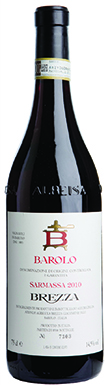

<p>Besides outstanding Freisa, Dolcetto and Barbera wines, Brezza's different, site-specific Barolos are standardbearers for Nebbiolo and the DOCG. This Sarmassa from the Barolo 2010 vintage...
2010
BrezzaBarolo

Cascina Adelaide, Fossati, Barolo, La Morra, Piedmont, Italy, 2010
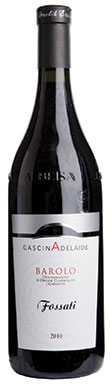
<p>The estate has been around since 1817, but the turning point came in 1999 when current owner Annibale Drocco took over; winemaker Sergio Molino helps...
2010
Cascina AdelaideBarolo
Giovanni Rosso, Cerretta, Barolo, Serralunga d’Alba, Piedmont, Italy, 2010
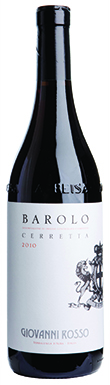
<p>Founded in 1890, the estate has recently become one of the brightest emerging stars in Barolo. Owner Davide Rosso studied winemaking in France and is...
2010
Giovanni RossoBarolo
Diego Conterno, Ginestra, Barolo, Monforte d’Alba, Piedmont, Italy, 2010
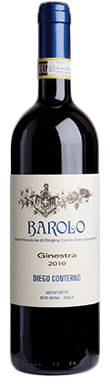
This wine is perfumed, with an almost romantic nose of aniseed, nutmeg, flowers and red berries. It has a big, ripe and densely textured palate...
2010
Diego ConternoBarolo
Francesco Rinaldi & Figli, Cannubi, Barolo, Barolo, Piedmont, Italy, 2010
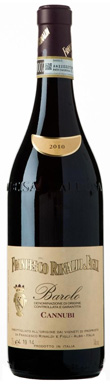
Fresh and floral; with juicy strawberry flavours and minty notes. Bright finish.
2010
Francesco Rinaldi & FigliBarolo
Rocca Giovanni, Ravera di Monforte, Barolo, Monforte d’Alba, Piedmont, Italy, 2010
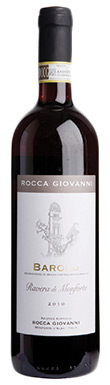
Pronounced cherry blossom and red apple nose with hints of coffee and vanilla. Graceful delivery of pure red fruit, plum liqueur, aromatic herbs and citrus...
2010
Rocca GiovanniBarolo
Alessandro & Gian Natale Fantino, Bussia Cascina Dardi, Barolo, Monforte d’Alba, Piedmont, Italy, 2010
This wine has an aroma of tea leaves and tobacco with pristine red cherry fruit, rose petal and a touch of mint. It has a...
2010
Alessandro & Gian Natale FantinoBarolo
Massolino, Parafada, Barolo, Serralunga d’Alba, Piedmont, Italy, 2010
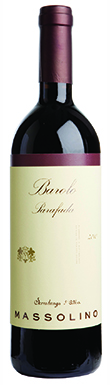
Brooding, very deep nose of sour red cherry and raspberry fruit complementd by aromatic herbs, sweet spices and roasted coffee. Long, densely textured finish with...
2010
MassolinoBarolo
Boroli, Villero, Barolo, Castiglione Falletto, Piedmont, Italy, 2010
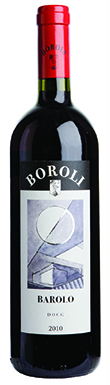
Toasted walnuts, chestnuts and fresh thyme with cherry, citrus and peach notes. Broad and fleshy fruit flavours of good intensity and aromatic spicy notes come...
2010
BoroliBarolo
Brovia, Barolo, Castiglione Falletto, Piedmont, Italy, 2010
Fresh mint and parsley and bright red berry aromas. Juicy red fruit palate balanced by good acidity and firm but ripe tannins. Lots of freshness...
2010
BroviaBarolo
Cordero di Montezemolo, Bricco Gattera, Barolo, La Morra, Piedmont, Italy, 2010
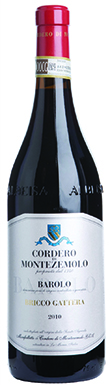
This wine is ripe with a spicy nose and has notes of strawberry, melon, pomegranate and dried flowers. It has a full palate of well-rounded...
2010
Cordero di MontezemoloBarolo
Deltetto, Bussia, Barolo, Monforte d’Alba, Piedmont, Italy, 2010
Bright and fresh aromas of raspberry, cherry, mint, and sage. Sweet and chunky with ripe cassis flavours; an interesting wine to sit with, lots of...
2010
DeltettoBarolo
