
Barolo 2019: vintage report & 139 recommendations
Aldo Fiordelli hails 2019 as a ‘classic‘ vintage in Barolo, rating it five out of five stars. Read his report below plus see the top-scoring wines.


Barolo 2019 vintage rating: 5/5
Good distribution of rainfall throughout the long growing season, with a warm spring, a scorching end to July which led to sunburnt grapes in some vineyards, and a hailstorm in September which mostly affected vines in La Morra. October was drier, with mild days and cool nights. Comparisons to the very structural 2013 vintage have been made by more than one producer.
Scroll down to see the top-scoring Barolo 2019 wines
The 2019 vintage
The adjective ‘classic’ can only partly be intended, as it is in Bordeaux, to indicate wines that are less concentrated. Here in Barolo, ‘classic’ refers to traditional, old-fashioned or even old-school styles – a ‘classic’ vintage is more austere than supple.
All the producers agree on the point that 2019 is a classic vintage. Even if it lacks a bit of concentration, it deserves five stars. But let’s go in order. Compared to the most recent (yet to be bottled) 2021 and 2022 vintages, which were affected by drought, 2019 started with good water reserves for the vines thanks to plenty of rain and snow through the winter, crucial for storing water in the steep, weathered, poor soils of the Barolo hills.
‘The sum of the rainfall in 2021 and 2022 together doesn’t reach the levels of 2019 by itself,’ Maria Teresa Mascarello announced to me. Conversely, the annual average rainfall of 654.5mm recorded for 2019 (according to the analytical data collected by respected ‘mapman’ Alessandro Masnaghetti on his platform barolomga360.it) was lower than that for the rainy, warm 2018 vintage’s 923.7mm.
And while 2018 was considered a bit ‘diluted’, 2019 is not, thanks to a better distribution of rainfall and a drier last part of the season. In terms of the spring, the two vintages were similar: pressure from diseases was quite high at flowering and fruit-set, and most of the 2019 wines that show rustic tannins can be attributed to this.
In 2019, warmth set in early, and the end of July was marked by terrible heat: ‘We measured 46-47°C in the vineyards,’ said Andrea Delpiano, Giovanni Rosso’s winemaker in Serralunga.
Temperatures peaking over 40 degrees were ‘followed by rain,’ as Fabio Alessandria from GB Burlotto specified. ‘We had some sunburn on the grapes in Bussia,’ admitted Marta Rinaldi from the Giuseppe Rinaldi estate which this year will release its first Bussia MGA. Sunburn was one of the main threats in 2019, as well as a hailstorm in September which mostly affected La Morra. ‘We did not pick Rocchette Vino due to the hail,’ confirmed Francesco Bianco, winemaker at Gianfranco Bovio. Apart from that, 2019 didn’t suffer spring frost as in 2021, and registered a great conclusion with mild days and cool nights which extended the season.
Harvest in 2019 finished around 20 October: the epitome of classic! Nebbiolo grapes with longer growing seasons are, in my experience, the best in terms of complexity and ability to age. The wines of this vintage have slightly more acidity, more structure, a bit of sternness: trademark Barolo.
See all 139 wines from Aldo’s Barolo 2019 report
View the score table with all 165 Barolo 2019 & Barolo 2017 Riservas from Aldo’s report
Classic
What, in my personal view, counts even more to further define ‘classic’ and my preference for this vintage, is that 2019 also has lower alcohol: 13.5-14%, which results in 0.5% to 1% below the average. Also, the lower the alcohol the better the management of volatile acidity, which was kept to a minimum in this vintage.
For GB Burlotto’s Fabio Alessandria, ‘the 2019 shows analytical data like 2013 in terms of tannins, alcohol and acidity, which is five to ten percent higher than usual. It produces a vertical wine, one that is straight, not powerful nor broad. My wines seem to have less shoulder and more energy [in 2019].
‘In the end, we have two to three great vintages for each decade, just like in the past. Most likely the 2019 is a less approachable vintage for those who are not too involved in Barolo.’
This last sentence captures my curiosity for these wines and their potential for evolution. Even Roberto Conterno from Giacomo Conterno compares 2019 – which is ‘more structured’ – with the ‘super-structured 2013.’ In comparison, he said, ‘the 2020 vintage is more exuberant and 2021 is somewhere in the middle of the two’.
The first tastings of Barbaresco, now releasing the 2020 vintage, have shown very sweet tannins and more round and approachable wines without being simple or obvious. They suggest another promising year for Barolo – but less upscale compared to 2019. At the same time, the samples of 2021 I tasted from barrel have shown great concentration and power. Will it be better?
I prefer to be pragmatic with such complex 2019s in the glass. To dive in even further, we could look to the analytical data collected by ‘mapman’ Alessandro Masnaghetti on his platform, barolomga360.it. In terms of rainfall, the 2019 vintage was slightly lower but close to 2016 and 2013 (25.76 inches). At the same time, monthly heat summation (per temperature > 10°C) was close to vintages like 2016 or 2006 but higher compared to 2013.
Which Barolo 2019 should you seek out?
The wines that do not lack in concentration – such as the great Brunate from Rinaldi, the astonishing Monfortino from Giacomo Conterno, the complex Bartolo Mascarello, and the super-elegant Monvigliero from GB Burlotto – deserve attention in the 2019 vintage.
Interestingly, three of these four top examples are blends, which well describes this vintage: blending the grapes from different MGAs has produced wines with more volume, refinement and complexity at this early stage. The single-MGA wines will need more time to develop their complexity, although they already demonstrate signature characteristics.
Southern exposures are back at the top in 2019, with sleek examples such as Brezza’s Sarmassa in the commune of Barolo. Cerretta in Serralunga d’Alba, with its multiple exposures, is increasingly establishing itself as one of the best and most consistent MGAs.
Gianfranco Bovio was among a handful of pleasant surprises among the lesser-known producers, adjusting their winemaking style to shorten the duration of pumping over, switching from barrique to botti grandi, and incorporating a splash of press wine a là Bordeaux.
Excluding La Morra – which in my opinion is too large to be easily defined, and moreover suffered from hail in 2019 – both Monforte and Serralunga performed better than the commune of Barolo in terms of quality.
Barolo 2019: Top-scoring wines
The following 25 wines all scored 96 points or above
View the score table with all 165 Barolo 2019 & Barolo 2017 Riservas from Aldo’s report
Related articles
- Barolo Riserva 2017: vintage report and 26 recommendations
- Brunello di Montalcino 2018: full report plus top-scoring wines
- Get to know Piedmont red wines in three steps
Giuseppe Rinaldi, Barolo Brunate, Barolo, Piedmont, Italy, 2019
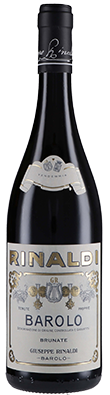

<p>The 2019 vintage is the first Brunate fully tended by Carlotta and Marta, following their father, Beppe Rinaldi's death. Typically blended with 15% of the...
2019
Giuseppe RinaldiBarolo Brunate

Bartolo Mascarello, Barolo, Piedmont, Italy, 2019
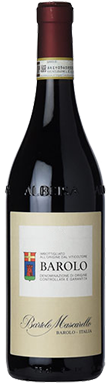
Maria Teresa Mascarello compared the 2019 of her Barolo (which will be released in September 2023) with the famed 1999 vintage. Fermented and aged in...
2019
Bartolo MascarelloBarolo
GB Burlotto, Barolo Monvigliero, Verduno, Piedmont, Italy, 2019
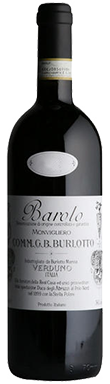
At the northernmost tip of Barolo, GB Burlotto's Monvigliero 2019 was harvested around 20 October. Fermented in big oak casks with its own yeasts and...
2019
GB BurlottoBarolo Monvigliero
Giacomo Conterno, Monfortino Riserva, Barolo, Piedmont, Italy, 2019
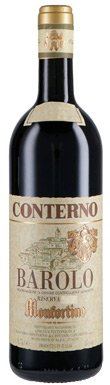
Demonstrating the meticulous precision for which the estate is known, the 2019 Monfortino is a thoroughbred. I was able to taste it on a couple...
2019
Giacomo ConternoBarolo
Domenico Clerico, Ciabot Mentin, Barolo Ginestra, Monforte d’Alba, Piedmont, Italy, 2019
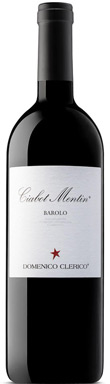
Ciabot Mentin was planted in Ginestra in 1978, between 390 and 420 metres above sea level – relatively high in Barolo – but mostly with...
2019
Domenico ClericoBarolo Ginestra
Aldo Conterno, Colonello, Barolo Bussia, Monforte d’Alba, Piedmont, Italy, 2019
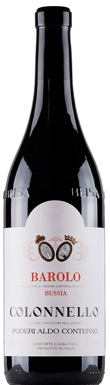
Tenuta Favot, Aldo Conterno's winery, is one of the most splendid estates in the Langhe. The Colonnello vineyard is a 45- to 50-year-old Nebbiolo in...
2019
Aldo ConternoBarolo Bussia
Brezza, Sarmassa, Barolo, Barolo, Piedmont, Italy, 2019
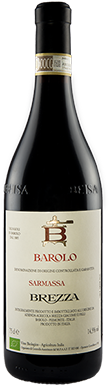
Brezza is dedicated to organic viticulture, and works only with indigenous yeast, big oak vessels and long macerations in the cellar. His 2019 Sarmassa is...
2019
BrezzaBarolo
Bovio Gianfranco, Barolo Parussi, Castiglione Falletto, Piedmont, Italy, 2019
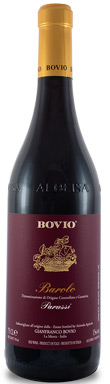
Bovio's Parussi is a lower amphitheatre with a southwest exposure in Castiglione Falletto, in front of Gattera. The estate has changed a lot, today handling...
2019
Bovio GianfrancoBarolo Parussi
Ceretto, Bricco Rocche, Barolo, Castiglione Falletto, Piedmont, Italy, 2019
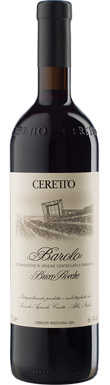
Bricco Rocche lies at the peak of both Rocche di Castiglione and Villero. East and west expositions create a greatly balanced blend of contrasting hallmarks....
2019
CerettoBarolo
Mauro Veglio, Paiagallo, Barolo, Barolo, Piedmont, Italy, 2019
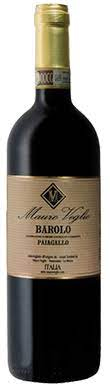
Veglio's Paiagallo is from a single 30hl botte grande, where the wine ages for 24 months. It's very classic on the nose, with dried cherry,...
2019
Mauro VeglioBarolo
Elvio Cogno, Ravera, Barolo, Novello, Piedmont, Italy, 2019
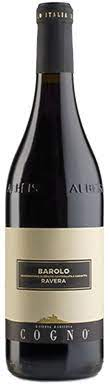
I must admit I'm not a fan of Ravera, but Elvio Cogno has produced a gorgeous Barolo here in 2019. The nose is an intoxicating...
2019
Elvio CognoBarolo
Azelia, Margheria, Barolo, Serralunga d’Alba, Piedmont, Italy, 2019
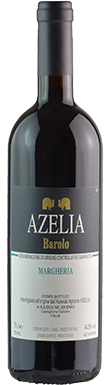
Luigi and Lorenzo Scavino prolong the maceration for up to 60 days, and ageing in botti for 30 months. This Margheria is thus more concentrated,...
2019
AzeliaBarolo
Azelia, Bricco Fiasco, Barolo, Castiglione Falletto, Piedmont, Italy, 2019
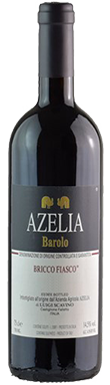
Bricco Fiasco is a single cru, vinified by itself since 1978, today from vines of 85 years old. The wine, after long maceration and ageing...
2019
AzeliaBarolo
Palladino, Parafada, Barolo, Serralunga d’Alba, Piedmont, Italy, 2019
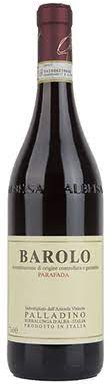
If 2019 is an austere vintage and Serralunga is an austere village, Parafada brings extra austerity to this wine. It's a powerful Barolo for the...
2019
PalladinoBarolo
GD Vajra, Cerretta, Barolo, Serralunga d’Alba, Piedmont, Italy, 2019
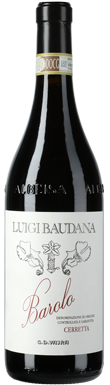
This Cerretta is restrained, mostly focused on earthy root aromas rather than fresh fruits: rhubarb, cinnamon and dried cherry. The attack is full of sucrosity,...
2019
GD VajraBarolo
Mauro Molino, Conca, Barolo, La Morra, Piedmont, Italy, 2019
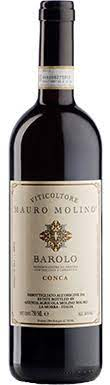
Year by year, Molino's Conca acquires more consistency. Very pale in the glass, it shows a polished nose of pomegranate, peach and earthy strawberry, Early...
2019
Mauro MolinoBarolo
Giacomo Conterno, Cerretta, Barolo, Serralunga d’Alba, Piedmont, Italy, 2019
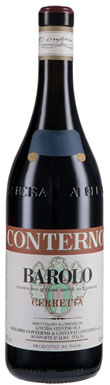
Harvested classically around 20 October, Roberto Conterno's Cerretta is a sleek example of a powerful wine with grace. Dried roses and dried cherries are highlighted,...
2019
Giacomo ConternoBarolo
Ettore Germano, Cerretta, Barolo, Serralunga d’Alba, Piedmont, Italy, 2019
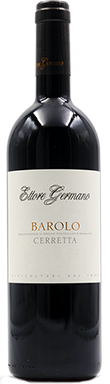
The style of Ettore Germano has the rare merit to combine traditional equipment such as botti grandi with a contemporary idea of balance, including earlier...
2019
Ettore GermanoBarolo
Giovanni Rosso, Cerretta, Barolo, Serralunga d’Alba, Piedmont, Italy, 2019
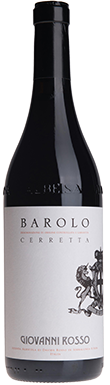
After 30 to 36 months in big oak casks, this 2019 vintage of one of Serralunga's most celebrated MGAs shines for its restrained nose of...
2019
Giovanni RossoBarolo
GB Burlotto, Castelletto, Barolo, Monforte d’Alba, Piedmont, Italy, 2019
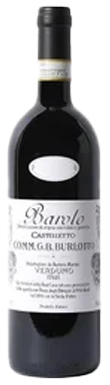
There were high expectations for this Castelletto from GB Burlotto, since the first vintage of this cru from the estate was the leaner 2018 vintage....
2019
GB BurlottoBarolo
Giacomo Fenocchio, Bussia, Barolo, Monforte d’Alba, Piedmont, Italy, 2019
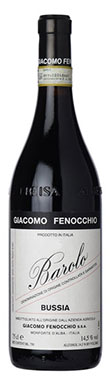
Giacomo Fenocchio is one of the producers who admitted that the 2019 vintage is for him better than the incoming rounder 2020. His Bussia plot...
2019
Giacomo FenocchioBarolo
Marco Marengo, Bricco delle Viole, Barolo, Barolo, Piedmont, Italy, 2019
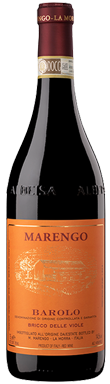
Marengo is a small estate based in La Morra, managed by Marco Marengo and his family. A boutique winery with a slightly modern style – small...
2019
Marco MarengoBarolo
Lodali, Lorens Bricco Ambrogio, Barolo, Roddi, Piedmont, Italy, 2019
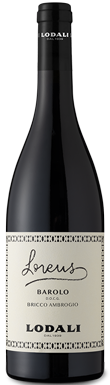
Walter Lodali switched from barrique to untoasted Austrian Stockinger oak casks in 2018. From 55-year-old vines, the Nebbiolo is fermented in concrete and ages for...
2019
LodaliBarolo
