Barolo 2016 ‘classico’ late releases tasted
After a low-key release last year, Michaela Morris presents her verdict on the Barolo 2016 wines without MGA designations, finding these blends of different crus are more accessible than the typical Barolo of the past and represent tremendous value for money.


Barolo’s lengthy ageing requirements – a minimum of 38 months – stipulate that the wines cannot be released until the fourth January following harvest. This means that the highly anticipated 2016 vintage was first previewed in January 2020.
At that early stage, some wines are not yet bottled and various producers hold off until annual trade fairs held in spring, or occassionally even longer, before a formal introduction. ‘We prefer to wait in order to propose expressive wines with a degree of harmony that make them representative of the vintage,’ says Federica Oberto at Ciabot Berton.
Scroll down to see tasting notes and scores for Barolo classico 2016 late releases
As wine tastings and travel had essentially ground to a halt by March last year, many wines were released without fanfare. The silver lining for Barolo producers is that the reputation of 2016 had customers clamouring regardless.
I returned to Barolo last autumn to round out my tastings, sampling a number of wines during a requisite two-week quarantine and at wineries following this.
I have divided these Barolo 2016 late releases tastings into two sections: those with an MGA on the label, and those without. Most of the latter are blends of different crus. You can find my report on the non-MGA Barolos below, and my report on those with MGA designations will follow shortly.
Barolo classico 2016
Despite the rise of single MGA, or ‘cru’ Barolo, the longstanding tradition in the region is to blend fruit from parcels across the territory. The district of La Morra has long been prized for elegance, while Serralunga d’Alba is well-known for lending structure, for example.
In reality, blending from various zones was a tool to manage the vagaries of vintages, especially in the last century when the cooler climate made it challenging for Nebbiolo to reach full ripeness in anywhere but the warmest spots. While achieving ripeness has been less difficult in the last couple of decades, hotter years present new challenges.
This is one of the reasons why Maria-Teresa Mascarello has upheld the tradition of blending. ‘It allows you in a difficult year, either because it is cold or hot, to have a wine that is better balanced and more consistent.’ One of the few producers who declines to bottle crus separately, she believes that the ‘best’ vineyards do not always give the best wine every year.
Alan Manley, who launched his Margherita Otto label with the 2015 vintage, has followed suit. ‘I want to show what these pieces of land in combination can achieve,’ he says, referring to the two hectares of disparate plots that he has managed to cobble together.
The concept is that the whole is better than the sum of its parts. Carlotta Rinaldi at Giuseppe Rinaldi acknowledges that they could make a separate Ravera bottling, ‘but we don’t feel it is harmonious on its own,’ she explains. So intead, the fruit goes into the estate’s superb Tre Tine blend.
Benefits of blending
There are other practical reasons for blending. Many producers only have tiny holdings in each vineyard – bottling each separately would result in tediously small quantities of many different wines.
Furthermore, not every Barolo vineyard is designated as a cru, nor are all MGAs of equal repute or strength of character to stand on their own. As such, producers often choose only the most prestigious crus – and/or those with sufficient production – to bottle separately.
Whatever holdings remain tend to be blended together. However, rather than just blending together any remaining fruit, it is often a well thought through process, as it’s in an estate’s best interest to keep the quality of all of its Baroli high.
Defining ‘classic’
The term classico or ‘classic’ has been unofficially adopted to refer to a Barolo without an MGA, especially to distinguish it from an estate’s cru Barolo. (This is not to be confused with the Classico which in other Italian regions legally defines the original production area.)
Classic is more appropriate than ‘basic’ or ‘normal’, as Barolo is neither of these. It also implies something traditional, which the practise of blending parcels is. However, many of these wines depart from tradition in that they are crafted to be more accessible than the typical Barolo of the past.
Like other producers, Fernando Burani, export manager at Mauro Molino, sees the classic Barolo as an ambassador for the estate. Besides having the personality of a Barolo, ‘it should also be pleasant, velvety and elegant so that it can be consumed even when it is young,’ he says.
Semantics aside, there is an enormous range of prices and stylistic interpretations of wines that are labelled without an MGA.
Some aren’t even from multiple sites at all, they simply refrain from declaring the MGA for various reasons. Furthermore, Baroli that do blend several MGAs are not necessarily inferior to their cru counterparts – some are among the greatest wines of Barolo.
Finally, many represent tremendous value for money, especially in a vintage such as 2016.
Top three Barolo classico 2016 picks:
- Bartolo Mascarello, Barolo 2016: A co-fermentation of multiple plots, this ageworthy Barolo is a classic in the truest sense.
- Fratelli Alessandria, Barolo 2016: Beautifully captures the elegant fragrant side of Barolo without sacrificing structure. An overachiever.
- Azelia, Barolo 2016: In the world of Barolo, this offers exceptional value for money.
See the tasting notes and scores for Barolo classico 2016 late releases:
You may also like:
Barolo 2016 & Riserva 2014: Report and 100 wines tasted
Tasting the single-vineyard wines of Pio Cesare
Tasting Ceretto’s 2016s
Bartolo Mascarello, Barolo, Piedmont, Italy, 2016
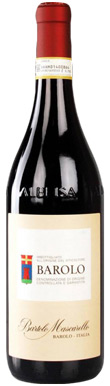

This legendary Barolo has traditionally been a blend of the estate’s plots in Canubbi, Ruè, Rocche dell’Annunziata and San Lorenzo. In 2015, the latter was pulled out and prepared for replanting. Coincidentally, in the same year, owners of a small, well-exposed Nebbiolo parcel neighbouring Mascarello’s Dolcetto holdings in Monrobiolo di Bussia offered it for rent, essentially making up the shortfall. The 2016 is so effortlessly seamless it is almost a shame to tease apart. Understated in its beauty, the nose slowly doles out successive fragrances of rose, raspberry, white pepper and rosehip. Expanding graciously across the palate, it distributes velvety, finely powdered tannins that are still compact and will take years to dissolve. But it is the underlying vibrant energy that drives this wine. Hints of blood orange and lavender linger on finish.
2016
Bartolo MascarelloBarolo

Giuseppe Rinaldi, Tre Tine, Barolo, Piedmont, Italy, 2016
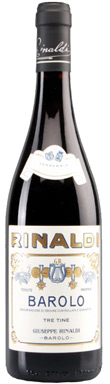
Comparing 2016 with 2015, Marta Rinaldi says that the 2016s are darker with more tannins and acidity. Ripeness was gradual, and the estate started picking Nebbiolo mid-October - 10 days later than in 2015. The Tre Tine, which brings together Ravera, Cannubi San Lorenzo and Le Coste, is definitely a more substantial wine than its 2015 counterpart but is ultimately still brilliantly light on its feet. It boasts very fine tannins, lots of energy and charmingly nervous acidity. Autumn leaves, forest berries, floral and mint nuances lace the palate and echo decisively on the long finish.
2016
Giuseppe RinaldiBarolo
Cordero di Montezemolo, Enrico VI, Barolo, Piedmont, Italy, 2016
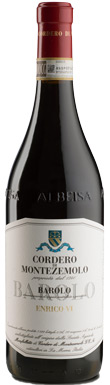
Produced since 1974, Enrico VI comes exclusively from the estate’s 2.2ha parcel in Villero. Reference to this highly regarded MGA is left off the label in favour of the name the wine has long been known by. The 2016 is strikingly fragrant, offering inviting scents of dried leaves, pressed flower, liquorice and raspberry. There is lovely purity here and an effortless balance of elegance with power. The palate is laced with savoury, mineral, stony notes framed by fine-grained, enduring tannins. This promises much satisfaction for years to come.
2016
Cordero di MontezemoloBarolo
Fratelli Alessandria, Barolo, Piedmont, Italy, 2016
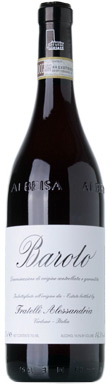
Fratelli Alessandria was established in 1870 but traces its roots as a winemaking estate back even further to 1830, making it one of the oldest in the zone. The estate's classic Barolo is dominated by the family’s holdings in Verduno’s lesser-known crus. It is a limpid, exquisite expression characterised by clarity and brightness. Flavours of black raspberry and orange are tinged with spice and underpinned by succulent acidity. The texture is elegant and chalky, culminating in a firm grip.
2016
Fratelli AlessandriaBarolo
Elvio Cogno, Cascina Nuova, Barolo, Piedmont, Italy, 2016
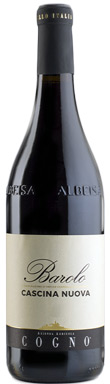
The Novello township has gained renown largely thanks to the Elvio Cogno estate which counts 11.5 of its 15 hectares in the cru of Ravera. Cascina Nuova is the most accessible of the property’s four Baroli, assembling fruit from a 1.5ha site of young plantings. The nose radiates prettiness: strawberry and raspberry underpin dewy rose, lilac and anise. Plump, succulent fruit remains buoyant and is gracefully buttressed by fine yet persistent structure. Zesty orange flavours refresh the finish.
2016
Elvio CognoBarolo
Azelia, Barolo, Piedmont, Italy, 2016
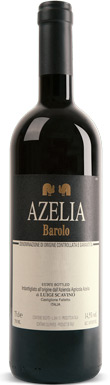
As pleased as Azelia’s proprietor Luigi Scavino is with 2016, he doesn’t consider it a classic vintage due to its relatively accessible character. Indeed, the tannins here are smooth and round on the entry, though they layer up with a fine, sandy texture and cling to the finish. Racy, linear acidity makes for a beguiling juxtaposition. Throughout, anise, sage and eucalyptus accent pretty woodland berries. This brings together seven crus with the backbone coming from Cerretta and Broglio in Serralunga d’Alba.
2016
AzeliaBarolo
Bruno Giacosa, Barolo, Piedmont, Italy, 2016
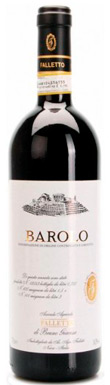
While this offering does not reference a specific cru within Barolo, it is made from younger vines within Falletto (approximately 25 years of age) as well as those found on the southwest edge just outside Falletto’s confines. The nose expresses a captivating juxtaposition of rose, iron and scorched earth, while dense tannins clench down on the palate and need some time to relax their grip. This doesn’t manage its large frame quite as deftly as the Falletto but will satisfy those seeking a robust, rigorously structured Barolo.
2016
Bruno GiacosaBarolo
Massolino, Barolo, Piedmont, Italy, 2016
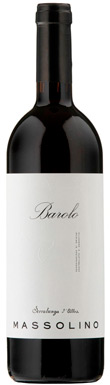
Located directly in the village of Serralunga d’Alba, the Massolino estate blends its classic Barolo from five diverse plots throughout the township as well as one in the neighbouring Castiglione Falletto. A fascinating mix of tar, wild broom, exotic spice and irony notes weave through this wine from start to finish. Assertive, ripe tannins wrap around palate which is full and concentrated yet well-proportioned. There is superb underlying juiciness here.
2016
MassolinoBarolo
Pecchenino, San Giuseppe, Barolo, Piedmont, Italy, 2016
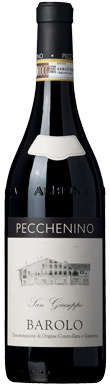
Long established in the area of Dogliani, Pecchenino is known for first-rate Dolcetto. Holdings in Barolo are more recent and include vineyards in Bussia, Le Coste di Monforte and Ravera di Monforte - San Giuseppe blends fruit from all three for this wine. After a little coaxing, bright red fruits mingle with orange, rose and mushroom. Polished, silky tannins provide effortless support to pristine ripe fruit. This is vibrant throughout with a lingering strawberry finish, and while the structure is already approachable, its complexities will become more prominent with time in the bottle.
2016
PeccheninoBarolo
Rivetto, Barolo, Serralunga d’Alba, Piedmont, Italy, 2016
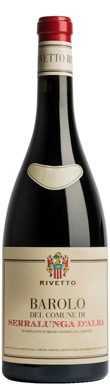
Enrico Rivetto draws upon his estate vineyards in the surrounding crus of San Bernardo, Serra and Manocino for this interpretation of the Serralunga d’Alba area. At an average altitude of 350 metres, all three face east, ripening in the mild morning sun. The 2016 is currently restrained, hinting subtly at fennel, sage and wildflowers. Full and expansive, the palate leans to earth and mineral tones on a backdrop of small dark berries deftly framed by suave tannins.
2016
RivettoBarolo
ArnaldoRivera, Undicicomuni, Barolo, Piedmont, Italy, 2016
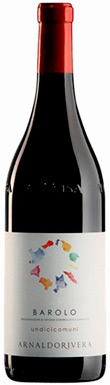
Though Terre di Barolo’s ArnaldoRivera label focuses on cru bottlings, Undicicomuni combines fruit from all 11 Barolo communes. Upfront cherry and cinnamon meet chocolate and hazelnut notes redolent of the Langhe’s landscape. The palate is supple and approachable yet youthful, with tannins piling up toward the finish. There is enough stuffing to balance and the finish is clean and bright. A polished, friendly ambassador for the region.
2016
ArnaldoRiveraBarolo
Negretti, Barolo, Piedmont, Italy, 2016
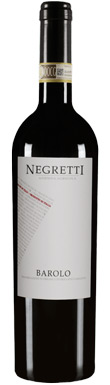
<p>Fourth-generation grape growers, brothers Enzo and Massimo established the Negretti winery in 2002. Their thoroughly delicious classic Barolo combines fruit from estate-owned vineyards in Bricco Ambrogio, Rive and Bettolotti. It spends its first six months in French oak barriques followed by 18 months in 2.5hL Austrian oak. Leading with discreet truffle and tobacco fragrances, this offers subtle raspberry and cherry underpinned by powdery tannins and a juicy core. Bright, savoury and a bit tense, it will drink well for the next seven to eight years.</p>
2016
NegrettiBarolo
Poderi Luigi Einaudi, Ludo, Barolo, Piedmont, Italy, 2016
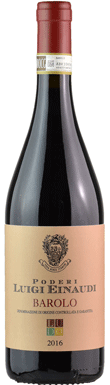
The quality-to-price ratio on this entry-level, young-vine Barolo is tough to beat. Approachable and balanced, supple and savoury, it sports black cherry, pomegranate and wild herb notes on a medium-bodied palate. There's energetic freshness, well-woven tannins and a full-bodied finish.
2016
Poderi Luigi EinaudiBarolo
GD Vajra, Albe, Barolo, Piedmont, Italy, 2016
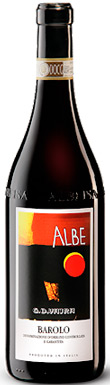
Albe is GD Vajra’s most classic Barolo in the sense that it is a blend of multiple sites: Coste di Vergne, La Volta and Fossati are all within the township of Barolo and sit at high altitudes. This wine is characterised by its pretty, becoming aromas and smooth suppleness. Alpine herbs and white pepper lace the predominantly floral profile and the palate is replete with crunchy summer berries. Don’t hesitate to pull the cork of this affable Barolo.
2016
GD VajraBarolo
Castello di Perno, Barolo, Piedmont, Italy, 2016
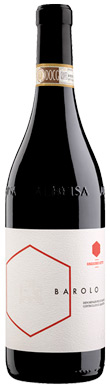
<p>Perno’s medieval castle was recently acquired by Brescian lawyer Gregorio Gitti, who has reestablished it as a cultural hub and hired talented consultant Gian Luca Colombo to oversee the winemaking operations. From lower altitude vines in the Castelletto cru, this emerges with inviting whiffs of lavender, lilac, mint and sage. Polished and refined, the palate displays dark raspberry fruit with powdery tannins sneaking up and lending compelling textural complexity.</p>
2016
Castello di PernoBarolo
Fratelli Seghesio, Barolo, Piedmont, Italy, 2016
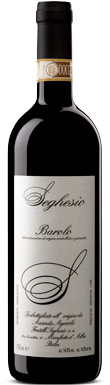
Established in 1988 with 10 hectares in Monforte d’Alba’s Castelletto subzone, the Seghesio estate produces two wines from this cru. La Villa showcases the property’s oldest vines, while this features newer plantings of 20 to 30 years old. Forthcoming, it exhibits an array of sweet balsamic aromas including mint, sage blossom and rosemary. Flavours of cherry and raspberry are infused with cedar and buoyed by juicy acidity, while ripe tannins flow seamlessly across the palate. Starting with the 2018 vintage, both Baroli will declare the MGA on the label.
2016
Fratelli SeghesioBarolo
Mauro Molino, Barolo, Piedmont, Italy, 2016
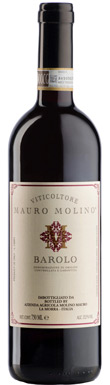
With 6ha of Nebbiolo, Mauro Molino produces four cru-designate Baroli, plus this blend. Fruit from the Berri and Annunziata crus of La Morra provides the core while a dash of Perno in Monforte d’Alba lends some backbone. Smoky aromas make way for heady red rose perfume. On the palate floral and nutty notes join red currants and sweet spice. Sapid and fluid, this mid-weight charmer is framed by pliant tannins.
2016
Mauro MolinoBarolo
Dosio, Barolo, Piedmont, Italy, 2016
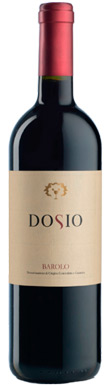
Dosio owns 11ha, nine of which are in the Serradenari cru of La Morra and two in the Barolo side of Fossati. A blend of the two, this immediately drinkable Barolo is attractively scented and bright on the palate. Tobacco and spice add nuance to crunchy forest fruit. It's medium bodied and fairly silky with some coarser wood tannins appearing on the mid-palate. While a percentage of this sees French tonneaux, the estate is moving towards ageing in large Slavonian casks only, according to new winemaker Alessandro Muda, who replaced outgoing winemaker Marco Dotta in 2020.
2016
DosioBarolo
