Countless foreign nationals, lured by the attractions of the Tuscan countryside, have bought wine properties in the region. For some it is an investment, for others a holiday home or a place to retire.
If there is a functioning winery on the property, they will typically either maintain the current staff, or engage consultants to supervise the winemaking. It is unusual for the new owners to arrive with the intention of becoming hands-on growers and winemakers themselves.
I spoke with two people, with very different stories, but who both abandoned previous occupations to become highly successful wine producers in Tuscany: Puru Manvi of Manvi Wines in Montepulciano, and James Marshall-Lockyer of Tenuta Licinia in Lucignano.
Scroll down for wines from two career-change winemakers
Puru Manvi – Manvi Wines
Puru Manvi tells me that he often asked himself, ‘why do people just have one career in their lives, why can’t we have more than one?’
He decided that, at the age of 50, he was going to do something completely different. When the deadline he had set himself came along, he turned a long-time passion for wine into a profession.
Manvi, who is Canadian-Swiss of Indian origins, resigned from his management position at a major Swiss bank and started the search for a place to buy. He had a love of all things Italian, so the choice of the country was easy. He also knew exactly what he was looking for: no more than five hectares of vineyard, a property that was already up and running – he wanted to start right away, without spending time planting and rebuilding – and it also had to be organic.
Manvi found the place that ticked all the boxes in the hills overlooking Montepulciano in 2015 – a working winery, a house with beautiful views, and 1.5ha of certified organic vineyard. It was smaller than he intended, but it was a good place to start, and he got down to the job of learning how to make wine.
Decanter newsletter
Get our daily fine wine reviews, latest wine ratings, news and travel guides delivered straight to your inbox.
Journey of fulfilment
He says, with a certain understatement, ‘the learning curve is pretty steep’. But he set about it in a highly systematic way. He hired the previous owner for a year to walk him through one complete production cycle, got his tractor driver’s license, took Italian lessons (he didn’t speak a word), and did a prodigious amount of reading.
Manvi was not afraid of making changes. He wanted wines with pure fruit character and restrained oak influence, so he cut back on barriques in favour of larger barrels. He also wanted the wines to be as natural as possible, so he moved over to spontaneous fermentation.
In 2020, he added another 5ha of vineyard to bring the production to around 20,000 bottles – but he asserts that he doesn’t want to get any bigger so as not to lose touch with the physical work of growing and making wine, which he loves.
It has not always been easy. In the extremely difficult 2023 vintage, Manvi lost almost the entire crop to disease, which he says was ‘a very humbling experience.’ I asked him what had given him the greatest satisfaction so far, and he replied: ‘To fulfil what I had come for, and to learn, learn, learn … it has been a wonderful journey.’
In fewer than 10 years, Puru Manvi has become an established figure at Montepulciano, with great reviews of his wines and a flourishing farmhouse B&B on the estate, where his wife Sudha teaches yoga.
Sudha Manvi teaches yoga at the Montepulciano-based estate.
(Image credit: Manvi Wines)
James Marshall-Lockyer – Tenuta Licinia
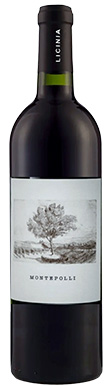
If Puru Manvi had a life plan, you might say that destiny played a part in the case of James Marshall-Lockyer. Aged just 27, he abandoned research for a doctoral thesis in moral philosophy at Oxford University in favour of becoming a wine producer in a secluded part of southern Tuscany.
His grandfather had bought a property there in the 1970s but had not originally intended to make wine, and it was only in 2007 that, being a lover of Bordeaux, he planted the vineyards below the house with Cabernet, Merlot and Petit Verdot.
When ill health prevented him from continuing the project, Marshall-Lockyer was detailed by the family to go out to the 5ha estate, to decide what to do with it. He spent 2020 observing, and, ‘basically, I just stayed.’ His thesis was put on the back-burner as he became a full-time wine producer.
Marshall-Lockyer took a heuristic approach to learning the job, tasting widely, applying his research abilities to create a knowledge base, and acquiring the practical skills hands on. He confesses that he is intrigued by what he calls ‘the intellectual puzzles of winemaking,’ and the last four years have been a period of continual experimentation.
Changes afoot
I asked him what he had changed since taking on the estate, and he replied ‘just about everything’, and reeled off a long list. The estate already had organic certification at his grandfather’s time, and Marshall-Lockyer has added the use of biodynamic preparations.
He has also reduced yields considerably and he now picks his grapes on taste rather than on analysis of technical ripeness. A convinced non-interventionist, he is nevertheless wary of spontaneous fermentation.
‘I won’t sacrifice all the hours of back-breaking work in the vineyard for bacteria to take over and destroy it all,’ he says.
Marshall-Lockyer is most excited about the acquisition of a plot of Sangiovese, a variety which was missing from the estate and for which he scoured the countryside in a 30km radius for a year. The feature he was looking for, and that took so long to find, was geological – he is a firm believer in the importance of sub-soil.
‘A lot of people deny it, but sub-soil matters’, he states. Speaking of his own vineyards, he says: ‘Some of my sub soils are really brilliant, some…make decent wines, but not great ones.’
The clear subtext is that his aim for the future is to make only great wines. There is a feeling of work in progress, but the direction is clear. Marshall-Lockyer is selling his first vintages, but already his top selection is on allocation, and pre-release samples of his new wines look very promising. It’s an estate on the up.
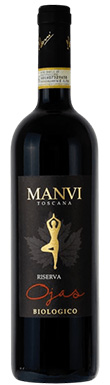
Manvi, Ojas Riserva, Vino Nobile di Montepulciano, Tuscany 2020
My wines
Initially understated on the nose, this opens up to release an intoxicating array of aromas spanning ripe fruit, incense, mint, sandalwood, aromatic herbs and sweet...
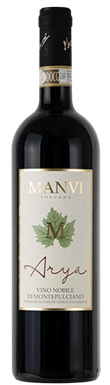
Manvi, Arya, Vino Nobile di Montepulciano, Tuscany 2021
My wines
The youthful violet shade preludes a sour plum nose of pure Sangiovese, with notes of carob, Mediterranean herbs and an earthy, phenolic undertone. The vibrant...
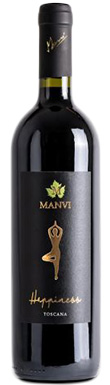
This is a mature Sangiovese-Cabernet Sauvignon-Merlot cuvée, with a nose of blackberry and figs, plus hints of mallow and walnut skin in the background. The...
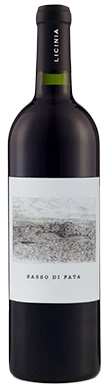
From a cuvée predominated by Merlot, supported by Cabernet Sauvignon, Cabernet Franc and Petit Verdot, this has a lush nose of ripe plum and cherry,...
Decanter Magazine, Regional Chair for Veneto DWWA 2019
Richard Baudains was born and bred in Jersey in the Channel Islands and trained to be a teacher of English as a foreign language. After several years in various foreign climes, Baudains settled down in beautiful Friuli-Venezia Giulia, having had the good fortune to reside previously in the winemaking regions of Piemonte, Tuscany, Liguria and Trentino-Alto Adige. Baudains wrote his first article for Decanter in 1989 and has been a regular contributor on Italian wines ever since. His day job as director of a language school conveniently leaves time for a range of wine-related activities including writing for the Slow wine guide, leading tastings and lecturing in wine journalism at L’Università degli Studi di Scienze Gastronomiche and for the web-based Wine Scholars’ Guild.