Behind LVMH’s Himalayan wine project: the villages of Ao Yun
The extraordinary Chinese winery, Ao Yun, is set to release a series of single-village wines that encapsulate the complexity of its high-altitude vineyards.


It’s no easy task to establish a super-premium wine in an entirely new region, particularly when inviting potential retail partners or distributors to the vineyard involves journeying to a distant corner of the Himalayas in the outer reaches of the Yunnan province, southwestern China.
For my journey, after four flights from Bordeaux to Shanghai, Chengdu then Shangri-La, it was a four-hour drive up through stunning mountain passes to the foothills (here, that means 2,200m above sea level) of the Meili mountains.
Scroll down to read Jane’s Ao Yun profile and her verdict on its wines
It’s hard to imagine a vineyard as breathtaking as Ao Yun, the LVMH (Moët Hennessy) project set in this improbably remote region.
The name (which means ‘flying above the clouds’) takes on a whole new meaning when you realise that oxygen is packed into the back of the car just in case you start to feel dizzy from altitude sickness.
Perfect Location
We are high above the Mekong valley here in the Three Parallel Rivers national park, one of the most biologically diverse temperate regions on earth. Just finding this location took the late Australian viticulturist Dr Tony Jordan four years of travelling around China, looking for the perfect place in a country that throws up obstacles for viticulture – from harsh winters to high humidity – at nearly every location.
‘What we found here was a low latitude but high altitude,’ says Maxence Dulou, winemaker for the project since its early years. ‘About the same as mid-Morocco in latitude, but much higher in altitude to compensate.
‘This is a monsoon region, but we are in a rain shadow because of the Meili mountains, and have summers that are often warmer than in France,’ he explains. ‘The shadow of the mountains means short days, but these are balanced by stronger ultraviolet light because of the altitude. It means we have long, slow growing seasons, giving density and concentration to the fruit but keeping freshness and balance.’

The potential of this location has been clear in the glass ever since the first vintage of Ao Yun in 2013. But even so, one of the key challenges has been balancing the creation of a wine that feels sufficiently luxurious to support its premium price point (about £250/$350), while still transmitting the sense of place that is such an essential and unusual part of the Ao Yun story.
How do you explain that the complexity of Ao Yun comes from its 300 blocks of vines, set across four villages, tended to by 100 families who own and work the land, if you know that the vast majority of consumers will never have the opportunity to travel there?
Read Jane’s first-hand account of her trip to the vineyards in 2015
Celebrating difference
The new village wines, introduced from the 2018 vintage and released in 2022, should go some way to answering that question. The exact parts that go into Ao Yun are decided by blind tasting each year. So in 2018, only three village crus – Adong, Shuori and Xidang – have been produced, because the fourth, Sinong, has gone entirely into the main wine.
‘These are four villages with very different soils, climates, altitude and exposure, all of which make an impact on the flavour profile,’ says Dulou. ‘There is, for example, a two-month difference in ripening with the same grape variety between the east-facing, gravel and limestone soils of Xidang, at 2,200m, and the cooler, northwest-facing clay and granite soils of Adong, at 2,600m.’
Understanding how best to harness this has been a learning experience for LVMH. For the first six years, 2013-2019, teams were set up so that the villagers worked in groups across everybody’s land, but from 2019 the organisation was changed to allow each family to manage their own plots.
‘The villagers are excellent farmers, and we realised they were losing motivation by working across a large area. They love their freedom and want to set their own schedules,’ says Dulou.
‘Each village has a chief villager who helps us understand the culture and rules, from bullfights to rituals like mushroom-picking in certain seasons. We then have one Chinese winemaker per village, usually from outside the region, and working alongside them is French vineyard manager Rémi Vincent.’
Reaching the market
It’s easy to see why this makes sense for the wines, but given how young the market is for Chinese wines as a whole, they may now come up against a different barrier. So soon into the Ao Yun project, is it sensible to add a new level of complexity?
Julien Le Doaré at Hedonism Wines in Mayfair, London, isn’t sure. ‘Our customer base is always open to new discoveries,’ he says, ‘yet only a handful of customers have come to us asking specifically for Ao Yun. A second label could help to reach more clients.’
‘Ao Yun is a grand cru, using the best blend from the four villages,’ is how Dulou puts it, ‘whereas the other bottlings are the village crus. Tasting them is a way to understand the array of flavours that go into Ao Yun.’
See Jane’s tasting notes and scores for Ao Yun’s wines
Related content
Ten years on: Chinese wine’s breakthrough moment at DWWA
Dumplings and wine pairing – ask Decanter
Changyu ‘Purple Air’: A new Ningxia wine style?
Ao Yun, Yunnan, China, 2018
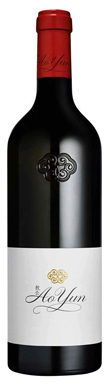

As ever a wine of impact, and here you get a ton of damson and black cherry fruits, with fragrant and fresh citrus peel and sage alongside earthier smoked cumin spice. Polished, smooth and ripe tannins have plenty of movement even when the wine remains young in structure and feel. Stands on its own, confident and accomplished, though tasting the three new 2018 village site wines alongside it serves to add to an understanding of just how exceptionally unusual Ao Yun is. Just released in March 2022.
2018
Ao Yun

Moet Hennessy Shangri-la Winery, Adong Cru, Yunnan, China, 2018
Cold ash aromatics, fresh acidity with waves of rosebud, smoked raspberry and bilberry fruits, a hum of power. At 2,600m, this is the highest of the four villages that make up Ao Yun, and where the winery building is located. The soils here are mainly schist and granite, with the deepest amount of clay, meaning cooler soils – slightly cooler temperatures, too, as the altitude rises, to the point where ripening is not assured without careful vineyard work, but with attention to detail the quality can be exceptional. 78% Cabernet Sauvignon, 14% Syrah, 8% Cabernet Franc, later harvest into November. Due for release May 2022.
2018
Moet Hennessy Shangri-la Winery
Moet Hennessy Shangri-la Winery, Shuori Cru, Yunnan, China, 2018
Clear density and weight; you feel the push and pull of the tannin-fruit balance through the palate. An espresso, coffee bean smoke comes in waves as it opens, along with the succulent black fruits typical of Ao Yun. Set across 7ha of vines at 2,500m on west-facing slopes where harvest almost always takes place in October. There are 14 families overseeing 106 blocks that have deep clay: cool soils, yet with schist and limestone deposits dominant. 75% Cabernet Sauvignon, 25% Cabernet Franc. Due for release May 2022.
2018
Moet Hennessy Shangri-la Winery
Moet Hennessy Shangri-la Winery, Xidang Cru, Yunnan, China, 2018
Fresh red fruits, soft tannins but good grip with wild thyme and sage spices that build through the palate. This has a sappy feel, lighter in structure than the other villages, and is more ready to drink now. 63% Cabernet Sauvignon, 20% Petit Verdot, 17% Cabernet Franc. At 2,100m on the right bank of the Mekong river, a little away from the three other villages of Ao Yun. These are breathtakingly steep slopes that have warmer eastern- facing soils and a higher level of gravel and sand. Due for release May 2022.
2018
Moet Hennessy Shangri-la Winery
