
Bertani Amarone della Valpolicella Classico: a 43 vintage vertical
Aldo Fiordelli embarked on a historical tasting of Bertani's Amarone Classico during a huge 43-vintage vertical dating all the way back to 1958.


There are few wineries in Italy capable of arranging a vertical tasting dating back 60 years.
The Bertani estate in Valpolicella, however, can do this and more – not only pouring 43 different vintages to demonstrate the history of their Amarone, but also releasing most of them to the market.
The initiative, carrying the name ‘Library’, was presented at the historic winery of the estate at the end of September 2022 in Grezzana. Along with the vertical tasting, a photographic book was debuted written by Nick Jackson MW that gives a brief history of the Bertani estate, the vineyards used to produce Amarone Classico, the typical house style, and a detailed report of all vintages – most of which are available in the UK via Enotria.
The American Master of Wine defined the vintages in one of four categories: ‘Exuberance, Gentleness, Harmony and Finesse’. Would you define an Amarone della Valpolicella using these categories? Made by drying grapes and demonstrating some of the highest levels of dry extract found in Italian red wines, you probably would not; with the exception of ‘Exuberance’, perhaps.
But Bertani’s Amarone Classico is different, well known for its elegance, freshness and drinkability. And there are technical reasons for that: since the foundation of the estate in Quinto di Valpantena, the Bertani brothers put to use what they had learned about viticulture and winemaking from the legendary French expert, Jules Guyot.
See Aldo’s notes & scores for all 43 Bertani Amarone Classico vintages
The vineyards
The vineyards are mostly planted in Negrar, one of the coolest valleys of Valpolicella. The Miniere (‘mines’) vineyard is located on iron-rich red limestone over clay subsoil. Lots of energy is sourced from here and given to the blend.
The Ognisanti vineyard, at lower altitude, lies on white limestone and sandy soil, while Colombara on the opposite side of the estate sits on volcanic basalt soils, similar to those inherent to Soave. Dark, vibrant and spicy reds are sourced from here.
Other important vineyard sources for the Amarone Classico are Fonte Romana and Quaiara, which each contribute to the complex patchwork of the final blend.
The drying process is carried out in a natural way at the Novare estate in Negrar. Andrea Lonardi, managing director of the Bertani group, underlines that ‘Amarone is one of the only wines affected by weather conditions after the harvest. Pure, precise wines are likely to have benefited from a dry autumn, with excellent drying conditions; those wines with a more extrovert, baroque character possibly incorporated some botrytis, which develops in damper autumns.’
In the cellar
The ageing is no less impressive: seven years in big Slavonian oak for most of the modern vintages, but up to 30 years in casks for the oldest wines. Due to this prolonged ageing in wood, the casks need to be topped regularly to avoid oxidation as a consequence of evaporation. Topping up is carried out using wine from the current vintage. Even though the quantities of wine needed for topping up are small, there is nonetheless a Sherry-style ‘solera effect’ at work, as each mature wine incorporates small amounts of at least seven younger vintages.
Between 70,000 and 110,000 bottles are produced each year at Bertani, of which 10-15% are retained to replenish the library stocks for the future.
In 2023, Bertani is due to release the 2013 vintage but then it will be necessary to wait until 2025 to buy the estate’s next new wine, as they did not produce Amarone in 2014 (nor in 2020).
However, such a wait is nothing new for fans of Bertani’s Amarone Classico. Aside from the signature cooler style of the Negrar valley, long ageing is what brings so much elegance and nimbleness to the estate’s Amarone.
Luckily, the vertical of Amarone was indeed a succession of finesse, harmony, gentleness and energy, otherwise such a mega-tasting of 43 vintages would be neither as enjoyable, nor as eloquent, as it was. The wines were divided into three flights, not only due to the number of glasses needed for a panel of 10 journalists, but also to provide some reprieve and order – Amarone is a wine with some residual sugar, a determined tannic structure, alcohol around 15%, and acidity concentrated by the drying process.
Tasting 43 vintages
The tasting demonstrated Bertani’s impressive consistency over 60 years. My personal tastes favoured the drier wines in the lineup. This is what emerged from the tasting notes and scores, not necessarily from an ideological position. In the 1960s, when this style was more evident, the wines shone for their finesse and incomparable complexity. The celebrated 1964 but also the 1962 were compared by most of the panellists to old Pinot Noir.
Nevertheless, when the Bertani style matches rich, warm and modern vintages like 2000, 2009 or 2010, the luscious style achieves a different kind of harmony, maybe ‘Baroque’ compared to the finesse of the more classic vintages, but elegant in the context of the appellation and at comparably affordable prices.
The 1990s were, if possible, the decade when these wines struggled, and Amarone went out of fashion in this period.
The last vintages, particularly the fresh 2013 (which will be released in 2023 at £95), aim to revive the finest Amarone vintages of the estate, leading with a crisp fruit character and showing plenty of finesse. The first vintages had to be more austere at the release, but on the flip side of the coin, we don’t have to wait as long to taste nowadays.
Bertani Amarone della Valpolicella Classico vertical: top scorers
See Aldo’s notes & scores for all 43 vintages
Related articles
- Masi producer profile plus 17 wines tasted
- Romano Dal Forno Amarone: 1988-2010
- Amarone 2017: Vintage report
Bertani, Amarone della Valpolicella, Classico, Veneto, Italy, 1962
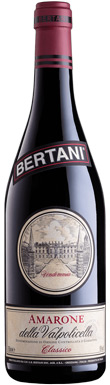

1962 was a fairly regular growing season. This Amarone was bottled in 1984 at 15% alcohol and just 4.3 grams of residual sugar. The sleek,...
1962
BertaniAmarone della Valpolicella

Bertani, Amarone della Valpolicella, Classico, Veneto, Italy, 1985

1985 was a hot and dry vintage. Scented, elegant nose of sweet violet, earth and truffle with a whiff of mint. Dry and full in...
1985
BertaniAmarone della Valpolicella
Bertani, Amarone della Valpolicella, Classico, Veneto, Italy, 2010
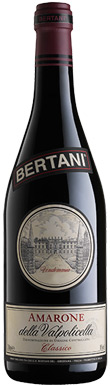
From a rightly celebrated vintage, this is one of the best Bertani Classicos of the decade. A variable summer, but the vintage was made by...
2010
BertaniAmarone della Valpolicella
Bertani, Amarone della Valpolicella, Classico, Veneto, Italy, 1964
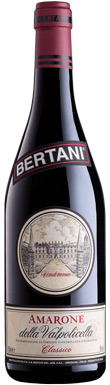
During the tasting of old vintages of Amarone Classico, this 1964 shines for longevity and elegance - 'Always considered a legendary Bertani vintage from a...
1964
BertaniAmarone della Valpolicella
Bertani, Amarone della Valpolicella, Classico, Veneto, Italy, 1967
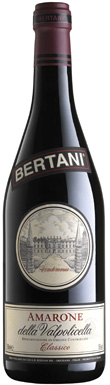
1967 is remembered for its very hot summer, so it's no coincidence that this exceeds 15% alcohol. The first impression is super-fresh, with tamarind, cedarwood,...
1967
BertaniAmarone della Valpolicella
Bertani, Amarone della Valpolicella, Classico, Veneto, Italy, 1973

1973 was a normal vintage which yielded a large crop. Considering the appassimento process, an abundant vintage is almost always a good one for Amarone....
1973
BertaniAmarone della Valpolicella
Bertani, Amarone della Valpolicella, Classico, Veneto, Italy, 1988

1988 was marked by a hot and dry summer. Geranium, leather, truffle and earthy aromas, maybe not intense and assertive but with an elegant balsamic...
1988
BertaniAmarone della Valpolicella
Bertani, Amarone della Valpolicella, Classico, Veneto, Italy, 2000
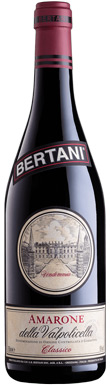
The 2000 vintage produced some of the most beautiful Amarones ever. Here, Bertani seems to be in its modern era; the wine is refined, polished...
2000
BertaniAmarone della Valpolicella
Bertani, Amarone della Valpolicella, Classico, Veneto, Italy, 2009
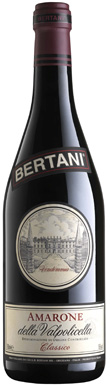
A hot summer with good diurnal temperature variation in September were the ingredients for an excellent vintage. Full of balsamic tones, milk, mint and citrus...
2009
BertaniAmarone della Valpolicella
Bertani, Amarone della Valpolicella, Classico, Veneto, Italy, 2013
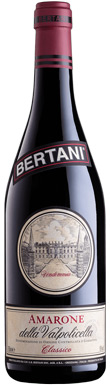
The current-release 2013 vintage features a nose of dried cherries combined with spice and smoke, adding a savoury element. The tannins are still tight but...
2013
BertaniAmarone della Valpolicella
