Bordeaux 1990s: the complete guide
An in-depth Decanter guide to the Bordeaux 1990s, a somewhat turbulent decade for conditions and outcomes – assessing each year and recommending wines to drink now (if you can find them...)


We are no longer used to decades in Bordeaux that contain more misses than hits, but the 1990s had its fair share of difficult harvests.
We can pretty much count a full six of the 10 years as having complicated growing seasons – 1991, 1992, 1993, 1994, 1997 and 1999 – although some were more difficult than others.
That leaves just four standout years – and it was the first, 1990, that won the most universal plaudits.
Scroll down for Jane Anson’s Bordeaux 1990s tasting notes and scores
In the vineyards, change was everywhere. Baron Philippe de Rothschild had died in 1988 and his daughter Baroness Philippine was making serious changes at Château Mouton Rothschild in Pauillac – a new second wine, introduced with the 1993 vintage, was given its name Le Petit Mouton from the following year, and new dry white Aile d’Argent was introduced in 1991.
In Pessac-Léognan, Florence and Daniel Cathiard arrived at Château Smith Haut Lafitte in 1990, followed a year later by François Pinualt at Château Latour in Pauillac. I’ve been lucky enough to taste through a large number of 1990s Bordeaux over the past year.
They have been some of the most pleasurable wines of the year, at a perfect moment for drinking now – particularly the 1996, which I would strongly suggest people get out of their cellars, or dig through bin ends in local wine stores, to find what they can.
In fact, I’m not surprised at all to see that it is the 1996 that is right now most traded by both value and volume on global trading platform Liv-ex, as of March 2021. This is followed by the 1998 and the 1995.
Bordeaux 1990s – investments
But that doesn’t mean they were the best investment, and as is often the case, it’s the smaller vintages that have seen the biggest return.
According to Liv-ex, the two Bordeaux 1990s vintages to have seen the biggest average price rises over the past 20 years (2002 to 2021) are 1994 and 1997, up 472% and 465% respectively.
In comparison, the 1990, which was given the biggest critical reception, has risen ‘only’ 245% – for the usual reason that the prices started out higher (although even that was priced at 20% under the 1989, which at the time was seen as the best vintage since 1982).
Bordeaux 1990s – every vintage rated
1990 – 5 stars
This was the third successful Bordeaux vintage in a row, and so maybe the locals were a little more blasé about it than theywould have been if they had known whatwas to follow for the next four years.
Cumulative temperatures from June to October in 1990 were higher than both 1989 and 1982, and just 31mm of rain fell across both July and August.
As a result, the natural concentration meant the tannins were initially hard and unforgiving. But it has aged brilliantly, and there are still plenty of wines that continue to deliver drinking pleasure.
Among the top wines, Châteaux Margaux and Haut-Brion would be my picks, with Mouton Rothschild the only one of the first growths that really should be drunk soon.
Châteaux Léoville Las Cases and Palmer are also still delivering, and Cheval Blanc continues to impress.
Price-wise, the first growths at 31 years old reflect the success of the year. Margaux is heading up the pack at £11,000-£12,500 (per 12x75cl in bond), Haut-Brion £8,000-£9,400, Lafite starting from about £8,000, Latour from £7,800, and even the less successful Mouton can be found from about £4,500.
For value, relatively speaking, you might want to look at the Yquem, which is drop-dead gorgeous and starting from a ‘mere’ £3,500-£4,000 for a case of 12 in bond right now.
See all of Decanter’s Bordeaux 1990 notes and scores
See also: Anson: How the 1990 Bordeaux first growths taste now
1991 – 2 stars
The worst frost since 1956 – and this time it fell on the night of 20 April, at which point the vines had fully begun their growing seasons as temperatures dropped to -7°C, meaning that the overall crop was reduced by 70%.
Although summer was hot and dry, there was rain across the region during harvest, most estates being fully underway by 20 September. All in all, this was an early-drinking year, and there is very little available today that I would recommend.
Cabernet Sauvignon did better as a whole than Merlot, so look to the Left Bank if given the choice; or Sauternes, which did rather better out of the wet, warm September than the rest of Bordeaux.
Château Climens is rightly seen as one of the wines of the vintage.
1992 – 1 star
Harvest began on 24 September, after the wettest summer for 50 years, with 131mm more than average in August alone.
The yearly write-up from the Bordeaux Institute of Oenology is particularly sombre, underlining why chaptalisation (the permitted addition of sugar to the grape must before fermentation) was indispensable ‘for adding the flesh and weight needed to balance out the tannins’.
Hard to find any wines to recommend today, although I tasted a Domaine de Chevalier white two years ago (out of magnum) that was delivering a lovely push and pull of truffle and saffron.
See all of Decanter’s Bordeaux 1992 notes and scores
1993 – 2 stars
Things improved slightly in 1993, with the season getting off to a reasonable start – early budding and even flowering were followed by a difficult June, a dry but cool July and a dry and sunny August.
Rising confidence was misplaced though, because harvest was a washout, with rainfall in September varying from 125mm-225mm.
The good earlier season meant plenty of châteaux offered pleasure in the short and medium term.
The Right Bank did better than the Left overall, with Merlot able to be harvested before the worst of the weather. I would suggest looking either at top St-Juliens, which still have charm today, or heading over to Pomerol.
Château Lafleur has held up well and shows gorgeously seductive, if subtle, notes of truffle and undergrowth.
See all of Decanter’s Bordeaux 1993 notes and scores
1994 – 3 stars
Again a vintage that was greeted with muted pleasure at the time but has not really delivered over the long term.
It was an early budding year, with March almost 3°C hotter than usual, and extremely dry. April saw heavy frosts in places. Summer was hot, although interrupted by storms and hail, and rain arrived at the end of the first week of September.
Overall this meant wines that lacked charm, and that took a while to come around – although some have done so beautifully.
I asked for recommendations here from Richard Bampfield MW, who was tasting and buying the wines at the time, and he recommends Châteaux La Mission Haut-Brion, Haut-Brion, Pichon Baron, Palmer, Petrus and Pontet-Canet.
On my own tastings, a recent Léoville Poyferré was still thoroughly enjoyable, and I can suggest both Trotanoy and Vieux Château Certan from Pomerol.
See all of Decanter’s Bordeaux 1994 notes and scores
1995 – 4 stars
Finally, a vintage that Bordeaux could be genuinely happy with (and not a moment too soon – Hubert de Boüard of Château Angélus told Decanter’s Steven Spurrier at the time, ‘If 1995 hadn’t turned out well, everything in St-Emilion would have been up for sale’).
The wines were well built and had both tannins and fruit.
There are many excellent 1995s that are still going strong and full of brambled, soft fruits, exotic spices and caramel-soft tannins.
Château Latour was seen to dominate the first growths at the time, and it is unquestionably still delivering pleasure today, as is the brilliant Château Palmer in Margaux.
A good year for Sauternes also, with harvest towards the end of October, and you’ll find many that are still going strong.
See all of Decanter’s Bordeaux 1995 notes and scores
1996 – 4.5 stars
A classic, old-school Médoc vintage, with plenty of menthol notes and a fresh savoury quality to the fruit.
My favourite tasting of the past year was of Pauillac 1996s, which are delivering perfect drinkability right now.
There was a hot early season, with even and rapid flowering, and a dry but not overly hot August (with rain at the end, particularly on the Right Bank). September was dry but 1°C cooler than average. There was some rain after 24 September, and the threat of rot meant that some estates picked at that point before full ripeness was reached. For those that held on, good weather returned in October.
All of this meant chunky tannins, and 1996 was long seen as an austere and backwards vintage; one that needed patience.
I strongly recommend Château Sociando-Mallet Haut-Médoc for a wine that shows you don’t have to buy classified estates to still get quality at 25 years old.
Price-wise, 1996 was seen as an investment year. Château Lynch-Bages was released at €25.15 ex-château – today, a case of 12 starts at £1,600-£1,700 in bond in the UK. Château Latour, on its most recent release in 2014, was £5,000 for a case of 12 in bond, and today stands at about £6,100-£7,000.
See all of Decanter’s Bordeaux 1996 notes and scores
1997 – 3.5 stars
The main issue with 1997 was that it was overpriced for the quality. But then it was a time of growing demand from Japan, and châteaux clearly felt they could get away with ambitious pricing.
It was one of the earliest harvests of the century in places, but inconsistent – even, as the Institute of Oenology pointed out, for the same grape varieties within the same plots.
Not concentrated, by any stretch, but there are plenty of bottles still showing soft easy fruits – look out for Châteaux Latour, Montrose and Calon Ségur.
The appellation of the vintage though has to go to Sauternes – and I strongly recommend a jaw-dropping Château Gilette, that was only released on to the market in 2018 and is just a brilliant wine.
See all of Decanter’s Bordeaux 1997 notes and scores
1998 – 4.5 stars
At the time this was seen as a similar vintage to the 1995 but with less capacity to age. That may be true on the Left Bank, but on the Right Bank the 1998 has proved itself one of the all-time great years.
Yields were high overall, helped by an even flowering with a sunny May. August saw temperatures a full 2.3°C above average, and was extremely dry with just 10mm of rain.
Even though there was rain during harvest, most grapes on the Right Bank, particularly in Pomerol, reached excellent ripeness.
Château Cheval Blanc in St-Emilion produced one of its greatest ever vintages in 1998 (trading today at about £7,000-£7,800 for 12x75cl in bond), as did Petrus in Pomerol (now £16,000+ for a case of six in bond).
You don’t have to spend these prices to taste some 1998 magic – look for Châteaux Trotte Vielle, Vieux Chateau Certan – and a classic Château Canon.
See all of Decanter’s Bordeaux 1998 notes and scores
1999 – 3 stars
A year that saw a warm but humid summer, where the vines needed careful watching to avoid mildew and rot.
A dry late summer meant hopes were raised, but rain started in the Médoc around 13 September while hail in early September badly affected St-Emilion.
Put those things together and you are looking for early-ripening Merlot for the best of the year – and that means Pomerol, where some wines equalled or approached their 1998s.
Prices again were high on release, suffering from the same problem as the 1997s, which meant they have never established a good reputation on the secondary market.
Look out for Châteaux Latour, Gruaud-Larose, Lafite Rothschild and Lynch-Bages for successes in the Médoc, although all err on savoury rather than exotic fruit flavours; but you’re going to find the best wines in Le Pin, Cheval Blanc, Pavie, Lafleur and Figeac.
See all of Decanter’s Bordeaux 1999 notes and scores
This Bordeaux 1990s article was published in Decanter’s Bordeaux Supplement 2021. All prices were correct at the time of publication (June 2021).
Jane Anson’s Bordeaux 1990s tasting notes and scores
See also
Lafite Rothschild 2020 release: ‘This should soar’
Bordeaux 2020: En primeur
Château Mouton Rothschild en primeur history: 2016 – 2020
Château Margaux, Margaux, 1er Cru Classé, Bordeaux, France, 1990
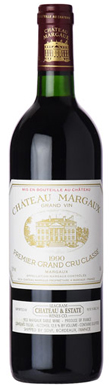

This is a great wine and, like all the greats, it is always changing. In some recent showings it has been effusively plump and energetic, here it was more restrained and mineral than I had remembered. It is still profound, however, and with a bit of time in the glass it opens up to show extraordinary depth. There are some first hints of maturity and a subtle iodine note on the finish, but it is exquisite throughout and should continue to improve for years to come.
1990
Château MargauxMargaux

Château Gruaud-Larose, St-Julien, 2ème Cru Classé, Bordeaux, France, 1990
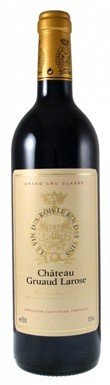
An estate known for its long ageing, and here it has softened at 31 years old, but still offering silky tannins and autumnal fruits with cedar smoked oak, marzipan, dried leather and gentle truffled spice. A thoroughly enjoyable Gruaud Larose showcasing old-school St-Julien balance. Clear crushed mint leaf on the finish, utterly moreish. 3% Petit Verdot completes the blend; 33% new oak.
1990
Château Gruaud-LaroseSt-Julien
Château d'Yquem, Sauternes, 1er Grand Cru Classé, Bordeaux, France, 1990
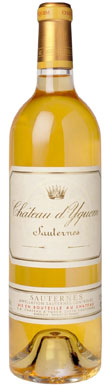
This is exuberant, concentrated and luscious. Full of blood orange, nectarine, saffron, touches of carmalised ginger, truffle and crème brûlée. A seesaw of zesty acidity and luscious sweetness, this is a beautiful wine that still has decades ahead of it. Owned by the Lur Saluces family at the time, this clearly shows why Yquem stands in its own category in the appellation.
1990
Château d'YquemSauternes
Domaine de Chevalier, Pessac-Léognan, Cru Classé de Graves, Bordeaux, France, 1992
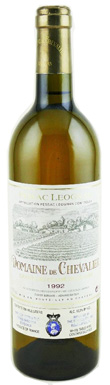
A lovely soft-but-persistent, salty finish and a slate minerality that makes you feel you could climb the walls of this wine. There's a touch of bitterness which gives a welcome point of navigation through the palate, and is most evident on the finish. Again, this is so drinkable, bursting with personality.
1992
Domaine de ChevalierPessac-Léognan
Château Léoville Poyferré, St-Julien, 2ème Cru Classé, Bordeaux, France, 1994
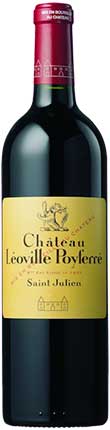
49% Merlot, 42% Cabernet Sauvignon, 7% Petit Verdot, 2% Cabernet Franc. This was the first year with Michel Rolland as consultant, and it bore witness to an immediate change of style, with more focus on picking fully ripe grapes, and a higher percentage of Merlot in the blend. It has aged really very beautifully – this is fragrant, finessed and integrated.
1994
Château Léoville PoyferréSt-Julien
Château Palmer, Margaux, 3ème Cru Classé, Bordeaux, France, 1995
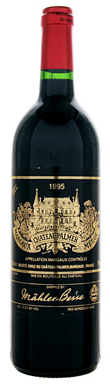
The wild strawberry sweetness and curling floral aromatics of a great older Margaux is starting to creep in at this point, along with clear white pepper spice, iris flowers and gentle black truffles. This was the first vintage to be produced in their new cellars, so going from old wooden vats to temperature controlled stainless steel. Also the last vintage of the famous Chardron brothers who had worked as cellar master and vineyard master for decades (and followed their father and grandfather in the roles, as with the Delmas' at Haut-Brion), so really marked the end of one era and the beginning of an another. There is a clear quiet beauty to this wine, full of gentle pleasures that steal up on you and ask you to slow down and take your time. Harvest September 18 to 2 October.
1995
Château PalmerMargaux
Château Cos d'Estournel, St-Estèphe, 2ème Cru Classé, Bordeaux, France, 1996
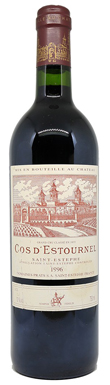
A brilliant year for Left Bank Bordeaux. This was stubborn in its youth and took time to open, but now stands as one of the great all-time vintages of Cos, in my opinion. It delivers still, at 25 years old, just utterly delicious, with complex slate, pencil lead, graphite, undergrowth, black truffle flavours and a crushed-mint finish. It is still juicy, with perfectly integrated fine tannins and a ton of personality. 65% new oak.
1996
Château Cos d'EstournelSt-Estèphe
Château Lafite Rothschild, Pauillac, 1er Cru Classé, Bordeaux, France, 1996
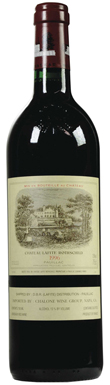
This is compelling, with a bright, forward currant fruit that is opening well now to show the nuance of game, earth, and gunflint to the ripe, dark fruit. The texture is tannic and fresh, with tannins starting to loosen but still in evidence. A luminous, radiant wine that will doubtless improve for another half-century. The vintage saw a solid flowering and fruit set and a warm July, but cool, rainy weather in August slowed ripening. The sun returned for most of September, but there was a bit of rain in the last week, although fine weather returned in October. At Lafite, 38% of the grapes went into the grand vin, a blend of 83% Cabernet Sauvignon, 9% Merlot, and 8% Petit Verdot – more of this last and less Merlot than customary. From 1996 forward, the percentage of Cabernet was higher than it had been hitherto.
1996
Château Lafite RothschildPauillac
Château Sociando-Mallet, Haut-Médoc, Bordeaux, France, 1996
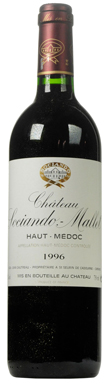
Of all the Bordeaux Zoom tastings that I held this year with 67 Pall Mall wine club, the 1996 Pauillacs was probably the one that had the most success - just hit after hit of great wines. They included Pichon Baron, Comtesse, Latour, Lafite and Lynch Bages, but I am selecting instead the 'ringer' that I put into the tasting; an Haut-Médoc with a huge amount in common with Pauillac that is tasting delicious and perfect for drinking right now. Still full of brambled blackberry and cassis fruit, creamy in texture with a crushed mint finish and now fully integrated tannins. Perhaps the best one here for a Christmas evening with a book by the fire.
1996
Château Sociando-MalletHaut-Médoc
Château Gilette, Sauternes, Bordeaux, France, 1997
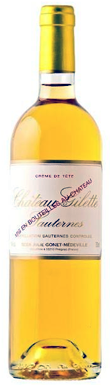
22 years old and just now into its second year on the market as it was released in 2018. On first opening, you get an almost smoky edge, suggesting that you are missing nothing in the complexity of aromatics from seeing no oak during ageing. The smoked starter is followed by strong lemon zest and salted caramel, intense but not at all heavy. Quite different from many Sauternes, even when they have two decades in bottle, it promises sweetness in its texture and hints at tarte tatin in the richness of the apple and apricot flavours, but the finish is clean, juicy and uplifting, almost dry. Tasted again at least eight hours later over an evening meal and what impressed the most was how fresh and delicate it still was. Strong salinity on the finish, powerful and impactful.
1997
Château GiletteSauternes
Château Trotanoy, Pomerol, Bordeaux, France, 1998
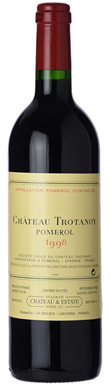
It was a real pleasure to try Trotanoy at 21 years old. The nose here majors on cloves and black pepper spices, and you can feel the richness of a vintage that was perfectly suited to the early-ripening soils of Pomerol (which means it was pretty perfect weather until October 1, when it began to rain and didn't let up - something that caused issues for Cabernet Sauvignon but less so for Merlot over in this corner of the region). The tannins and black fruits are still going strong although this is definitely showing some evolution. The acidity is fairly present, as are black truffle and olive notes, alongside some more gentle crushed autumn leaves. As it opens in the glass the wine starts to feel elastic, with its muscles stretching out, but it still needs a good few hours decanting if you’e looking to open this soon.
1998
Château TrotanoyPomerol
Château Haut-Bailly, Pessac-Léognan, Cru Classé de Graves, Bordeaux, France, 1998
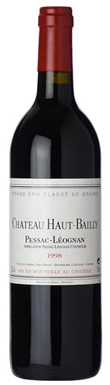
Aromatics of gently smoked bracken, with stirrings of tertiary character that shows we are reaching the full expression of this wine at 22 years old. There is a softness to the tannins that is extremely enjoyable and a silkiness that perfectly showcases the balance and elegance of Haut-Bailly in full flight. Savoury raspberry and blackberry fruits with sappy acidities giving a juicy finish that remains very much on the elegant, controlled side - this is made for drinking pleasure.
1998
Château Haut-BaillyPessac-Léognan
Petrus, Pomerol, Bordeaux, France, 1998
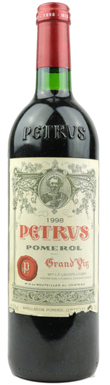
Richly scented like you wouldn't believe; earthy truffle, black olive and rosemary fill the glass and don’t let up right through the palate, providing waves of first aroma then flavour. The vintage plays to all of Petrus’ strengths; a classic Merlot year that here combines velvety soft-edged tannins, caressing and cushioning the abundant black cherry, blackberry and bilberry fruit. Traces of campfire, mocha and liquorice are shot through every mouthful, and this is just so good. A small yield meant just 2,400 cases [of 12].
1998
PetrusPomerol
Château Tertre Rôteboeuf, St Emilion, Premier Grands Crus Classes, Bordeaux, France, 1998
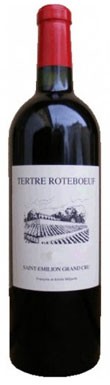
Gentle raspberry and redcurrant notes, soft cured leather and campfire smoke. This wine has held on to its sense of the dramatic and is fully open, showing some delicacy in the tannins on the finish, with touches of caramel and kirsch, too. With 100% of production in the grand vin, this shows exactly why François Mitjavile’s property was starting to make such a stir at this point.
1998
Château Tertre RôteboeufSt Emilion
Château Lafleur, Pomerol, Bordeaux, France, 1999
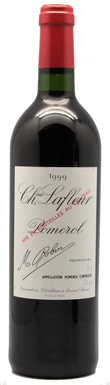
Violet edges flirt with a savoury tomato leaf aromatic, and this is an intellectual take on 1999 that demands your attention and holds it every step of the way. Unquestionably one of the wines of the vintage, in a year where Pomerol had the upper hand. It is still just edging out of its primary phase, full of white pepper and sage spice. Pure and a little austere on the attack, its well-defined layers of raspberry and redcurrant fruits open and fatten halfway through the palate. A slice of history also, as at this point Lafleur was being made by Jacques Guinaudeau but still owned by Marie Robin. 50% new oak.
1999
Château LafleurPomerol
Château Le Pin, Pomerol, Bordeaux, France, 1999
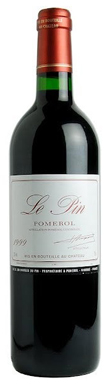
Expressive and rich, not as decadent as the 1998 but still in a class of its own in terms of concentration of menthol-laced plum and smoked blueberry fruits. It's the extra filling that always makes Le Pin stand out, the multi-layered tannins that instead of air between them have silk and feathers. Touches of cinnamon, mocha and bitter black chocolate give a roundness and further depth to the overall shot of pleasure. This is a delicious 1999, a standout in the vintage. 100% new oak.
1999
Château Le PinPomerol
