
Bordeaux vintages: The best of the 1960s & 1970s
The 1960s and '70s was period of seismic shifts in society, technology and politics, not to mention fashion and the music scene. In Bordeaux, it was two decades of great highs – and lows. Here we focus on the highlights of the 1960s and ’70s, with wines that should still reward lucky connoisseurs to this day.


In the summer and autumn of 1945, the vineyards of Bordeaux spoke, against fascism and the Nazi regime, giving the Bordelais something to cheer about and the rest of the free world an iconic vintage by which to remember the end of World War II. What was to follow in the next decade and a half, in this most lauded of regions, was nothing short of remarkable.
Some would argue that between 1945 and 1959 there were as many as six harvests that, in any other period, would be contenders for top of their respective decade. It was as if nature was cutting Bordeaux producers some slack for what had been an unimaginably difficult time for so many.
If it is true to say that, in some way, Bordeaux vintages reflect the mood of the times, then the two decades that followed certainly had this in abundance. The absolute highs and unbelievable lows of the technicolour 1960s, then the ‘thousand tones of brown’ that epitomised the decade that domesticated the microwave oven.
The ’60s produced the best and worst of Bordeaux. The decade started badly, which is a perfect segue as to why, contrary to form, this guide features two decades, rather than one.
When discussing wines of this age, there’s little point diving into 100 synonyms of ‘past its best’, along with the odd ‘you shouldn’t have bought it in the first place’; so, while there are still drinkable examples of 1960, 1963, 1965, 1968, 1969, 1972, 1974, 1977 and 1979 wines to be found, none of those vintages will be covered here.
Scroll down to see notes and scores for Gareth’s Bordeaux picks from the ’60s and ’70s
1961 – 5/5
The best will continue to evolve and hold for another few decades. So, let’s assume, for the sake of rose-tinted nostalgia, that the decade began with 1961. A goliath of a vintage, renowned not only for its uniform consistency, but for the fact that it’s unquestionably a contender for the coveted title of ‘Vintage of the Century’.
The very best wines here are still, at more than 60 years old, on the early plateau of full maturity. My first encounter with this iconic year was with the legendary Château Cheval Blanc opened at Rotisserie Jules in central London, at the height of Sideways mania. After the Merlot-disparaging film’s release in 2004, everyone wanted to replicate the famous scene by drinking legendary claret in any fast-food establishment that would oblige.
In terms of consistency, Château Latour is the wine of the vintage, closely followed by Chiateau Mouton Rothschild, Château Palmer and Château La Mission Haut-Brion – a wine I find that, through this period, rises to the top in most vintages, good, bad or ugly.
For those looking for something a little less weighty on the pocket, I can wholeheartedly recommend (assuming perfectly stored) both Meyney and Batailley – two wines that give you a glimpse at greatness without the price tag.
1962 – 4/5
Very good from top to bottom, but tread carefully with lower-end wines. So often overshadowed by its immediate predecessor, 1962 is a wonderful vintage full of surprises. As you will find with many vintages in this period, Latour grabs the top spot, and it still has decades of life in it yet.
Similarly, its near-neighbour Château Léoville Las Cases was hugely successful, as was Château Pichon Baron just across the D2 road. In that glorious spring of 2020, a wonderful bottle of Château Giscours 1962 with roast lamb hit the spot – an ethereal Margaux that, if you can find it, is likely to cost you not much more than £2-£3 for every year it has been alive.
1964 – 4/5
The rating is based specifically on the Right Bank: the best will hold. Left Bank more patchy. The year that saw the Beatles take America by storm is generally recognised as a Right Bank vintage. In Pomerol, Petrus produced a legendary example, as did Cheval Blanc in St-Emilion; and, although less consistently great, a recent bottle of Château L’Evangile from an immaculate source, was a perfect wine.
Châteaux Lafleur, Latour à Pomerol and a handful of others on that prestigious plateau produced wines that are so close in quality to the best of 1961. The highlight on the Left Bank was, once again, Latour in Pauillac, along with notable contributions from Château Pichon Longueville Comtesse de Lalande and Château Cos d’Estournel. It was certainly a patchy vintage in the Médoc, but there’s very little that was disastrous.

1966 – 3.5/5
Consistently good and still drinking well. Nothing outstanding. The 1966 vintage perhaps lacks the superstars of 1961 and 1964, but it is incredibly consistent across all regions and at all levels. Latour, of course, was great, but the list of estates that still deliver today is almost endless: Beychevelle, Cheval Blanc, Gruaud-Larose, Haut-Bailly, Haut-Brion, La Mission Haut-Brion, Léoville Las Cases, Palmer, Pichon Comtesse and so on.
I would even put my neck on the line and say that, in the complex world of old Bordeaux in which we find ourselves, this is the vintage to go for if you’re looking to dip your toe in the water. The wines are rarely as expensive as other ‘very good’ vintages of the period, and the homogeneity gives room for exploration.
If you like a particular Médoc château in the modern era, there is a high chance it will have produced a very passable 1966 that is not only available, but drinking well now. I would note that the single exception to that rule in this period is Château Margaux. While it was wildly successful during the post-war golden age, it wouldn’t really find its ‘first growth form’ again until 1982/1983.
The same could be said about Mouton Rothschild: the wines were not terrible, but they were poor relative to the standards to which we hold them across most of the 20th century.
1970 – 3.5/5
Consistently good and still drinking, but will not improve. After the three terrible vintages of 1967-1969, and as the world was sliding into financial depression, the Bordelais believed that 1970 would be their saviour. It is, unquestionably, the finest vintage of what would turn out to be the worst decade of the century, at least for Bordeaux.
I have a concern with many of the wines that they don’t have enough fruit for the structure, but they are far less problematic in that regard than the muscular 1975s. Like 1966, but to a lesser degree, there is great consistency here. In case you had forgotten how this goes, Latour is again the wine of the vintage. Halcyon days indeed for that estate.
Château Ducru-Beaucaillou made its finest wine between 1961 and 1982. Beychevelle, Montrose and Palmer made some of their finest wines of this period, but a special mention must go to Château La Lagune – consistently great during this era, the 1970 is perhaps its finest example.
On the Right Bank, it’s more of the same, with Cheval Blanc and Petrus making world-beating wines that still have decades of life in them. This is another example of a vintage that’s worth taking a risk on when you see bottles at fair prices. If well stored, they may end up providing you with a wonderful surprise.

1971 – 3/5
Tread carefully. Well-stored bottles only. Unlike its predecessor, 1971 is nothing if not patchy. The higher-quality wines are on the Right Bank, most notably Cheval Blanc, which can, on occasion, be spectacular, as can Trotanoy. La Fleur-Pétrus has always been a favourite, given that Petrus in this vintage has somehow managed to elude me thus far.
In addition, a recent bottle of Château Gazin showed that decent wines were made outside the top flight. The Left Bank is far more about trial and error in 1971, but that’s no hardship given that most of the wines are very reasonably priced. I have, in the last year, encountered good but not great bottles of Châteaux Cos d’Estournel, Giscours, Grand- Puy-Lacoste, Lafite Rothschild and Lynch-Bages.
You’ll rarely get fireworks from 1971, but they are generally solid. Perhaps search out larger formats, going on my experience of an outstanding magnum of Beychevelle a few years ago. This is also the first vintage for which I feel compelled to mention the whites.
I was blown away by a bottle of 1971 Château Laville Haut-Brion served blind at our biennial Ryder Cup lunch, and I suspect that Haut-Brion Blanc would be equally glorious.
In Sauternes, there was wonderful success in 1971, despite a tricky growing season: Château d’Yquem is fabulous and tighter-wound than the more lauded 1975 and 1976; Climens and Doisy- Daëne also made their best wines of the decade.
1973 – 4/5
The rating is specifically for Pomerol: very good but will not improve. For Left Bank: one star. Some would be surprised at the presence of the ill-reputed 1973 vintage; however, I stand by its inclusion. The Left Bank is generally poor, although there are a few passable examples in both the Médoc and Pessac-Léognan, particularly Château La Mission Haut-Brion.
But this is an example of one microclimate managing to produce expectation-defying wines that are still holding up half a century later. I have no clear idea what happened on that tiny plateau of Pomerol clay that borders St-Emilion in 1973, but everything I have tasted from that sub-region has surpassed any red wine produced anywhere else in France that year.
The Petrus, a wine I have encountered half a dozen times or so in the same number of years, is the standard bearer, but a recent blind comparison with Lafleur and La Fleur-Pétrus showed the unique, almost tropical style of Lafleur to be my preference, if not the overall preference of the tasting group.
Cheval Blanc, La Conseillante and Vieux Château Certan are all still wonderful if they’ve been well stored, and are relatively inexpensive for fully mature vintages of such lauded wines.
1975 – 3/5
Those that have enough fruit are still good. Don’t wait. After a string of ‘difficult’ vintages, the Bordelais thought, once again, that they would find a saviour, this time in 1975. Michael Broadbent MW, at the time head of Christie’s wine department, noted that on release the wines were well received, but certainly, after nearly 50 years, they have been found to be irregular.
Generally, the wines lack fruit to pad out the immense structure, but there are notable examples of genuinely profound wines. It is probably fair to say that La Mission Haut-Brion vies with Petrus for ‘wine of the vintage’ – the former a foursquare, muscular wine that eclipses its sibling Château Haut-Brion, despite the first growth turning out a solid effort.
Pomerol produced wines to compete with anything else in the decade, but those looking for a wine that is almost guaranteed to have plenty of life left should seek out the stunning 1975 Sauternes, Château d’Yquem.
1978 – 3.5/5
Consistently good. Feel free to experiment, but wines will not improve. Like 1971, the general consistency of quality is there in 1978, even if there are only a handful of spectacular wines. Bordeaux struggled here, relative to Burgundy and the Rhône, where some of the finest wines of the century were produced.
To my mind, the only competitor to eastern France is La Mission Haut-Brion, which made yet another legendary wine. Beychevelle, Gruaud Larose and Vieux Château Certan all made examples worth seeking out, especially given their relative prices.

Sauternes
It is, I think, important to recognise that the growing conditions for perfect Sauternes are wholly different to those for red wines. Two examples of those vintages that favoured botrytis are 1967 and 1976, both unworthy of inclusion otherwise. In 1967, Château d’Yquem made a contender for its finest wine of the century, as did Château Suduiraut and Château De Fargues: likely the best wines from this troubled vintage globally.
1976 saw the hottest summer in a century, and the vines baked. It was a lauded sweet wine vintage across Europe, although some have struggled to retain their freshness.
These Sauternes wines are rich and luscious, but in 1967 and 1976, Yquem and Climens seem to be the two that have held their acidity best.
Gareth Birchley’s 1960s and 1970s highlights
Wines are listed in vintage order
Related articles
- Château La Mission Haut-Brion: Second to none
- Bordeaux 2014 revisited 1o years on
- The Bordeaux vintage guide to years ending in 4
Château Cheval Blanc, St-Émilion, 1er Grand Cru Classé A, Bordeaux, France, 1961
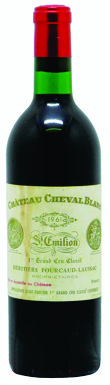

Initially quite closed on the nose. Sweet almost overripe and slightly confected. An incredibly dense core of fruit that needs time to open out. After...
1961
Château Cheval BlancSt-Émilion

Château Latour, Pauillac, 1er Cru Classé, Bordeaux, France, 1962
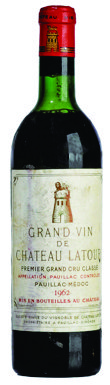
On occasion 1962 Latour is whisker away in quality from the legendary 1961. Tasted four times in recent years, it is quintessential Latour with beautifully...
1962
Château LatourPauillac
Château Lafleur, Pomerol, Bordeaux, France, 1964
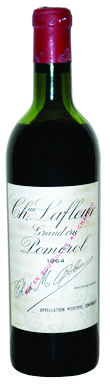
Tasted alongside 1964 Latour à Pomerol and Petrus. Unlike in youth, mature Lafleur of this period is often far more flamboyant than its neighbours. This...
1964
Château LafleurPomerol
Château Gruaud-Larose, Saint-Julien, 2ème Cru Classé, Bordeaux, France, 1966
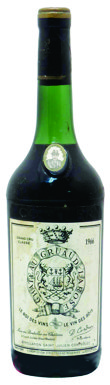
A slight variation in the four bottles purchased at auction. Still a lovely deep core to the wine. Initially a little dusty on the nose,...
1966
Château Gruaud-LaroseSaint-Julien
Château d'Yquem, Sauternes, 1er Cru Classé Superieur, Bordeaux, France, 1967
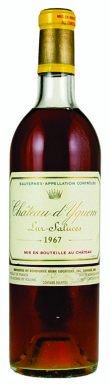
With its deep amber colour this wine is a force to be reckoned with. There is nothing subtle here, just all power. Baked fruit, marmalade...
1967
Château d'YquemSauternes
Château Beychevelle, St-Julien, 4ème Cru Classé, Bordeaux, France, 1970
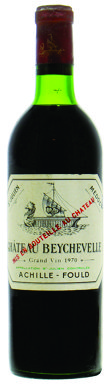
Fully mature nose, loaded with spice and dark fruit. Not a heavyweight wine anymore, but you get the feeling it had a huge structure in...
1970
Château BeychevelleSt-Julien
Château Cheval Blanc, St-Émilion, 1er Grand Cru Classé A, Bordeaux, France, 1971
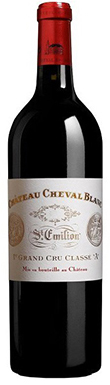
Absolutely loaded with that beautiful Cabernet Franc perfume from the get-go. The wine unravels and unfurls beautifully over the course of an hour. There is...
1971
Château Cheval BlancSt-Émilion
Petrus, Pomerol, Bordeaux, France, 1973
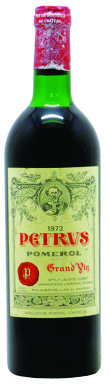
Tasted five times with consistent notes. I do often wonder what happened on that tiny Pomerol plateau in 1973. All the classic hallmarks of mature...
1973
PetrusPomerol
Château La Mission Haut-Brion, Pessac-Léognan, Cru Classé de Graves, Bordeaux, France, 1975
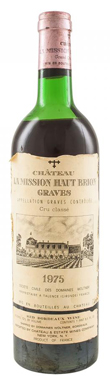
I noted previously that this was a goliath of a wine. A huge amount of structure that is amply padded out by sweet fruit. More...
1975
Château La Mission Haut-BrionPessac-Léognan
Vieux Château Certan, Pomerol, Bordeaux, France, 1978
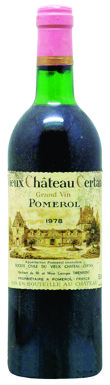
Fully mature but still ample fruit on the nose. Spice and baked fruit. Mid-weight in the mouth with fine, well-integrated tannin. This wine will not...
1978
Vieux Château CertanPomerol
