
Anson: Brane-Cantenac steps out of the shadows


Jane Anson examines some of the changes at Château Brane-Cantenac and tastes a decade of vintages of both the first and second wines.
Go straight to Jane Anson’s tasting notes on Brane-Cantenac and Baron de Brane spanning the past decade
Available exclusively for Decanter Premium members
It’s exactly 10 years ago, in March 2008, that I did a barrel tasting with Château Brane-Cantenac’s technical director Christophe Capdeville and owner Henri Lurton, comparing pre-fined samples of the 2006 vintage that had been aged using a variety of barrels from the cooperage houses of Seguin Moreau, Demptos, and Taransaud.
The aim was to look at the impact of different toasts, of different forest sourcing in both France and Russian oak from the Caucasus forest in the Adygué Republic, and of different lengths of seasoning from 24 to 36 months, and from either inside a drying park or outside with exposure to the natural elements, most importantly rainfall.
This was just part of a regular series of technical experiments that the estate runs.
Brane-Cantenac has worked in partnership with the Bordeaux Faculty of Oenology since the 1960s, and continually carries out research and microvinifications across a variety of vineyard, winemaking and cellar management programmes.
The estate has its own weather station linked up to the European-wide DEMETER network and for more than 10 years has used an extranet website run by Météo France with daily reports, rain radar, satellite pictures and long range forecasts that ensure fully targeted treatments (the estate is fully organic for over one third of the total area, so heading the way of Lurton’s brothers and sisters, who are known for their organic and biodynamic farming at estates like Climens and Durfort Vivens) and encourages biodiversity through hedgerows, rabbit warrens, dry meadows and other things.
Lurton himself has a Masters in biology, another in ampelography and an œnology diploma from the University of Bordeaux.
And it’s clear that his continued interest in analysis is part of the success of Brane-Cantenac over the past ten years, a decade that has really seen this Margaux Second Growth step out from the shadows.
It also meant that I was not surprised to see that for this tasting, held in late 2017, they were more than happy to compare the ageing potential of both Brane-Cantenac and their second wine Baron de Brane, side by side.
It was a fascinating vertical, tracking not only the results of the barrel experiments that have made Brane one of the best practitioners of oak ageing in my opinion, to serious vineyard changes in terms of plantings (the percentage of Cabernet Sauvignon has been pushed upwards from 56% of the blend of the first wine in 2005 to regularly 70%-plus in the more recent years).
The effect on the wine is clear, with a deepening in structure and complexity as the Cabernet Sauvignon increases, a nice nod to the past owner – who gave his name to the property – Baron Hector de Brane, who was a key driver in the popularity of the Cabernet Sauvignon grape in the Médoc.
The Carmenère grape has also been introduced, a grape that is notoriously difficult in its early years and often shows unkindly during en primeur, but that Lurton believes in for its complexity and spice.
Brane is never the most showy of wines and yet it has become one of the most sought-after names in Margaux, impressing through the most beautiful layering of aromatics and textured, confident fruits, perfectly encapsulated in the 2005 and even the undervalued 2012.
The winners hands down during the tasting were the usual suspects of 2009, 2010, 2015 and 2016 (with my money on the Baron de Brane 2010 for drinking now), but once we sat down to eat afterwards, the 2008 Baron de Brane was one of the stars, as was the 2007 of the main château wine.
Proof not only that verticals have their limitations, and can sometimes hide the wines that will give most pleasure in a less charged situation, but also that these are the kind of estates that you need to go to in the more challenging vintages like 2007 and 2013.
Don’t think about cellaring them, but take advantage of the lower prices for these classified properties in the less prestigious years, and enjoy.
Oh, and you might be interested to learn that Henri Lurton, that most modest of men in Bordeaux, is also finding himself at the centre of a growing wine event thousands of miles away, in Baja California.
This region is getting a ton of interest from sommeliers, with Lurton one of its biggest names through his Bodegas Henri Lurton.
It’s somehow entirely in keeping with the man that he has chosen to invest in Mexico’s growing fine wine region – that dates back 500 years and yet is still in its infancy – rather than the more established and prestigious regions a little to the north in California.
Because Baja, surely, is where he can best continue to satisfy that itch to experiment and explore.
Château Brane-Cantenac production: 75 hectares (185 acres), producing one-third first wine and two-thirds Baron de Brane/Château Notton (also known as Le Margaux de Henri Lurton). In the Lurton family since 1925, the first wine of Brane-Cantenac comes from a single block of 45 hectares – the original vineyard of the estate, unchanged in size since the 18th century.
Top scoring Brane-Cantenac and Baron de Brane wines
See also:
Château Brane-Cantenac, Margaux, 2ème Cru Classé, Bordeaux, France, 2015

Right from the attack this has beautiful intensity and focus, with tannins covered by a layer of silk. A dash of violet and white pepper...
2015
Château Brane-CantenacMargaux

Château Brane-Cantenac, Margaux, 2ème Cru Classé, Bordeaux, France, 2010
When tasted at 15 years, complexity remains. Ample florality brightens the aromas of black fruits, earth and faint hints of wood smoke. The palate shows...
2010
Château Brane-CantenacMargaux
Château Brane-Cantenac, Margaux, 2ème Cru Classé, Bordeaux, France, 2016
Owned by the Lurton family celebrating their centenary in 2025, this Margaux second growth estate is known for its elegance and focus on Cabernet Sauvignon....
2016
Château Brane-CantenacMargaux
Château Brane-Cantenac, Margaux, 2ème Cru Classé, Bordeaux, France, 2005
I have loved this wine on many occasions, and love it here again. This is not a wine that is hiding its age - there...
2005
Château Brane-CantenacMargaux
Château Brane-Cantenac, Baron de Brane, Margaux, Bordeaux, France, 2010
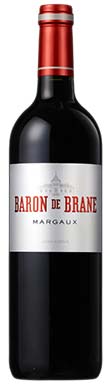
Slightly stalky with robust black fruits on the nose and really quite rich on the palate, a bit robust for Margaux, but depth of fruit...
2010
Château Brane-CantenacMargaux
Château Brane-Cantenac, Baron de Brane, Margaux, Bordeaux, France, 2009
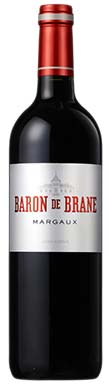
2009
Château Brane-CantenacMargaux
Château Brane-Cantenac, Baron de Brane, Margaux, Bordeaux, France, 2016
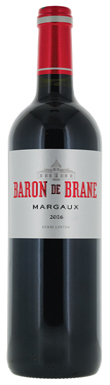
Soft, rich and fresh, this is a succulent second wine with juicy well-placed fruit. A great drinking Margaux.
2016
Château Brane-CantenacMargaux
Château Brane-Cantenac, Baron de Brane, Margaux, Bordeaux, France, 2015
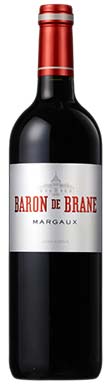
2015 was an exceptional vintage in this part of the world, making many second wines a shrewd value purchase. Luckily this doesn't disappoint, although I...
2015
Château Brane-CantenacMargaux
