
Brunello di Montalcino 2019 – ‘spoiled for choice’: Full report
‘The strength of the vintage is that the wines will be enjoyable at any stage along the way,’ concludes Michaela Morris in her Brunello 2019 report. Read her analysis below, along with 127 tasting notes and scores.


Brunello di Montalcino 2019 vintage rating: 5/5
A warm vintage without extremes, and rainfall at the optimal intervals. Long ripening and cool nights yielded perfumed wines with ripe tannins. Most are accessible now but possess structure for mid- to long-term ageing.
When I visited Montalcino in November 2023, the recent harvest was still fresh in producers’ minds. Between the non-stop rain in spring, the ongoing menace of peronospora (downy mildew), and hail in mid-August, it was one of the most challenging years the region has seen in decades.
Softening the blow was the 2019 vintage of Brunello di Montalcino, to be released in January 2024. Faces brightened when the conversation turned to this outstanding vintage. Unlike 2023, the growing season was particularly benevolent – to the extent that producers seemed to have little to discuss.
‘When a year is great, there is no need to say anything,’ quips Gigliola Giannetti at Le Potazzine. ‘Everything was as it should be.’
The 2019 vintage explained
Mostly, that is. It should be noted that winter was typical of the current worrying trend – slightly warmer than the norm, with lower-than-average rainfall and little snow to speak of. Only estates at high altitudes, such as Il Palazzone and Poggio Antico, referenced minor flurries.
Nevertheless, a couple of concentrated downpours in January and February did deliver a moderate 70 millimetres of rain, and crucially, temperatures remained sufficiently cool to keep budbreak at bay until early April, sparing growers of late-season frost.
April and May were cool and rainy yet disease pressure remained low, as evidenced by the lack of mushrooms in the forest, according to Alessio Sostegni, winemaker at Poggio Antico. Even though these conditions slowed down the vegetative cycle by a couple of weeks, the succeeding months were more than adequate to bring grapes to full ripeness.
While the summer was characteristically hot and dry, temperature spikes above 35°C were minimal and never prolonged. A solid rainfall (70 millimetres in two days) at the end of July topped up reserves and the modest sprinkling at the end of August was welcome. Two further showers in September – one at the beginning, one mid-month – served to delay harvest, allowing further phenolic ripening and diluting grapes enough to curb alcohol levels.
‘We had the right rain when we needed it, giving the plants the water they required,’ sums up Nicola Vaglini, enologist at Pieve Santa Restituta.
Following normal precipitation patterns, rainy periods were concentrated to a couple of days followed by clement weather. As vineyards dried out quickly, there wasn’t the humidity to encourage fungal disease, which was an issue in 2018.
‘September was beautiful,’ says Andrea Costanti. He describes the days as warm, evenings as windy and nights as cool, leading to a harvest that was neither significantly early nor late. The balmiest corners of the southwest began picking on 10 September. In the north, most producers brought in grapes between the last 10 days of September and the first week of October. Finally, in the highest and coolest areas, harvest lasted until mid-October.
‘The harvest was long, and we did various passages as ripening occurred,’ says Katia Nussbaum at San Polino. At Argiano, CEO and winemaker, Bernardino Sani noted the long ripening period between veraison and maturation, describing the resulting grapes as ‘rich in concentration, fruit and colour’.

View the complete table with all 127 of Michaela’s Brunello 2019 tasting notes and scores
Producers from all corners and altitudes of the zone remarked on the quality of the grapes, which were clean and abundant in polyphenols. ‘It was as if they were painted,’ enthuses Sostegni, saying they barely had to discard any berries. Giacomo Bartolommei at Caprili concurs. ‘All the grapes were excellent, whereas in 2016 we had both high quality and lesser quality grapes.’
2019 was a prolific year. Montalcino’s consortium reports a production of 98,407 hectolitres – by far the highest of the last five years. Generous quantities may be attributed to favourable conditions during flowering, but it is also possible that the vines had finally rebounded after the stress of heat and drought in 2017. While many producers confirm making slightly more wine than average, some others claim they produced less.
For some, green harvesting was essential, ‘to avoid unbalance,’ says Sani. The decision was generally based on the vigour of each vineyard. In his clay-based La Mannella plot in Montalcino’s north, for example, Tommaso Cortonesi dropped fruit from the middle to the end of August, ‘to lighten the plants carrying a load of grapes not optimal for even maturation,’ he explains. Conversely, in his Poggiarelli site on stony Galestro soil in the southeast, he asserts that ‘green harvesting is never necessary.’
‘The year did not constrain or obligate winemakers the same way in which 2017 and 2018 did’
Managing quantities was hardly considered difficult, so I questioned if 2019 presented any tribulations. For Vincenzo Abbruzzese at Valdicava, who calls 2019 ‘a fairy-tale vintage with an American ending,’ the only challenge was sacrificing 2018. In that year, he decided just to produce Rosso di Montalcino from early-picked fruit to allow the vines more time to recover from devastating frost damage which occurred in 2017.
2019: ‘A superb vintage’
I remember Andrea Cortonesi at Uccelliera saying that ‘all years have their challenges’ when I spoke with him last year about 2018. Following up this year, he added, ‘a year like 2019 is the exception that proves the rule!’ He did, however, note the weight of responsibility to preserve the quality 2019 bestowed, and foster the best expression of the vintage.
Nevertheless, producers enjoyed a certain freedom in the cellar. Fully mature grapes with thick skins allowed for a return to long macerations for those who favour it. Ripeness of stems also encouraged some to experiment with whole bunches. Essentially, the year did not constrain or obligate winemakers the same way in which 2017 and 2018 did.
The resulting wines were an immense pleasure to taste. After sampling over 170, many at least twice, there is no doubt that 2019 is a superb vintage.
I was struck by the gorgeous and immediate aroma profiles, the ripeness without excess, and the balance of richness with freshness. The 2019 Brunellos do not fatigue the palate and are often stealthy in their power. Emblematic of the vintage, Padelletti and Le Potazzine demonstrate glorious perfumes backed up by substance and structure.
Given the quality in 2019, Brunello enthusiasts will be spoiled for choice. Alas, this doesn’t mean that every wine is exceptional. The most disappointing examples were excessively extracted or, worse, unclean. But these are not indicative of the vintage itself. Others simply came across as rather superficial, somehow echoing the easygoing growing season.

There were no surprises among the highest scoring wines. They hailed from some of the region’s most celebrated estates – Conti Costanti, Le Chiuse, Il Marroneto and Canalicchio di Sopra. Alongside these, Carlo Ferrini emerged with his best-ever vintage of Giodo, included in my top picks. Beyond the upper echelons, 2019 is a vintage to discover some of Montalcino’s lesser-known estates such as Sanlorenzo, La Palazzetta, Fattoi, La Serena and Patrizia Cencioni.
The 2019 vintage also continued the trend of single-vineyard and special selections. Overall, these didn’t diminish estates’ classic Brunello and, in many cases, delivered a step up. Besides new bottlings, 2019 also saw the return of some selections not made since 2016 – most impressively Franco Pacenti’s Rosildo and Valdicava’s Montosoli. By contrast, the Silvio Nardi estate did not deem quality high enough for their Manachiara bottling.
Vintage comparisons
The inevitable desire to compare divided most producers between 2015 and 2016, with Armilla’s Nicola Giannetti describing 2019 as ‘a peculiar combination of the two’. While not as hot as 2015 (particularly in September), 2019 was slightly warmer than 2016. Indeed, some wines tend toward the volume and generosity of 2015, though I find them more precise and fresher. Others recall the elegance of 2016 without the sheer tension and profound depth. They are more immediately expressive and rounder.
There were also references to wines from the 1990s, and particularly 1990 itself. The question is, does 2019 possess the same ageing capacity? The wines of the last century were often stern and austere in their youth but this is not the case with 2019. In fact, most are charming, almost ready to drink at this early stage.
The majority of 2019s possess solid mid-term potential with a projected sweet spot over the next 10 to 15 years. Meanwhile, the very best should age gracefully for upwards of 20.
The strength of the vintage is that the wines will be enjoyable at any stage along the way. And, as they age, they should provide a palpable demonstration of their distinct origin within Montalcino.
Late releases
Amid the profusion of 2019s, a couple of late release 2018s were shown – namely Biondi Santi and Val di Suga’s Spuntali. Alongside the clearly superior 2019 vintage, these two held their own.
Moreover, they provided a reminder that although location was a key factor in 2018, weather conditions leveled the playing field in 2019, with no area favoured over another. ‘It was hard to make bad Brunello in 2019,’ Le Chiuse’s Lorenzo Magnelli declared – and yet, some did. Or at least a disappointing one. In Montalcino, producer still reigns.
Michaela’s top Brunello 2019 picks:
Conti Costanti
A complete, confident and deeply satisfying Brunello of unequivocal breed (100 points)
Giodo
The best vintage yet from Carlo Ferrini’s young estate, it sings eloquently of Montalcino’s south (98 points)
Salicutti, Sorgente
Under new ownership, Salicutti soars with its profound Sorgente bottling (97 points)
Le Potazzine
The epitome of 2019’s charms – heady perfumes, fruit purity and sneaky, seductive structure (97 points)
Franco Pacenti, Rosildo
A captivating vineyard selection from one of the denomination’s under-the-radar producers (94 points)
Brunello di Montalcino 2019: Top scorers
View the complete table with all 127 of Michaela’s Brunello 2019 tasting notes and scores
See all 127 Brunello 2019 tasting notes and scores
Related articles
- Brunello di Montalcino: The best wines to drink, cellar and invest in
- The lesser-known Tuscany: 12 hidden gems to discover
- Barbaresco 2013: A retrospective of one of the top vintages in the last decade
Conti Costanti, Brunello di Montalcino, Tuscany, Italy, 2019
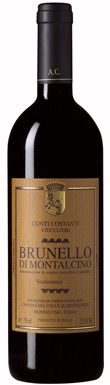

I remember tasting Costanti’s 2019 Rosso di Montalcino in 2021 and thinking how Brunello-esque it was: the sturdy structure was almost uncharacteristic, yet it certainly...
2019
Conti CostantiBrunello di Montalcino

Il Marroneto, Madonna delle Grazie, Brunello di Montalcino, Tuscany, Italy, 2019
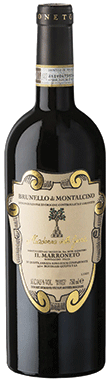
Those familiar with Il Marroneto will notice that with the 2019 vintage, the name of the estate is now at the fore on all labels....
2019
Il MarronetoBrunello di Montalcino
Le Chiuse, Brunello di Montalcino, Tuscany, Italy, 2019
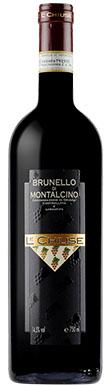
Lorenzo Magnelli says the timing of the harvest was similar to 2015. To avoid richness and over-ripeness, he picked relatively early – between 20 to...
2019
Le ChiuseBrunello di Montalcino
Canalicchio di Sopra, La Casaccia, Brunello di Montalcino, Tuscany, Italy, 2019
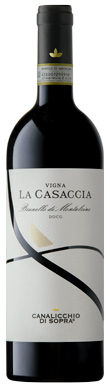
Produced since the 2015 vintage, Vigna Casaccia is fashioned from 30-year-old vines of the BBS11 clone. Reaching 315 metres, the plot is characterised by a...
2019
Canalicchio di SopraBrunello di Montalcino
Podere Giodo, Brunello di Montalcino, Tuscany, Italy, 2019
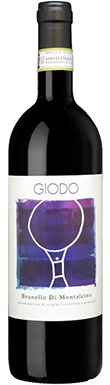
With four neighbouring parcels totaling just five hectares, Carlo Ferrini says the modest size of his estate enables him to pick at precisely the moment...
2019
Podere GiodoBrunello di Montalcino
Baricci, Montosoli, Brunello di Montalcino, Tuscany, Italy, 2019
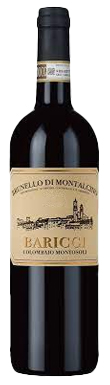
Baricci shines with this stunning 2019, from the estate’s south- to southeast-facing plots at 300 metres on the Montosoli hill. It is still far too...
2019
BaricciBrunello di Montalcino
Canalicchio di Sopra, Vigna Montosoli, Brunello di Montalcino, Tuscany, Italy, 2019
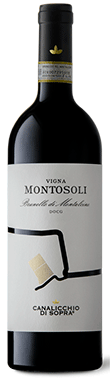
One of fewer than 10 producers with precious holdings on the Montosoli hill, Canalicchio di Sopra owns six hectares, contiguous with Le Gode. The second...
2019
Canalicchio di SopraBrunello di Montalcino
Fuligni, Brunello di Montalcino, Tuscany, Italy, 2019
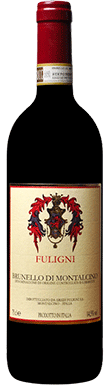
This historic, unwaveringly reliable estate does not disappoint in 2019. Graciously expressive rather than austere, it will nevertheless reveal more with time; yet the aromas...
2019
FuligniBrunello di Montalcino
Le Potazzine, Brunello di Montalcino, Tuscany, Italy, 2019
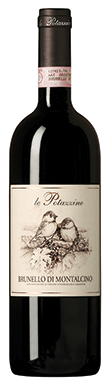
Le Potazzine's Brunello is a mix of Sangiovese from the vineyards around the estate in the centre of the appellation, and from vines in Sant'Angelo...
2019
Le PotazzineBrunello di Montalcino
Le Ragnaie, Casanovina Montosoli, Brunello di Montalcino, Tuscany, Italy, 2019
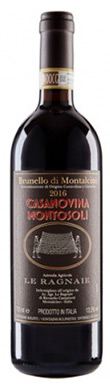
From a prime, east-facing parcel on Montosoli’s limestone rich, slatey soil, Casanovina was planted in 1999 and acquired by Le Ragnaie in 2014. Innate breeding...
2019
Le RagnaieBrunello di Montalcino
Mastrojanni, Vigna Schiena d'Asino, Brunello di Montalcino, Tuscany, Italy, 2019
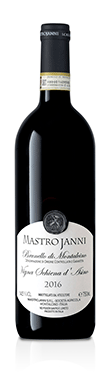
Schiena d'Asino is a one-hectare cru planted in 1975. It flanks a ridge that reaches almost 400 metres, with exposures to both the southwest and...
2019
MastrojanniBrunello di Montalcino
Salicutti, Sorgente, Brunello di Montalcino, Tuscany, Italy, 2019
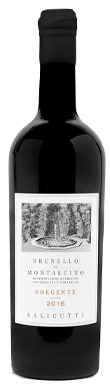
The highest of Salicutti’s vineyards, Sorgente sits on heavier clay with a slight incline to the southwest. It is usually the last to be picked...
2019
SalicuttiBrunello di Montalcino
Valdicava, Montosoli, Brunello di Montalcino, Tuscany, Italy, 2019
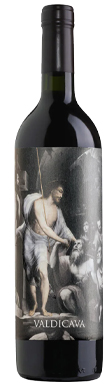
After selling its significant holdings on the hill of Montosoli in the early 1970s, the Abbruzzese family was able to buy back 1.3 hectares in...
2019
ValdicavaBrunello di Montalcino
Argiano, Vigna del Suolo, Brunello di Montalcino, Tuscany, Italy, 2019
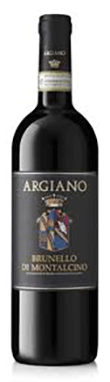
Argiano’s limestone-rich patch of old vines was given a new lease of life when CEO and eenologist, Bernardino Sani shifted to bottling it as a...
2019
ArgianoBrunello di Montalcino
Castello Romitorio, Filo di Seta, Brunello di Montalcino, Tuscany, Italy, 2019
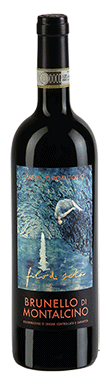
Not to take anything away from Romitorio’s affable estate Brunello, but the 2019 Filo di Seta plumbs greater depths. It hails from a single plot...
2019
Castello RomitorioBrunello di Montalcino
Le Ragnaie, Ragnaie VV, Brunello di Montalcino, Tuscany, Italy, 2019
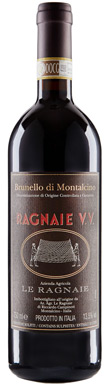
Owner Riccardo Campinoti reports that the 2019 harvest was slightly early by the estate’s standards: he picked his 50-plus-year-old vines on 4 October, giving the...
2019
Le RagnaieBrunello di Montalcino
Il Marroneto, Brunello di Montalcino, Tuscany, Italy, 2019
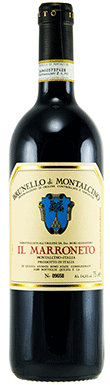
Il Marroneto is one of Montalcino’s most consistently outstanding producers, in challenging and celebrated vintages alike. Brought up under the tutelage of Tuscan greats, Giulio...
2019
Il MarronetoBrunello di Montalcino
La Cerbaiola di Salvioni, Brunello di Montalcino, Tuscany, Italy, 2019
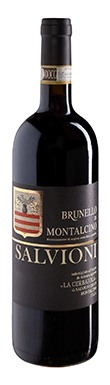
The abundant 2019 vintage resulted in Salvioni releasing both a Rosso and Brunello. The latter is a stunning follow up to the former: restrained yet...
2019
La Cerbaiola di SalvioniBrunello di Montalcino
Lisini, Brunello di Montalcino, Tuscany, Italy, 2019
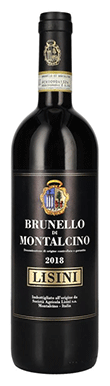
Below the town of Sant'Angelo in Colle, Lisini sprawls over 120 hectares, 24 of which are planted to vines. The 2019 embodies this warm, munificent,...
2019
LisiniBrunello di Montalcino
Padelletti, Brunello di Montalcino, Tuscany, Italy, 2019
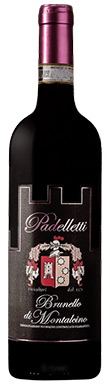
To the northeast of Montalcino, tucked just beneath the town, Padelletti’s vineyards sit on limestone-rich calcareous clay. The Brunello is fermented in lined cement vats...
2019
PadellettiBrunello di Montalcino
Pieve Santa Restituta, Rennina, Brunello di Montalcino, Tuscany, Italy, 2019
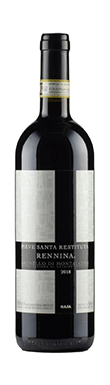
From three vineyards directly surrounding the Pieve Santa Restituta winery in Tavernelle, the Rennina bottling is akin to Barbaresco, according to Angelo Gaja. Harvested between...
2019
Pieve Santa RestitutaBrunello di Montalcino
San Filippo, Le Lucere, Brunello di Montalcino, Tuscany, Italy, 2019
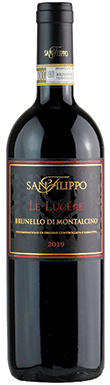
San Filippo is fully exposed to the east, meaning that in 2019 the Sangiovese was harvested relatively late, from 28 September to 7 October. The...
2019
San FilippoBrunello di Montalcino
San Polino, Helichrysum, Brunello di Montalcino, Tuscany, Italy, 2019
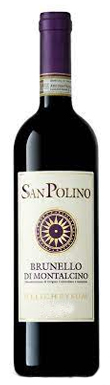
With unimpeded views towards Monte Amiata in Montalcino’s southeast, the Helichrysum vineyards are characterised by arid, stony soil, winds from the Sahara, and significant temperature...
2019
San PolinoBrunello di Montalcino
Sesti, Brunello di Montalcino, Tuscany, Italy, 2019
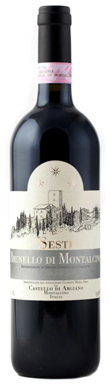
Planted in 1986 on Montalcino’s southern slopes, Sesti’s 13 hectares are freshened by an eastward tilt, constant breezes and surrounding woodlands. Ripeness allies with brightness,...
2019
SestiBrunello di Montalcino
Talenti, Piero, Brunello di Montalcino, Tuscany, Italy, 2019
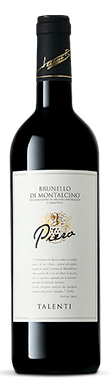
This selection hails from a two-hectare vineyard at 410 metres with rocky sandstone at the surface. Riccardo Talenti says that no matter what the conditions,...
2019
TalentiBrunello di Montalcino
