
Brunello di Montalcino: The 10 must-know estates
The producers of Montalcino are steadfast in their dedication to the Sangiovese grape – they even have their own name for it. Monty Waldin picks 10 top wineries from the DOCG region, exploring their differing approaches to this singular red variety and the noble wines it makes.


Tuscany’s Montalcino region is shaped like a four-sided pyramid,whose well-sheltered, well-drained topography is bright, breezy and especially vine friendly. It’s also an incredibly beautiful place to live, sparsely populated and far from motorways and heavy industry.
Half of Montalcino’s land is wild, either grassland or oak and chestnut forests teeming with wild boar and roebuck (permitted local delicacies), plus protected rare owls, eagles and amphibians.
Sangiovese is the only grape variety permitted for Montalcino’s two flagship red wines: the puzzlingly under-appreciated Rosso di Montalcino DOC, which can be sold after one year, oak ageing optional; and the globally acclaimed Brunello di Montalcino DOCG, which ages for a minimum of two years in oak and four years overall before release.
Scroll down for Monty’s tasting notes and scores from 10 must-know Brunello di Montalcino estates
Brunello is simply the local name for Sangiovese, used since 1865, when a producer in Montalcino made Italy’s first 100% Sangiovese wine. The region’s 250 wineries are mostly small scale – 20ha or less – and in total make up 3,500ha under vine, or about 15% of the land. The western, more sea- influenced flank has the fewest wineries, but its vineyards are some of the region’s largest.

Castiglion del Bosco
The ‘fortress in the woods’ is one of Montalcino’s most isolated vineyards, with 62ha of vines surrounded by 1,200ha of woodland – yet it was a founding member when Montalcino’s wineries created the region’s first official rules in 1966. Massimo Ferragamo of fashion fame purchased the estate in 2003 and brought new impetus; the estate’s Brunellos are now really easy to enjoy.
‘The vines get cool air from the forest,’ winemaker Cecilia Leoneschi says. ‘We rejigged the vine supports to get riper, more even-sized bunches. We ferment Sangiovese cooler and longer now, which the yeast like, as there is less stress. We make sure the yeasts get the food they need by sowing plants in the vineyards, which naturally put nutrients in the soil which end up in the grape juice. The aromas and flavours emerge gradually and are more refreshing. This then encouraged us to dial down the oak.’
Castello Banfi
Montalcino’s Brunello DOCG and Rosso DOC were little-known internationally until 1978, when the Mariani family, importers from New York, founded Castello Banfi, Montalcino’s biggest estate. Back then, vineyards were outnumbered by ‘mostly wheat and olive groves’, remembers Cristina Mariani-May, Banfi’s proprietor.
Thinking long term, Banfi invested in a 20-year project to get the best out of mercurial Sangiovese in both vineyard and winery. ‘Sangiovese is a chameleon,’ says Mariani-May, ‘with different characteristics depending on where it’s grown and how it’s fermented.’ So Banfi developed its own Sangiovese strains and patented its own fermentation tanks with stainless steel staves to preserve fruitiness and wooden staves for softer tannins.
Its wines are a good starting point for Brunello newbies, and its Poggio alle Mure estate is home to a 13th-century castle and glass museum, well worth the detour.

CastelGiocondo
It sounds counterintuitive, but the CastelGiocondo team, steered by Lamberto Frescobaldi of the historic Florentine family, have made the vines at their vast estate in southwest Montalcino more robust in order to make their Brunello wines taste less so.
In one of Montalcino’s warmest, driest, sunniest spots – the next stop west is the Tyrrhenian seaside – you’d be forgiven for wondering why replanting since 1993 has increased the vine density per hectare, resulting in fewer soil nutrients and rain water for each vine. Smaller bunches, smaller grapes, more concentrated wines, right?
Well, CastelGiocondo has combined intuition with common sense. ‘It’s actually more about encouraging each vine’s own individual root, shoot and bunch expression,’ says CastelGiocondo’s long-term vineyard supremo, Ermanno Morlacchetti.
‘Removing excess buds, shoots or grapes from the vines early in the season gave stronger fruiting branches for both the current and following vintage. The smoother tannins and enhanced flavours we got meant that we could dial down the oak without sacrificing intensity or ageability.’
Col d’Orcia
Francesco Marone Cinzano seems to spend an awful lot of his time growing anything but grapes at his 550ha Col d’Orcia estate, Montalcino’s third-largest vineyard at 150ha.
Spelt and durum wheat are sown across 200ha, to be used for making pasta flour, while flowering plants such as clovers and blue tansy are sown across 60ha for the estate’s 200 beehives, owned by a local honey producer. After flowering, the seeds are collected, stored and sown in the vineyards as cover crops. Clovers and beans feed the soil with nitrogen – no nitrogen means no grapes this year or next. Mustard’s stinky roots repel disease-carrying soil pests.
‘We also sow plants with different root depths to keep the soil airy,’ says vineyard manager Valerio Chechi. ‘Vines on compact soil seem stifled and lethargic.’
Doing all this in-house is very rare, even for organic, biodynamic estates like Col d’Orcia.

Conti Costanti
A modest, intense and soft-spoken man, Andrea Costanti is rightly considered one of Montalcino’s foremost Brunello producers, and his wines show why the DOCG merits its place in the pantheon of the world’s greatest wines. His vines are in an exposed but relatively cool and very breezy site just outside the town of Montalcino. The site is more than 400m above sea level, just before the land drops sharply north-northeast.
Here, quick-to-dry clay-schist soil, or galestro, makes for compact vines that naturally give small, flavour-rich berries – the result of a complex of long-haul roots in constant search for subterranean moisture – producing wines with a complex textural weave once fermented.
‘We are lucky to have our vines in a place which allows them to express something of interest,’ he says.
Costanti’s Brunello wines are crisp, clear and smooth-textured, and sensitively oaked in a mix of squat oak barrels and tall oak vats. The wines are moreish when young, but they have extremely long drinking windows: a sign of healthy berries.
Cosimi, Il Poggiolo
I first met Rodolfo ‘Rudy’ Cosimi in 2005. Organic wines were storming Europe but had barely breached the fortress town of Montalcino, let alone Cosimi Towers – Cosimi labelled one of his many reds ‘Bionasega’, which translates to something like ‘Couldn’t give a **** about organics’.
Yet this particular wine brilliantly displayed the delicious umami vibrancy expected of good organic or natural wines, which was then still rather rare in Montalcino.
Cosimi is contradiction central. A rally car and motorcycle champion who safely guided my car home while doing wheelies on his motorbike; an extrovert whose silently enigmatic watercolours grace his labels; a Cartesian playing rock or classical music to two identical wines to gauge what role soundwaves might exert on wine development.
He is also a creative, making both tank- and bottle-fermented sparkling whites from Sangiovese, the former with sharp fruit, the latter with gastronomic yeasty creaminess, both labelled ‘Le mie Bollecine’ – ‘my bubbles’.

Salicutti
Francesco Leanza founded Salicutti in 1990. Although Leanza is now retired, I once wrote that what I liked about his wines was that his Rosso and Brunello have concentration and depth without seeming extracted.
Under his energetic successors, the German Eichbauer family, the estate’s wine range was streamlined, and from 2019, three site-specific Brunellos are being made from crus in Piaggione, Sorgente and Teatro.
Sabine Eichbauer describes Piaggione as ‘like a Ford Mustang, an old-style Brunello with palate weight, plenty of muscle, as broad as it is deep’. Meanwhile, ‘Sorgente is the most accessible Brunello, evolving easily with juiciness from the clay and fluidity from the fact that Sorgente refers to an underground water source or spring’, and ‘Teatro is the ethereal one, with its mix of Mediterranean wild herbs and blue forest fruits’.
Seeing someone’s life work being respected and augmented rather than trashed, as so often happens in winery takeovers, bodes well for this estate.
Giodo
The name ‘Giodo’ derives from Carlo Ferrini’s parents, Giovanna and Donatello. One of Italy’s best-known wine consultants, Ferrini is as comfortable in the vineyard as he is in the winery, thanks to degrees in both viticulture and viniculture. Ferrini’s winemaking style is no doubt populist, but those who think this automatically invalidates his technical prowess miss the point.
There are still too many faulty wines in Montalcino – not surprising when temperamental, easily bruised Sangiovese must survive two years in oak in both Nordic winters and North African summers, and another two years in bottle before it can sit on the wine-store shelf proudly wearing its Brunello badge.
Ferrini’s style is well suited to Sesta, the area in southwest Montalcino in which his 6ha vineyard is situated. And it’s a good match: superstar winemaker meets aspirational superstar terroir, in an already-stellar region.
Piancornello
Claudio and Silvia Monaci come from a family of down-to-earth farmers. Their part of the much-divided estate has been in the family since the 1950s, old by Montalcino standards.
Located in the Sesta zone, Piancornello lies on its own little plateau, protected from bad weather from the south by Monte Amiata, Tuscany’s highest peak. The farmhouse was built in the 1700s, its approaches strewn with old tractors and ploughs.
Blazing summer heat is mitigated by water-retentive blue clay, geologically young and rich in the iron and calcium needed to ripen the Sangiovese grapes steadily, rather than in a stop-start mode. This reduces stress on the grapes and makes for smoother tannins (a Sesta hallmark) and clearer fruit expression.
Poggio di Sotto
In 2011, Poggio di Sotto’s meticulous founders, the Palmucci family, sold the estate to the Tipa-Bertarelli family, already owners of the respected ColleMassari estate in neighbouring Montecucco and Grattamacco in Bolgheri.
Poggio di Sotto’s vines lie on three terraces – one at 200m, another at 300m and a third at 450m. Each site has different ripening times and is picked individually when perfectly ripe.
‘Our oldest Sangiovese vines are biotypes, meaning all are genetically identical but each individual looks different, for example the shape of the leaves,’ says Giampiero Pazzaglia, the estate’s general manager. ‘If we push a vine branch down into the soil, the shoot will root and eventually grow another vine. This means both mother vine and child remain close.’
The 10 must-know Brunello di Montalcino estates tasted:
You may also like:
The best Brunello di Montalcino wines: Expert reviews
Brunello di Montalcino 2014: What to look for
The best new generation Sangiovese: A fresh perspective
Castiglion del Bosco, Brunello di Montalcino, Tuscany, Italy, 2015
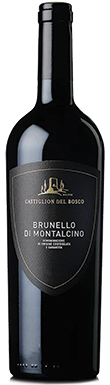

A crunchy Brunello oozing red-fruit succulence. Its mouthwateringly appealing bite relegates its albeit light tannic undertow to a bit-part, ultimately leaving the textural thoroughfare smooth,...
2015
Castiglion del BoscoBrunello di Montalcino

Castello Banfi, Brunello di Montalcino, Tuscany, Italy, 2015
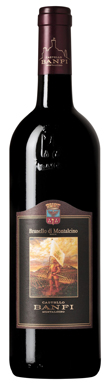
Banfi is Montalcino's largest estate, with 170ha dedicated to Brunello production. Though rumours abound about a takeover by luxury goods giant LVMH, Banfi is still...
2015
Castello BanfiBrunello di Montalcino
Frescobaldi, CastelGiocondo, Brunello di Montalcino, Tuscany, Italy, 2015
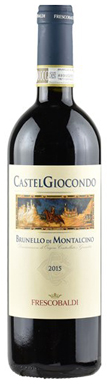
Current winemaker, Filippo Manni arrived at CastelGiocondo at the beginning of 2015. He brings precision to the winemaking, vinifying each of the estate's plots separately...
2015
FrescobaldiBrunello di Montalcino
Col d'Orcia, Brunello di Montalcino, Tuscany, Italy, 2015
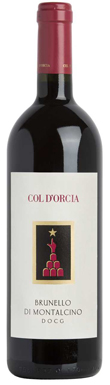
Quite flinty and reductive at first, a vigorous swirl releases scented herb, Mediterranean shrub and dry earth on a warm summer day. Despite being fully...
2015
Col d'OrciaBrunello di Montalcino
Conti Costanti, Brunello di Montalcino, Tuscany, Italy, 2015
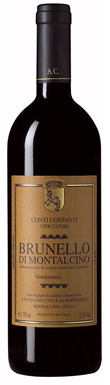
After sitting out the 2014 vintage, Andrea Costanti calls 2015 a beautiful year and one of the best in the history of Brunello. He deemed...
2015
Conti CostantiBrunello di Montalcino
Rodolfo Cosimi, Il Poggiolo, Brunello di Montalcino, Tuscany, Italy, 2012
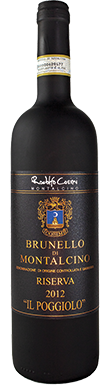
Forward, appealing nose of dark cherry garnished by notes of roses and undergrowth; a drier style, with leathery, gamey flavours partnering fleshy black fruit.
2012
Rodolfo CosimiBrunello di Montalcino
Salicutti, Piaggione, Brunello di Montalcino, Tuscany, Italy, 2015
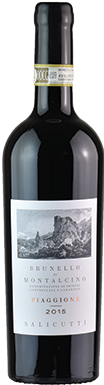
If you baulk at the thought of a red with 15% alcohol on the label, you need not be too worried, as this booming red...
2015
SalicuttiBrunello di Montalcino
Podere Giodo, Brunello di Montalcino, Tuscany, Italy, 2013
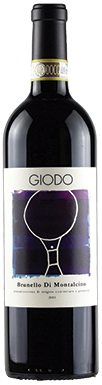
Shows lovely fragrance of porcini, clove and tea. Background wood notes are nicely integrated. The palate captivates with strawberry and persimmon laced with iron and...
2013
Podere GiodoBrunello di Montalcino
Piancornello, Brunello di Montalcino, Tuscany, Italy, 2016
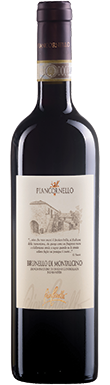
The Piancornello style has morphed in recent years from slight clunkiness to something much smoother in the glass, more agreeable and far more interesting in...
2016
PiancornelloBrunello di Montalcino
Poggio di Sotto, Brunello di Montalcino, Tuscany, Italy, 2015
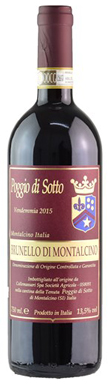
Despite some heavy summer rains, August was very hot but with cool nights. The result was splendid, structured wines of considerable longevity. The cherry aromas...
2015
Poggio di SottoBrunello di Montalcino
