Brunello’s new generation: six top producers and their wines


Tuscan wine specialist Monty Waldin picks six to watch in Montalcino...
Considering its global fame, Brunello di Montalcino is a relatively new star in the world of wine. The region remained an inside tip for almost a century until lifestylers and wealthy investors discovered its wines and unspoiled landscape in the 1970s. The new entrants propelled Brunello, the local name for the Sangiovese grape, to international stardom and Montalcino’s young incumbents are set to refine their wines further with an emphasis on improving the health of the vineyards for future generations.
Scroll down for Monty Waldin’s top wine picks from six new generation Brunello producers
Andrea & Francesca Ciacci
Tenuta di Sesta

The Ciacci family has an historic role in the Brunello di Montalcino story: in 1966, the same year that Brunello became a prized member of the new DOC family in Italy, Giuseppe Ciacci became one of a handful of producers making and bottling Brunello.
Giuseppe’s son Giovanni continued the family tradition at Tenuta di Sesta, but it is his children Andrea and Francesca Ciacci who have turned the screw in recent years, improving vineyard practices and refining the winemaking.
Situated in the warmer southern half of the DOCG, the siblings are cognisant of the challenges that climate change presents for their wines. Growing good Sangiovese in a hotspot requires good water availability and shade, explains Francesca. ‘You can drink as much water as you want on the beach, but you will burn without shade.’ It’s the same with vines. ‘We retain leaves around the Sangiovese bunches and they act as a sunshade, but not a sunblock. Stress-free grapes give you more freedom as a winemaker, and more versatile, enjoyable wines.’ It is a strategy that seems to be working: in recent vintages, the wines have offered greater clarity and harmony, capturing ripeness without overripeness.
Giovanni & Gianlorenzo Neri
Casanova di Neri

You’d think that following in the footsteps of Giacomo Neri, arguably Montalcino’s most influential producer over the last decade, would be a burden for his sons, Giovanni (27) and Gianlorenzo (24), but they are thriving.
Giovanni lets the wines do the talking – his focus is the enviable range of well-sited single vineyards his father accumulated across the huge Montalcino zone. Gianlorenzo is the company’s globetrotting communicator. The wine-loving world, he says, ‘increasingly want personal contact, are already well informed yet are thirsty for more information, especially on differences between Brunellos from single sites’. These single-vineyard bottlings include Cerretalto in northeast Montalcino, which was first bottled in 1981, and Tenuta Nuova, which hails from a patchwork of vines on the warmer southeast side of Montalcino.
Tocci, the latest (2017) acquisition, is located in Sesta, a prized zone south of Montalcino town, known for rich and smooth but unheavy Brunellos. Combining style as well as substance is very much the Casanova di Neri way, and that’s set to continue.
Francesco Monari
Argiano

Francesco Monari’s arrival as vineyard manager at Tenuta di Argiano in 2006 happened to coincide with the biggest upheaval in Montalcino since nearby Mount Amiata stopped erupting 180,000 years ago, leaving an undulating landscape in its wake. From 2008 onwards, there was a definitive shift in the style of Montalcino’s reds: bold, black-fruited and instantly gratifying Brunellos gave way to a red-fruited style that offered a greater sense of levity, individuality and Sangiovese savouriness. And Francesco Monari has played an integral part in that movement.
Uncertainty over Argiano’s ownership (Italian Countess Noemi Cinzano eventually sold to a group of Brazilian businessmen in 2013) could easily have blown Monari off-course, but he stuck to his long-term plan to convert Argiano’s entire 50ha of vines to organics, devising individual strategies for each plot. For example, the compact soil on which Argiano’s oldest vines stood had created a shallow root system, which he sought to redress naturally by compost and worms to soften and aerate the soil.
Thanks to Monari, Argiano’s enviable vineyard – a well-drained and breezy sun-kissed plateau – now has the vines and wines to match.
Federico Ciacci
Villa i Cipressi

Having a long-standing reputation as honey-loving beekeepers, the Ciacci family also makes excellent extra virgin olive oil and, since 2000, Brunello di Montalcino.
More recently, Villa i Cipressi founders Hubert Ciacci and Patrizia Bernini have handed over the reins to their sons, Dario and Federico. While the dynamic Federico took six years instead of three to complete his winemaking studies, he was not slacking: he spent an extended period working as a lowly cellarhand for Giancarlo Pacenti of Siro Pacenti, one of Montalcino’s most admired estates. ‘I wanted to combine classroom study with hands-on experience,’ explains Federico.
‘I learned the importance of a spotlessly clean but not sterile winery. You must encourage the right yeasts to thrive to transform the flavours in the grape juice into the wine as faithfully as possible.’
Federico’s hands-on approach extends beyond the winery. All three of the Ciacci family’s vineyards, which are some distance apart, are surrounded by forests, and Federico has been adding bird boxes designed specifically for ‘robins and tits which eat tiny worms harmful to grapes – birds like starlings, which eat grapes, aren’t attracted to them’.
Birds and bees sorted, Federico’s next project is the team of shire horses he recently bought with two other Montalcino growers. ‘Walking your vineyards when ploughing is the way to really reconnect with your land,’ he says. This attitude is characteristic of Montalcino’s next generation, linking enhanced biodiversity with improved wine quality.
Andrea Mantengoli
La Serena

A track leads to vineyards that have a wild air, but there isn’t a winery in sight. Andrea Mantengoli’s architect brother designed an ‘eco-winery’ under the house at La Serena, making use of nature’s natural pump: gravity.
Mantengoli is engaging and distinctive, with wines to match. His success is based on imagining he is a Sangiovese grape, and asking himself ‘what do I need to do to achieve excellence?’ His intensive work begins in the vineyard – he draws pictures of vines, showing how he now reshapes them like the old-timers did, in an effort to grow looser bunches with disease-free, small berries producing more transparent, deeper wines.
It doesn’t stop there. He sows Egyptian clover in the rows, which he claims ‘slows the falling raindrops so the vines get the water they need and the soil doesn’t wash away’. He also sows spelt, a type of wheat. Once grown, he rolls not the grains but the tall, spindly spelt stems, ‘to flatten them, so they cover the ground to form a sun screen to cool the vineyard and protect the soil from drying out too much’. He admits it is more work, but the results of his tender loving care in the vineyard are evident in the glass.
Loredana Tanganelli
Podere Scopetone

Loredana Tanganelli’s decision to add Brunello production to her beekeeping and honey-making activities in 2009 didn’t exactly cause a buzz in Montalcino. The previous decade and a half had brought Montalcino a swarm of new arrivals, and a confusion of wine styles that polarised the region and the commentariat, the same wine often garnering both sweet praise and stinging criticism.
It was Tanganelli’s husband, Antonio Brandi, who convinced her to make wine. She already owned 3ha of Sangiovese vines over in the Montecucco DoC, whose low-priced reds are grown south of the Montalcino border. She sold the grapes rather than bear the cost of making a wine with low margins.
Back in Montalcino, Tanganelli inherited La Melina, a small (0.5ha) vineyard from her grandfather Alvaro. She put beehives on the plot, but when neighbouring vineyard Podere Scopetone became available, it provided Tanganelli with enough fruit to make her own Brunello from the 2009 vintage.
The Sangiovese vines dating back to 1978 enjoy a spectacular slice of real estate, to the northwest of Montalcino town. It is a high, cool and sunny site exposed to warm southwesterly winds from the Tyrrhenian sea. She is not the only winemaker to realise the potential of this area: the Biondi Santi family, who created Brunello di Montalcino in the 19th century, has long grown grapes here, and now has Tanganelli, her bees and her Brunello for company.
Monty Waldin is a widely published wine writer, author and DWWA Regional Chair for Tuscany
See Monty Waldin’s top wine picks from six new generation Brunello producers
You may also like
The making of MontalcinoFrom the archive: Brunello di Montalcino 2010 panel tasting resultsHow the Tuscany 2018 vintage is shaping upBrunello Riserva 2012: Report & Top winesBrunello di Montalcino 2013: Report and top wines
Tenuta di Sesta, Duelecci Ovest Riserva, Brunello di Montalcino, Tuscany, Italy, 2012
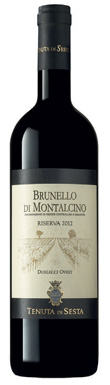

Tenuta di Sesta’s old vine plots either side of two oak trees (‘leccio’) can be blended or bottled separately, like this one from the warmer western (‘ovest’) side. It is rich and ripe but not heavy, offering a mouthful of lacy, clearly defined fruit.
2012
Tenuta di SestaBrunello di Montalcino

Casanova di Neri, Cerretalto, Brunello di Montalcino, Tuscany, Italy, 2012
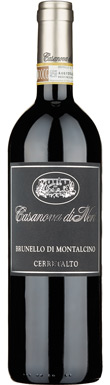
The Casanova di Neri domain of Giacomo Neri and his family has been one of the pioneers of sub-zonal, single-vineyard Brunello: its celebrated Cerretalto and Pietradonice wines are both sourced from single vineyards in the southern half of the DOCG zone, the former just underneath the town itself to the east, and the latter close to Castelnuovo dell’Abbate. This is a dark wine with scents of currants and plums, wax and incense spice. There’s great wealth on the palate and ample fruit architecture, even after the requisite ageing trajectory; once again the dark plums are haunted by incense spice notes and the dark, alluring glow of hearth embers.
2012
Casanova di NeriBrunello di Montalcino
Tenuta di Argiano, Brunello di Montalcino, Tuscany, Italy, 2013
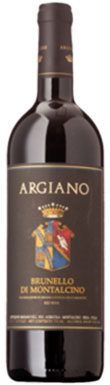
Tenuta di Argiano’s Brunellos are more velvet glove than iron fist. They drink well in youth but can easily stay the course in bottle. Its plumptious 2013 is a good example of a Brunello made in what some feel to be an earlier drinking vintage.
2013
Tenuta di ArgianoBrunello di Montalcino
Villa i Cipressi, Brunello di Montalcino, Tuscany, Italy, 2013
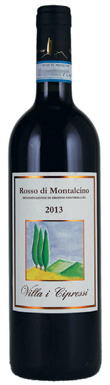
A blend of two sub-zones of Montalcino: fruit from Castelnuovo dell’Abate gives this a lovely rich mouthfeel while Tavernelle brings sapidity, intensity and lift. The whole ensemble is knit together with seamless oak. Simply delicious.
2013
Villa i CipressiBrunello di Montalcino
La Serena, Gemini Riserva, Brunello di Montalcino, Tuscany, Italy, 2013
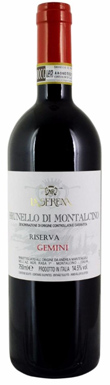
A Brunello whose limpid, pale crimson colour could mislead you to think this was a lightweight wine, but it has the Sangiovese grape’s classic underlying insistency, focused fruit and clear red cherry flavours. The finish is mouthwateringly savoury
2013
La SerenaBrunello di Montalcino
Podere Scopetone, Brunello di Montalcino, Tuscany, Italy, 2013
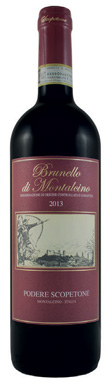
If you like ripe red cherries for their crunchy skins, smooth centres and bright red cherry flavours, then this is the Brunello for you. An effortless, refreshing style. While it is light in colour, it is generously flavoured.
2013
Podere ScopetoneBrunello di Montalcino
