
Burgundy’s young talent: 10 sensational producers and their wines
It pays to keep your finger firmly on Burgundy's pulse. Charles Curtis MW picks out 10 stellar names who seem destined to achieve legendary status.

In a region as diverse and exciting as Burgundy, it is natural that wine lovers can struggle to keep up. There is a great depth of well-established, quality estates that beg one’s attention.
To truly keep ahead of the curve, however, talent-spotting the next generation is essential.
Scroll down to see tasting notes and scores for 10 wines from Burgundy’s future legends
Marc-Antonin Blain
Marc-Antonin, the talented son of Jean-Marc Blain (of Domaine Blain-Gagnard), has begun to turn out delicious wines of his own, both from his new estate in Beaujolais (Brouilly and Côte de Brouilly) and from his share of the family vineyards in Chassagne.
At present there is a village Chassagne-Montrachet in red and white; a Chassagne premier cru Morgeot in both red and white, and a small bit of Bâtard-Montrachet. The vineyard work is done sustainably and is moving towards organic, although not yet in official conversion.
The Chardonnay is lightly crushed prior to pressing, and the press is rolled a few times at lower pressure, but not at higher pressure. The must is barreled down with a modest use of new oak and aged reductively to give an elegance found in those coming from his father’s cellar, but with just a bit more flinty, smoky reduction.
The red wines are fermented with a proportion of whole cluster that can vary from none to 100%. The extraction is very gentle and the wines are aged for 18 months in cask.
The vines for the red wines are old, ranging from 50–100 years of age. Although the whites undoubtedly get the most attention, the older vines for the reds give results that are truly exemplary.
Domaine Jean-Baptiste Boudier
The first vintage for Jean-Baptiste Boudier after winemaking school and apprenticeships abroad was 2015. He began with 3ha of family-owned vines in Pernand-Vergelesses.
His holdings expanded when his father retired in 2018, and last year he was able to rent additional property to bring his total to 6ha, all on or around the hill of Corton.
Drawing on his diverse experience with second cousin Nicolas Rossignol, Domaine Gauby in the Languedoc, and Château Haut-Brion, Boudier is modern but not dogmatic.
The Chardonnay is pressed as whole clusters. The fermentation on native yeasts begins in tank and finishes in a combination of older, larger casks (300- and 350-litre) in order to limit the influence of oak.
The Pinot Noir is mostly completely destemmed, but in some cuvées up to 30% is vinified as whole clusters. Ageing for the reds is done for a year in cask followed by an additional three months in tank.
These are lush, compelling wines that do not lack the backbone or substance you would expect from these terroirs. This is definitely an estate to watch.

Domaine Pierrick Bouley
The Bouley family has been farming vineyards in Volnay for hundreds of years. There are several different branches, but the wines produced by Domaine Pierrick Bouley are increasingly coming to the attention of wine lovers.
Pierrick Bouley has been vinifying the grapes at his family’s estate since 2014 after training at Felton Road in New Zealand.
His family own 9ha in total; all of the vines are located within the commune of Volnay; appellations range from a variety of premiers crus (1.5 ha) to village Volnay to some classed as humbler Bourgogne Rouge.
He is paying attention to the latest trends in viticulture and winemaking: the vines are worked using biodynamic methods (although he is not certified) and they are managed using tressage – instead of being cut back, the shoots are woven together into the canopy of the vine.
The fruit is carefully harvested and completely destemmed. Winemaking is done with a very gentle extraction and very little sulphur.
The wine is matured in a modest proportion of new oak, in barrels with a light toast to avoid marking the wine with strong flavours. His approach allows the fruit to shine through and these are wines of limpid purity.
Domaine Benoît Chevallier
The Chevallier family, based in Vosne-Romanée, had owned vines for generations, but rented them out until recently.
Upon the retirement of his parents in 2018, however, Benoît Chevallier decided with his sister Eloïse to reclaim the leases and run the domaine themselves, founding Domaine Benoît Chevallier in 2019. Fortunately, the metayeurs (‘sharecroppers’) had worked well; the vines have been certified organic for a decade.
Benoît is a former computer engineer and Eloïse was a schoolteacher, but the two have real passion for the the winegrowing profession. Today they farm 4ha, tilling the soil and using biodynamic-style preparations on the vines.
The youngest vines are 50 years of age on average, and some of the plots are 70 years old.
Everything is located in Vosne and Nuits, including 0.33ha of Beaux Monts where the vines are located next to Liger-Belair, and parcels in the Nuits premiers crus Aux Damodes and Aux Boudots on the border with Vosne-Romanée.
The grapes are destemmed but kept as intact as possible, and the fermentations are done on native yeasts with very gentle extraction following a cold soak. Ageing is in cask for up to 18 months.
These are fresh and elegant wines that are supple without lacking structure, and show an admirable purity of fruit.

Domaine Coffinet-Duvernay
Domaine Coffinet-Duvernay was founded in the 1980s by Philippe Duvernay and Laura Coffinet. Together they built a 6.5ha domaine that is run today by their son Bastien.
Bastien began to work with his parents in 2012, becoming responsible for the vinification in 2017. He presses the bunches of Chardonnay directly without crushing them first, and settles the must overnight prior to being barreled down with all or most of its lees and fermented on native yeasts.
The wine is aged in cask until the following vintage, when they are racked into tank, but most are put back into cask for another winter. On average, 25%-30% of the casks are new each year.
The domaine works only its own vines, all of which are located in the village of Chassagne, while the winery is situated just above premier cru La Maltroie where Coffinet-Duvernay also has vines.
It also owns parcels in two parts of premier cru Morgeot which are bottled separately: Le Grand Clos (on clay soils), and Fairendes.
Further plots exist in both premier cru Blanchots-Dessus (south of Montrachet) and village-level Chassagne Blanchots-Dessous (south of Criots-Bâtard-Montrachet).
The vineyard holdings are crowned with a single ouvrée of Bâtard-Montrachet on the Chassagne side of the vineyard.
Simon Colin
Simon Colin is an ambitious young man producing impressive wines and whose lineage is an exemplary preparation for success: his father is Philippe Colin and his grandfather is Michel Colin, proprietor of the legendary Domaine Colin-Deléger.
He trained with his father and with his uncle Bruno, and completed internships in Oregon and South Africa before returning to work at Sauzet while simultaneously setting up a négociant business that debuted in 2017.
Last year, his father began to transition his share of the family holdings to him, adding 9ha of vines to the portfolio. Two-thirds are Chardonnay, principally from St-Aubin and Chassagne-Montrachet, with a bit of Aligoté, and the balance is Pinot Noir from Chassagne, Santenay and Maranges.
The whites are gently crushed prior to settling overnight and a fermentation in cask (about 20% new) with most of the lees. The wine is aged 12 months in cask and another four to five months in tank after racking.
The Pinot Noir is fermented with about one-third new clusters and a very soft extraction (no punching down) before ageing for 16-17 months, then bottled without filtration.
Pierre-Vincent Girardin
Pierre Girardin relates that he did not attend school to learn winemaking, but instead worked with his father from an early age. His first vintage on his own was 2017, which he made under his parents’ house while still a teenager.
Having moved to his immaculate new winery in 2019, Girardin is now producing wine from a total of 15ha: 4.5ha from his father (now in organic conversion), another 5.5ha that he rents, and fruit purchased from a further 5ha.
The reds are fermented in stainless steel in reductive conditions. Girardin prefers to ferment with whole clusters, but this is adapted to the needs of the vintage. He describes the process as ‘no physical extraction, only temperature extraction’, with a short and cool fermentation at 20–22° C the entire time.
The reds are pressed and finished in cask after five days whether they are dry or not. Ageing is mostly in 456-litre tonneaux (double-sized barrels) to avoid marking the wines too much with wood.
Whites are fermented by crushing the clusters prior to pressing. Two types of presses are used: there is a long, slow pressing of up to four hours in a pneumatic press and a shorter, stronger pressing in a vertical press to optimise dry extract.
The must is settled very lightly and run into barrel with most of its lees. The length of the maturation is not fixed, but determined by tasting, and the delicious result speaks for itself.

Domaine Jeannot
Domaine Jeannot was founded by Valérie and Philippe Jeannot in the late 1990s.
In 2014 they were joined by their son Quentin who began to make the wines the following year. While his parents remain involved, Quentin is taking on an increasingly important role and the wines now bear his name.
The domaine originated in Maranges where the red wines are still made. In 2018, however, the Jeannot family moved to Meursault, and the white wines are made there. The family now farms a total of 11ha spread from Maranges to the hill of Corton; all are farmed using un-certified organic methods.
White wine is produced from appellations that range from Bourgogne Blanc and village-level Santenay and Maranges, through to Meursault, Meursault premier cru and Corton-Charlemagne grand cru.
The Chardonnay is destemmed and then pressed. The fermentation begins in stainless steel before being barreled down, and the wine ages 9-14 months before bottling.
Red wines are produced across appellations that include Bourgogne and Hautes-Côtes de Beaune, village-level Maranges and Santenay, a range of Maranges premier crus and an old-vine Pommard.
The Pinot Noir is completely destemmed and treated to a cold soak prior to vinification and ageing in 30%-40% new casks for up to 17 months before bottling.
These are sensitive, expressive wines from appellations that merit more attention.
Millemann
Busy, buzzy consulting winemaker Pierre Millemann founded Millemann Wines in 2017 with his wife Stéphanie and young daughter Charlotte.
They began with Corton-Charlemagne and Chambertin in the first vintage before adding Bonnes-Mares, and more recently Clos de la Roche and Corton Les Renardes. The wines are an absolute knock-out.
The family sources grapes from Pierre’s consulting clients who allow them complete freedom over the grape-growing and choice of harvest date. The goal is ‘ripe but not too ripe,’ says Pierre.
In the winery, the Pinot is fermented with a significant proportion of whole clusters. The Chardonnay is firmly crushed and pressed very hard to ensure a large amount of phenolic compounds in the must, which is barreled down with most of its lees into 500-litre puncheons to ferment on native yeasts.
The wine stays on the lees for a year before racking into stainless steel for another six months – until it is racked, no sulphur is used.
The barrels are from Damy and use a toast called ‘LL++’ meaning light and long, with a longer toasting over a lower fire.
For bottling, the Millemanns use top-quality corks, with special bottles that have a slightly narrower neck than normal in order to ensure a tighter seal. The bottles are then waxed to ensure that they are impermeable.
These are wines that are engineered for long ageing, and the delicious results speaks for themselves.

Domaine Gérard Seguin
Jérôme Seguin is the fifth generation to farm the family vines in the Côte de Nuits.
He began to work with his parents in 2005, taking over the winemaking in 2012, and full management of the estate in 2018.
The family farms 6.22ha and produces a range that includes Bourgogne Rouge, village-level Marsannay (near Couchey), Fixin and Chambolle, plus no less than four villages from Gevrey including single-vineyard wines from Les Crais and La Justice.
Finally, there are premier crus from Craipillot (where the winery is located) and nearby Lavaux-St-Jacques, both influenced by the cool air of the Combe de Lavaux. The vines are farmed sustainably, tilling the soil in place of herbicides.
The seductive reds are destemmed and given a cold maceration before fermentation. Extraction is done by twice-daily punch-downs.
After a fermentation of two weeks, the wine is racked into barrel. No new casks are used for the regional appellations, and between 20%–50% new for the village and premier cru-level wines, which are bottled unfiltered when possible. The results are traditional yet full of finesse and elegance.
See tasting notes and scores for 10 wines from Burgundy’s future legends
Related content:
Mature Burgundy: best from the 1960s, ’70s and ’80s
Clos de Tart: 1947-2019 vertical tasting
Crémant de Bourgogne: nine top buys
Domaine Coffinet-Duvernay, Chassagne-Montrachet, 1er Cru Blanchots Dessus, Burgundy, France, 2020
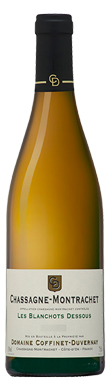

Coffinet-Duvernay has a tiny slice of this superb premier cru, which continues south from Montrachet. The ripe apple and quince aromas are underscored by cream...
2020
Domaine Coffinet-DuvernayChassagne-Montrachet

Domaine Jean-Baptiste Boudier, Pernand-Vergelesses, 1er Cru Sous Frétille, Burgundy, France, 2020
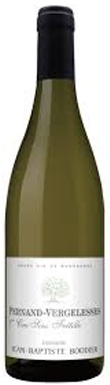
There is great precision to this wine, with forward, lush aromas of ripe apricot and a floral edge that leads seamlessly to a texture that...
2020
Domaine Jean-Baptiste BoudierPernand-Vergelesses
Domaine Jeannot, Meursault, 1er Cru Porusots, Burgundy, France, 2020
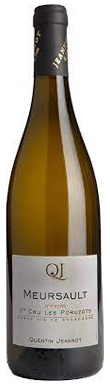
Opens with ripe apple fruit aromas and hints of marzipan, acacia flowers and fresh butter. Initially, the wine seems opulent and almost fat, but with...
2020
Domaine JeannotMeursault
Domaine Simon Colin, Chardonnay, Bourgogne, Burgundy, France, 2019
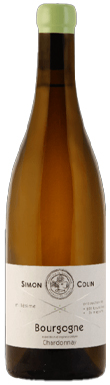
This 'simple' Bourgogne Blanc over-delivers with ripe apple and apricot aromas which show a floral, hawthorn edge. The nuanced aromas are underscored on the palate...
2019
Domaine Simon ColinBourgogne
Millemann, Bonnes-Mares Grand Cru, Burgundy, France, 2020
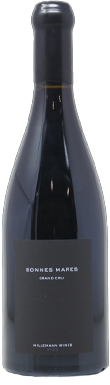
On the initial attack, this has an almost incredibly forward, intensely expressive fruit that ranges from fraises de bois to pomegranate and black cherry, all...
2020
MillemannBonnes-Mares Grand Cru
Domaine Benoît Chevallier, Vosne-Romanée, 1er Cru Beaux Monts, Burgundy, France, 2020
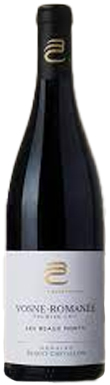
This superb wine of impressive concentration shows a deep violet-scented black cherry fruit with savoury and saline accents on the initial attack, then hints of...
2020
Domaine Benoît ChevallierVosne-Romanée
Domaine Gerard Seguin, Vieilles Vignes, Gevrey-Chambertin, Burgundy, France, 2020
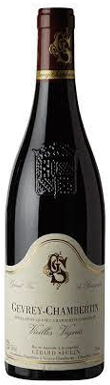
A lovely surprise, with more depth and concentration than one would expect from a village-level Gevrey. A bright cherry, raspberry and blackberry fruit is elegantly...
2020
Domaine Gerard SeguinGevrey-Chambertin
Domaine Pierre-Vincent Girardin, Pommard, 1er Cru Rugiens-Bas, Burgundy, France, 2021
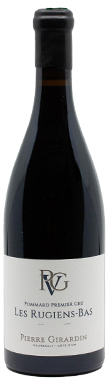
There is plenty of polished purple fruit on the initial attack, but the 100% whole-cluster ferment also gives a slight menthol tone, some savoury notes...
2021
Domaine Pierre-Vincent GirardinPommard
Domaine Marc-Antonin Blain, Chassagne-Montrachet, 1er Cru Morgeot, Burgundy, France, 2020
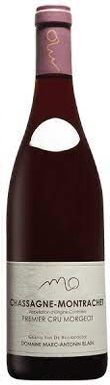
The healthy old vines planted nearly a century ago and trained in the Cordon de Royat style yielded a wine of impressive depth, concentration and...
2020
Domaine Marc-Antonin BlainChassagne-Montrachet
Domaine Pierrick Bouley, Volnay, 1er Cru Robardelle, Burgundy, France, 2018
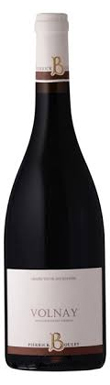
Showcases ripe raspberry and black cherry fruit with an attractive rose petal edge and a savoury note at the end. The texture shows an admirable...
2018
Domaine Pierrick BouleyVolnay