
Busting myths around Californian Chardonnay
Chardonnay from California has a whole lot more to offer – and always has – than the outmoded ‘big and buttery’ exuberance that became its calling card in the past. Time to reassess, and highlight those producers who are taking their beloved Chardonnays into a fresh future.


A few months ago, I was asked to respond to a reader who asked how you could pick out Californian Chardonnay in particular from American Chardonnay in general, when blind tasting. At its root, the question speaks to a broader understanding, or lack thereof, of the myriad growing conditions, terroir and style of Chardonnays being made in the geographically enormous and meteorologically, geologically and topographically diverse west coast US state of California. The place is massive, and so are the differences.
‘From my perspective,’ says Chantal Forthun, director of winemaking at Flowers Vineyards & Winery in the Sonoma Coast sub-region, ‘the remarkable nature of Chardonnay is its transparency to place and winemaking style. Given its thinner skins, Chardonnay purely translates the character of its site. This makes this variety as multifaceted as the places from which it originates.’
California Chardonnay is, of course, American Chardonnay. However, the wine style that was first made in the 1980s, rose to prominence and popularity in the 1990s, and can only be described as ‘buttery’, still lingers in the minds of wine consumers, if not now on their palates.
The style of wine, which often included very ripe fruit with almost no noticeable acidity, but full malolactic fermentation and ample new oak, resulted in mouth coating, viscous wines of an undeniable buttery character.
At their worst, they were flabby, one-dimensional and uninteresting; at their best, simply one-dimensional.
Scroll down for tasting notes and scores for 12 Californian Chardonnays

Defining itself
That trend, however, does not define Chardonnay as a variety or the state it is grown in. Napa Valley wineries such as Chateau Montelena, Stony Hill and Smith-Madrone, for example, have long been considered historic among the valley’s Chardonnay producers, and they have never produced such an on-trend wine.
‘Our decision to acquire both the Haynes Vineyard and Stony Hill was due to our love for the great wines of the Côte de Beaune [in Burgundy]’, says Carlton McCoy MS, CEO of Lawrence Wine Estates. ‘With old, low-yielding vineyards, we can produce Chardonnay that rivals those wines, but through the lens of these two unique Napa sites.’
‘As I watch my peers,’ says Dan Petroski of Napa white wine producer Massican, ‘I am starting to see a new character of Chardonnay making inroads in recent years. I don’t want to simplify it by saying the wines are lower in alcohol, or just lighter and brighter, but the fact that Chardonnay has, in its DNA, the depth of flavour and structure (acid) to provide a complex and noteworthy white wine at 12% to 14% alcohol is what makes this new level of ripeness and focus.
A historic upstart
In a real sense, it was Chardonnay that put America, and in particular California, on the wine world’s radar. The 1973 Chateau Montelena Chardonnay sits at the top of the list of America’s most important wines, as a result of its triumph over classic French Chardonnay wines in the celebrated Judgement of Paris tasting in 1976.
The 1973 Montelena was not a wine of great heritage – far from it. Montelena is a storied estate (dating to the 1880s), but one that had been abandoned since 1939, having been forsaken for more than three decades when the Barrett family took over in 1972. The Montelena estate vineyards were a hodgepodge of vines neglected since the 1930s. In 2014, Montelena disclosed sourcing on the iconic 1973 bottle (as reported on decanter.com, May 2016).
The Barretts revealed that the Chardonnay fruit for that vintage came from independent growers: 39% of the grapes from the Belle Terre Vineyard in Alexander Valley, 35% from the Bacigalupi Vineyard, Russian River Valley, 23% from the Hanna Vineyard in Oak Knoll near Napa and just 3% from Calistoga. The wine was a blend across both Sonoma and Napa appellations, without any clear terroir.
However, the winemaker monitored each vineyard and decided on the harvesting dates. The wine was made by the estate’s then brand new winemaker, Croatian immigrant Mike Grgich (an American wine legend in his own right, who died in December 2023, aged 100), in his first full vintage at Montelena. Grgich made the final blend in December 1974 and the wine was released in September 1975.
In spite of these less-than-ideal circumstances, Grgich crafted a brilliant Chardonnay that beat several top Burgundy wines at the 1976 Paris tasting (organised by the late Steven Spurrier, Decanter’s Consultant Editor for many years), including a Meursault-Charmes from Roulot, Drouhin’s Beaune Clos des Mouches, a Ramonet-Prudhon Bâtard-Montrachet and Leflaive’s Puligny-Montrachet 1er Cru Les Pucelles.
Perhaps this shows just how perfect California is for the Burgundian white variety. With long odds, it still stood above wines of place from pedigreed estates with longstanding traditions.

Coastal cool kids
According to the US NOAA Office for Coastal Management, the California coastline measures about 5,515km, while the overland driving distance between London and Istanbul comes in at 2,500km. So, the notion that the state’s winemaking regions, such as Napa, Sonoma and the southern coastal region of San Luis Obispo, more than 400km apart, would make a singular style of any wine is, on the face of it, impossible.
‘Santa Cruz Mountain Chardonnay is such a Goldilocks,’ says winemaker Ashley Holland of Read Holland Wines near Santa Rosa. Among all the wines grown in the region, ‘the Chardonnays truly exhibit that push-and- pull nature of contrasting elements that makes a wine so compelling. They are briny, full of fruit, vinous and hold tension’.
‘I do believe great Chardonnay sites in California have the best-tasting skins,’ Holland continues. ‘So I am not shy in the press with this wine – I press it hard and love how that plays out over time with the expression of Peter Martin Ray (see tasting notes, opposite).’
While much of California is warm and sunny, other parts are subject to the cold and wildly dynamic influence of the mighty Pacific ocean. Whether it’s the North Coast’s Mendocino County and Sonoma Coast, or southern locales like San Luis Obispo or Santa Barbara just north of Los Angeles, proximity to the Pacific plays a far more significant role than latitude.
‘What’s unique about San Luis Obispo Coast, specifically Arroyo Grande and Edna Valley,’ says Talley Vineyards’ director of viticulture and winemaking Eric Johnson,‘is that we are completely dominated by the Pacific, creating an airflow that is a natural air conditioner for the region.
‘The benefit of this,’ Johnson continues, ‘is that this maritime influence mitigates high temperatures, giving us a very long and cool growing season that allows us to produce wines with subtle fruit and vibrant acidity.’

Napa classics
While the 1973 Montelena was not properly a Napa Valley-designated wine, classic Chardonnays have been made from the valley since at least 1976, the year of that world- shattering moment in Paris. While styles evolved and indeed became caricatures that California is still trying to leave behind, in Napa – the epicentre of American wine – a number of older producers never bothered to chase fashion.
From Trefethen and Montelena to the Spring Mountain originals like Stony Hill and Smith-Madrone, the valley’s vanguard Chardonnay producers have long held fast in the face of a butter-riddled craze of Chardonnay that lasted for decades.
‘Stony Hill was one of California’s first direct-to-consumer wine sales brands, with mailers dating back to the 1960s,’ says Petroski. ‘That winery is still producing some of the most enjoyable, lightweight Chardonnays in California. Inspired by how Stony Hill was able to capture the hearts and minds of sommeliers, it is encouraging to see a larger availability of food-friendly Chardonnays in Napa and Sonoma.’
For Stu Smith of Smith-Madrone, it was Spring Mountain that made their Chardonnay so special. ‘I chose Spring Mountain intentionally,’ says Smith, ‘because in my opinion, the best grapes come from the mountains. When you leave grapes out too long, the acidity respires out of the grape. California has lived with this “go big or go home” notion for too long, and that is anathema to how Chardonnay is supposed to be made.’
Napa Valley viticulturist Steve Matthiasson sees the future of Napa and California Chardonnay in how producers choose to farm it. ‘At its best, Chardonnay has a tension between acidity and texture,’ he says. ‘With the right soils, clonal selections, farming and harvesting, it’s possible to produce Chardonnay with lip-smacking brightness and silky length at moderate alcohol, even here in sunny California.
‘Ripeness at lower alcohol comes from organic farming,’ Matthiasson continues, ‘vine-by-vine pruning, canopy work and harvest. Equally vital are older clonal selections that are slower-ripening and higher in acid. Native yeast barrel fermentation helps reveal complexity that would otherwise need a longer hang time. When Chardonnay is magical, it has weight without heaviness.’
The Pursehouse dozen: Leading lights of California Chardonnay
Related articles
- Oregon vintage report: Tricky Willamette Valley 2022 sticks the landing
- Sonoma County: 2021 vintage report
- US West Coast: The new vanguard
Racines, Grand Reserve Chardonnay, Santa Barbara County, Santa Rita Hills, California, USA

This Blanc de Blancs from across renowned Sta Rita Hills vineyards has undeniable Old World charm and sophistication. The aromatics boast ample toasted biscuit notes...
RacinesSanta Barbara County

Stony Hill, Chardonnay, Napa Valley, Spring Mountain, California, USA, 2021
The Chardonnays from Stony Hill have been classic since – forever. Napa's first cult winery eschewed chasing style and went with a conviction and focus...
2021
Stony HillNapa Valley
Matthiasson, Michael Mara Vineyard Chardonnay, Sonoma County, Sonoma Coast, California, USA, 2020
There is an undeniable intensity from this Sonoma Coast site in the hands of the winemaking team at Matthiasson. A smoky saline aromatic nudges against...
2020
MatthiassonSonoma County
Read Holland, Peter Martin Ray Chardonnay, Santa Cruz Mountains, California, USA, 2021
An exceptional wine from winemaker Ashley Holland of Read Holland, which comes from nearly 50-year-old Chardonnay vines, head-trained in the Santa Cruz Mountains. ‘This heritage...
2021
Read HollandSanta Cruz Mountains
Haynes Vineyard, Forgeron Chardonnay, Napa Valley, Coombsville, California, USA, 2020
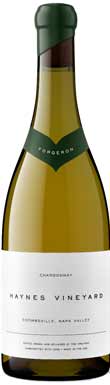
A mastery of reductive Chardonnay, this barrel selection comes from 1968-planted Wente Clone vines in Coombsville. Winemaker Nico Cueva, formerly of Kosta Browne, uses a...
2020
Haynes VineyardNapa Valley
Massican, Hyde, Napa Valley, Los Carneros, California, USA, 2023
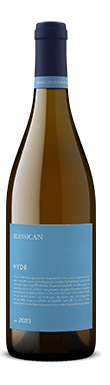
Winemaker Dan Petroski sources this fruit from the eponymous Hyde Vineyard, one of California's most famous and historic Chardonnay sites. It was founded by Larry...
2023
MassicanNapa Valley
Mayacamas, Chardonnay, Napa Valley, Mt Veeder, California, USA, 2022

<p>A bouquet of dried white wildflowers, hints of cardamom and salty sea spray and a bright whiff of lemon zest. Bright and beguiling, with savoury...
2022
MayacamasNapa Valley
Smith-Madrone, Chardonnay, Napa Valley, Spring Mountain, California, USA, 2019
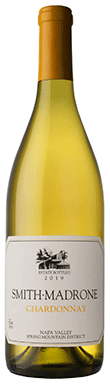
The Smith-Madrone Chardonnay over-delivers again with the 2019 bottling. This is one of the finest Napa wines in existence for $45. Rich, showy aromas of...
2019
Smith-MadroneNapa Valley
Talley Vineyards, Oliver's Chardonnay, Central Coast, Edna Valley, California, USA, 2022
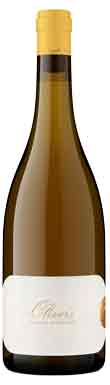
The Oliver's Chardonnay from Talley Vineyards is stunning in its beauty and balance. The 14 months in 40% new French oak delivers a richness balanced...
2022
Talley VineyardsCentral Coast
Flowers, Camp Meeting Ridge Chardonnay, Sonoma County, Sonoma Coast, California, USA, 2021
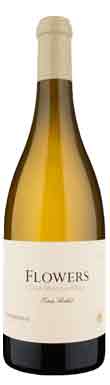
Great lemon cream aromas, Camp Meeting Ridge from 1991, over 30 years old, where Flowers got its start. Old Wente clone and zero battonage make...
2021
FlowersSonoma County
Freeman, Hawk Hill Vineyard Chardonnay, Sonoma County, Green Valley of Russian River Valley, California, USA, 2022
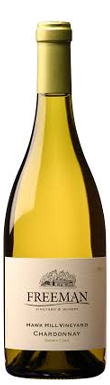
<p>Hawk Hill Vineyard is found in the confluence of the Russian River, Sonoma Coast and Green Valley AVAs, planted on the region's Goldridge soils. The...
2022
FreemanSonoma County
Ridge Vineyards, Estate Chardonnay, Santa Cruz Mountains, California, USA, 2020
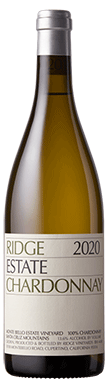
Fruit for the Estate Chardonnay comes from the lower slopes of the Monte Bello estate on the original Klein Ranch. Eastern-facing slopes give this wine...
2020
Ridge VineyardsSanta Cruz Mountains
