
Cabernet vs Cabernet: Italy’s tale of two French grapes
From their beginnings in Italy 150 years ago, Cabernet Sauvignon and Cabernet Franc have become central components of some of the country's most important and recognisable red wines. Isobel Salamon investigates how Italian winemakers are managing these noble varieties in the face of contemporary issues such as climate change and changing tastes.


Italy might be renowned for its ancient varieties, but two noble French interlopers, Cabernet Sauvignon and Cabernet Franc, now contribute to some of Italy’s most prestigious wines, telling a fascinating story of adaptation and evolving identity.
The pair, commonly referred to simply as ‘Cabernet’ in blends, has become a hot topic in Italian wine circles.
Recent decades have shown clear shifts in preference – Cabernet Sauvignon dominated the 2000s, while Cabernet Franc rose to prominence in the 2010s with consumers favouring its vibrancy, acidity, and floral characteristics.
Scroll down for eight examples of exceptional Italian Cabernet
French nobility on Italian soil
But how did these French varieties first make their way to Italy? The Cabernet journey began in 1820, when Count Manfredo di Sambuy brought them from Bordeaux to his Piedmont estate, alongside Sauvignon Blanc.
This collection was fitting – a family affair of sorts – given Cabernet Sauvignon is the progeny of Cabernet Franc and Sauvignon Blanc.
By 1877, the Cabernet spread moved to Italy’s north with Veneto and Trentino (then under Austro-Hungarian rule), before later heading south.
One notable exception is Sicily’s early adoption in 1855, when Baron Felice Spitaleri created ‘Castello Sollicchiata,’ Italy’s first Bordeaux-style blend which earned international acclaim in 19th century competitions.
The volcanic soils, it turned out, proved interesting for both Cabernet varieties.
Sassicaia and the Super Tuscan revolution
The true catalyst for change came in the 1940s, when Marchese Mario Incisa della Rocchetta and his wife Clarice inherited the Tenuta San Guido property on Tuscany’s stony Bolgheri coastline.
Drawing inspiration from great Bordeaux wines, he sought to create a wine of superior quality to the local Sangiovese.
Studying in Bordeaux at the likes of Château Mouton Rothschild, he noted similarities between Bolgheri’s stony soils and Bordeaux’s Graves region. On his return, he planted both Cabernet varieties in a vineyard he named ‘Sassicaia’, meaning ‘area of many stones’.
Initially labelled as Vino da Tavola, Sassicaia made its commercial debut in 1968. It later found itself part of the broader Super Tuscan revolution of the 1970s and 1980s, along with notable wines such as Ornellaia, Tignanello and Solaia, which were exploring barrique ageing and unconventional Cabernet blends to critical acclaim.
Winemakers outside of Tuscany began to take note and started planting Cabernet widely across Italy.
As Alex Ferrigato of Alto Adige winery Colterenzio explains: ‘In the 1980s, if you wanted to prove you could produce a great wine, you had to do it with this variety.’

Family resemblance and distinctive characters
Today, Cabernet Sauvignon (14,200 hectares) and Cabernet Franc (6,300 hectares) make up 3% of Italy’s 720,00 hectares under vine (according to Luigi Bavaresco, professor of viticulture at Catholic University of the Sacred Heart in Piacenza, and scientific secretary of the OIV expert group on genetic resources and vine selection).
In this sense it very much holds minority status compared to popular Italian varieties such as Sangiovese, which commands plantings of 72,000 hectares.
Cabernet Sauvignon has established strongholds in Tuscany (particularly Bolgheri), Alto Adige, Veneto, and increasingly in warmer sites across Sicily and Sardinia.
Meanwhile, Cabernet Franc thrives in Friuli-Venezia Giulia, northern Alpine areas, Veneto, and has formed a particularly harmonious relationship with Tuscany, where plantings have doubled in a decade (OIV), including a 50% increase in Bolgheri (Bolgheri Consorzio).
These genetic relatives share pronounced tannins, good natural acidity and excellent ageing potential, but their Italian expressions have diverged significantly, each finding unique voices in different regions.
Cabernet Sauvignon has historically been considered ‘without flaws’, capable of ripening optimally in diverse environments, although it can struggle with ripeness on cool soils at altitude.
Its thick skins provide botrytis resistance and drought tolerance, while its later ripening (often 1-2 weeks after Cabernet Franc) extends the harvest window, protecting it from early frosts.
In Bolgheri, where both varieties excel, Cinzia Merli, owner and oenologist at Le Macchiole, finds Franc has ‘a more elegant body, a tannic texture of greater character, and a broader aromatic spectrum’ than its offspring.
The variety’s adaptability allows it to reveal different facets depending on soil type, making it particularly site-expressive.
‘On calcareous soils, Cabernet Franc tends to express more floral aromas – violet, rose – fresh red fruits and spicy notes’, adds Elena Pozzolini, oenologist at Tenuta Sette Cieli.
‘Cabernet Sauvignon develops darker aromas – blackcurrant, graphite – sometimes accentuating vegetal notes on clay – green bell pepper, tomato leaf’.

Forging an Italian identity
Italy’s approach to the Cabernet varieties has evolved beyond French emulation to emphasise terroir, and, today, wineries are investing in Cabernet Sauvignon once more for their flagship bottlings.
French oenologist Pierre Seillan at Chianti Classico’s Tenuta di Arceno, with his continent-spanning career producing exemplary Bordeaux-style wines, defines himself as a ‘terroirist’, emphasising the use of each parcel’s geomorphological characteristics.
This sums up the site-specific philosophy which now defines Italy’s Cabernet landscape, which emphasises regional character over varietal orthodoxy.
We now see a broad spectrum emerging.
This ranges from classic Bordeaux blends such as Tenuta San Guido’s Sassicaia, Antinori’s Guado al Tasso, Castello del Terriccio’s Lupicaia, and San Leonardo, to unique varietal expressions of Cabernet Sauvignon such as Tenuta Liliana’s Cabernet Sauvignon, Fèlsina’s Maestro Raro and Pasqua’s Fear No Dark, or Cabernet Franc – Tenuta di Arceno’s Arcanum, and Ferlat’s Sessanta.
This localised approach is clear in Alto Adige, where Ferrigato highlights the character of Colterenzio’s Lafóa Cabernet Sauvignon, grown on poor gravel and volcanic subsoil, which yields what he describes as ‘both Alpine and Mediterranean characteristics’.
Climate Change and Future Trends
Climate shifts are reshaping Italy’s Cabernet landscape. Paolo Bomben, oenologist at the research centre at Vivai Rauscedo (VCR), one of the world’s leading vine nurseries, located between Conegliano and Udine, explains: ‘Cabernet Sauvignon is increasingly being replaced in warmer regions by Cabernet Franc, which ripens earlier.’
The nursery now focuses on identifying clones suited to evolving climate conditions as southern Italian regions become less suitable for Cabernet Sauvignon.
Innovation proves essential for Cabernet Sauvignon’s future. Pasqua’s Fear No Dark demonstrates this brilliantly by planting vines in a shady vineyard, embracing the longer ripening period while protecting the grapes from excessive heat.
For Cabernet Franc – a variety that thrives with significant diurnal shifts, as seen in Bolgheri – Pozzolini explains that higher temperature excursion helps to preserve acidity while ripening tannins, suggesting Bolgheri’s strong affinity with this variety will endure.
Advancement continues with the creation of resistant ‘PIWI’ varieties such as VCR’s Cabernet Volos and Cabernet Eidos. Bomben explains that both offer ‘remarkable aromatic intensity’, with Volos being bold, fruity and spicy while Eidos leans more floral.
These varieties’ ‘polyphenolic intensity’ often surpasses conventional counterparts, combining disease resistance with exceptional quality.
So what’s holding these PIWI varieties back? Largely, industry reception, with Bomben noting that, ‘Tuscany stands out negatively in this regard’, refusing authorisation for PIWI varieties despite 10 other Italian regions already embracing this change.
Given France and Germany have permitted PIWI varieties in quality wine classifications, Italian prejudices may prove short-lived.
After 150 years on Italian soil, the Cabernets have forged exciting identities across the country; no longer French imports, they are today embraced as citizens offering a distinctive voice to Italy’s viticultural landscape.
Eight exceptional Italian Cabernets
Related articles
- Super Tuscans 2.0: Meet the innovators behind the stylish new wave
- Bolgheri 2021: Overview of a milestone vintage and top-scorers
- Bordeaux 2022: Wines from a superb vintage revisited in bottle
Tenuta San Guido, Sassicaia, Bolgheri, Sassicaia, Tuscany, Italy, 2021
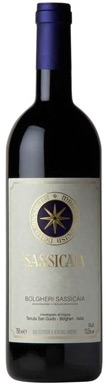

2021 is one of Sassicaia's legendary vintages, and it's just gorgeous. The grapes are hand harvested, before eight to 10 separate vinifications with indigenous yeasts...
2021
Tenuta San GuidoBolgheri

Le Macchiole, Paleo, Toscana, Tuscany, Italy, 2021
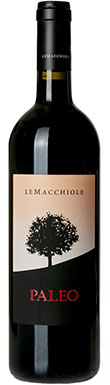
Le Macchiole's iconic Paleo has evolved from a Bordeaux-style blend into a unique single-variety expression of Tuscany's coastline. This pioneering 100% Cabernet Franc is sourced...
2021
Le MacchioleToscana
Eugenio Rosi, 19Venti21 Cabernet Franc, Vallagarina, Trentino-Alto Adige, Italy
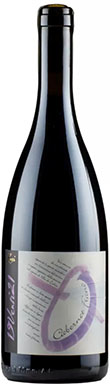
An idiosyncratic, rather elusive wine from Trentino's self-described ‘numero uno artisan winemaker’, blending three consecutive vintages of Cabernet Franc (2019, 2020 and 2021) from biodynamically...
Eugenio RosiVallagarina
Tenuta Sette Cieli, Scipio, Toscana, Tuscany, Italy, 2019
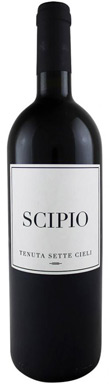
This limited-production (900 cases) 100% Cabernet Franc from organically farmed vineyards at 400m sits just outside Bolgheri's boundaries, hence its Toscana IGT designation. Grown on...
2019
Tenuta Sette CieliToscana
Gaja, Darmagi, Langhe, Piedmont, Italy, 2020
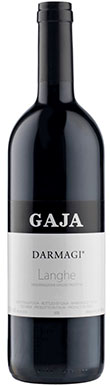
Ironically named Darmagi – meaning ‘what a pity’ in the Piedmontese dialect – stemming from Giovanni Gaja's reported lament at discovering his son, Angelo had replaced Nebbiolo...
2020
GajaLanghe
Tenuta Meraviglia, Maestro di Cava, Bolgheri, Superiore, Tuscany, Italy, 2019
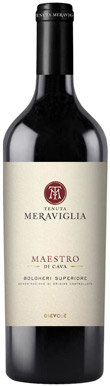
There's a lot going on in this 100% Cabernet Franc from select vines at 150m. Notes of smoky cedar, juicy blueberries, wild mint and amaro...
2019
Tenuta MeravigliaBolgheri
Colterenzio, Lafóa Cabernet Sauvignon, Südtirol, Trentino-Alto Adige, Italy, 2021
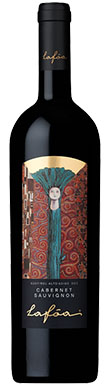
Almost black in colour, this 100% Cabernet Sauvignon is a South Tyrol star from a trailblazing cooperative who changed the entire wine region. The vines...
2021
ColterenzioSüdtirol
Pasqua, Mai Dire Mai Fear No Dark, Veneto, Veneto, Italy, 2020
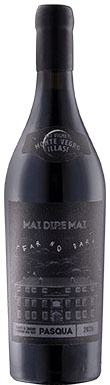
Fear No Dark is boldly challenging winemaking conventions. A distinctly mineral Cabernet Sauvignon (95%), blended with the local Oseleta (5%) and planted in a shadowy...
2020
PasquaVeneto
