
Catalonia’s exciting winemakers: the 14 names and wines to know
Independent thinking and a fearless vision characterise this region in Spain’s far northeast, where many producers are pushing the boundaries in Spanish wine. Meet 14 at the forefront of the action.


Among Spain’s regions, with their unrivalled patchwork of terroirs and old vines, Catalonia is often seen as something of an underachiever: a region characterised by the wholesale dominance of big players – of Cava and cooperatives; by a lack of confidence in its winemaking heritage.
Scroll down to see tasting notes and scores for 14 exciting wines from Catalonian
Thankfully this is changing. Across the region – a triangle of territory in Spain’s far northeastern corner – wines of individuality, vitality and terroir expression are being made by winemakers with a newfound confidence in their own grape varieties and their own land. Typically these are young winemakers who have travelled widely, have studied together, and now work in a spirit of community to learn, improve and promote their region’s identity.
Refreshed tradition
Priorat has had its Burgundy-style quality pyramid since 2019 (applied retrospectively from the 2017 vintage), and at about the same time the Corpinnat designation for quality Penedès sparkling wine emerged as a breakaway group of producers from the wider Cava category.
And such moves can only be for the good across the region, as Catalonia seeks to prove that it can stand among the wine world’s elite. But arguably a more intriguing story is happening at ground level, so to speak, in the less celebrated regions and overlooked appellations. These are places where winemakers are not so rigidly tied to appellation rules and have the freedom, as well as easier access to old vines and prime terroirs, to create their own legend.
If there is a common stylistic theme for the winemakers profiled – in no particular order – in the pages that follow, it is perhaps a pursuit of freshness, whether from earlier picking, or from working with grapes from more elevated sites, or from harnessing Catalonia’s enviable Mediterranean climate.
What is certainly common to them all is a focus on the vineyard, through which these winemakers are seeking not only to produce the highest-quality wines, but also to revive their soils, enhance biodiversity and ensure that their vines remain healthy and productive in the long term.
A good proportion of these winemakers do not add sulphur dioxide to their wines. But they would be hesitant to be referred to as ‘natural winemakers’, with the potential stigma this term can bring with it. They would say that they are simply making wines in the traditional way, and this is because their vineyards allow them to.
How fortunate we are that Catalonia gives us such a cornucopia of true terroir wines to enjoy.
Dominik Huber & Tatjana Peceric
Montsant; Priorat

Terroir al Límit is now one of the consecrated wineries of Priorat, the precursor of a new style of wines from the region with a focus on finesse and fragrance, rather than heft and extract. With Terroir Sense Fronteres, formidable winemaking duo Dominik Huber and Tatjana Peceric (also owner and oenologist respectively of Terroir al Límit) shine a spotlight on Montsant.
High in the Montsant mountains and just across the DO border from their prized Manyes vineyard in Priorat, they are free of the more stringent regulatory constraints of the Priorat DO and can take their obsession with finesse to its limit. Think filigree wines with low alcohol and zero oak (in fact, since 2019 they have abandoned oak entirely, selling their handsome collection of Stockinger foudres and replacing them with unlined cement tanks) – these wines would not be possible just a short walk across the DO border.
2021 saw an important development for TSF. This marked the first vintage in which the pair worked exclusively with Garnacha (their Negre cuvée used to include Cariñena, while the Brisat cuvée had a small proportion of Macabeo). 2021 also saw the addition of a new single-vineyard TSF wine: Marcenca, a typically precise and fine-detailed Garnacha from a plot at 800m altitude, which will be available in the UK from late spring 2023.
Terroir Sense Fronteres, Vèrtebra de la Figuera, Montsant 2021
Francesc & Joan Frisach
Terra Alta

In the mountainous south of Catalonia, at the seaward end of the Ebro river, DO Terra Alta is often overlooked in the search for high-quality Spanish wines. Its reputation seems to be based on producers aiming for bold, rich wines – but these are beginning to seem old-hat. Celler Frisach represents something different: wines with freshness and charisma, focused on letting old vines and high-altitude terroir do the talking.
Brothers Francesc, 35, and Joan, 33, run the Frisach family winery in Corbera d’Ebre. Their father converted to organic farming about 30 years ago and began selling his grapes to winemakers in 2005. The following year, one buyer pulled out of buying his grapes – so the boys made wine from them.
They have become an inspiration to other young winemakers who have moved to the region to make low-intervention wines. Focusing on Garnacha Blanca (Terra Alta is home to as much as 50% of Spanish white Grenache, according to the regional DO), Garnacha Negra and Garnacha Peluda (‘hairy’), along with Cariñena, Frisach wines are made without sulphur additions. Reds are always fermented with stems, typically in a semi-carbonic style in cement tanks, with stainless steel tanks and 3,000-litre foudres also used for ageing.
In keeping with Terra Alta’s traditional classification of white wines, they produce light vinos de virgen and richer vinos brisado. The latter, skin-contact wines can be wonderfully aromatic, with complex flavours, and so particularly gastronomic.
Celler Frisach, Sang de Corb, Terra Alta 2019
Fredi Torres
Priorat; Montsant

‘I always put myself in problematic situations, so I have to find a solution to escape,’ says Fredi Torres, restless spirit, former star DJ and talented, instinctive multi-region winemaker.
Inspired by a bottle of 1998 Clos Mogador, in 2004 Galicia-born Torres moved from his home in Switzerland to Catalonia with the intention of discovering Priorat. Eventually he persuaded winemaker René Barbier to give him a job, making a home in the picturesque Priorat village of Gratallops while ‘hunting around like a dog for a bone’ for the right vineyards so he could start his own winemaking project.
When he started to make wines for himself in 2005, the Priorats that he knew were big, ‘bodybuilder’ wines – products of late picking, heavy extraction, long maceration and 100% new oak. Looking for acidity, crispness and freshness, he realised he needed to pick earlier and extract less. ‘Today, everyone does that,’ he says, ‘but back then it was something different.’
But Torres didn’t stop in Priorat. Collaborating with his longtime friend Marc Lecha, he established Lectores Vini and ventured into neighbouring Montsant. In his view, this now-burgeoning appellation, established in 2001, spent a long time trying to emulate its more prestigious neighbour. ‘It took some time to find itself,’ he says, ‘but eventually I started to see something I liked.’
That translates to red wines with lots of fruit and lots of pleasure – his Garnacha-based La Selección (2018, US$18 Dandelion Wine Brooklyn) being the prime example. @freditorres
Lectores Vini, Classic, Priorat 2019
Oriol Artigas
Alella

Just 20km east up the coast from Barcelona, Alella is a wine region whose historical importance far exceeds its modest size. With a little more than 220ha under vine (according to INCAVI, the Catalan Institute for Vines & Wines), established in 1953 it is among the oldest DOs in Spain. In Roman times its wines were cited by Pliny the Elder and Martial, and in the Middle Ages it supplied wines to the Crown of Aragón.
Oriol Artigas was born in the region, in Vilassar de Dalt. Since 2011, he has made it his mission to recover some of Alella’s ancient coastal vineyard sites to produce playful yet pure minimal- intervention wines influenced by the Mediterranean sea and the mountains.
About 70% of his domaine is planted with Pansà Blanca – the local name for Xarel.lo, massal selections of which have been central to Alella viticulture for centuries. His skin-contact La Bella cuvée, made from a single plot of Pansà Blanca on the region’s distinctive sauló white granitic sand, is emblematic.
A further 20% is planted with Garnacha Negra, the rest comprising a mix of different varieties – including a centenarian plot of 30 co-planted varieties which goes into his La Prats cuvée (£45 Dynamic Vines).
In 2020, a catastrophic attack of mildew wiped out about 90% of Artigas’ crop. Facing ruin, he was rescued in a way that reveals the spirit of collaboration and solidarity that seems to be inherent in the young winemakers of Catalonia. More than 20 grower/winemaker friends from across the region and beyond stepped up to offer Artigas grapes to produce a special ‘SOS’ series of 2020 cuvées (£24-£32 Dynamic Vines, Natty Boy Wines). This concerted act of charity saved the vintage and enabled Artigas to continue in his mission to preserve and celebrate the winemaking heritage of Alella. @oriol.artigas
Oriol Artigas, La Bella, Alella 2019
Leo & Roc Gramona
Alt Penedès
Cousins Leo and Roc Gramona are scions of the Gramona family – to many the ne plus ultra of Cava winemaking in Alt Penedès since the middle of the 19th century. They launched their L’Enclòs de Peralba project in 2018. Already they represent a clear demonstration of the potential for fine terroir whites from the higher reaches of Penedès.
‘Basically what we’re trying to do is recover the style of wines which existed here before the explosion of sparkling and commercial wines in our region,’ Leo explains, ‘using those ancient local grapes which have been neglected because they are not so productive.’
Roc is something of a pruning guru. Along with his father Xavier, he launched the influential Acadèmia de Poda – the first Spanish school of pruning – which teaches a new generation of Spanish grower-winemakers ‘respectful pruning’ – a traditional, pre-trellising pruning method that promotes longevity and disease resistance in the vines.
Leo and Roc have sought out old, north-orientated vineyards from which to produce their wines. They make two wines using Xarel.lo (Leo says Xarel.lo has the best capacity for ageing) along with two single-site Garnacha Blancas, one single-site Macabeo and two Malvasia de Sitges, both entry-level still and pét-nat styles. The latter variety, which was popular before the Cava boom, majors in aromatics and acidity. Leo casts it as the future ‘Riesling of Penedès’. From late 2023, expect to see a top tier of wines from the vineyard plots the cousins regard as ‘grands crus’. @enclosdeperalba
L’Enclòs de Peralba, Betzinera 2020
Alfredo Arribas
Montsant

Neither an emerging winemaker nor a young blood, Alfredo Arribas is nevertheless a searching soul, and one in a constant pursuit of elegance and complexity in his wines.
A celebrated Barcelona architect with some family history of winemaking in Catalonia, Arribas created his Clos del Portal winery back in 2001 and built an enviable reputation based on the refinement of his Portal del Priorat wines.
His desire to reach new heights – both figuratively and literally – took him to higher elevation in Montsant. His SiurAlta wines, part of his minimal-intervention Vins Nus (‘naked wines’) range, are produced from vineyards at 700m-800m in the dramatic Cornudella de Montsant area (also favoured by Terroir al Límit winemaker Tatjana Peceric for her excellent Coreografia wines) and the Montsant natural park.
While Montsant is invariably eclipsed by Priorat – or dismissed for making flabby, fruity wines that don’t quite hit the sensorial heights of its neighbour – Arribas’ SiurAlta wines provide a clear indication that this is an appellation to watch closely. These wines are laser-focused, with taut acid and electric energy.
Vins Nus, SiurAlta Orange, Montsant 2021
Joan Rubió
Penedès

In the plains of Penedès, Xarel.lo grows in abundance, mostly for use in industrial Cava. But what Joan Rubió is doing here is very different. He makes natural wines of amazing precision, with a commitment to restoring the heritage of his family while also asserting his own winemaking identity.
The former head of oenology at Recaredo, Rubió is an authority on biodynamic farming and during his 14 years at Recaredo he helped to convert this prestigious Cava house’s entire 50ha estate to biodynamics.
Like many other Penedès wine-growing families, the Rubiós stopped making wine in the 1980s when the Cava behemoths monopolised the local industry. Joan took over management of the family’s vines in his 20s, but while he continued to sell grapes to the big Cava houses, he always held an ambition to make wine for himself. In 2015, Rubió left Recaredo to open his Tiques winery and create the wines he always dreamed of making.
Rubió’s family has always grown Xarel.lo and Macabeo, and these varieties dominate his output, in both varietal whites (his flagship Tiques, as well as Essencial and Obstinat for Xarel.lo; Joanots for Macabeo) and the blend Nituix (2018, £25 Raw Wine) with varying levels of skin maceration. He also makes two outstanding Ancestral pét-nats, made from Xarel.lo and the red Monastrell.
Tiques, Ancestral Xarel·lo, Penedès 2019
Josep & Joan Anguera
Montsant

With its diversity of Mediterranean-influenced rocky terroirs, one might expect Catalonia to be the home of fine Garnacha. Strange, then, that despite there being a little more than 4,000ha of the variety in the region [plus some 1,900ha of white Garnacha Blanca, according to INCAVI, the Catalan Institute for Vines & Wines] – with huge clonal diversity – world-beating examples remain somewhat thin on the ground.
The likes of Alvaro Palacios (who now uses as much as 90% of Garnacha in his iconic L’Ermita), Scala Dei and, latterly, the Terroir al Límit offshoot Terroir Sense Fronteres have drawn welcome attention to the limitless potential of Catalan versions of the grape, but Joan d’Anguera is arguably not credited enough. Over the past decade, brothers Josep and Joan Anguera Pons, the seventh generation of the Angueras to make wines in Darmós, have dramatically rethought their family winemaking operation. In the vineyard, they gained Demeter biodynamic certification, increased plantings of Garnacha and Cariñena and began training their vines using lower-yielding gobelet pruning. In the cellar, they began to favour whole-bunch fermentations and, thanks to their work in the vineyard, were able to reduce use of sulphur.
The fruits of their tireless labour are wines that have reached an unprecedented level of refinement – and Garnachas, specifically, which now draw
comparisons to some of the best Grenache producers in the world.
Joan d’Anguera, Altaroses 2020
Joan Ramón Escoda
Conca de Barberà

While not exactly a new kid on the block, Joan Ramón Escoda is certainly young at heart and deserves a prominent mention in an article on exciting Catalan producers, owing to the novelty and personality of his wines.
Based in Prenafeta in DO Conca de Barberà, Escoda is a Catalonian natural wine pioneer (along with the likes of Partida Creus, nearer the coast in Baix Penedès), and has been making highly individual wines without sulphur since 2005. He and his friend Laureano Serres founded PVN (Asociación de Productores de Vinos Naturales), the first natural wine association in Spain. Together they also host H2O Vegetal, a natural wine fair which sees natural winemakers and enthusiasts from around the world flock eagerly to this part of Catalonia every year.
A small, easy-to-overlook appellation sandwiched between Penedès, Costers del Segre and Tarragona, Conca de Barberà is most often associated with the Trepat variety, but at Escoda-Sanahuja, Mario Rovira with wife Maria the wines are based on a rich mix of local and international varieties: Garnacha Negra and Blanco combine with Sumoll, Cariñena, Merlot, Cabernet Franc, Chenin Blanc, even Pinot Noir (his La Llopetera is arguably the best Pinot in Catalonia, and therefore Spain). And while purists might question the presence of Chenin and Pinot in Mediterranean Spain, when your wines are as good as this, all tends to be forgiven.
Escoda-Sanahuja, Els Bassots, Conca de Barberà 2021
Mario Rovira
Alella

Barcelona native Mario Rovira cut his teeth working with Jean-Claude Berrouet at Château La Fleur-Pétrus in Pomerol, Bordeaux, also gaining broad experience in New Zealand, California and Jerez, before returning in 2011 to start his Akilia project in Bierzo, northwestern Spain. Three years later, he began making unfortified Palomino, working with grapes from specific types of albariza soil in Sanlúcar de Barrameda, before turning his attention to his homeland. In 2018, Rovira leased a 2.5ha plot of Pansà Blanca (Xarel.lo), Macabeo and Syrah vines just 100m from the Mediterranean coast in Tiana, DO Alella. For Rovira there is a striking similarity between Tiana and Sanlúcar de Barrameda – the proximity to the sea, the white soil, the fine, saline expression of the wines. ‘The soil in Tiana is beautiful for this kind of wine,’ he says.
Rovira also reserves praise for Alella’s Pansà Blanca – its salinity, acidity and its ability to achieve phenolic ripeness with low alcohol (he often picks at 10 degrees). His La Flamenca cuvée represents the bulk of his production here. The grapes are picked early, the juice is macerated with skins for two weeks and the wine is aged in a combination of stainless steel tank, ceramic egg and a manzanilla barrel previously used for his Palomino. The result is a wine driven by tension and minerality – something of a signature for Rovira, wherever the wine is made.
Mario Rovira, La Flamenca, Alella 2019
See tasting notes and scores for 14 exciting wines from Catalonia
Related articles
- 10 Spanish grapes to discover
- Rioja’s rising stars: the winemakers to watch out for
- Regional profile: Jumilla plus 10 wines worth seeking out
Tiques, Ancestral Xarel·lo, Penedès, Catalonia, Spain, 2019
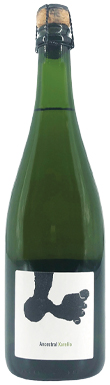

Made by Joan Rubió, ancestral-method sparkling from Xarel.lo grown on clay-limestone soil. The grapes were macerated with skins for seven days and fermented in bottle,...
2019
TiquesPenedès

L'Enclòs de Peralba, Betzinera, Catalonia, Spain, 2020
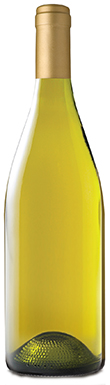
From a single vineyard owned by the Gramona family with vines aged about 60 years. Such finesse. Fresh and refined with crystalline citrus, white flowers...
2020
L'Enclòs de Peralba
Escoda-Sanahuja, Els Bassots, Conca de Barberà, Catalonia, Spain, 2021
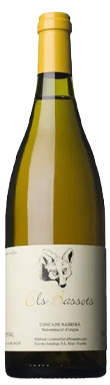
A Chenin Blanc from the estate's Els Bassots vineyard – 15 days on skins and six months' ageing in amphorae. Stubbornly reductive but repays patience...
2021
Escoda-SanahujaConca de Barberà
Oriol Artigas, La Bella, Alella, Catalonia, Spain, 2019
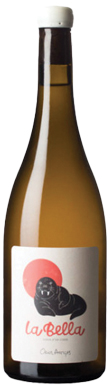
From a single vineyard of old-vine Pansa Blanca, macerated with skins for two weeks. Oriol Artigas regards this wine as a good representation of the...
2019
Oriol ArtigasAlella
Mario Rovira, La Flamenca, Alella, Catalonia, Spain, 2019
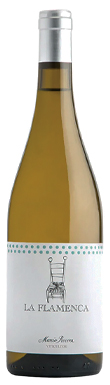
A beautiful nose with mellow whisky-like woodspice and camomile flowers. Creamy, glycerol-y, then very saline on the palate, with bruised apple, lemony citrus and yellow...
2019
Mario RoviraAlella
Vins Nus, SiurAlta Orange, Montsant, Catalonia, Spain, 2021
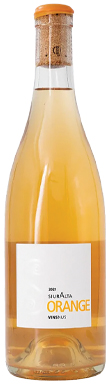
Garnacha Blanca, Malvasía and Cariñena Blanca grapes come from selected plots at about 800m in the Sierra de Montsant natural park. A fascinating orange wine...
2021
Vins NusMontsant
Terroir Sense Fronteres, Vertebra de la Figuera, Montsant, Catalonia, Spain, 2021
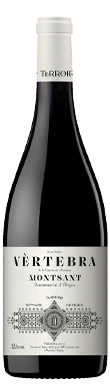
Wow. Tatjana Peceric and Dominik Huber really are extremely good at what they do. This is an extraordiinarily fine Garnacha, so elegant, so beautifully balanced,...
2021
Terroir Sense FronteresMontsant
Celler Frisach, Sang de Corb, Terra Alta, Catalonia, Spain, 2019
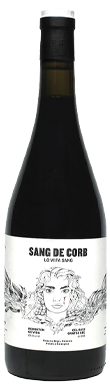
From a co-planted old vineyard of Garnacha Tinto, Garnacha Peluda and Cariñena, this is truly representative of Terra Alta's heritage. Francesc Ferré says: 'We want...
2019
Celler FrisachTerra Alta
Joan d'Anguera, Altaroses, Catalonia, Spain, 2020
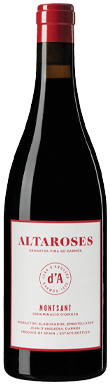
The 'village' Garnacha of seventh-generation brothers Josep and Juan, from relatively young vines. Immediately rich and floral with fruit recalling cherry lips and strawberry bootlaces,...
2020
Joan d'Anguera
Lectores Vini, Classic, Priorat, Catalonia, Spain, 2019
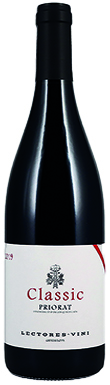
Beautifully elegant and aerial blend of Garnacha, Cariñena and Syrah, despite its 14.5% alcohol. It packs in all the the black fruit, spice and structure...
2019
Lectores ViniPriorat
