
Cesanese: The winemakers restoring Lazio’s noblest grape
Once favoured by the Popes and epicures of ancient Rome, Cesanese is the noble Italian grape you’ve never heard of. Now winemakers in its historic home of Castelli Romani are rising to the challenge of working with this difficult variety to restore its unique appeal.


It was in 2019, while eating at the great Roman trattoria Cesare al Casaletto, that murmurs of Cesanese’s renaissance became palpable.
It was a long Sunday lunch, and amid the cacophony and the blue-rinse set, a group of sommeliers and food journalists sat nearby. Eschewing international varieties for the indigenous, or autochthones in Italian parlance, the table ordered bottle after bottle of Cesanese, a grape that is said to have been a particular favourite of 13th-century popes Innocent III and Boniface VIII.
Pushing the tome of a wine list aside, it made sense for me to do the same – after all, it seemed absurd that a curious drinker would opt for anything but something local, given that Italy boasts the world’s greatest bounty of indigenous varieties used for wine.
Scroll down to see notes and scores for six characterful Cesanese wines
While the exact number is disputed, the authorised number is in excess of 350, smattered across 20 wine regions; however, if hybrids and forbidden grapes, Vitis vinifera or otherwise, are included, the number surely exceeds 500.
Cesanese is today the quintessential Roman variety, and surely Lazio’s most exciting. The precise etymology is hard to pin down, but a place named Cesano in the Castelli Romani region south of Rome is thought to have inspired the grape’s name.
Anthropological records trace it to the era of the Etruscans and then the heady days of the Roman empire, when it was sweet and, later, a little effervescent (according to Mary Ewing-Mulligan MW and the late Ed MacCarthy in their 2001 Italian Wine For Dummies).
In essence, Cesanese was a civilising agent of the ancient Romans, pre-dating any wine from Tuscany or France – the Gauls would largely still have been drinking beer.
A steep decline
Skipping to the more recent past, during the 1960s and ’70s much of Lazio’s viticulture was abandoned as post-war industrialisation drew rural workers to factories in the cities.
Other than olive trees, little replaced it, resulting in an expanse of old vines trained in inconsistent ways, with production geared largely towards volume over quality. Many Cesanese vineyards were effectively mothballed.
While these remained largely unscathed, in vineyards that were left untended indefinitely, many vines died. In other cases, Cesanese vines were grubbed up to be replaced by in-vogue international varieties.
By the 1990s Cesanese was in danger of extinction across its spiritual turf in the Castelli Romani, which encompasses Cesanese di Affile DOC and Cesanese di Olevano Romano DOC in the province of Rome, and Cesanese del Piglio DOCG – the only red DOCG in Lazio – in the province of Frosinone. All lie about 50km in a straight line east of the capital.

As the capital of Italy – the largest wine-producing country in volume terms – Rome is thirsty. Yet this has been both a benefit and a bane. It is easier, after all, to sell an average house wine as ‘what locals drink’ than it is to sell a superior expression at a price that’s able to sustain both grower and winery.
Consequently, most Cesanese wines became industrial plonk, foisted on locals who no longer cared, as well as the hordes of tourists who knew nothing of its illustrious past.
The DOC/G zones named above boast a distinctive sub-alpine aura, particularly when one climbs to Acuto, the highest commune within Cesanese del Piglio, where vineyards are planted up to 600m. Mediterranean scrub is replaced by pine as volcanic clay, sand and alluvial soils on the lower undulations give way to calcareous marl and mineral-infused limestone.
Prominent winemaker Gabriele Graia, who works with a number of the local producers, explains: ‘The hillsides were covered in vines before it became more economical to plant olives.’
Who knows how high the earlier vineyards went? With that in mind, who knows how high the new vanguard may take them in the quest for fresher, more filigree wines?
A challenging variety
A black-skinned grape, Cesanese has challenges ripening. Its alcohol levels often soar before its phenolic constituents – the skins, pips and stems – ripen fully, leading to obvious challenges in the face of a warming climate.
As well as reducing yields using different pruning techniques, higher-density planting, or organics and biodynamics, quality-focused producers seek to speed up the physiological ripening process in order to harvest fruit at lower levels of alcohol, while retaining acidity, to befit fresher, more poised and more drinkable wines.
Complex, firm and yet paradoxically almost gossamer of texture, with modest anthocyanin levels (which give colour to wines), Cesanese offers a flavour spectrum of mulberry, bergamot, chicory and a whiff of something alpine; call it spruce, perhaps.
The best examples today have a semblance of the Schiava wines of northeastern Italy, or Nebbiolo from Alto Piemonte.
When it comes to maturation, Cesanese seems best suited to larger-format neutral wood, or better still, concrete and/or amphorae, such as at Terre del Cesanese, a winery which shows great promise.
The porosity of these vessels wards off the variety’s reductive tendencies (when a lack of oxygen can produce odorous sulphur compounds in the finished wine), while helping to polymerise tannins (contributing to overall structure) and soften any green edginess.
Cesanese’s tannins are assertive enough without a bulwark of obvious oak, or overzealous extraction.
The stunning cuvées at the family-owned Piglio winery La Visciola illustrate this point, particularly the delicate single-vineyard Ju Lattaro 2021 and sturdier Mozzatta 2021 (see recommendations below), both among Italy’s most exciting wines.
La Visciola eschews oak altogether, having ditched every one of its barrels following the 2020 vintage. Winemaker Piero Macciocca and his partner Rosa Alessandri’s smiles light up the room when asked how tannins so immaculately wrought are achieved.
Macciocca responds that Cesanese’s struggles to ripen demand intensive work in the vineyard, vindicating the practice of organic farming at the estate since the 1960s, and certified biodynamic farming since 2005.

Three Cesaneses
According to Istat data for 2023, Lazio makes up a mere 2% of Italian wine production. Beyond statistics, though, it’s important to be specific about which Cesanese we are talking about.
There are two main varieties, and no, these are not biotypes, or strains, born of Darwinian adaptation to the environment. Nor are they clones, propagated from high-performing mother vines’ to ensure favourable colour, concentration or whatever the desired characteristics in a wine may be. Rather, each variety of Cesanese shows distinct morphological and isoenzymatic differences.
Most prominent is Cesanese di Affile, followed by Cesanese Comune. While both boast winged, rather compact bunches, di Affile’s are shaped like an ancient pyramid while Comune’s are more cylindrical. This said, there are several biotypes of each variety in existence, with considerable clonal research carried out at the Istituto Sperimentale per l’Enologia, in the town of Velletri.
The rare Cesanese di Castelfranco, also known as the ‘black Cesanese’, appears sporadically in the northeast of Lazio. It is of modest vigour and looser bunches than the main two varieties, and sometimes has just one wing and a distinct spheroidal shape. As the name suggests, it is denser of hue, verging into blueish black.
There was a mere 328ha of Cesanese Comune in 2016, while Cesanese d’Affile was at 372ha in 2010 before rocketing to 535ha, according to a 2017 census (by Anna Carbone et al of the state of Lazio’s wine and viticulture body ARSIAL).
Today, these figures are surely on the increase as Cesanese’s potential is further realised, and the affordability of land and the template of old vines entices many who grew up here to return.

Rising stars
Gabriele Graia, for example, was raised in Rome and began studying computer engineering before shifting to oenology and viticulture. An itinerant winemaker, Graia is responsible for the suite of Pinot Noir wines produced at Bodega Chacra in Patagonia, Argentina.
He worked for Andrea Franchetti at Tenuta di Trinoro in Tuscany and Passopisciaro on Etna, and reports with glee that Franchetti’s fondness for Cesanese served as impetus for him to take his original cuttings from Piglio. Today, Cesanese is planted at both Franchetti estates.
As well as international appointments, Graia fronts local project Abbia Nòva in Piglio, while boasting a string of consultancies including Terre del Cesanese in Affile, and Cantina Colle Gioie and local stalwart Maria Ernesta Berucci in Piglio.
All of these specialise in Cesanese, largely of the minimal-interventionist school. Excellent samples from amphorae were available at Terre del Cesanese when I visited, while Colle Gioie’s wines show freshness and a relaxed ease.
Berucci’s wines are delectably idiosyncratic, her Rosato 2022, the hue of a lighter red and just as versatile, delivering salted plum, camphor and alpine hints, bound by a sinewy tannic twine.
Damiano Ciolli (above) of the eponymous estate grew up in Olevano Romano. Before the 2001 vintage, his first with partner Letizia Rocchi, he made bulk wine with his father.
In terms of personality, Ciolli is salt of the earth, while Rocchi is sinew and discipline, splitting her time as winemaker with Kestrel Vintners in Washington State, USA. Her laser focus earned her a PhD in grapevine physiology and winemaking – they make a formidable team.
‘This is the birthplace of Cesanese and I want to make wine to show how good it can be’, Ciolli says.
His gorgeous Cirsium 2015 (today called ‘Riserva’) is tough to beat!
The taste of Lazio: Six Cesanese wines
Related articles
- Barolo vs Barbaresco vs Brunello: What’s the difference?
- Baudains: Italy’s frizzante tradition returns
- Decanter’s rare finds: A journey through Italy’s lesser-known varieties
Maria Ernesta Berucci, Raphaël Rosato del Frusinate, Lazio, Italy, 2022
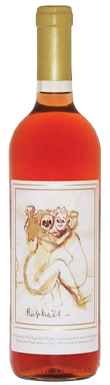

Absolutely delicious, if on the weightier side, suggestive of a lighter red. A musky hue, with aromas of chestnut, campfire, satsuma and camphor leading to...
2022
Maria Ernesta Berucci

La Visciola, Priore Mozzatta, Cesanese del Piglio, Lazio, Italy, 2021
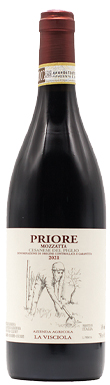
A dark wine in the context of the estate. Dark cherry, gardenia, chestnut and shiitake mushroom, brimming with a ferrous, umami-like dashi note. An alpine...
2021
La VisciolaCesanese del Piglio
La Torretta, Marciana Cesanese, Lazio, Italy, 2022
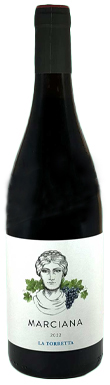
Hints of bitter menthol, chicory, black cherry and gardenia. Gently midweight, this is a wine of levity, crunch and sass. The tannins are gently sooty,...
2022
La Torretta
Carlo Noro, Collefurno Cesanese, Lazio, Italy, 2020
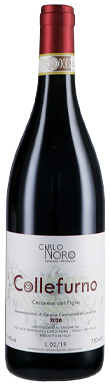
Edgy and natural, with its low-SO2 evident in its biting tannins, brisk freshness and jolt of volatility that stings the nostril hairs. Yet everything is...
2020
Carlo Noro
Damiano Ciolli, Silene Superiore, Cesanese di Olevano Romano, Lazio, Italy, 2022
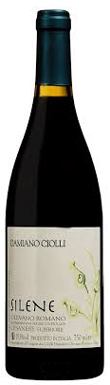
The idea with Silene is to craft a midweight vin de soif, according to Damiano Ciolli. The organically grown grapes are handled in stainless steel...
2022
Damiano CiolliCesanese di Olevano Romano
Cantina Colle Gioie, Col le Radici, Cesanese del Piglio, Lazio, Italy, 2023
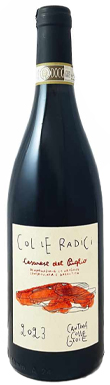
A bright, subtly reductive expression crafted in tank, this midweight Cesanese is brimming with vitality. It combines blue fruits with dried thyme, musk and lilac....
2023
Cantina Colle GioieCesanese del Piglio
