
Champagne: What happens when a new chef de cave takes over?


The role of chef de cave is integral to any Champagne house. But what happens when it is time to hand over the art of blending to a newcomer? Anne Krebiehl MW talks to four pairs of winemakers to find out...
Blending Champagne is an art. Most Champagne is the antithesis of a single-vineyard wine, a carefully calibrated composition made from numerous base wines: different grape varieties, different sites, different vinification methods, and different vintages.
Scroll down for Anne Krebiehl MW’s top two Champagnes from each house
Achieving consistency takes more than skill: it takes experience, intuition and imagination. But how do you train for that? By transmitting knowledge from one chef de cave to another – while the world around them keeps changing. Sometimes it’s a more or less carefully planned handover, sometimes it’s family succession. Either way, the aim is for the changeover to be imperceptible in the final wines.
All of the Champagne houses profiled below acknowledge that the handover is a mutual exchange rather than a one-way street. Becoming chef de cave is a slow process of assimilation. The transition is a curious mix of preservation and renewal; responsibility and possibility; evolution and aspiration.
Billecart-Salmon
François Domi & Florent Nys

When outgoing chef de cave François Domi joined Billecart-Salmon in 1985, he worked alongside Jean Roland-Billecart himself who, at 94, still forms part of the house’s tasting committee. It was Roland-Billecart who defined the delicate, taut and long-lived house style by introducing very cool, slow ferments of the base wines. Domi made his first assemblage together with Roland-Billecart in 1989 and the first of his own in 1990.
Florent Nys joined Domi in 2005 and took over as chef de cave in January 2018. This amounts to 33 years at the company for Domi, who now continues on the tasting committee, and 13 for Nys. ‘My first assemblage was the brut and the brut is always the most difficult,’ Domi remembers, meaning the Billecart- Salmon Brut Réserve. ‘It starts with a blank sheet. It’s difficult to describe what a pleasure it is to blend all these wines and to work out what the best assemblage is. It is the most interesting task of all.’
Domi stresses the idea of a continuous quest for improvement, in equipment, in the team, in all technical aspects, but always based on achieving and finding the best quality of grapes. He explains how much the house has grown: ‘We have quadrupled our volume from 500,000 bottles a year to two million, while maintaining the same quality. We have also expanded our range. We used to have brut, rosé, blanc de blancs millésime and Nicolas-François; just four. Today we have 10 different wines. But the spirit of the house hasn’t changed at all. We’re always pushing things to the limit and question everything.’
Nys, who is a little shy, has submitted a suggested assemblage to the Billecart tasting committee for the past three years. Together with Domi he was responsible for the assemblage of the Bicentenary Cuvée, which was released in summer 2018 to mark the house’s 200th anniversary. Does he feel ready to step into his new role? ‘Yes, I feel ready… I think,’ Nys confesses and laughs before emphasising that ‘every year things are very different.’ Domi pauses when asked what it takes to be a chef de cave. His answer is telling: ‘You can achieve 99% with a good assemblage, but it is that last one percent that is the most important thing.’
Champagne Gosset
Odilon de Varine & Gabrielle Bouby-Malagu

Both transition and consistency are in the very DNA of Champagne’s oldest maison. Champagne Gosset was founded in 1584 and each chef de cave takes his or her place in that succession. Current manager and chef de cave Odilon de Varine immediately says about his adjunct chef de cave Gabrielle Bouby-Malagu: ‘I have nothing to teach her. She is a brilliant oenologist with great experience in Burgundy and Champagne, so she doesn’t need any help.’
De Varine had been chef de cave at Champagne Deutz before he joined Gosset as a managing director in 2006. When Gosset’s chef de cave Jean-Pierre Mareigner died suddenly in 2016, de Varine took over, ‘as a sort of interim chef de cave’. De Varine explains that he had worked closely with Mareigner for 10 years, on vinification, assemblage and dosage.
‘Pierre needed to have a second opinion. That’s why it’s very important to work with Gabrielle because we, too, need two opinions,’ comments de Varine. ‘The idea of the house is to make it grow – and I do not mean volume, I mean to grow in spirit. Handing over to Gabrielle involves us making the assemblage together. She does not need training as such, just the spirit of mind – because technically I have nothing to teach her.’ Here he looks to the house’s history: ‘You don’t have to be part of the family in order to be a piece of the puzzle. It’s about understanding the style, the different cuvées and learning to express them.’
Bouby-Malagu, who joined in June 2017, says she has a nervous tendency: ‘We’ve set the bar very high. But it’s easy to work with Odilon because he’s calm – the opposite of me. Between the two of us we result in a normal ‘It’s about understanding the style, the different cuvées and learning to express them’ Odilon de Varine person,’ she laughs. ‘I am also impatient, because the wines are fermenting…’ She is eager to see how this vintage will turn out.
Bouby-Malagu loves the quality and diversity of terroirs she can work with at Gosset, and the way the long ageing softens the steely acidity. Gosset always avoids malolactic fermentation: ‘I discovered the power of this style of wine. At first I was scared, but while the acidity is present, it is balanced with aroma and structure.’ She clearly relishes the challenge. There is no set time for the formal takeover of the role – but de Varine adds: ‘She’s already doing the job.’
Champagne Bruno Paillard
Bruno Paillard & Alice Paillard

Champagne Bruno Paillard is still run by its founder, Bruno Paillard. Over the past 37 years he has managed to build a remarkable and often ground-breaking house. His daughter, Alice Paillard, joined him in 2007. While there has been a chef de cave for the past 24 years, it is Bruno and Alice who make the assemblage. ‘It is about creation and interpretation,’ Alice says, when she talks about blending the base wines each year. ‘All the existing cuvées of this house were created by my father, and each year we reinterpret what the nature of our terroir gives us.’
Bruno famously makes the assemblage by smell only, never by taste. Alice likes to taste the wines on her own, even without looking at the names of the villages where the base wines are from, in order to avoid being influenced by preconceptions. Her training followed seamlessly from a childhood in which she and her siblings were taught to pay attention to their senses, in food, in nature and in wine.
‘Taste, smell, vocabulary and emotion – even before we were able to taste we had this sensation that there was something great about wine. I think this is important. Taste and smell are capacities which one trains since childhood, without even realising it. It’s not something that developed only when I started working here. Of course my father has taught me a lot, but it has always been part of my memory.’ Bruno echoes her sentiment, explaining: ‘The composition of Champagne is not just physical, it’s also intellectual. Knowing how each instrument in the orchestra will play in the end is difficult. It’s difficult to know intuitively. It is a lot to do with memory.’
‘We have already had 10 years together, something very alive,’ continues Alice. ‘My father built this maison and we are looking at this beautiful heritage, but we always need to challenge it in some aspects and cherish it in others; never confuse tradition and folklore. It is always the manner that evolves, but the spirit stays exactly the same.’ Bruno is clear: ‘We have already done the most important thing: education and respect. We have done that with all four of our children. Respecting time and Mother Nature and making something you can be proud of: this was the way we raised our children and the way I have run this maison.’ Alice turns to her father: ‘The lesson you have always taught me is to take the luxury of time when it comes to wine.’
Dom Pérignon
Richard Geoffroy & Vincent Chaperon
At Dom Pérignon, the handover is a matter of slow, continuous relay. In January 2019, Vincent Chaperon will take over from current chef de cave Richard Geoffroy (pictured top). He in turn took over from Dominique Foulon, who held the role between 1975 and 1990. What did Geoffroy change during his 28-year tenure? ‘Vincent and I believe we have brought playfulness into the winemaking,’ he answers. ‘We look back at all our artist collaborations… Then there has been so much [innovation] in viticulture and winemaking. We created the Plénitudes [late-release vintages], pushed the rosé… I call it playfulness.’
He is clear about his task: ‘The job of chef de cave at Dom Pérignon is not necessarily hands-on. It’s more about showing direction, putting things in perspective. I keep explaining to Vincent that the scope of responsibility is so broad you have to position yourself at the right level. Dom Pérignon constantly needs to be put back into the perspective of time. When you consider that a single blend, a single vintage, takes 10 years, it gives you a timescale. You cannot shift things rapidly. You test one thing in the vineyards or the winery, it takes 10 years to be checked and approved, and then it’s got to be cross-checked and confirmed. So voilà.’ He gestures to hold back, take things slow.
Taking over the position was not a given for Chaperon, who has been with parent company LVMH since 1999 and has worked alongside Geoffroy since 2005. He remembers his soul-searching: ‘Would I have the potential to add something? You are not here to be a guardian. Dom Pérignon needs people that are alive to reinvent the patrimony and the savoir-faire. Do I have that energy, that desire? Can I add something?’
Now he is fully on board. ‘I have been learning, listening, helping in these past 18 years. I have some idea of what I have to do,’ he says. ‘As Richard said, I have to take a distance from a lot of constraints, project for the long term, start to build,’ he adds. ‘Today we work on the wine we will sell in 2029. For the next 10 years we will release Richard’s wines. You work for 2030 and have to project yourself. You work for the future. There is a big team behind this and you are at their service, to help them and to have the collective vision.’
Anne Krebiehl MW is a freelance wine writer, educator, consultant and judge.
See Anne Krebiehl MW’s top two Champagnes from each House
You may also like
Producer profile: Dom Pérignon Champagne
First taste: Bruno Paillard launches Dosage: Zero
First taste: Gosset Grand Blanc de Meunier Champagne
Billecart-Salmon, Brut Rosé, Champagne, France
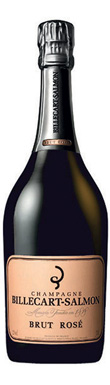

Based on the 2020 vintage, Billecart-Salmon's signature rosé appears to be on its finest form of recent years under cellar master Florent Nys, full of...
Billecart-Salmon

Billecart-Salmon, Cuvée Nicolas François, Champagne, France, 2002
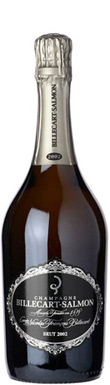
This continues to make its case as the top Cuvée Nicolas François of recent times, showing brilliant harmony and balance with no signs of slowing...
2002
Billecart-Salmon
Gosset, Grande Réserve Brut, Champagne, France
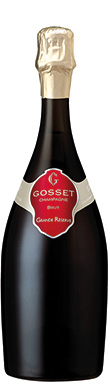
Rich nose of hazelnut, fig, and verbena. Fresh buttery, yeasty palate with lovely train of citrus and floral notes; shows autolytic depth.
Gosset
Bruno Paillard, Première Cuvée Extra Brut, Champagne, France
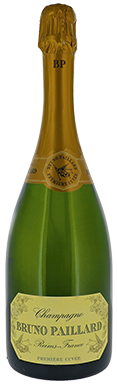
A whiff of flint precedes fresh lemon notes that pervade the entire wine with vivid freshness. The palate is taut and bright, with a rather...
Bruno Paillard
Bruno Paillard, Première Cuvée Rosé Extra Brut, Champagne, France
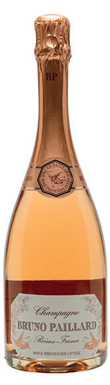
There’s a touch of orange peel on the nose along with notes of tart red fruit. Despite the lightness and delicacy, there is concentration on...
Bruno Paillard
Dom Pérignon, Champagne, France, 2008
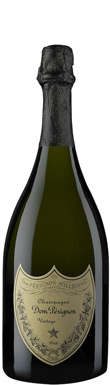
<p>Dom Pérignon is named after 17th-century Benedictine monk Dom Pierre Pérignon (1638-1715), who is said to have invented sparkling wine while cellarmaster at the Abbey...
2008
Dom Pérignon
Dom Pérignon, Champagne, France, 2005
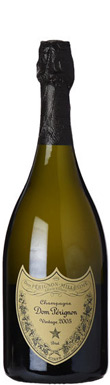
2005 was a tricky vintage, with rain and botrytis punctuating the sleep patterns of the vigneron. It was harvested at great speed, quite the opposite...
2005
Dom Pérignon
Billecart-Salmon, Brut Rosé, Champagne, France
Based on the 2020 vintage, Billecart-Salmon's signature rosé appears to be on its finest form of recent years under cellar master Florent Nys, full of...
Billecart-Salmon
Billecart-Salmon, Cuvée Nicolas François, Champagne, France, 2002
This continues to make its case as the top Cuvée Nicolas François of recent times, showing brilliant harmony and balance with no signs of slowing...
2002
Billecart-Salmon
Gosset, Grande Réserve Brut, Champagne, France
Rich nose of hazelnut, fig, and verbena. Fresh buttery, yeasty palate with lovely train of citrus and floral notes; shows autolytic depth.
Gosset
Bruno Paillard, Première Cuvée Extra Brut, Champagne, France
A whiff of flint precedes fresh lemon notes that pervade the entire wine with vivid freshness. The palate is taut and bright, with a rather...
Bruno Paillard
Bruno Paillard, Première Cuvée Rosé Extra Brut, Champagne, France
There’s a touch of orange peel on the nose along with notes of tart red fruit. Despite the lightness and delicacy, there is concentration on...
Bruno Paillard
Dom Pérignon, Champagne, France, 2008
<p>Dom Pérignon is named after 17th-century Benedictine monk Dom Pierre Pérignon (1638-1715), who is said to have invented sparkling wine while cellarmaster at the Abbey...
2008
Dom Pérignon
Dom Pérignon, Champagne, France, 2005
2005 was a tricky vintage, with rain and botrytis punctuating the sleep patterns of the vigneron. It was harvested at great speed, quite the opposite...
2005
Dom Pérignon
