
Champagne panel tasting: Bottles to look for under £40
See our expert panel's top recommendations for grower, supermarket and own-label Champagne under £40 below, plus tasting notes & scores for all 79 wines submitted...


Scroll down to see the full report, tasting notes and scores
Our tasters each pick their three best Champagnes under £40 from the tasting:
Simon Field MW
Field was a buyer for Berry Bros & Rudd for more than 20 years and now consults on areas that particularly interested him during that time, with the Rhône, Languedoc and Champagne topping the list in France, and Spain and the fortified category also featuring prominently.
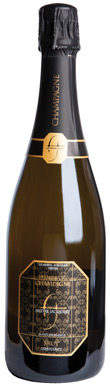
André Jacquart, Expérience Blanc de Blancs Brut 1er Cru NV
Not to be confused with the large co-op, André Jacquart makes exemplary Chardonnay Champagnes in the villages of Vertus and Le Mesnil. The marriage of oak with a steely freshness is absolutely textbook and the wine is exceptional value! 95 Drink 2018-2022
Lopez-Martin, Blason d’Argent Brut NV
New to me, this grower is based in Hautvillers, home of Dom Pérignon no less. Despite the distinctly Iberian name, this is a most commendable effort and dramatically superior to a Cava! 94 Drink 2018-2020
Alfred Gratien, Brut
Wonderful, if not surprising, to see the great house of Gratien scoring so well. Oak is evidenced, as always, but Nicolas Jaeger has laced it with freshness and lift, perfectly complementing the autolytic complexity beneath. 94 Drink 2018-2020
Andy Howard MW
A Master of Wine since 2011, Howard worked as senior wine buyer at Marks & Spencer for six years to 2013. He now runs consultancy Vinetrades, which focuses on education, investment and sourcing. Key areas of expertise are Burgundy and Italy, and he has a house in Gaillac.
Collard-Picard, Cuvée Sélection Brut NV
A consistently highly rated grower Champagne. Old foudres are used for 15 months, prior to three years’ lees ageing. This gives many extra layers of complexity, combining freshness, power and some biscuity, honeyed notes. 91 Drink 2018-2020
Gobillard, Grand Réserve 1er Cru Brut NV
Located in Hautvillers, just 5km outside Epernay, this is a wonderful small family-owned house that is now in its fifth generation. Aged for three years, this is a classic blend of Chardonnay and the two Pinots. 93 Drink 2018-2020
Delamotte, Brut NV
A small but very high-quality house, located in the heart of the Côte des Blancs. Delamotte is closely related to cult Champagne Salon, yet at a much more approachable price. Delectable Chardonnay leads the way here. 90 Drink 2018-2022
David Vareille
Head sommelier at The Arts Club in London, Vareille was raised in Chablis and began his career at 16 at the Michelin-starred La Salamandre. He moved to the UK in 2004 and has worked at top venues including L’Enclume, Hotel du Vin group, Bleeding Heart and Bar Boulud.
André Jacquart, Expérience Blanc de Blancs Brut 1er Cru NV
This opened up an enormous array of surprises. André Jacquart filled the gap brilliantly, punching way above its weight class – not what you’d expect from an entry-level product. 95 Drink 2018-2022
Lopez-Martin, Blason d’Argent Brut NV
This was more mature, surfing at the edge of evolution without crossing the limit. Once again, totally unexpected at this price range – I know for a fact that some premium Champagnes are not as balanced as this one. 94 Drink 2018-2020
Gobillard, Grande Réserve 1er Cru Brut NV
Gobillard has a very pronounced profile. My personal tastes lean towards a fresher, more energetic style, but you can’t ignore how well made and intensely flavoured this Champagne is. 94 Drink 2018-2020
Quick link: See all 79 tasting notes & scores
The summary
Judges were pleasantly surprised at the quality and breadth of character on display here, particularly among the smaller houses and growers, reports Andy Howard MW
The term ‘value’ Champagne might seem a bit of an oxymoron or, for seasoned wine tasters, something to dread. Sadly, ‘cheap’ Champagne can often mean overly acidic, lean and simple wines.
So it was with some trepidation that the tasting panel considered a range of 79 different contenders which shared just their appellation and a retail price point of £40 or under. Simon Field MW was anxious about ‘tart, thin and uninspiring wines, devoid of personality, either gaunt and mean, or made-up with sugar’.
David Vareille was also concerned, and although he went into the tasting room ‘with low expectations’, he felt there were many ‘surprises’.
The tasting encompassed a wide range, both in terms of price positioning, type of producer and the use of blends or single varieties.
Monovarietal wines with 100% Chardonnay or Pinot Noir (and in two cases Pinot Meunier) were generally less successful than where winemakers had used their skills in blending.
The classic mix of Pinot Noir, Chardonnay and Pinot Meunier was found in 50% of the wines tasted, with blends of two different varieties accounting for another quarter. Where a single variety was used, Chardonnay stood out as a more successful option, with the only outstanding, and one of the 10 Highly Recommended awards.
Growers
Grower Champagnes performed generally well in the tasting. Within this sector, there are some fine examples that have character, complexity and the attributes one would associate with high-quality sparkling wine.
The highest scoring examples showed additional levels of complexity – some from extended maturation on lees in bottle, some from judicious oak regimes. The latter was unexpected, but when done well – as with the André Jacquart Chardonnay – the resulting wine was top class.
Other less well-known growers performed well, for example Lopez-Martin and Collard-Picard – another producer using wood in the form of old foudres.
Grands marques
The major grands marques were notably absent from this tasting, but several of the smaller houses were represented. These can usually be relied on for high-quality Champagne, always with their own distinct styles.
Delamotte (Salon’s sister property, based in the Côte des Blancs), Devaux, Ayala, Deutz and Alfred Gratien all performed well, showing refined Champagnes at realistic prices.
Own-label
Somewhat surprising was the absence of many supermarket own-label ‘discount’ Champagnes.
This might have come as a relief to the tasters, but it was a shame that more weren’t submitted. This category includes some fine examples, with very reasonable prices for well-made Champagne.
The Co-op’s Les Pionniers (produced by Piper-Heidsieck) has previously won several awards, while Philizot is the house behind Aldi’s Veuve Monsigny Brut. These offer good (and in the latter case exceptional) value for money.
‘Discounts’
What remains a concern is the use of half-price promotions on Champagne – most prevalent close to Christmas. Wine lovers should avoid these promotions, as the heavily promoted ‘bargain’ price is much more representative of what the wine is worth.
Wines such as these give the ‘value’ end of the category a bad name, and encourage drinkers to look at alternatives.
Our advice? Spend a little bit more on a Champagne from a smaller house, or experiment with the intriguing world of grower Champagne, and you will find much more drinking delight.
The scores
79 wines tasted
Entry criteria: Producers and UK agents were invited to submit latest-release, non-vintage Champagne under £40 and available on UK shelves – not including rosés
Exceptional 0
Outstanding 1
Highly Recommended 10
Recommended 49
Commended 14
Fair 4
Poor 1
Faulty 0
About Champagne
Champagne remains the leading sparkling wine category worldwide, and despite the growth of Prosecco and recent challenges from its domestic rivals in the crémant category, this situation is unlikely to change any time soon.
In March 2018, annual figures released by the Comité Champagne showed Champagne accounted for 36% of the value of worldwide sparkling wine sales in 2017, with a presence in more than 190 countries. Total shipments amounted to 307 million bottles, with over a billion bottles currently stored in the region.
What prompted a significant amount of press coverage was the fact that volumes shipped to the UK had fallen to 27.8m bottles – a decline of 11% and the first time in over 15 years that exports were less than 30m bottles.
Was this a reaction to a reduction in discounted Champagne as a result of the pound’s weakness; the growth of alternatives such as Prosecco; or even the development of the English sparkling wine industry?
Bright sparks
It is difficult to categorise exactly what wine lovers should be expecting in this sub-£40 category.
Drinkers can expect to find value-oriented, own-label wines sourced by supermarkets or online retailers, as well as Champagnes from both smaller growers and some of the larger houses – still the main volume driver for worldwide sales.
The region also benefits from a network of strong cooperatives, which can usually be relied on for the production of high-quality, good-value wines.
The lower price tiers are dominated by blends, with the classic mix of Pinot Noir, Chardonnay and Pinot Meunier accounting for 80% of the wines in this tasting. Hardly surprising, as blending different varieties gives winemakers more options.
While vintage Champagne is a different beast, the quality of recent vintages is significant as this drives the character of base wines. Both 2010 and 2011 were poor, but in recent years quality has been high, which bodes well for the NV category.
Stylistically, the best Champagnes in this price bracket should offer a fine, lasting mousse, crisp (but not excessive) acidity, finesse and purity of flavour. Some wines may show the development of autolytic characters as a result of longer ageing on lees and, in a few cases, some element of maturation in wood. In most cases, drinkers should anticipate elegant, bright, fresh sparkling wines, full of verve and ready to enjoy now.
Champagne: the facts
Area 34,300ha across three regions, five departments and 319 wine-producing communes
Shipments (2017) 307m bottles
Value (2017) €4.9 billion
Structure 15,800 growers, 140 co-ops, 320 houses (which account for 70% of volume sales)
Champagne: know your vintages
2013 A very late harvest. Quality is variable between different areas, but the best wines are very promising.
2012 A wonderful vintage with richness, density and very healthy grapes from low yields. High acidity will promote long ageing for vintage.
2011 This was a very difficult – and early – harvest, with few Champagne houses likely to produce a vintage wine.
2010 Heavy August rain led to a generally poor vintage with few high-quality wines.
2009 Variable quality; richness and approachability evident in the best wines. Lacks the drive of 2008 and 2012 but there are some very drinkable wines.
2008 A great vintage: concentration, purity and wonderful balancing acidity. Can be enjoyed while young, but the best will keep for many years.
Top-rated Champagnes from this panel tasting:
You might also like:
Champagne Grower-producers: the beginning of the end? (July 2018)
Great value magnums for Christmas and New Year (December 2017)
When should you decant wine? An expert taste test (July 2018)
André Jacquart, Experience Blanc de Blancs Brut 1er Cru, Champagne, France
95
For four generations, the Jacquart family were just growers – selling all their grapes – until 1958 when André Jacquart began to bottle his own Champagne. Now headed by his granddaughter Marie Doyard, the business is based in the village of Vertus, in the Côte des Blancs; three-quarters of the family's 24ha of vineyard is here, while the remainder in the Vallée de la Marne and L’Aube provide their Pinots Noir and Meunier. With such a high proportion of Chardonnay, the family has long specialised in blanc de blancs and are unusual in their use of oak for fermenting the base wines. The family’s current annual production is 90,000 bottles of classically styled Champagne. Simon Field MW: Oaky style, with hints of linseed oil and mango. Rich and with a fairly high dosage, this is animated and shows impressive length. Andy Howard MW: Oak ageing is evident on the nose, with a character hinting at slightly browning apples. Warm, full and fleshy on the palate – there is admirable freshness here, as well as a satisfying degree of complexity, with zesty lemon sherbet and some brioche characters. An interesting, alternative style. David Vareille: Exotic fruit and lemon-peel aromas welcome passion fruit and lemon tart nuances on the palate, mobilised by persistent bubbles and zesty acidity, while a fine layer of wood adds richness without compromising the freshness.
André Jacquart
Lopez-Martin, Blason d'Argent Brut, Champagne, France
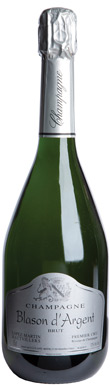

A classic, steely style of Champagne, with roasted almond and pear aromas leading to a lemon meringue-infused mousse and elegant bubbles. Long – and with...
Lopez-Martin

Gobillard, Grande Réserve Brut 1er Cru, Champagne, France
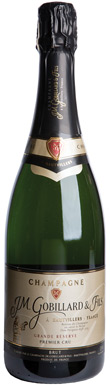
A more full-bodied style, revealing a fairly high level of dosage as well as a pleasing biscuity character, yet with satisfying acidity and finely poised...
Gobillard
Delamotte, Brut, Champagne, France
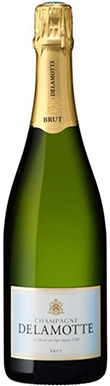
<p>Floral nose, with a hint of soft spice and nectarine; palate is dry but not austere, with stone fruit and a fine mineral tension. Cerebral,...
Delamotte
Alfred Gratien, Brut, Champagne, France
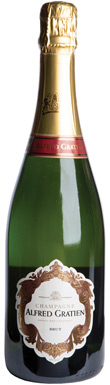
Fulsome bubbles, hints of coconut and tropical fruit. Oaky, yeasty and quite rich; a little ‘manufactured’ perhaps, but successful overall and will appeal to many.
Alfred Gratien
Claude Cazals, Carte d'Or Blanc de Blancs Grand Cru, Champagne, France
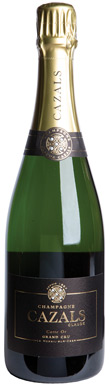
100% Chardonnay. Aromas of baked pineapple cede to a delightful mousse on the palate, with gentle acidity propelling notes of butter biscuit, brioche and lemon...
Claude Cazals
Collard-Picard, Cuvée Sélection Brut, Champagne, France
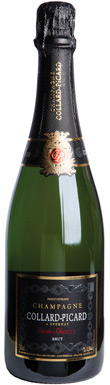
There is plenty of complexity to be found here, with a period of ageing in wood contributing an extra level of interest – crisp and...
Collard-Picard
Didier Herbert, Brut 1er Cru, Champagne, France
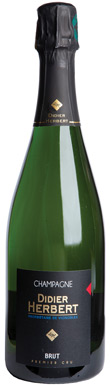
Lively and fairly full-bodied, yet with finely pitched notes of yeast and sweet spice, hints of orange blossom, a touch of smoke and bright citrus...
Didier Herbert
Paul Herard, Blanc de Noirs Brut, Champagne, France
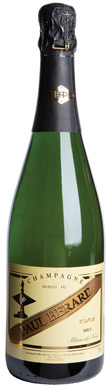
90
An assertive, fuller-bodied style with biscuity, bready notes dominating, yet with sufficient acidity to keep it in check. Savoury, food-oriented and with a long, steely finish.
Paul Herard
Marc Hébrart, Sélection Brut 1er Cru, Champagne, France
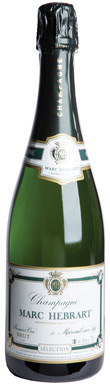
A good all-round style with some complexity of yeasty, bready notes, in combination with a satisfying freshness and nicely integrated yet persistent bubbles.
Marc Hébrart
Deutz, Brut Classic, Champagne, France
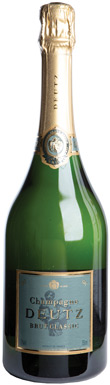
Distinctively Deutz in style with vinosity and verve, this is fresh, elegant and round with a precocious ripeness and good depth. The base is largely...
Deutz
