
Championing Aligoté
Could a group of open-minded and fanatical winemakers give this much-maligned grape variety a new lease of life? Nina Caplan is keen to find out...


If you own land under vine on Burgundy’s legendary Côte d’Or, don’t expect many commiserations. Prices for grand cru vineyards have doubled in a decade and you can probably sell every drop you bottle, twice.
All you need do is exactly what your predecessors did, give or take a few winery improvements and perhaps a more careful attitude to chemicals on the vines.
Scroll down for Nina Caplan’s pick of the world’s best Aligoté
Of course, you’re worried about climate change and you fret about frost and hail. But as a winemaker in one of the world’s best-loved wine regions, you probably encounter pity only slightly more frequently than you see Cabernet Sauvignon vines.
But that’s all right: Burgundy’s best young winemakers aren’t looking for pity, except perhaps from the heavens in the matter of late spring frosts. What they want is something even less in evidence: a chance to remake the world. It’s all very well doing things just as your fathers did (and, usually, it was fathers – or at least the men took the credit).
But it is not how the next generation likes to operate. Which may be one reason for an obsession their forefathers certainly didn’t share: with Aligoté, a grape as underrated and misunderstood as any teenager.
‘Aligoté is high in yield,’ wrote one commentator in 1841 (as quoted by Pierre Rézeau in his Dictionnaire des noms de cépages de France). ‘The new wine has a particular, rather disagreeable flavour, which disappears after a few weeks.’ Charming.
Aligoté is still viewed as a boring, acidic white grape, good only for sweetening with cassis to make kir or persuading to bubble as Crémant de Bourgogne. And there’s plenty of mediocre Aligoté around, but that’s true of Chardonnay too. Are Aligoté’s problems a fair judgement on the variety, or is it a matter of winemaking, terroir and tradition?
Expensive indulgence
I visited the Côte d’Or to enquire and found a bunch of friendly fanatics. All of them make their living from Chardonnay and Pinot Noir, because buyers ‘want something they already understand’, says Laurent Fournier of Domaine Jean Fournier. The obsession with Aligoté is an expensive indulgence, since it involves planting the better terroirs with a variety that sells for far less than Chardonnay. But they are unrepentant. ‘Aligoté is almost more expressive of terroir than Chardonnay is,’ says Sylvain Pataille of Domaine Sylvain Pataille, whose Marsannay reds have won him praise that would distract a lesser man from Aligoté. The two white varieties are close relations – both offspring of Pinot Noir and Gouais Blanc, both probably native to this region. One is revered (on the Côte d’Or at least), the other despised. What happened?
Phylloxera is part of the answer. There were Aligoté vines blended in with the Chardonnay before the louse arrived in the 19th century, and afterwards many were not replaced, as Chardonnay was deemed more valuable. But Aligoté had been mistrusted before that, as that grumpy 1840s quote indicates, possibly as it requires more work in the vineyard to show its full potential.
Not everyone agreed: there was still Aligoté on premier cru hillsides after World War II; some was pulled out of the grand cru Corton-Charlemagne vineyards in the 1970s. Domaine Ponsot makes Le Clos des Monts Luisants, the only premier cru Aligoté, thanks to a bloody mindedness that refused to accept 20th-century rules devaluing the grape. Surely, if one great terroir can make top-calibre Aligoté, then others can too.
Fan club
Fournier thinks so. ‘I had some old vines and I wanted to make a serious, gastronomic Aligoté, but nobody was interested,’ he says. At a Parisian restaurant, a few Aligoté fanciers found a dozen Aligotés on the list: ‘We couldn’t believe it,’ recalls Pataille. So he ordered them all. It may have taken the proprietor, Philippe Delacourcelle, a few moments to realise that his customers (who had not requested a spittoon) were connoisseurs rather than drunkards, but then their shared passion became the root of a deep friendship.
Now, Delacourcelle has built Boisrouge, a beautiful restaurant and five-bedroom guesthouse in the woods near Flagey-Echézeaux, and serves as president of an informal organisation known – with a wink to both auteurs and reptiles – as Les Aligoteurs.
At first, they were just a handful of younger free-thinkers, including Pataille and Fournier, who were childhood friends; Nicolas Morin, a négociant in Nuits-St-Georges; Pablo Chevrot in Maranges; and Anne Morey in Meursault. Pierre de Benoist, nephew of Domaine de la Romanée-Conti’s Aubert de Villaine and overseer of his property at Bouzeron, has become very involved too. ‘Aligoté needs a champion,’ he says.
Well, now it has 51 of them, with a successful salon in 2018 under their collective belt. There is big demand to join the Aligoteurs, Fournier says: ‘But we don’t want to get too big. We want to make great wine and achieve recognition for it without taking ourselves too seriously.’ They don’t insist on organic practice; they don’t insist on much. ‘We want to respect everyone’s choices. But we do want people who will open a few bottles – you can’t just say you have nothing to sell; that’s not our philosophy.’
Seriously good
You can say that again. During my day with the Aligoteurs I think I tasted close to 100 Aligotés, some seriously good. Many had a delicate, lemony minerality and a lick of salt. Some were creamier, thanks to time in oak; most registered the acidity for which Aligoté is best known – a quality that should make ageing perfectly possible. And, in fact, the oldest wine I tried, a Domaine Chevrot 1986, had lovely flavours of honey and quince paste, despite being past its best.
‘People don’t really talk about Aligoté,’ says Damien Colin of Domaine Marc Colin, who isn’t an Aligoteur but has a similar outlook; ‘They forget it’s a noble Burgundian variety.’ He grows his Aligoté on clay soils in St-Aubin and Puligny-Montrachet and leaves it in old oak for 13 months (the Chardonnay gets 18 months). It ages well, he tells me, and he likes the fact that he can sell it far cheaper than his Chardonnay – ‘otherwise my countrymen will never get to taste my wines’.
Aligoté ripens later than Chardonnay – an advantage, given climate change – and buds early, which makes it more resistant to cold. It’s less susceptible than Chardonnay to several diseases, including powdery mildew and grey rot. Nonetheless, when the AC system was created in 1937, Aligoté was only awarded the lowly classification Bourgogne Aligoté.
In 1979 Bouzeron gained its own village appellation, and is very proud of its Aligoté Doré, which is now propagated through massal selection and is believed to be a richer, higher quality clone than the more common Aligoté Vert. Then in 1997, Bouzeron was recognised as an AC, largely because here the Aligoté is planted on the better, higher slopes.
Wine and laughter
They’re lovely, those slopes, their dark soil littered with crumbled chunks of limestone and tiny purple wildflowers. Benoît Pagot takes us to his tiny Domaine Gouffier winery; de Benoist shows off the conservatoire where he is preserving the variety’s genetic diversity. Pataille points to 7ha that Bouchard recently sold, to 13 producers – although for now he
himself is not one of them. His four parcels of Aligoté are elsewhere; the largest is 0.3ha. He vinifies and bottles each individually, despite the fact that this is economic insanity.
‘We don’t grow Aligoté to get rich,’ agrees Fournier, and even de Benoist, with the world-famous name of de Villaine on his bottles and vines up to 115 years old, sells his Aligoté for about €15 and sometimes gets asked why it costs so much.
Back at Boisrouge, Delacourcelle brings out gougères (Burgundian cheese puffs) and white asparagus, both excellent with the bottles of Aligoté that litter the table. The Aligoteurs drink, eat and laugh – the former president Jacques Chirac would have made a fine winemaker, someone cracks, ‘because in 12 years he did almost nothing!’). Getting rich feels like a poor alternative.
Others are interested in Aligoté, too: it’s France’s 10th most widely planted white grape, very popular in Eastern Europe, and Château des Charmes even makes one in Ontario. Hickinbotham and Garagiste, two wineries in Australia’s Mornington Peninsula, both turn out impressive versions.
Back in France, a second gathering awaits in Paris on 2 December. There will be much wine and more laughter. Doors will be closed to the closed-minded; everyone else is welcome.
Nina Caplan is an awarded journalist, writer and editor. She writes a column for the New Statesman, and was the Louis Roederer International Food & Wine Writer of the Year 2016
See Nina Caplan’s pick of the world’s best Aligoté
You may also like
How does 2010 white Burgundy taste today?Burgundy: Premier cru status, grand cru qualityBest Chardonnays outside BurgundyTop Côte de Beaune 2017 en primeur wines
Domaine Sylvain Pataille, Les Auvonnes au Pépé, Bourgogne, Aligoté, Burgundy, France, 2017
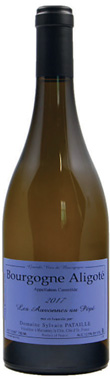

Only Sylvain Pataille is crazy enough to make single-vineyard Aligoté: a mere barrel of each, from four tiny plots, of which Les Auvonnes au Pépé...
2017
Domaine Sylvain PatailleBourgogne

Domaine A & P de Villaine, Bouzeron, Bouzeron, Burgundy, France, 2017
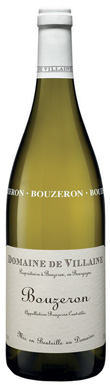
Pierre de Benoist says that he wants bitterness in his wine and, in the best possible way, he gets what he wants: this is racy...
2017
Domaine A & P de VillaineBouzeron
Domaine Ponsot, Aligoté, Morey-St-Denis, 1er Cru Clos des Monts Luisants, Burgundy, France, 2016
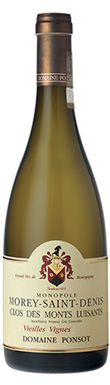
The world’s only premier cru Aligoté, from vines nearly 110 years old, with 24 months in old oak. This is pure and vivacious, lemon and...
2016
Domaine PonsotMorey-St-Denis
Jean Hugues & Guilhem Goisot, Bourgogne Aligoté, Bourgogne, Aligoté, Burgundy, France, 2017
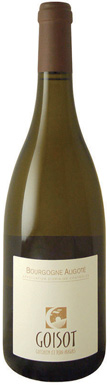
Guilhem Goisot in St-Bris is known for his mineral Sauvignons; this has a similar minerality, where you feel like you can actually taste the fossils...
2017
Jean Hugues & Guilhem GoisotBourgogne
Domaine Marc Colin, Bourgogne Aligoté, Bourgogne, Aligoté, Burgundy, France, 2017
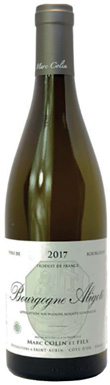
Damien Colin and his sister Caroline carry on their father’s domaine; their two siblings each have their own label but this is where the old...
2017
Domaine Marc ColinBourgogne
Garagiste, Aligoté, Mornington Peninsula, Victoria, Australia, 2017
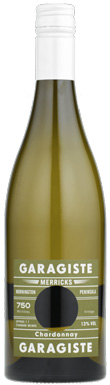
Barney Flanders buys his Aligoté from Andrew Hickinbotham, who has about three rows in Tuerong. They may be the only two Australians making it into...
2017
GaragisteMornington Peninsula
