
Anson: Inside Chanel’s newest winery Domaine de l’Ile
Jane Anson gets an exclusive look at the winemaking project taking shape at Chanel's new Provence rosé estate, on Porquerolles island off France's Mediterranean coast.


Porquerolles island, home to Domaine de L’Ile, is just 4.3 miles long and 1.9 miles wide and yet packs in a dizzying array of landscapes.
As we moved around the island – by boat, bike, Citroën Méhari and on foot – we were by turns in a Kenya of mimosas, eucalyptus and cypress trees, in the Scottish Highlands of rugged cliffs, spray and scrub, or pure Mediterranean groves of olives, oranges, lemons and mandarins.
Scroll down to see Jane Anson’s tasting notes on Domaine de L’Ile 2019 wines
This was my first trip outside of the Bordeaux region since February.
When climbing aboard the boat from Hyères port to Porquerolles, I could understand why Charles Carmignac, director of the island’s Carmignac Art Foundation, described this 15-minute journey as a form of psychological re-set, a way of disconnecting from normal life.

You also see this when you take the boat in the opposite direction, as the most usual response from the islanders as you leave is ‘say hello to France’.
A protected national park, with forest covering around 80% of the land, Porquerolles is the largest of the three Îles d’Hyères, the furthest to the west of its neighbours, Port Cros and Le Levant.
The French president’s summer residence, the Fort de Brégançon, is a few kilometres away back on the French mainland – as is Domaine Ott’s Clos Mireille vineyard, just about visible from the island’s northeastern tip.
I was here to visit Domaine de L’Ile, the newest property in the collection of vineyards owned by luxury goods house Chanel that comprises Châteaux Rauzan-Ségla, Canon and Berliquet in Bordeaux, plus St Supery in Napa Valley.
Going on three decades ago now, the family owners of Chanel famously missed out on buying Château Latour in Pauillac. One hesitation too many and François Pinault was able to swoop in and buy it from under them.
So there must have been something particularly pleasing about things working out the other way for them here at Domaine de L’Ile.
‘We heard that the vineyard had come up for sale,’ says director Nicolas Audebert, ‘and were in discussion with owner Sebastien Le Ber for a few months. We got to the point of sending a winemaker down from Bordeaux (Pierre Etcheberry, formerly at Château Lafleur in Pomerol) simply to get to understand the challenges involved, and to show our commitment.
‘One day Le Ber called me up and said that we had been outbid substantially, and that he had to accept the higher offer.’
But it turned out that Chanel wasn’t out for the count. This island is, after all, a family story. Le Ber, who I would later see on the shaded central square playing the balletic local version of pétanque called La Longue, is the grandson of the island’s former owner, François-Joseph Fournier – along with Maxime Prodromidès, also still resident on the island and president of the Small Islands Organisation.
It was Fournier who gave Porquerolles to his young bride Sylvia (English father, French mother) in 1912 as a wedding present, successfully bidding on it at auction with money he had made discovering gold in Mexico.
Together, they brought it back to life after a devastating fire had destroyed much of the land, raised seven children on the island, opened a school, planted hundreds of thousands of trees, fruit trees and vegetable gardens, along with vineyards that could be bottled as Côtes de Provence.
Fournier died in 1935 at the age of 77, but his wife lived until 1971, the same year that the French state purchased 80% of the island to make it part of the Parc National de Port-Cros.
Their grandson, Le Ber, had run the vineyard since 1980. But it takes serious time and investment to make wine with so many logistical challenges, such as no mains water supply, no cars save a few transport vehicles, and no bridge to the mainland meaning all wine has to be moved by boat.
He was looking for ways to protect the family’s ownership of other parts of the island. Selling the vineyard seemed a sensible way to ensure this, even if letting in outsiders was bound to draw attention in this close-knit community. Fewer than 300 people live here year-round, although numbers normally swell to 10,000 over the summer months.
All of this meant that Audebert’s connection to Porquerolles must have struck a chord.
‘I grew up in the nearby port city of Toulon, as my father was a naval officer based there, and I spent a lot of my childhood sailing around and exploring the island,’ Audebert says.
‘We felt a genuine link to the potential of the wines here, and wished him the best when he decided to sell to someone else. But he called us a few days later to say that he had reconsidered, and wanted to sell his family’s estate to a group that he knew would love it as he had done.’

It’s not easy trying to bottle what is so special about this place, where the sound of the cicadas in the summer is so loud that colleagues calling from Rauzan-Ségla ask the team to ‘move away from the trees, we can’t hear you’.
The team has inherited a vineyard with great views, set across several remote plots on opposite sides of the island – partly on the Brégançonnet plain and partly on the Notre-Dame plains. There has been a lot of work to do, however.
After soil studies, and the observations of onsite winemaker Pierre Etcheberry, they pulled up areas that had become unproductive or had too many missing vines.
The terroir here is schist, clay and sand, and it is true island viticulture, with all the saline-tang and stinging wind that its location imparts. The vineyard stands at 20 hectares (ha), along with 5ha of olive trees that Etcheberry is learning to take care of.
He is as obsessive over details as you would expect from someone who spent three years with the team at Château Lafleur, and is clearly thrilled at the expanded challenge of olives. They also require hand-picking, have a slightly longer growing season than the vines and are even more capricious in terms of yield.
Everything is organic, certified since 2015, reflecting the island’s overall status as a protected national park, as well as the philosophy of Chanel at their other properties.
To date, 20% of Domaine de l’Ile’s production is sold on the island itself to the local hotels and restaurants, and to summer tourists. The remaining 80%, comprising around 80,000 bottles, makes its way to the mainland via a freight boat that ferries 600 cubic metres of water to the island each day in summer.
The rosé itself stands in contrast to the island’s other two estates, Domaine La Courtade and Domaine Perzinsky. La Courtade, with the same owners as the Carmignac Foundation, is sleek and gently oak-aged. It’s the most expensive of the three wines, while Perzinsky is a more traditional, fruit-focused rosé.
Domaine de l’Ile stands somewhere in between the two. It retails for around €20 per bottle and shows pared-back rose petal and soft redcurrant flavours, combined with gentle acidities from a blend of Grenache, Cinsault, Syrah, Mourvèdre and Tibouren.
The brilliant citrus-filled white wine is 100% Rolle (Vermentino), and both are unoaked. A red has been made in the past but stopped under Chanel, at least for now.
‘We are not looking to create an entry-level brand and then release a few thousand bottles of a top cuvée,’ says Audebert.
‘Instead we want to be known for producing one great bottling of rosé, and another of white, all from our own grapes on this island, capturing the expression of what that means.’
‘It takes time to be accepted here,’ says Etcheberry. ‘Island life has its own rhythm, and we still have a lot to learn. But we are in this for the long-term.’
Domaine de L’Ile 2019 wines, plus other rosés with Bordeaux connections
You might also like
Best Provence rosé: Panel tasting results (2020)
Cos d’Estournel owner buys Provence winery
Anson: Exclusive first look inside billionaire Jack Ma’s Bordeaux wine estate
Château d'Esclans, Garrus, Côtes de Provence, Provence, France, 2019
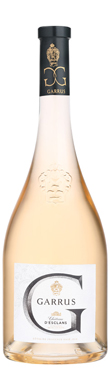

As with Les Clans, this is from old vines (up to 100 years old in the case of Garrus), fermented and aged in 600l oak...
2019
Château d'EsclansCôtes de Provence

Château d'Esclans, Les Clans, Côtes de Provence, Provence, France, 2019
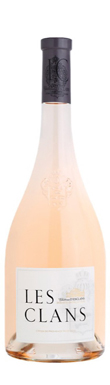
Fermented and aged in large sized oak casks, this is another successful vintage of Les Clans, holding its place in my estimation as the most...
2019
Château d'EsclansCôtes de Provence
Domaine de l'Ile, Côtes de Provence, Provence, France, 2019
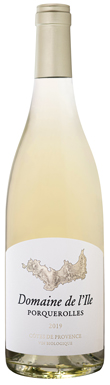
Thoroughly enjoyable Provençal white, with fresh citrus flavours, gentle spice, and the crushed stone salinity that you find in the rosé also. Good grip also...
2019
Domaine de l'IleCôtes de Provence
Château Tamary, Côtes de Provence, Provence, France, 2019
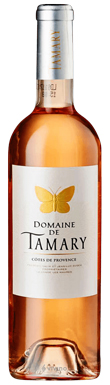
Owned by Jean-Luc Zuger of Malescot St Exupéry (along with Frédéric Salin of Salin négociants), this is savoury to the point that you can almost...
2019
Château TamaryCôtes de Provence
Domaine de l'Ile, Côtes de Provence, Provence, France, 2019
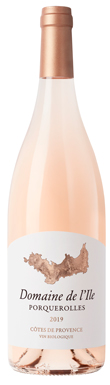
Well-placed and delicate raspberry, rosemary and sage with an attractive balance of fresh fruits alongside a mineral-edged slate texture and the hint of salt tang...
2019
Domaine de l'IleCôtes de Provence
Domaine Saint Andrieu, L'Oratoire, Côteaux Varois de Provence, Provence, France, 2019
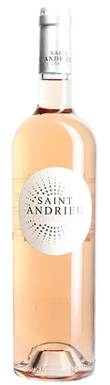
Owned by the Talbot group, this is a fruit-forward, unfussy Provence with an edge of sweetness to the fruit that is balanced by an orange...
2019
Domaine Saint AndrieuCôteaux Varois de Provence
