
Château de Millery: a hidden gem in St-Emilion
Château de Millery deserves the attention of wine lovers worldwide, writes Yohan Castaing, who tastes 10 vintages of the St-Emilion Grand Cru back to 2009.


Since 1892, the name of the Manoncourt family has been inextricably linked to Château Figeac, a Premier Grand Cru Classé B that amply deserves a promotion to the coveted A category in the next update of the St-Émilion Classification scheduled for 2022.
It’s less well-known that, not far from Figeac, the Manoncourt family has for nearly 80 years also owned a hidden jewel in the form of Château de Millery and its tiny vineyard of less than one hectare.
Scroll down to see tasting notes and scores for 10 Château de Millery wines
Located in the commune of St-Christophe-des-Bardes within the St-Emilion Grand Cru appellation area, Millery has clay-limestone soil that is very different from that of Figeac, famous for lying in a sector of gravelly soil, which is unusual for the Right Bank.
Not surprisingly, therefore, the wines of Millery have a rounder, fuller-bodied style than those of Figeac, which stand out for their the crystalline precision and fine-boned structure.
Madame Manoncourt acquired Millery in 1942 while her son Thierry was a prisoner of war in Germany, as an incentive for him to return to St-Emilion once he made it back to France.
This was the same Thierry who would go on to strengthen the reputation of Figeac after taking charge of the estate in 1947, making his mark with an innovative approach to grape-growing and wine-making.
Distinctive terroir
Thierry Manoncourt recognised early on that Millery had its own distinctive terroir, so he was wise enough not integrate it into Figeac, says Blandine de Brier Manoncourt, co-manager of Figeac today but also of Château de Millery, for which she has a special attachment. Thierry’s own special attachment to Millery can be seen on the labels, which he designed himself.
For a long time, Millery was overshadowed by Figeac if only because of its low production – just 4,000 bottles – that was destined for a happy few, mainly the Caves Legrand in Paris or a few restaurants such as Guy Savoy, as well as a small number of aficionados around the world.
The vineyard was restructured in the 1970s and 1980s, and today it benefits from the meticulous care accorded to it by the Château Figeac team under the leadership of the very talented Figeac estate director, Frédéric Faye.
Precise and painstaking attention to detail is the rule both for the viticulture and for the adroit winemaking carried out with the approach of minimalist intervention.
Barrel ageing is done with the same mindful intent so as not to ‘mark the wine with wood,’ in the words of Faye.
How the Château de Millery wines showed in this tasting
This vertical tasting was fascinating, because it provided ample evidence of the efforts undertaken at Millery in recent years.
Since 2009, the wines have become more precise and balanced in their expression of the property’s superlative clay-limestone terroir. The structure has finer contours and the mouthfeel is more harmonious.
Tannins that are finer-grained but still unctuous show the benefit of choosing coopers carefully and managing the essential stage of elevage with a deft hand.
Of course, the 2009 and 2010 vintages are both remarkable, but 2010 has a more perceptible tannic structure.
I must admit to being impressed with the wine from the unloved Bordeaux 2012 vintage for its compelling truffle notes and elegant structure, which can be enjoyed as of now.
Surprisingly, the elegant 2013 – an even more unloved vintage in Bordeaux where ripeness was an issue – has an inkling of a solar style on its nose. As for the 2014, it is quite graphite in character but seems to be going through a phase of austerity.
The 2015 marks a slight evolution in style towards fresher wines with a brighter nose and especially racier tannins providing depth.
The 2016 provides a convincing confirmation of this stylistic trend towards a more tension-filled wine, followed by a pure and crystalline 2017. Meanwhile, the 2018 is a superb expression of limestone soil, filled with those traits including sapidity that many describe as minerality.
Rare appeal
Today, this St-Emilion Grand Cru has shed itself of its cloak of anonymity and can now be found in the international market following the Manoncourt family’s decision to make Château de Millery available to different wine merchants.
The small production remains unchanged, so rarity will be part of its appeal.
This formerly hidden gem deserves the attention of wine enthusiasts around the world, and it will certainly spark interest among those who are particularly fond of wines produced on the clay-limestone soils of St-Emilion.
Château de Millery wines from 2009 to 2018: tasting notes and scores
You may also like
Château Mouton Rothschild vertical: 1993 – 1999
Collector’s Guide: Bordeaux 2020 En Primeur
Investing in Bordeaux wine: time to buy?
Château de Millery, St-Émilion, Grand Cru, Bordeaux, France, 2009
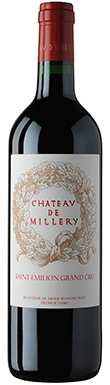

The 2009 de Millery is spicy, sensual and inviting with truffle, pepper and fresh grape aromas. It is a beautifully sunny expression of this domaine,...
2009
Château de MillerySt-Émilion

Château de Millery, St-Émilion, Grand Cru, Bordeaux, France, 2010
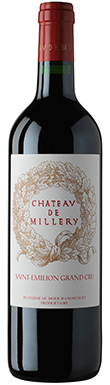
The 2010 shows a very different style from that of 2009, with more power and complexity. Tobacco, spices and mineral aromas dominate, rather than floral...
2010
Château de MillerySt-Émilion
Château de Millery, St-Émilion, Grand Cru, Bordeaux, France, 2011
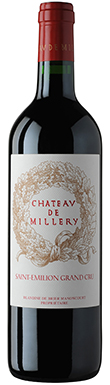
A difficult vintage, but not for calcareous soils. This is racy and concentrated with so much menthol freshness as well as floral and blackberry aromas...
2011
Château de MillerySt-Émilion
Château de Millery, St-Émilion, Grand Cru, Bordeaux, France, 2012
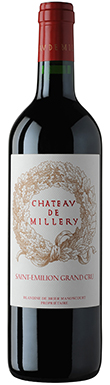
The 2012 de Millery is terrific. It captures the essence of the site with truffle, blackberries, black cherry and floral aromas. The Cabernet seems to...
2012
Château de MillerySt-Émilion
Château de Millery, St-Émilion, Grand Cru, Bordeaux, France, 2013
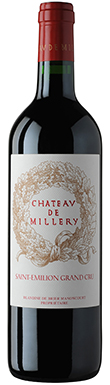
This wine starts well with a slight tobacco, plus ripe cherry, plum and spice aromas, but doesn't have the energy through the palate to really...
2013
Château de MillerySt-Émilion
Château de Millery, St-Émilion, Grand Cru, Bordeaux, France, 2014
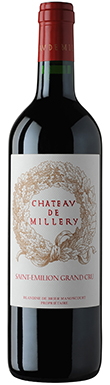
With a bouquet of blackberries and menthol, the Cabernet Franc comes through with delicate perfumed notes of blackcurrant, spices and graphite. Very mineral with a...
2014
Château de MillerySt-Émilion
Château de Millery, St-Émilion, Grand Cru, Bordeaux, France, 2015
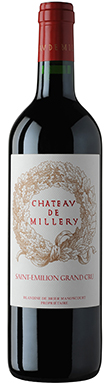
The 2015 marks an evolution of the style, defined by a bright bouquet with fruity, fresh, and slightly mineral and graphite aromas. Blackberries and spices...
2015
Château de MillerySt-Émilion
Château de Millery, St-Émilion, Grand Cru, Bordeaux, France, 2016
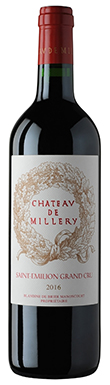
A fragrant and aromatic bouquet of black berries, flowers, and spice aromas. Very racy, profound and aromatic. The is plenty of muscle, with a linear...
2016
Château de MillerySt-Émilion
Château de Millery, St-Émilion, Grand Cru, Bordeaux, France, 2017
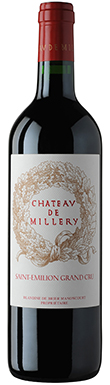
A slightly shy and closed bouquet, with blackberry aromas intertwined with floral touches. Dense and profound, the palate is pure, clean, and chiselled with much...
2017
Château de MillerySt-Émilion
Château de Millery, St-Émilion, Grand Cru, Bordeaux, France, 2018
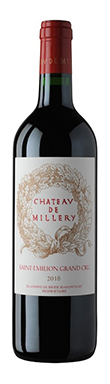
This first scents are floral in character, accompanied by a touch of blackcurrant and raspberry, but aeration reveals graphite and slightly smoky notes. The palate...
2018
Château de MillerySt-Émilion
